
Asbestos legislation catches people out when they assume the rules only matter during major building work. In reality, if you manage premises, instruct contractors or oversee maintenance, asbestos legislation affects routine decisions every week — from checking a ceiling void to planning a refurbishment programme.
The legal duties are not there to create paperwork. They exist to prevent asbestos fibres being disturbed, inhaled and spread through occupied buildings. For property managers, landlords, employers and dutyholders, the challenge is understanding what the law expects in practice and making sure your surveys, records and contractor controls stand up to scrutiny.
What asbestos legislation means for dutyholders and property managers
In Great Britain, asbestos legislation is centred on the Control of Asbestos Regulations. These regulations sit alongside wider health and safety duties and are supported by HSE guidance, including HSG264 for asbestos surveys.
If you are responsible for maintenance or repair in non-domestic premises, or the common parts of certain domestic buildings, you may be the dutyholder. That means the law expects you to take reasonable steps to find asbestos-containing materials, assess their condition and manage the risk.
For most organisations, that translates into a clear set of actions:
- Identify whether asbestos may be present
- Arrange the right type of survey for the building and planned works
- Maintain an accurate asbestos register
- Assess the risk from known or presumed asbestos-containing materials
- Share information with staff, contractors and anyone who may disturb it
- Review the condition of materials over time
- Use competent specialists for surveying, sampling, removal and air testing where required
Miss one of those steps and the problem quickly moves from administrative oversight to legal exposure. A contractor drilling into asbestos insulating board because no one checked the register is exactly the kind of failure the regulations are designed to prevent.
The Control of Asbestos Regulations: the core of asbestos legislation
The Control of Asbestos Regulations are the main legal framework for asbestos management and asbestos work in Great Britain. They set out duties for employers, dutyholders, building managers and contractors.
They cover far more than surveying. The regulations deal with exposure prevention, training, licensing, notification, control measures, medical surveillance in relevant cases, and the duty to manage asbestos in non-domestic premises.
The duty to manage asbestos
One of the most important parts of asbestos legislation is the duty to manage. This applies to the person or organisation with responsibility for maintenance or repair.
To comply, you need to:
- Find out whether asbestos is present, as far as reasonably practicable
- Presume materials contain asbestos unless there is strong evidence otherwise
- Keep an up-to-date record of its location and condition
- Assess the risk of anyone being exposed
- Prepare and implement a plan to manage that risk
- Review and monitor the plan regularly
- Provide information to anyone liable to disturb the material
That is why a suitable management survey is often the starting point for compliance. It helps locate asbestos-containing materials that could be disturbed during normal occupation, routine maintenance or foreseeable installation work.
Different categories of asbestos work
Not all asbestos work is treated the same under asbestos legislation. The category depends on the material, its condition, how likely it is to release fibres and the nature of the task.
- Licensed work — higher-risk work that must be carried out by a licensed asbestos contractor
- Notifiable non-licensed work — lower risk than licensed work, but still subject to notification and additional controls
- Non-licensed work — lower-risk work where a licence may not be required, but strict legal duties still apply
A common mistake is assuming non-licensed work is informal or lightly regulated. It is not. Risk assessment, suitable training, safe methods, control measures and waste handling requirements still matter.
Training and competence
Asbestos legislation requires employers to provide suitable training to anyone who may encounter asbestos through their work. That can include maintenance teams, electricians, plumbers, decorators, telecoms installers, surveyors and site supervisors.
The training must match the task. Asbestos awareness training is useful for recognising risk and avoiding disturbance, but it does not qualify someone to carry out asbestos removal. Competence also depends on supervision, experience, equipment and planning.
How HSE guidance and HSG264 support asbestos legislation
The law does not operate in isolation. HSE guidance explains what good compliance looks like in practice, and HSG264 is the key document for asbestos survey standards.

For clients, HSG264 matters because it helps you judge whether the survey you have commissioned is actually suitable. A poor survey can undermine everything that follows, from your asbestos register to contractor briefings and project planning.
Why HSG264 matters to building owners and managers
HSG264 sets expectations for how asbestos surveys should be planned, carried out and reported. It explains survey scope, sampling, access issues, limitations and the information a client should receive.
A useful asbestos report should do more than list a few suspect materials. It should clearly identify locations, note the extent of inspection, record material assessments, explain any limitations and give you enough information to update your asbestos register and management plan.
If your report is vague, out of date or based on poor access, you should not assume you are covered. The legal duty is to manage risk effectively, not simply to hold a document on file.
Approved guidance and practical compliance
HSE guidance helps organisations interpret asbestos legislation properly. That matters when you are deciding whether a survey is sufficient, whether a material can remain in place, or what information contractors need before starting work.
Practical steps include:
- Checking survey reports match the building layout and planned activities
- Making sure inaccessible areas and limitations are clearly recorded
- Updating the asbestos register after removal, encapsulation or further sampling
- Ensuring contractor induction includes asbestos information relevant to the task
- Reviewing management arrangements when occupancy or building use changes
Choosing the right survey under asbestos legislation
Survey type is one of the areas where asbestos legislation is most often misunderstood. The right survey depends on what is happening in the building, not just on whether you already have an asbestos register.
Management surveys for occupied buildings
A management survey is designed for the normal occupation and use of a building. Its purpose is to locate, as far as reasonably practicable, asbestos-containing materials that could be disturbed during routine occupancy, maintenance or minor works.
This is usually the correct survey where asbestos is being managed in situ. It supports the duty to manage by helping you keep records, assess condition and brief anyone working on the premises.
Refurbishment and demolition surveys
When intrusive work is planned, a management survey is not enough. If walls are being opened, ceilings removed, risers accessed or areas stripped out, you need a survey that reflects that level of disruption.
Before major strip-out or demolition, a suitable demolition survey should be commissioned for the relevant area. This type of survey is intrusive and aims to locate asbestos-containing materials so they can be dealt with before work starts.
Using the wrong survey is one of the fastest ways to fall foul of asbestos legislation. If contractors are asked to start intrusive work based only on a management survey, the risk of accidental disturbance rises sharply.
Re-inspections and ongoing review
Asbestos management is not a one-off exercise. Where asbestos-containing materials remain in place, their condition needs to be reviewed at suitable intervals.
A re-inspection survey helps confirm whether known materials remain in a stable condition or whether damage, deterioration or changes in use have altered the risk. The timing should be based on condition, accessibility and likelihood of disturbance.
Actionable rule: if your register has not been reviewed for a long period, or the building has seen a lot of maintenance activity, do not assume the records are still reliable. Check them before the next contractor arrives.
How asbestos legislation links to wider health and safety law
Asbestos legislation sits within a broader legal framework. The Health and Safety at Work etc Act places general duties on employers and those in control of premises to protect employees and others affected by their work.
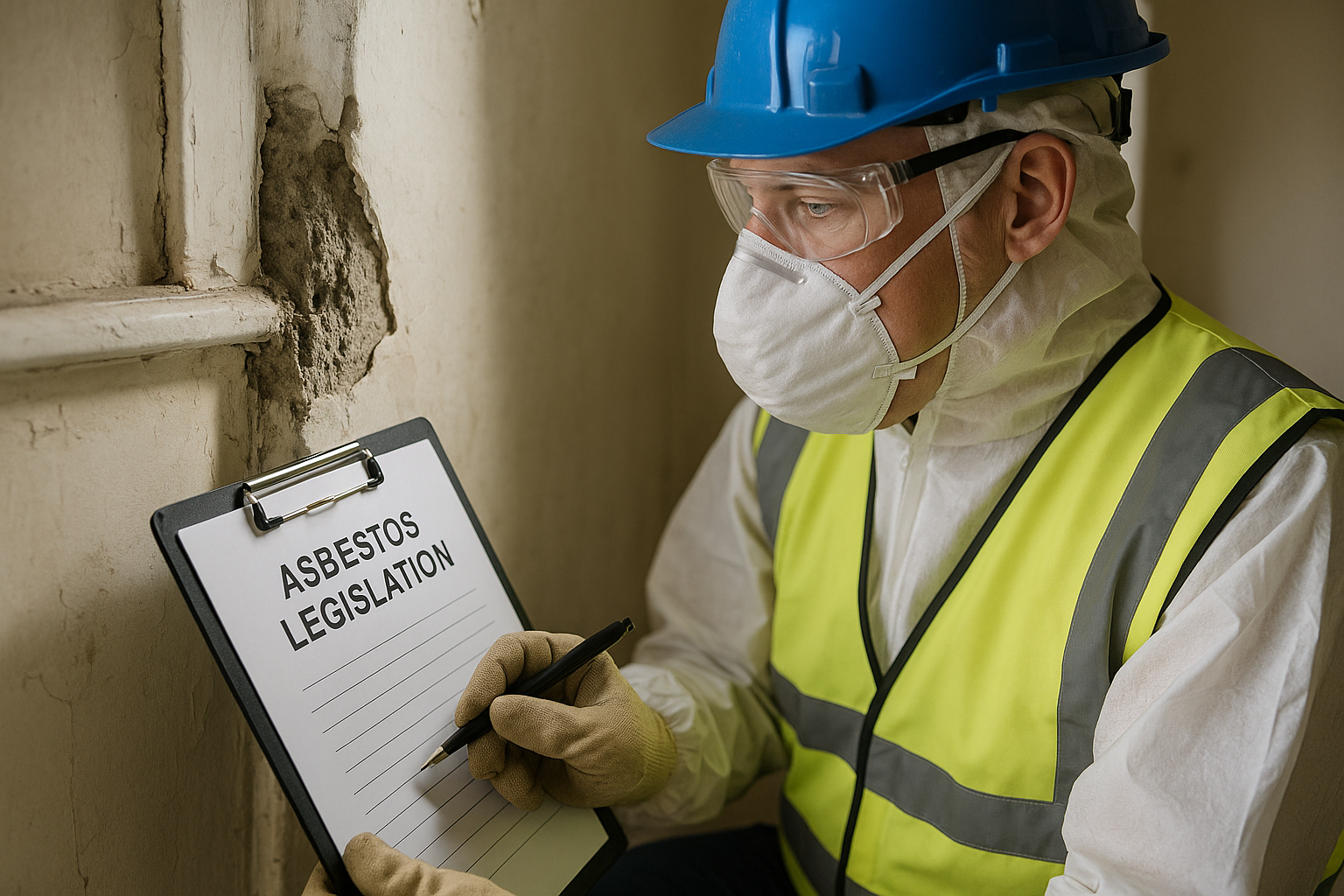
That means asbestos failings rarely exist in isolation. If a contractor is sent into a plant room without asbestos information, the issue may involve both specific asbestos duties and wider health and safety failures.
Why asbestos must be built into everyday management systems
The safest organisations do not treat asbestos as a separate file in the compliance cupboard. They build it into contractor management, permit systems, planned maintenance and project planning.
In practice, that means:
- Checking the asbestos register before issuing work orders
- Providing relevant survey information during procurement and induction
- Stopping work immediately if suspect materials are uncovered
- Escalating findings to a competent asbestos professional without delay
- Recording decisions and actions rather than relying on verbal updates
If asbestos information is not accessible when decisions are being made, it may as well not exist. The legal test is about effective management, not document storage.
COSHH and asbestos
The Control of Substances Hazardous to Health Regulations often come up in discussions about asbestos. In practice, asbestos is governed primarily by the more specific Control of Asbestos Regulations.
Even so, the principles behind COSHH are useful. They reinforce the need to assess risk, prevent exposure where possible, control it where prevention is not achievable, and review arrangements when circumstances change.
That approach helps when planning work methods, selecting controls, managing respiratory protective equipment and ensuring waste handling and decontamination procedures are understood.
Construction projects, CDM and asbestos legislation
Construction, refurbishment and demolition projects create some of the highest asbestos risks because they involve intrusive work. This is where asbestos legislation and the Construction Design and Management Regulations work side by side.
Clients, designers, principal designers, principal contractors and contractors all need relevant asbestos information early enough to plan safely. Waiting until site mobilisation is too late.
Client duties
Clients must make suitable arrangements for managing a project, including allowing enough time and resources. Where asbestos may be present, that means ensuring the right pre-construction information is available.
If intrusive works are planned, relying on an old register or a basic management survey is risky. The survey information must suit the scope of the project.
Designer and principal designer duties
Designers should eliminate, reduce or control foreseeable risks through design decisions. If asbestos is known or suspected, they may need to redesign details, change sequencing or ensure removal happens before other trades enter the area.
The principal designer should coordinate the pre-construction phase so that asbestos information is identified, reviewed and passed to the right people. Good coordination at this stage prevents expensive delays later.
Principal contractor and contractor duties
Contractors need accurate information before starting work. They should review survey findings, brief their teams, challenge gaps in information and stop if conditions on site do not match what they were told.
Practical checks before work starts:
- Confirm the survey type matches the planned work
- Check the surveyed areas match the actual work area
- Review limitations, exclusions and inaccessible voids
- Make sure asbestos removal, if required, is completed before follow-on trades attend
- Keep emergency arrangements in place if suspect materials are discovered
How often does asbestos legislation change?
Many dutyholders ask how often asbestos legislation is updated. The honest answer is that the core legal framework does not change constantly, but guidance, enforcement expectations and practical interpretation can evolve.
For most organisations, the bigger risk is not failing to spot a major legal amendment. It is failing to keep day-to-day management arrangements aligned with current HSE expectations and the actual condition of the building.
That means you should monitor three things:
- Legal duties — the core requirements under the Control of Asbestos Regulations and wider health and safety law
- Guidance — HSE publications and survey standards such as HSG264
- Your own records — whether surveys, registers and plans still reflect the premises as they exist now
If you only review your asbestos arrangements when a project starts, you are leaving too much to chance. Build periodic compliance reviews into your property management routine.
Common mistakes that lead to breaches of asbestos legislation
Most asbestos failures are not dramatic at the start. They begin with assumptions, poor communication or outdated information.
The most common problems include:
- Assuming a building is asbestos-free because no one has reported issues
- Using an old survey for work it was never intended to support
- Failing to update the asbestos register after removal or refurbishment
- Not sharing asbestos information with contractors before work starts
- Allowing intrusive maintenance without checking survey coverage
- Confusing asbestos awareness training with competence to carry out asbestos work
- Ignoring damaged materials because they have been present for years without incident
Each of these errors is preventable. The fix is usually straightforward: better information, better planning and better control of who does what on site.
Practical steps to stay compliant with asbestos legislation
If you are responsible for a portfolio, a school, an office block, industrial premises or mixed-use property, compliance improves when asbestos management is simple, visible and repeatable.
Use this checklist as a working standard:
- Identify the dutyholder so responsibility is clear
- Commission the right survey for occupation, maintenance, refurbishment or demolition
- Keep the asbestos register current and easy to access
- Review known materials regularly and act on deterioration
- Brief contractors properly before they arrive on site
- Stop work on discovery if suspect materials are found unexpectedly
- Use competent specialists for surveying, sampling, removal and analytical work
- Record decisions so there is a clear audit trail
For organisations with sites in different regions, consistency matters. Whether you need an asbestos survey London, an asbestos survey Manchester service, or an asbestos survey Birmingham appointment, the standard of information should be the same: clear scope, competent inspection and reports that support real-world decisions.
When to get professional help
You should bring in a competent asbestos surveyor whenever you need reliable information about the presence, condition or extent of asbestos-containing materials. That is especially true before intrusive works, after unexpected discoveries, or when your existing records are incomplete.
Professional support is also sensible if you are unsure whether your current arrangements meet asbestos legislation. A quick review now is far easier than dealing with project delays, enforcement action or an exposure incident later.
Supernova Asbestos Surveys provides management surveys, refurbishment and demolition surveys, re-inspections and nationwide support for dutyholders, landlords and property managers. If you need clear advice and a fast response, call 020 4586 0680 or visit asbestos-surveys.org.uk to book a survey.
Frequently Asked Questions
How often is asbestos legislation updated in the UK?
The core framework does not change constantly, but HSE guidance, enforcement priorities and practical expectations can develop over time. The safest approach is to review both legal duties and your own asbestos management arrangements regularly.
What is the main law covering asbestos legislation?
The main legal framework is the Control of Asbestos Regulations. These regulations set out duties relating to asbestos management, training, exposure control, licensing and work with asbestos-containing materials.
Do I always need an asbestos survey before work starts?
Not every task needs the same type of survey, but you do need suitable information before work begins. Routine occupation usually calls for a management survey, while intrusive refurbishment or demolition works require a more intrusive survey for the affected area.
Who is responsible for asbestos in a non-domestic building?
The dutyholder is usually the person or organisation responsible for maintenance or repair of the premises. In some cases this may be the owner, landlord, managing agent or tenant, depending on the lease and maintenance arrangements.
Can asbestos be left in place legally?
Yes, if the material is in good condition, the risk is properly assessed and it is managed safely. The law does not require automatic removal of all asbestos, but it does require effective management to prevent exposure.