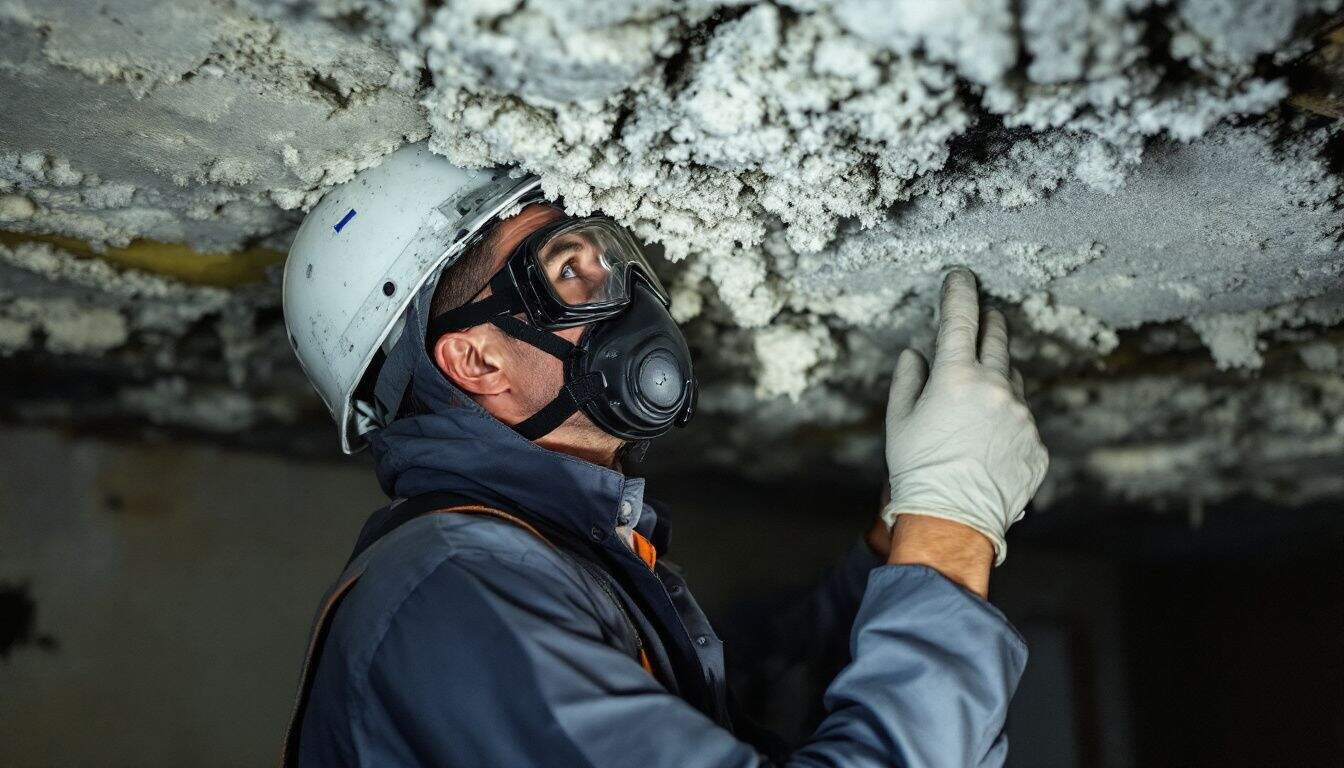
Is Your Asbestos Roof a Hidden Risk? What Every Property Owner Must Know
Millions of buildings across the UK still have an asbestos roof sitting directly above the people who live and work inside them. For decades, asbestos cement roofing was the go-to material for industrial units, farm buildings, garages, schools, and commercial premises — cheap, durable, and completely normalised.
The problem is that those same roofs are now ageing, weathering, and in many cases beginning to deteriorate in ways that create a genuine health risk. If you manage or own a property built before the year 2000, there is a real possibility your roof contains asbestos.
Understanding what that means, what the law requires of you, and what your practical options are is not optional — it is a legal and moral responsibility.
What Is an Asbestos Roof and Why Was It So Widely Used?
Asbestos cement roofing sheets — often called corrugated asbestos or AC sheets — were used extensively throughout the twentieth century. The material was favoured by builders and developers because it was lightweight, fire-resistant, weatherproof, and inexpensive to manufacture and install.
You will typically find asbestos roofing on:
- Agricultural and farm buildings
- Industrial warehouses and factories
- Garages, outbuildings, and lean-tos
- Schools and public buildings constructed before the 1980s
- Commercial premises and retail units
- Some domestic extensions and conservatories
The asbestos content in roofing sheets is typically chrysotile (white asbestos), bound within cement. When the material is in good condition and left undisturbed, the fibres are largely contained. The danger arises when the material degrades, is drilled, cut, broken, or disturbed during maintenance or removal work.
How to Tell If You Have an Asbestos Roof
Visual identification alone is never sufficient to confirm asbestos. However, there are strong indicators that a roof may contain asbestos-based materials.
Age of the Building
If your building was constructed or had its roof installed before the late 1990s, asbestos roofing is a strong possibility. The UK banned the use of all asbestos products in 1999, so anything installed before that date warrants investigation.
Appearance of the Roof Sheets
Corrugated grey or dark roofing sheets, particularly on older agricultural or industrial buildings, are a classic indicator. Over time, these sheets may develop a rough, pitted texture, moss or lichen growth, and visible cracking or delamination — all signs of weathering that can release fibres.
The Only Way to Be Certain: Professional Testing
The only reliable way to confirm whether your roof contains asbestos is through professional asbestos testing, which involves taking a small sample of the material and having it analysed in an accredited laboratory. This should always be carried out by a trained professional — never attempt to take samples yourself.
A qualified surveyor will collect samples safely, minimising any risk of fibre release, and provide you with a laboratory-confirmed result that you can rely on for legal and management purposes.
The Legal Position: What UK Law Requires of You
The Control of Asbestos Regulations places clear duties on those who own or manage non-domestic premises. If you are a dutyholder — which includes landlords, facilities managers, and employers — you are legally required to manage asbestos in your building, and that absolutely includes the roof.
The Duty to Manage
The duty to manage asbestos does not mean you must remove it immediately. It means you must know what is in your building, assess its condition, and put a plan in place to manage any risk. Ignoring the issue is not a legal option — and the Health and Safety Executive takes enforcement seriously.
An asbestos management survey is the starting point for most dutyholders. This type of survey identifies the location, type, and condition of asbestos-containing materials throughout the property, including roofing, and produces a register that forms the basis of your asbestos management plan.
HSE Guidance and HSG264
HSG264, the HSE’s guidance document on asbestos surveys, sets out the standards that surveyors must follow. It distinguishes between management surveys (for properties in normal use) and refurbishment or demolition surveys, which are required before any significant work that could disturb asbestos.
If you are planning any roof repairs, replacement, or renovation, a refurbishment survey is legally required before work begins. Commissioning one is not a bureaucratic formality — it is what protects your workers, your contractors, and yourself from serious legal and health consequences.
Training and Information Sharing
If you employ workers or engage contractors who may work on or near an asbestos roof, you are required to inform them of its presence and condition. Sending a roofer up to carry out repairs without disclosing that the roof contains asbestos is not just dangerous — it is a criminal offence under the Control of Asbestos Regulations.
Asbestos Roof Condition: When Is It Actually a Problem?
Not all asbestos roofs present the same level of risk. The HSE uses a risk assessment approach that considers the type of asbestos, its condition, and the likelihood of it being disturbed. Understanding where your roof sits on that spectrum is essential to making the right management decisions.
Good Condition: Manage in Place
An asbestos cement roof that is intact, not weathered or cracked, and unlikely to be disturbed may be perfectly safe to leave in place — provided it is monitored regularly and recorded in your asbestos management plan. Many dutyholders manage asbestos roofing in this way for years without incident.
Regular inspections are key. You need to know if the condition changes so that your management approach can be updated accordingly.
Deteriorating Condition: Encapsulation
Where a roof is showing signs of weathering, surface erosion, or minor damage, encapsulation may be an appropriate interim measure. This involves applying a sealant to bind any loose fibres and prevent release. It is not a permanent solution, but it can extend the safe life of the material and reduce risk while a longer-term plan is developed.
Encapsulation is also frequently favoured in heritage settings, where full removal may be complicated by planning constraints.
Severely Damaged or Friable: Removal Required
Where roofing sheets are severely cracked, broken, or friable — meaning fibres can be released by hand pressure alone — removal is likely to be the safest option. This must be carried out by a licensed asbestos contractor following strict procedural controls set out by the HSE.
Safe Removal of an Asbestos Roof: What the Process Involves
Asbestos roof removal is a specialist operation. It is not a job for a general roofing contractor, regardless of how experienced they may be with conventional roofing materials. Licensed removal is required for certain asbestos types and is strongly recommended for all roofing work involving asbestos-containing materials.
Engaging a Licensed Contractor
Any contractor carrying out asbestos removal must hold a licence issued by the HSE. Before engaging anyone, ask to see their licence, their method statement, and their insurance documentation. A reputable contractor will provide all of this without hesitation.
The removal team will typically:
- Erect appropriate barriers and signage around the work area
- Wear full personal protective equipment (PPE) including respirators
- Wet the roofing sheets prior to removal to suppress fibre release
- Remove sheets whole wherever possible, avoiding breakage
- Double-bag or wrap all waste in clearly labelled, leak-tight containers
- Carry out air monitoring to confirm the area is safe after work is complete
Notification Requirements
For licensable work, the contractor must notify the relevant enforcing authority — either the HSE or the local authority, depending on the premises — at least 14 days before work begins. This is a legal requirement, not a formality, and failure to comply can result in enforcement action against both the contractor and the client.
Asbestos Waste Disposal
Asbestos waste is classified as hazardous waste under UK law. It must be transported by a registered waste carrier and disposed of at a licensed facility. It cannot be placed in a skip, taken to a household waste site, or disposed of in general waste — doing so carries serious legal consequences including prosecution.
Your removal contractor should handle all waste documentation and provide you with consignment notes confirming legal disposal. Keep these records — they form part of your compliance documentation.
Which Asbestos Survey Do You Need for a Roof?
Choosing the right survey type is essential. Commissioning the wrong type can leave you legally exposed and practically uninformed about the risks on your property.
Management Survey
A management survey is appropriate for buildings in normal occupation where no major structural work is planned. It will identify the presence, location, and condition of asbestos-containing materials accessible under normal conditions, including roofing where it can be safely assessed. This is the foundation of your legal duty to manage.
Refurbishment and Demolition Survey
If you are planning to repair, replace, or demolish an asbestos roof, you need a demolition survey or refurbishment survey first. This is a more intrusive investigation that identifies all asbestos-containing materials in areas that will be disturbed, so that the removal contractor knows exactly what they are dealing with before work starts.
Skipping this step is not just legally non-compliant — it puts workers at serious risk and can result in uncontrolled fibre release affecting neighbouring properties and the wider environment.
Asbestos Roofing in Historic and Heritage Buildings
An asbestos roof is not exclusively a problem for modern industrial estates. Many historic and heritage properties — including listed buildings, converted barns, and Victorian commercial premises — also have asbestos-containing roofing materials that require careful management.
Working on listed buildings introduces an additional layer of complexity. Any removal or replacement work may require listed building consent from the local planning authority, and heritage bodies may have requirements about what replacement materials are used.
Removal teams working on heritage properties must coordinate with conservation officers to ensure that the structural and aesthetic integrity of the building is preserved throughout the process. Encapsulation is often the preferred approach in these settings precisely because it avoids the physical disturbance associated with full removal, protecting fragile architectural features while managing the asbestos risk effectively.
Costs and Practical Considerations
The cost of managing or removing an asbestos roof varies considerably depending on the size of the roof, the type and condition of the asbestos, access requirements, and the location of the property. A survey will give you the information you need to understand the scope of the work before committing to any expenditure.
What is clear is that the cost of doing nothing — in terms of health risk, legal liability, and potential enforcement action — far outweighs the cost of professional management. The HSE has the power to issue improvement and prohibition notices, and prosecution for asbestos-related offences can result in substantial fines and, in serious cases, custodial sentences.
Proactive management is always cheaper than reactive crisis response. A survey carried out now gives you control over the situation; waiting until a deteriorating sheet falls or a contractor discovers something unexpected takes that control away entirely.
If you want to confirm the presence of asbestos before commissioning a full survey, standalone asbestos testing of a roofing sample is a cost-effective first step that provides laboratory-confirmed results quickly.
Asbestos Roof Surveys Across the UK
Supernova Asbestos Surveys operates nationwide, with specialist teams covering every region of the country. Whether your property is a single-unit garage or a multi-site industrial portfolio, we have the capacity and expertise to survey it correctly.
If you are based in the capital, our team provides a full asbestos survey London service covering all property types, including those with complex or ageing roofing systems. For properties in the North West, our asbestos survey Manchester team is on hand to provide fast, accredited surveys with minimal disruption to your operations. And across the Midlands, our asbestos survey Birmingham specialists bring the same rigorous standards to every inspection.
Every survey we carry out follows HSG264 guidance, is conducted by qualified surveyors, and produces a clear, actionable report that tells you exactly where you stand and what to do next.
Take Control of Your Asbestos Roof Today
An asbestos roof does not have to be a crisis — but it does have to be managed. Whether you need a management survey to establish what you have, a refurbishment survey before planned works, or specialist testing to confirm your suspicions, Supernova Asbestos Surveys has the expertise to help.
With over 50,000 surveys completed nationwide, we are the UK’s most trusted asbestos surveying company. Our surveyors are fully qualified, our reports are legally compliant, and our advice is always straightforward and practical.
Call us today on 020 4586 0680 or visit asbestos-surveys.org.uk to book your survey or request a quote. Do not wait for a problem to become a crisis — get the information you need now.
Frequently Asked Questions
How do I know if my roof contains asbestos?
Visual inspection alone cannot confirm asbestos. The most reliable indicators are the age of the building (pre-2000 construction), the appearance of corrugated cement sheets, and any original building records. The only definitive answer comes from professional asbestos testing, where a sample is taken and analysed by an accredited laboratory.
Is an asbestos roof dangerous?
An asbestos roof in good condition, where fibres are fully bound within the cement matrix and the material is undisturbed, presents a low risk. The danger increases significantly when sheets are weathered, cracked, broken, or disturbed during maintenance or removal work, as this can release respirable fibres into the air. Regular condition monitoring is essential.
Do I have to remove my asbestos roof?
Not necessarily. The Control of Asbestos Regulations requires you to manage asbestos, not automatically remove it. If the roof is in good condition and not at risk of disturbance, a managed-in-place approach with regular inspections may be entirely appropriate. Removal becomes necessary when the material is severely deteriorated or when structural work requires it to be disturbed.
What type of asbestos survey do I need for a roof?
For a building in normal use with no planned works, a management survey will assess the roof’s condition and inform your asbestos management plan. If you are planning repairs, re-roofing, or demolition, a refurbishment or demolition survey is legally required before any work begins. Both survey types must be carried out by a qualified, accredited surveyor.
Can I dispose of asbestos roofing sheets myself?
No. Asbestos waste is classified as hazardous waste under UK law and must be handled, transported, and disposed of by licensed contractors using registered waste carriers and approved disposal facilities. Placing asbestos sheets in a skip or general waste is a criminal offence that can result in prosecution and significant fines.