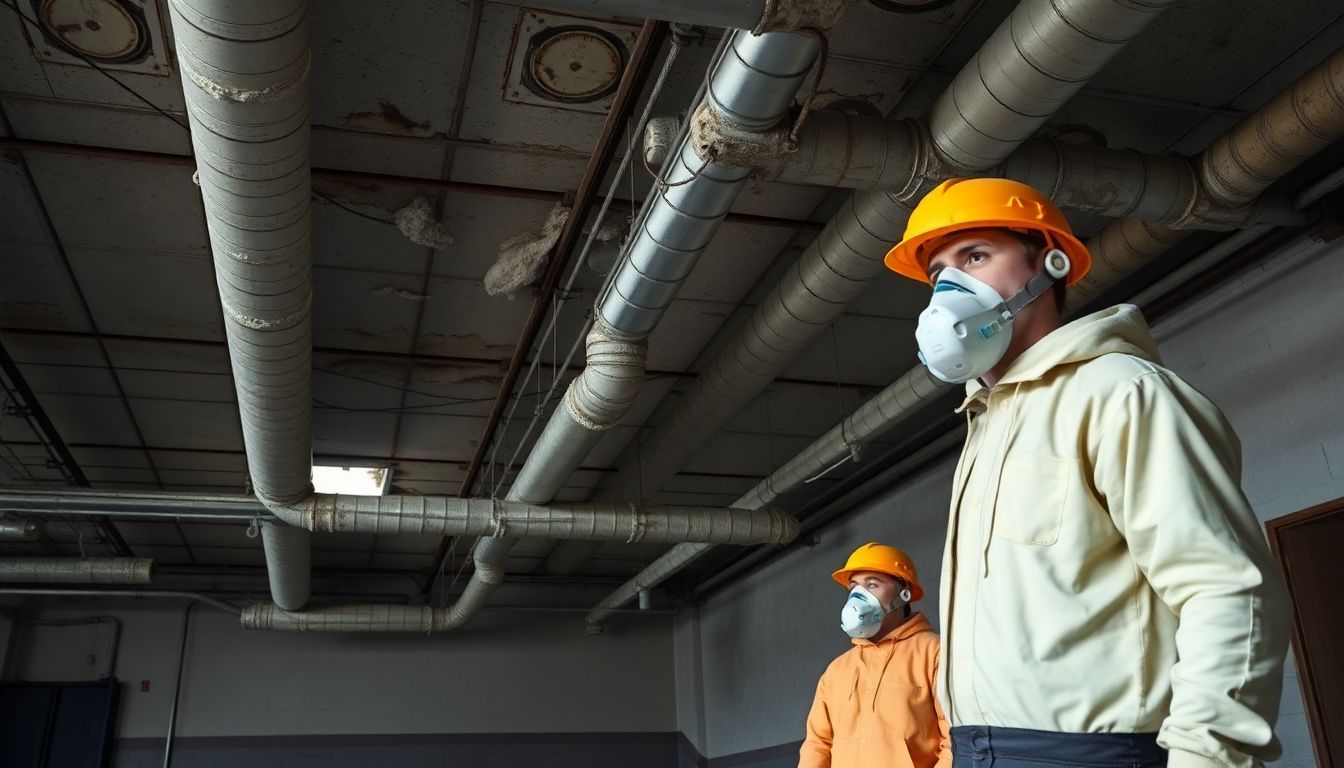
From Ancient Wonder to Modern Hazard: The History of Asbestos in the UK
Few materials have experienced such a dramatic fall from grace as asbestos. Once celebrated as near-miraculous, the history of asbestos in the UK spans ancient civilisations, industrial ambition, and ultimately one of the most significant public health crises the country has ever faced. Understanding how we arrived here matters — not merely as historical curiosity, but because millions of UK buildings still contain the material today.
Ancient Origins: Asbestos Before Industry
Asbestos has been in human hands for thousands of years. Ancient Greek and Roman writers described a cloth that could be cleaned by throwing it into fire rather than washing it — almost certainly woven asbestos fibres. The name itself derives from the Greek word meaning “indestructible.”
Ancient Egyptians are believed to have used asbestos fibres in embalming cloths, exploiting the material’s resistance to decay and fire. Scandinavian cultures crafted flexible containers and fire-resistant materials from asbestos long before industrial techniques existed.
These early uses were limited in scale, but they established asbestos as something genuinely remarkable. For most of human history, it was a curiosity — a naturally occurring mineral with unusual properties. It was the Industrial Revolution that transformed it into a global commodity.
The Industrial Revolution and the Rise of Asbestos in Britain
Britain’s Industrial Revolution created an insatiable demand for materials that could withstand heat, resist fire, and insulate machinery. Asbestos ticked every box. By the mid-19th century, commercial asbestos mining had begun in earnest, with major deposits exploited in Canada, Russia, and South Africa supplying British industry.
British factories, shipyards, and power stations became major consumers. Asbestos was used to insulate steam pipes, boilers, and turbines. Shipbuilders at yards on the Clyde, the Tyne, and in Belfast used it extensively — a fact that would have devastating consequences for workers decades later.
By the early 20th century, asbestos had found its way into an extraordinary range of products:
- Roof tiles and corrugated sheeting
- Floor tiles and adhesives
- Pipe lagging and boiler insulation
- Ceiling tiles and textured coatings
- Gaskets, brake linings, and fire blankets
- Sprayed coatings applied to structural steelwork
The post-war construction boom of the 1950s and 1960s saw asbestos use reach its peak in the UK. Prefabricated buildings, schools, hospitals, and tower blocks were constructed using asbestos-containing materials (ACMs) at virtually every stage. It was cheap, versatile, and seemingly indispensable.
The History of Asbestos UK: When the Health Evidence Emerged
The health dangers of asbestos were not entirely unknown to industry. As far back as 1898, the UK’s Chief Inspector of Factories noted the “evil effects” of asbestos dust on workers. By 1906, French and British factory inspectors were reporting high rates of lung disease among asbestos textile workers.
The landmark moment in British medical history came in 1930, when Dr E.R.A. Merewether and C.W. Price published their report on asbestosis — a scarring of the lung tissue caused by inhaled asbestos fibres. This directly led to the Asbestos Industry Regulations of 1931, the first legislation in the world to attempt to control asbestos dust in the workplace.
However, these regulations were limited in scope, applying only to asbestos textile factories. The vast majority of workers — laggers, shipyard workers, construction labourers — remained entirely unprotected.
Mesothelioma and the Expanding Evidence Base
In 1955, Sir Richard Doll published research conclusively linking asbestos exposure to lung cancer. Then in 1960, South African researchers established the connection between asbestos — particularly crocidolite, or blue asbestos — and mesothelioma, a cancer of the lining of the lungs and abdomen.
This was a turning point. Mesothelioma is almost exclusively caused by asbestos exposure. It has a latency period of 20 to 50 years, meaning workers exposed during the 1950s and 1960s were only beginning to fall ill in the 1980s and 1990s.
The UK has one of the highest rates of mesothelioma in the world — a direct consequence of the country’s industrial history and the scale of asbestos use in its shipyards and construction industry.
Regulation and the Long Road to a UK Asbestos Ban
Britain’s regulatory response was gradual rather than immediate. The 1969 Asbestos Regulations extended protections to a wider range of workers, but it was not until the 1980s that the most dangerous forms were restricted.
The bans came in stages:
- Crocidolite (blue asbestos) — banned in the UK in 1985
- Amosite (brown asbestos) — banned in 1986
- Chrysotile (white asbestos) — not banned until 1999, making the UK one of the later Western European nations to act on white asbestos
The current legal framework governing asbestos in the UK is the Control of Asbestos Regulations, which impose strict duties on employers, building owners, and those carrying out work with asbestos-containing materials. The regulations are supported by the HSE guidance document HSG264, which sets out how asbestos surveys must be conducted.
The Duty to Manage
One of the most significant provisions in the Control of Asbestos Regulations is the duty to manage asbestos in non-domestic premises. This places a legal obligation on the “dutyholder” — typically the owner or manager of a building — to identify ACMs, assess their condition and risk, and put in place a written management plan.
An management survey is the standard tool for fulfilling this duty. It involves a qualified surveyor inspecting accessible areas of a building, taking samples from suspect materials, and producing a risk-rated asbestos register. If you manage a non-domestic property built before 2000, this is a legal requirement — not an optional extra.
Asbestos in UK Buildings Today
The ban on new uses of asbestos does not mean the problem has gone away. The Health and Safety Executive estimates that around half a million non-domestic buildings in Great Britain still contain asbestos. Add to that the millions of domestic properties — particularly those built between 1950 and 1980 — and the scale of the ongoing challenge becomes clear.
Asbestos that is in good condition and undisturbed poses a relatively low risk. The danger arises when materials are damaged, deteriorating, or disturbed during maintenance, renovation, or demolition work. This is why the regulatory framework focuses so heavily on identification, monitoring, and managed removal rather than simply demanding that all asbestos be stripped out immediately.
Common Locations for Asbestos in UK Properties
Understanding where asbestos is likely to be found helps property owners and managers take the right precautions. Common locations include:
- Artex and textured coatings on ceilings and walls (common in homes built before 1985)
- Insulation boards around boilers, fireplaces, and in ceiling tiles
- Pipe lagging in older heating and water systems
- Roof sheets and guttering made from asbestos cement
- Floor tiles and the adhesive used to fix them
- Sprayed coatings on structural steelwork in industrial and commercial buildings
If you are planning any building work and are unsure whether asbestos is present, a refurbishment survey must be carried out before work begins in the affected area. This is a legal requirement under the Control of Asbestos Regulations, and it protects both workers and building occupants.
The Human Cost: Asbestos Disease in the UK
No account of the history of asbestos in the UK would be complete without acknowledging the human toll. The UK continues to record around 2,500 mesothelioma deaths per year — among the highest rates in the world. Thousands more die each year from asbestos-related lung cancer and asbestosis.
Many of these deaths are among people who worked in shipbuilding, construction, and manufacturing during the 1950s to 1970s. But secondary exposure — family members of workers who brought asbestos fibres home on their clothing — has also caused disease and death.
Teachers who worked in asbestos-contaminated school buildings, electricians and plumbers who disturbed lagging during routine maintenance — the exposure routes were numerous and often invisible at the time. Legal action against former employers and manufacturers has been a significant feature of asbestos history in the UK, with landmark court cases establishing the rights of workers and their families to compensation.
Managing Asbestos in the 21st Century
Today, the focus in the UK is on competent management of the asbestos legacy that remains in the built environment. This means regular inspection and monitoring of known ACMs, proper risk assessment, and ensuring that anyone who might disturb asbestos — from builders to electricians to facilities managers — knows what they are dealing with.
For buildings where asbestos has already been identified and documented, a re-inspection survey should be carried out periodically — typically annually — to check whether the condition of ACMs has changed. Deteriorating materials that were once low-risk can become high-risk if their condition worsens.
It is also worth noting that asbestos risk does not exist in isolation. Buildings that contain asbestos insulation boards around fire doors and compartmentation systems may have overlapping concerns with fire safety. A fire risk assessment carried out alongside asbestos management ensures a joined-up approach to building safety.
What If You Are Unsure Whether Asbestos Is Present?
If you own or manage a property and have not had it surveyed, the safest assumption for any building constructed before 2000 is that asbestos-containing materials may be present. Do not disturb suspect materials until they have been tested.
For homeowners who want a preliminary indication before commissioning a full survey, a testing kit allows you to collect a sample from a suspect material and have it analysed by a UKAS-accredited laboratory. This can be a useful first step — though a professional survey remains the only way to comprehensively assess a property.
The Legacy of Asbestos and What It Teaches Us
The history of asbestos in the UK is a cautionary tale about the gap between industrial enthusiasm and scientific understanding. The material was not used carelessly out of malice — for much of its history, its dangers were genuinely not understood. But as evidence emerged, the response from industry and government was often too slow, and the consequences were catastrophic for workers and their families.
What this history underscores is the importance of acting on emerging evidence, taking a precautionary approach to materials whose long-term health effects are unknown, and maintaining robust regulatory frameworks. The Control of Asbestos Regulations and HSG264 guidance exist precisely because of the lessons learned from asbestos’s long and damaging history in British industry.
For property owners and managers today, the practical lesson is straightforward: know what is in your building, manage it properly, and get professional help when you need it. Whether you need an asbestos survey in London, an asbestos survey in Manchester, or an asbestos survey in Birmingham, qualified surveyors are available to help you meet your legal obligations and protect the people in your building.
Get Expert Help from Supernova Asbestos Surveys
Supernova Asbestos Surveys has completed over 50,000 surveys across the UK, with more than 900 five-star reviews from property owners, managers, and contractors. Our BOHS P402-qualified surveyors operate nationally and deliver clear, actionable reports — fast.
Whether you are fulfilling your duty to manage, planning a refurbishment, or simply unsure what is in your building, we can help. Call us on 020 4586 0680 or visit asbestos-surveys.org.uk to book your survey today.
Frequently Asked Questions
When was asbestos banned in the UK?
Asbestos was banned in stages in the UK. Blue asbestos (crocidolite) was banned in 1985, followed by brown asbestos (amosite) in 1986. White asbestos (chrysotile) — the most widely used form — was not banned until 1999. The use, supply, and importation of all forms of asbestos is now prohibited under the Control of Asbestos Regulations.
Why does the UK have such high rates of mesothelioma?
The UK’s high mesothelioma rates are a direct consequence of the scale of asbestos use during the industrial era — particularly in shipbuilding, construction, and manufacturing from the 1950s through to the 1970s. Because mesothelioma has a latency period of 20 to 50 years, the disease continues to claim lives among those exposed during that period, as well as some who were exposed more recently.
Is asbestos still found in UK buildings?
Yes. The HSE estimates that around half a million non-domestic buildings in Great Britain still contain asbestos. Millions of domestic properties built between 1950 and 1980 may also contain asbestos-containing materials. Any building constructed before 2000 should be treated as potentially containing asbestos until a professional survey has confirmed otherwise.
What is the duty to manage asbestos?
The duty to manage is a legal obligation under the Control of Asbestos Regulations that applies to the owners and managers of non-domestic premises. It requires dutyholders to identify any asbestos-containing materials in their building, assess the condition and risk those materials present, and maintain a written asbestos management plan. A management survey is the standard method for meeting this duty.
Do I need an asbestos survey before renovation work?
Yes. Before any refurbishment or demolition work begins in an area where asbestos may be present, a refurbishment survey must be carried out. This is a legal requirement under the Control of Asbestos Regulations and is designed to protect workers from disturbing asbestos unknowingly. A standard management survey is not sufficient for this purpose — a more intrusive refurbishment survey is required.