An asbestos diagnosis can turn a historic building issue into an urgent legal and practical problem overnight. For employers, landlords, dutyholders and families, asbestos claims often depend on one thing above all else: whether there is reliable evidence showing where asbestos was present, how exposure may have happened, and whether it was managed properly.
That is where technical property evidence matters. Supernova Asbestos Surveys does not provide legal representation, but we regularly support asbestos claims with surveys, sampling and reporting prepared in line with HSG264, the Control of Asbestos Regulations and wider HSE guidance. If you manage property, respond to historic exposure concerns, or need to preserve evidence properly, getting the survey scope right from the start can make a real difference.
Understanding asbestos claims in the UK
Most asbestos claims are based on a straightforward argument: someone was exposed to asbestos because another party failed to control that risk. In practice, that may involve an employer, landlord, occupier, contractor or dutyholder with responsibility for asbestos management in a building.
The difficulty is that asbestos-related disease often appears decades after exposure. By the time asbestos claims arise, records may be incomplete, companies may have changed hands, and buildings may have been altered, stripped out or demolished.
That does not mean a claim cannot succeed. It means the evidence must be built carefully from several sources at once.
Evidence commonly used in asbestos claims
- Medical records confirming diagnosis
- Employment, pension and payroll records
- Witness statements from colleagues, relatives or former managers
- Historic maintenance logs, plans and site documents
- Asbestos survey reports and sampling results
- Photographs of damaged or disturbed materials
- Asbestos registers and management plans
- Records of refurbishment, repair or demolition work
For property managers, the key question is often whether asbestos-containing materials were present at the site and whether they were identified and managed in line with legal duties. A properly scoped survey can help answer both points.
Who brings asbestos claims?
Many asbestos claims are brought by people exposed through work in factories, schools, hospitals, plant rooms, warehouses, offices, public buildings and housing stock. Exposure is not limited to heavy industry. It can also arise during routine maintenance, refurbishment, cleaning, tenancy works or contractor activity in older premises.
Some claims involve secondary exposure. A family member may have inhaled asbestos dust from contaminated work clothing brought into the home. Others relate to poor asbestos management in occupied buildings, where maintenance or repair work disturbed hidden asbestos-containing materials.
Common exposure scenarios
- Work with pipe lagging, insulation board or sprayed coatings
- Maintenance in older commercial or public buildings
- Refurbishment carried out without suitable asbestos checks
- Demolition or strip-out disturbing concealed materials
- Exposure in schools, hospitals, council buildings or rented property
- Dust from asbestos cement, textured coatings or service risers
- Secondary exposure from dusty clothing
Age can affect how some official payment routes assess compensation, but it does not determine whether exposure took place. Whether someone was diagnosed in mid-life or later years, the strength of asbestos claims still depends on evidence of exposure, diagnosis and impact.
Why technical evidence is so important in asbestos claims
When exposure is disputed, technical building evidence can be decisive. A good survey report can show whether asbestos-containing materials were present, where they were located, what condition they were in, and whether disturbance was likely during occupation, maintenance, refurbishment or demolition.

This is especially useful where the building still exists. It is also valuable where a landlord, employer or managing agent needs to understand whether asbestos remains in place today and whether previous management arrangements were adequate.
What a strong asbestos report should include
- Clear location details for each suspect material
- Laboratory-confirmed sample results
- Photographs and marked-up plans where appropriate
- Material and damage assessments
- Notes on accessibility and likely disturbance
- Recommendations aligned with HSE guidance
- A scope that matches the actual question being investigated
Weak reports create gaps. If a survey is too limited, poorly described or missing sample confirmation, it may not answer the issue at the centre of the asbestos claim.
That is why property managers should store all surveys, plans, asbestos registers and management records securely. Historic documents that seem routine today can become crucial years later.
Management survey evidence and ongoing occupation
In occupied buildings, a management survey is often the starting point. Its purpose is to locate, as far as reasonably practicable, the presence and extent of asbestos-containing materials that could be damaged or disturbed during normal occupation, including foreseeable maintenance.
For asbestos claims, this type of survey can help establish whether asbestos was known about, should have been identified, and whether it was being monitored and managed appropriately. It is particularly relevant where allegations relate to day-to-day occupation, minor works, maintenance access or repeated disturbance over time.
When a management survey helps
- The building is still in use
- There are concerns about historic maintenance exposure
- The asbestos register is missing or out of date
- Dutyholders need to confirm what remains in place
- There is a need to assess current condition and risk
A management survey is not a substitute for more intrusive inspection where major works are involved. If the allegation concerns hidden asbestos behind finishes, inside risers or above ceilings, the survey scope may need to go further.
Demolition survey evidence and intrusive investigation
Where a structure is due to be fully removed, or where hidden asbestos is central to the issue, a demolition survey may be the right tool. This type of survey is fully intrusive and is designed to identify asbestos-containing materials throughout the area being demolished.
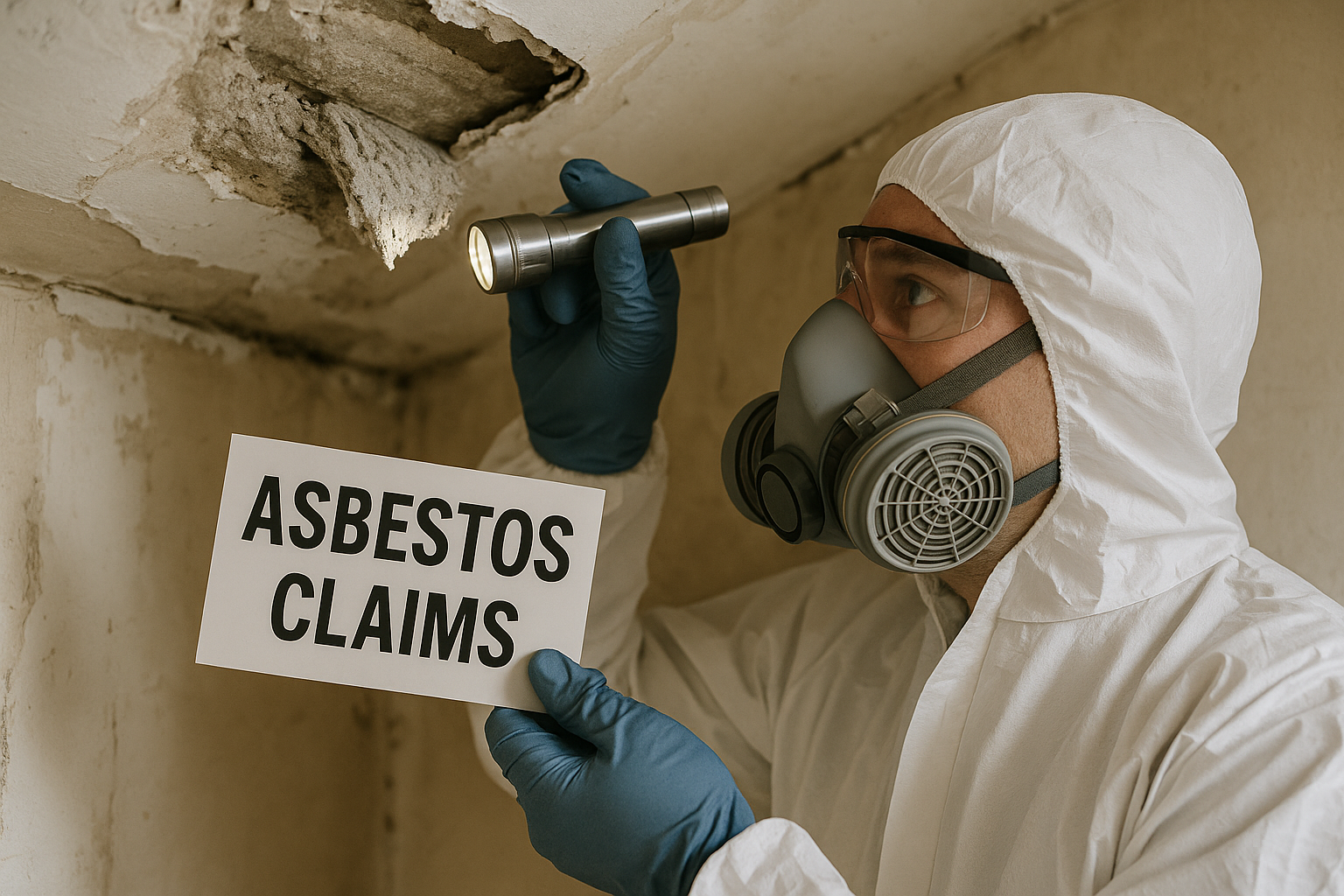
For asbestos claims, intrusive investigation can be highly relevant where exposure may have arisen during strip-out, demolition, major disturbance or access into concealed voids. A light-touch inspection will not answer allegations about materials hidden behind wall linings, within service ducts or inside plant areas.
Situations where intrusive surveys matter
- Historic demolition or strip-out is part of the exposure story
- Concealed asbestos is suspected
- Void spaces, risers or service runs may contain asbestos
- Previous surveys were limited to accessible areas only
- The building has been heavily altered over time
The key practical point is simple: match the survey to the question. If the issue is hidden asbestos disturbed during major works, the evidence needs to come from a survey designed to investigate that properly.
Official payment routes and legal support
When people search for asbestos claims, they are often also looking for official compensation routes. One of the best-known is the Diffuse Mesothelioma Payment Scheme, which may apply in limited circumstances for eligible people diagnosed with diffuse mesothelioma who were exposed at work but cannot trace the relevant employer or insurer.
It is not a general route for every asbestos-related condition. Eligibility is specific, and the evidence requirements are strict.
Key points to keep in mind
- The scheme applies specifically to diffuse mesothelioma
- Eligibility rules are narrow and must be checked carefully
- Payments may vary depending on personal circumstances
- Dependants may be able to claim in some cases
- A civil claim may still become possible if an insurer is later identified
There may also be other statutory or benefits-based routes depending on diagnosis and work history. Official guidance is useful for checking forms and headings, but it does not replace advice from a solicitor who specialises in industrial disease litigation.
If you are helping to support asbestos claims from the property side, your role is not to guess liability. Your role is to preserve evidence, commission competent survey work and keep records in a form that can be relied on later.
Practical steps for property managers dealing with asbestos claims
Property managers are often brought into asbestos claims long after the alleged exposure happened. Sometimes the building is still occupied. Sometimes it is mid-refurbishment. Sometimes only fragments of the old record remain.
The first priority is to secure the evidence and stop any further avoidable disturbance.
Immediate actions to take
- Locate the asbestos register, previous surveys and management plan.
- Check whether suspect materials remain in place.
- Pause any work that could disturb asbestos until the position is clear.
- Preserve maintenance logs, permits to work, contractor records and plans.
- Record where samples, reports and key documents are stored.
- Arrange a competent survey if information is missing, outdated or too limited.
- Keep a clear timeline of works, complaints, repairs and incidents.
Do not discard earlier versions of reports just because a newer survey exists. Historic records can be highly relevant in asbestos claims, especially where the issue is what was known at a particular time.
Documents worth preserving
- Asbestos surveys and reinspection records
- Asbestos registers and management plans
- Maintenance and repair logs
- Contractor method statements and permits
- Refurbishment and demolition records
- Building plans and service drawings
- Email trails relating to asbestos concerns
- Photographs of suspect materials or damaged areas
If a claim relates to serious illness, treat the investigation with the same care you would give any major health and safety matter. Delays, assumptions and missing records can make fair assessment much harder for everyone involved.
How asbestos claims differ from other injury cases
Many law firms group asbestos claims alongside wider personal injury categories such as road traffic accidents, accidents at work or medical negligence. That may make sense from a website structure point of view, but the cases are not interchangeable.
Asbestos claims have their own challenges. Exposure may have happened decades ago. There may be multiple employers, changing insurers, incomplete workplace records and buildings that have been altered repeatedly since the relevant period.
Why asbestos cases need specialist handling
- Diseases often have long latency periods
- Exposure may have occurred across several sites
- Historic insurance tracing may be required
- Building records can be incomplete or inconsistent
- Technical asbestos evidence may need to be reconstructed
- Medical evidence is often condition-specific
Medical negligence can overlap in some situations, such as delayed diagnosis, but that is a separate legal question. From a property perspective, the practical duty remains the same: preserve the evidence, avoid disturbing materials, and obtain competent asbestos advice.
What good evidence gathering looks like
When people are under pressure, they often search official pages, legal directories and service menus without a clear plan. A better approach is to work through the evidence methodically.
If exposure is suspected, focus on facts that can still be verified.
A practical evidence checklist
- Confirm the diagnosis and keep copies of medical letters.
- Create a timeline of workplaces, sites and job roles.
- List the buildings, rooms and materials linked to likely exposure.
- Gather old surveys, registers, maintenance logs and plans.
- Speak to colleagues, contractors or family members who may recall the conditions.
- Arrange competent surveying or sampling if the property still exists.
- Store all records securely and keep duplicates where possible.
- Speak to a solicitor who specialises in asbestos disease claims.
For property owners and managing agents, this kind of organised approach is far more useful than reacting piecemeal. It helps establish what is known, what is missing and what can still be investigated.
Regional survey support when asbestos claims involve existing buildings
Where the property still exists, local survey support can help you move quickly and preserve evidence before further works affect the site. Supernova carries out surveys nationwide and can assist with both occupied and vacant premises.
If the site is in the capital, our asbestos survey London service supports landlords, managing agents, employers and commercial clients who need clear reporting and fast turnaround.
For North West instructions, our asbestos survey Manchester team helps dutyholders dealing with maintenance concerns, redevelopment plans and historic building records.
For Midlands properties, our asbestos survey Birmingham service provides local support where accurate survey evidence is needed quickly.
Wherever the site is located, the same rule applies: the survey must be suitable for the issue being investigated. A generic inspection will not answer a specific question about likely exposure.
How to reduce future asbestos claims risk
Not every asbestos issue becomes a legal claim, but poor management increases the risk. If you are responsible for a building that may contain asbestos, practical control measures matter.
The most effective approach is consistent, documented asbestos management rather than reactive action after an incident.
Steps that help reduce risk
- Keep the asbestos register current and accessible
- Review survey information before maintenance or refurbishment
- Train staff and contractors to recognise asbestos risks
- Use permit systems for intrusive work
- Inspect known asbestos-containing materials regularly
- Update management plans when conditions change
- Commission the right survey before any significant works
These actions will not rewrite the past, but they can prevent further exposure and show that asbestos risks are being managed responsibly in the present.
When to call in a specialist asbestos surveying company
If you are facing questions about historic exposure, uncertain records or possible asbestos disturbance, bring in a competent surveying company early. Waiting until works have continued, materials have been removed or documents have gone missing can make asbestos claims much harder to assess.
Choose a provider that understands not just how to locate asbestos-containing materials, but how to produce clear, defensible reporting in line with HSG264 and HSE expectations. The report should answer the actual property question, not just tick a box.
Supernova Asbestos Surveys supports clients across the UK with management surveys, demolition surveys, sampling and clear reporting that can assist with compliance, risk management and evidence preservation. If you need help, call 020 4586 0680 or visit asbestos-surveys.org.uk to arrange a survey.
Frequently Asked Questions
Can a survey help with asbestos claims?
Yes. A properly scoped asbestos survey can help show whether asbestos-containing materials were present, where they were located, what condition they were in and whether disturbance was likely. That can be valuable evidence in asbestos claims where exposure is disputed.
What is the difference between a management survey and a demolition survey?
A management survey is used in occupied buildings to identify asbestos-containing materials that could be disturbed during normal occupation or foreseeable maintenance. A demolition survey is fully intrusive and is used before demolition or where concealed asbestos needs to be identified throughout the relevant area.
Should property managers keep old asbestos reports?
Yes. Historic asbestos surveys, registers, plans and maintenance records should be retained wherever possible. Older documents can become important evidence in asbestos claims, especially when the issue is what was known about asbestos at a certain time.
Do asbestos claims only apply to workplace exposure?
No. Many asbestos claims relate to workplace exposure, but claims can also arise from secondary exposure, rented property, public buildings, poor asbestos management or disturbance during maintenance, refurbishment or demolition works.
What should I do if asbestos exposure is alleged at a building I manage?
Stop any work that could disturb asbestos, secure existing records, preserve maintenance and contractor documents, and arrange a competent survey if the information is incomplete or outdated. You should also seek legal advice from a solicitor experienced in asbestos disease matters.