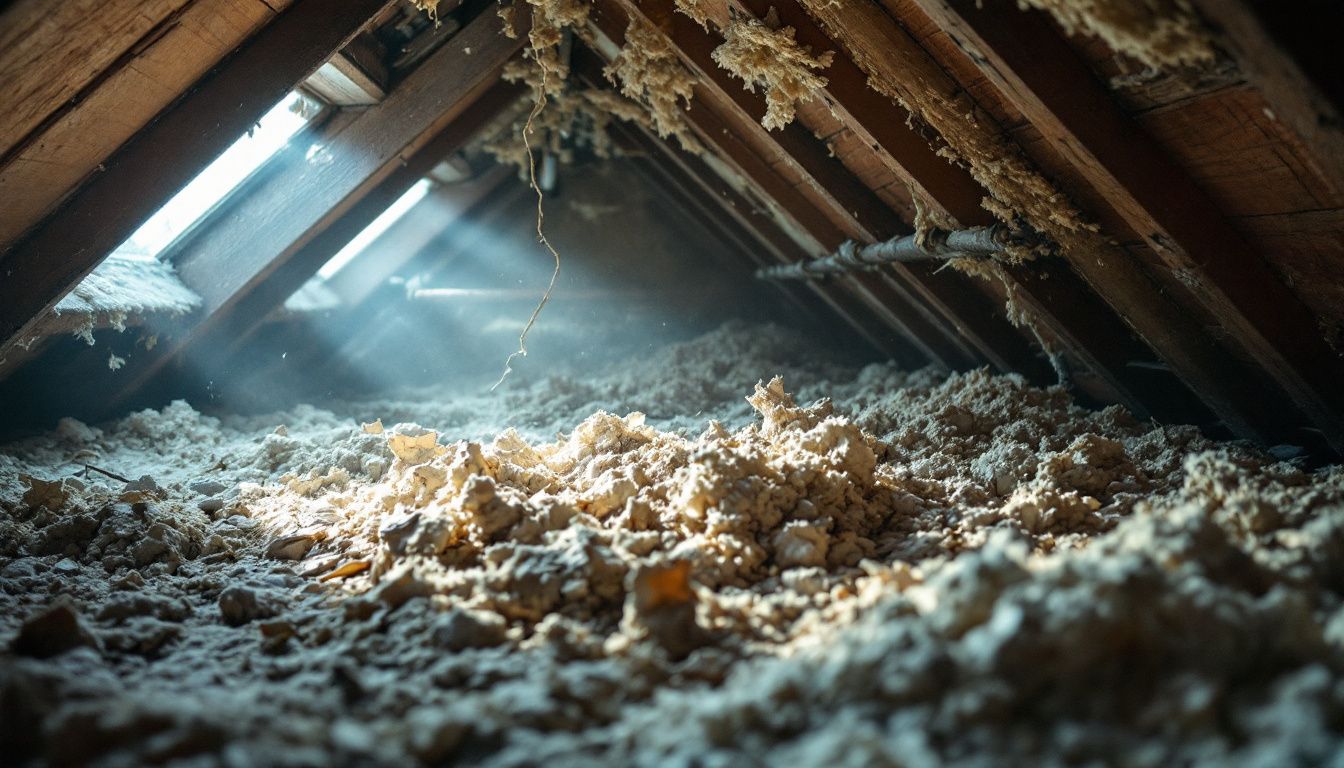
What Is Required for an Asbestos Risk Assessment — A Guide for Landlords and Property Owners
Asbestos doesn’t announce itself. It sits silently in walls, ceilings, floor tiles, and pipe lagging — and if you own or manage a property built before 2000, there’s a real chance it’s there. Understanding what is required for an asbestos risk assessment isn’t just a legal box to tick; it’s the foundation of your duty of care to everyone who sets foot in your building.
Whether you’re a landlord with a single flat, a facilities manager overseeing a commercial portfolio, or a developer planning a refurbishment, the rules apply to you. Get it wrong and you’re looking at unlimited fines, potential imprisonment, and — far more seriously — the risk of exposing people to one of the most dangerous substances ever used in construction.
Your Legal Obligations Under UK Asbestos Law
The Control of Asbestos Regulations place a clear legal duty on anyone who owns, manages, or has responsibility for non-domestic premises. This is known as the Duty to Manage, and it sits at the heart of everything a landlord or property owner must do.
The Duty to Manage requires you to take reasonable steps to find out whether asbestos-containing materials (ACMs) are present, assess their condition, manage the risk they pose, and keep an up-to-date asbestos register. Ignoring this duty isn’t an option — the Health and Safety Executive actively enforces these requirements, and the consequences of non-compliance are severe.
Fines for minor offences can reach £20,000 in the magistrates’ court. For serious breaches — particularly where exposure has occurred — cases are referred to the Crown Court, where fines are unlimited and custodial sentences are possible. The Defective Premises Act adds further civil liability for landlords whose properties cause harm to residents.
Who Does the Duty to Manage Apply To?
The Duty to Manage applies to the owners and managers of non-domestic premises. This includes commercial buildings, schools, hospitals, industrial units, and communal areas of residential blocks — staircases, plant rooms, roof spaces, and any shared facilities.
If you’re a landlord with a residential property and you rent it out, you still have obligations in the communal and shared areas. The individual dwelling itself may fall under different guidance, but the principle of identifying and managing risk remains the same.
What Is Required for an Asbestos Risk Assessment — The Core Components
A proper asbestos risk assessment isn’t a single document you fill in once and forget. It’s a structured process that combines physical inspection, sampling, laboratory analysis, and ongoing management. Here’s what it must include.
1. A Review of Existing Building Records
Before anyone sets foot on site with a sampling kit, the process begins with a desk study. This means reviewing any existing asbestos surveys, building plans, maintenance records, and previous inspection reports.
If the building has changed hands, been refurbished, or if records are incomplete, this stage helps identify gaps and informs the scope of the physical survey. Never assume a previous owner’s records are accurate or complete.
2. A Suitable Asbestos Survey
The type of survey required depends on what you’re planning to do with the building. The HSE’s guidance document HSG264 sets out the main survey types, each suited to different circumstances.
A management survey is required for occupied premises where the building is in normal use. It identifies ACMs that could be disturbed during routine maintenance and assesses their condition and risk — this is the standard starting point for landlords fulfilling their ongoing duty of care.
A refurbishment survey is required before any intrusive work begins. It’s more invasive than a management survey — it involves accessing areas that will be disturbed during works, including behind walls and above ceilings.
If the building is being fully demolished, a demolition survey is needed to locate every ACM throughout the entire structure. Both refurbishment and demolition surveys must be completed before work commences — not during it.
All survey types must be carried out by a competent surveyor — ideally someone holding the BOHS P402 qualification, which is the recognised standard for asbestos surveyors in the UK.
3. Sampling and Laboratory Analysis
Identifying suspect materials visually isn’t enough. Samples must be collected from materials reasonably suspected to contain asbestos and sent to a UKAS-accredited laboratory for analysis under polarised light microscopy (PLM) — the only scientifically reliable method for confirming the presence and type of asbestos fibres.
The three main fibre types — chrysotile (white), amosite (brown), and crocidolite (blue) — all carry serious health risks. The type identified can affect the risk rating and the management approach that follows.
If you’d prefer to collect samples yourself from accessible, non-friable materials, a testing kit allows you to send samples directly to an accredited laboratory. For anything beyond straightforward surface sampling, a qualified surveyor should always be involved. You can also arrange standalone sample analysis if you already have samples that need confirming.
4. A Risk Assessment for Each Identified ACM
Once the survey and sampling are complete, each identified ACM must be assessed for risk. This involves evaluating a range of factors:
- The material’s condition — is it intact, damaged, or deteriorating?
- Its location — is it accessible, in a high-traffic area, or in a concealed space?
- The likelihood of disturbance — how often is the area accessed, and for what purpose?
- The type of asbestos present — some fibre types carry higher risk than others
- The potential for fibre release — is the material friable (easily crumbled) or bound within a matrix?
Each ACM is given a risk score or priority rating. This forms the basis of your asbestos register — a document that records every identified material, its location, condition, and risk level.
5. An Asbestos Management Plan
The risk assessment feeds directly into an asbestos management plan. This is a written document that sets out how you intend to manage the ACMs identified — whether that means leaving them in place and monitoring them, encapsulating them, or arranging for removal by a licensed contractor.
A robust management plan must include:
- A complete asbestos register with locations and risk ratings
- Decisions on whether each ACM will be managed in situ, encapsulated, or removed
- A schedule for regular re-inspections
- Emergency response procedures in case of accidental disturbance
- Details of who is responsible for managing asbestos on site
- A record of how information will be communicated to contractors and maintenance workers
The plan isn’t a static document. It must be reviewed and updated whenever conditions change — after maintenance work, following damage to the building, or when a new survey is carried out.
Keeping Records and Informing Others
One of the most frequently overlooked aspects of asbestos management is the obligation to share information. Anyone who might disturb an ACM — a plumber, an electrician, a decorator — must be told about its presence before they start work.
Tenants also have rights. If a tenant requests a copy of the asbestos report, you must provide it within a reasonable timeframe. Failing to share this information doesn’t just put people at risk — it undermines your legal position entirely.
Keep all survey reports, risk assessments, and management plans in a secure but accessible format. Digital records are perfectly acceptable, provided they can be retrieved quickly when needed.
When Re-Inspection Is Required
Asbestos management is an ongoing responsibility, not a one-off exercise. ACMs that are left in place must be monitored regularly to check that their condition hasn’t deteriorated. This is where a periodic re-inspection survey becomes essential.
Re-inspections should typically be carried out annually, though higher-risk materials or more frequently accessed areas may require more regular checks. The re-inspection updates the condition rating of each ACM and flags any that require action before the next scheduled review.
If you’ve recently acquired a property, inherited someone else’s management plan, or if significant time has passed since the last survey, a re-inspection is the right place to start.
Asbestos Risk Assessment and Fire Safety — The Overlap
Asbestos management and fire safety are more closely linked than many property owners realise. Asbestos was widely used as a fire-retardant material — in ceiling tiles, pipe insulation, and spray coatings — precisely because it doesn’t burn. This means that fire damage or fire suppression work can disturb ACMs and release fibres into the air.
If your property requires a fire risk assessment, it makes sense to coordinate this with your asbestos management plan. Both assessments should inform each other, particularly when it comes to emergency procedures and contractor briefings.
Practical Steps for Landlords Starting From Scratch
If you’ve recently acquired a property and have no existing asbestos records, here’s a practical sequence to follow:
- Check the build date. If the property was built or refurbished before 2000, assume asbestos may be present until proven otherwise.
- Commission a management survey. This is your starting point for any occupied or in-use building. It will identify suspect materials and give you a risk-rated register.
- Review the report carefully. Understand which materials have been identified, where they are, and what risk rating they’ve been given.
- Develop your management plan. Use the survey findings to decide how each ACM will be managed — in situ monitoring, encapsulation, or removal.
- Communicate the findings. Inform maintenance contractors, tradespeople, and tenants as appropriate. Keep copies of all briefing records.
- Schedule re-inspections. Set a reminder for your annual re-inspection and update your register accordingly.
- Act on high-risk findings promptly. If any ACMs are rated as high priority, arrange for remediation by a licensed contractor without delay.
Choosing the Right Asbestos Surveyor
Not all asbestos surveys are equal. The quality of your risk assessment depends entirely on the competence of the surveyor carrying it out. When selecting a surveyor, look for:
- BOHS P402 qualification — the recognised standard for asbestos surveyors in the UK
- UKAS-accredited laboratory for sample analysis
- Reports that comply with HSG264 guidance
- Clear, jargon-free reports that tell you exactly what to do next
- Experience with your property type — residential, commercial, or industrial
A cheap survey that misses ACMs or produces an inadequate report isn’t a saving — it’s a liability. Your report needs to be legally defensible and genuinely useful as a management tool.
Supernova Asbestos Surveys — Nationwide Coverage, Trusted Results
Supernova Asbestos Surveys has completed over 50,000 surveys across the UK, with more than 900 five-star reviews from landlords, facilities managers, developers, and housing associations. Our BOHS P402-qualified surveyors operate nationwide, with strong coverage across major cities and regions.
If you’re based in the capital, our team provides a fast, reliable asbestos survey London service, with same-week appointments available. In the North West, our asbestos survey Manchester team covers the full Greater Manchester area and surrounding regions. Across the Midlands, our asbestos survey Birmingham service supports property owners from the city centre to the wider West Midlands.
Every survey includes a full asbestos register, risk assessment, and management plan — delivered in digital format within 3–5 working days. All sample analysis is carried out in our UKAS-accredited laboratory, and every report is fully compliant with HSG264 and the Control of Asbestos Regulations.
Call us on 020 4586 0680 or visit asbestos-surveys.org.uk to get a fixed-price quote and book your survey today.
Frequently Asked Questions
What is required for an asbestos risk assessment in a commercial property?
A commercial property asbestos risk assessment must include a review of existing building records, a suitable asbestos survey carried out by a BOHS P402-qualified surveyor, sampling of suspect materials analysed by a UKAS-accredited laboratory, a risk rating for each identified ACM, and a written asbestos management plan. The specific survey type — management, refurbishment, or demolition — depends on the current use and any planned works. All of this is required under the Control of Asbestos Regulations and HSE guidance document HSG264.
Do landlords of residential properties need an asbestos risk assessment?
Landlords of residential properties have a legal duty to manage asbestos in communal and shared areas — staircases, plant rooms, roof spaces, and shared facilities. The Duty to Manage under the Control of Asbestos Regulations applies to non-domestic areas, but the principle of identifying and managing risk applies across all property types. If you’re letting a property built before 2000, commissioning a management survey is strongly advisable to protect both your tenants and your legal position.
How often does an asbestos risk assessment need to be reviewed?
ACMs that are left in place must be re-inspected at least annually to check their condition hasn’t deteriorated. The asbestos management plan itself should be reviewed and updated after any maintenance work, following building damage, or whenever a new survey is carried out. Higher-risk materials or areas subject to frequent disturbance may require more regular monitoring than the standard annual cycle.
Can I carry out an asbestos risk assessment myself?
You can collect samples from accessible, non-friable materials using a testing kit and send them to a UKAS-accredited laboratory for analysis. However, a full asbestos risk assessment — particularly one that will satisfy the Duty to Manage — must be carried out by a competent surveyor holding the BOHS P402 qualification. Self-assessment carries significant legal and safety risks, especially in older or complex buildings where ACMs may not be immediately visible.
What happens if I don’t have an asbestos risk assessment?
Failing to carry out an asbestos risk assessment where one is required is a breach of the Control of Asbestos Regulations. The HSE can issue improvement notices, prohibition notices, and prosecute duty holders. Fines can reach £20,000 in the magistrates’ court, and serious cases referred to the Crown Court carry unlimited fines and the possibility of custodial sentences. Beyond the legal consequences, the health risk to anyone working in or visiting the building is very real.