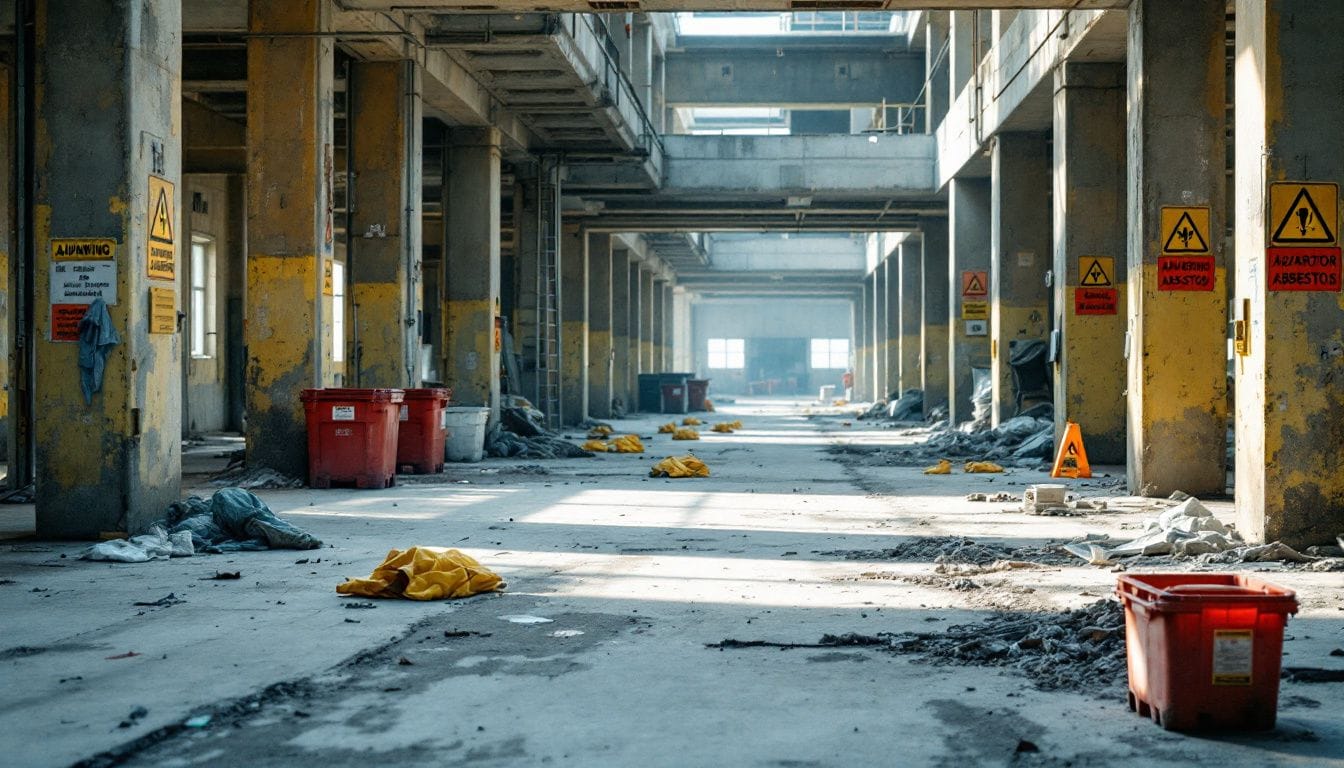
When You Suspect Asbestos: What Emergency Asbestos Testing Actually Involves
Discovering crumbling pipe lagging, a damaged ceiling tile, or disturbed floor tiles in an older building is enough to stop any responsible manager in their tracks. If the building dates from before 2000, the question is immediate: could this be asbestos? Emergency asbestos testing exists precisely for these moments — when you need a confirmed answer quickly, and when the wrong decision could put people at serious risk.
This post walks you through exactly what to do, in the right order, from the moment you suspect contamination through to getting your site safe and legally compliant again.
Why Speed Matters — But So Does Doing It Right
Asbestos fibres are invisible to the naked eye and have no smell. Once disturbed, they become airborne and can be inhaled without anyone realising. Prolonged exposure is linked to serious and fatal diseases including mesothelioma, asbestosis, and asbestos-related lung cancer — and asbestos remains the single largest cause of work-related deaths in Great Britain.
The urgency is real. But rushing in without a plan — or worse, attempting to clean up suspected asbestos without professional involvement — can dramatically worsen the situation. The goal is to act fast and act correctly.
Step One: Stop Work and Secure the Area Immediately
The moment asbestos contamination is suspected, all work in the affected area must cease. This is non-negotiable. Anyone in the vicinity should leave calmly — unnecessary movement risks disturbing fibres further.
Once the area is cleared, restrict access. Use physical barriers where possible and post clear warning signage. Do not allow anyone back into the space — cleaners, maintenance staff, contractors, or otherwise — until a competent professional has assessed the situation.
Who Needs to Be Notified?
- The building owner or duty holder
- Your health and safety manager or officer
- Any principal contractor if works are underway
- The HSE, if there has been a significant uncontrolled release of asbestos fibres (this may be a legal requirement under RIDDOR)
Keep a clear record of when the incident was discovered, who was present, and what actions were taken. This documentation will be essential for any subsequent investigation or regulatory review.
Step Two: Emergency Asbestos Testing — What It Actually Involves
Emergency asbestos testing is the process of collecting samples from suspect materials and having them analysed by a UKAS-accredited laboratory, typically on an expedited basis. The results confirm whether asbestos-containing materials (ACMs) are present and, if so, which type of asbestos fibre is involved.
There are two main types of testing relevant in an emergency situation.
Bulk Material Sampling
A qualified surveyor takes a small physical sample from the suspect material — insulation, floor tiles, textured coatings, pipe lagging, or similar. The sample is sealed, labelled, and sent to a UKAS-accredited laboratory for analysis under polarised light microscopy (PLM). This confirms the presence or absence of asbestos and identifies the fibre type.
If you need to arrange professional asbestos testing quickly, Supernova can provide fast-turnaround sampling with UKAS-accredited lab analysis, often with same-day or next-day attendance for urgent situations.
Air Monitoring
Where there has been a suspected release of fibres — for example, materials have already been disturbed — air monitoring may also be required. This involves collecting air samples from the affected area and analysing them to determine fibre concentration levels.
Air monitoring is particularly important before anyone re-enters a contaminated space and after any remediation work has been completed. It provides the objective evidence you need to demonstrate the area is safe.
Can You Use a DIY Testing Kit?
In some circumstances, a testing kit can be used to collect bulk samples for laboratory analysis. These are suitable where materials are clearly intact and undisturbed, and where you are confident you can collect a sample safely without causing further disturbance.
In a genuine emergency — where materials are already damaged or fibres may have been released — professional sampling by a qualified surveyor is strongly recommended. The risk of inadvertently spreading contamination is too significant to take chances.
Step Three: Decontamination Procedures
If workers were present when asbestos was disturbed, decontamination procedures must be followed promptly. This is not optional — it is a requirement under the Control of Asbestos Regulations.
Personal Decontamination
- Any contaminated clothing should be removed carefully, placed in a sealed double bag, and disposed of as hazardous waste through a licensed carrier
- Exposed skin should be washed thoroughly with warm water and soap — do not use a dry brush or compressed air, as this can re-suspend fibres
- Workers should shower if facilities are available
- Record the names of all individuals who may have been exposed
Area Decontamination
The affected area should not be cleaned using a standard vacuum cleaner or dry sweeping — both methods risk spreading fibres. Only H-class (HEPA-filtered) vacuums and damp wiping methods are appropriate. This work should be carried out by a licensed contractor, not general site staff.
All contaminated materials, rags, and disposable PPE must be double-bagged, labelled as asbestos waste, and collected by a licensed waste carrier. Asbestos waste cannot be disposed of through standard commercial waste streams — this is a legal requirement, not a recommendation.
Step Four: Formal Survey and Risk Assessment
Once the immediate emergency is contained, a formal survey should be commissioned to understand the full extent of asbestos-containing materials in the building. The type of survey required depends on the circumstances.
Management Survey
If the building is occupied and no intrusive works are planned, a management survey establishes the location, condition, and risk rating of all accessible ACMs. This forms the basis of your asbestos register and management plan — both of which are legal requirements for non-domestic premises under the duty to manage set out in the Control of Asbestos Regulations.
Refurbishment Survey
If the emergency arose during or ahead of building works, a refurbishment survey is required before work can safely resume. This is a more intrusive survey that accesses areas which will be disturbed during the works. It must be completed before any refurbishment or demolition activity begins — no exceptions.
Re-inspection Survey
If your building already has an asbestos register but the incident has raised concerns about the condition of known ACMs, a re-inspection survey allows a qualified surveyor to reassess the current state of those materials and update your risk ratings accordingly. This is often the fastest route to restoring confidence in your asbestos management position.
Step Five: Remediation and Removal
Not all ACMs need to be removed. In many cases, materials in good condition that are unlikely to be disturbed can be managed in place, with regular monitoring and clear documentation.
However, where materials are damaged, deteriorating, or located in areas where disturbance is unavoidable, asbestos removal may be the appropriate course of action. Licensed asbestos removal must be carried out by a contractor holding a licence issued by the HSE. This applies to the most hazardous types of asbestos work, including the removal of sprayed coatings, lagging, and loose-fill insulation.
Some lower-risk work can be carried out by unlicensed but competent contractors, but the distinction must be made carefully and in line with HSE guidance. Never attempt to remove asbestos yourself unless you have confirmed the material is low-risk, received appropriate training, and the work falls clearly outside the scope of licensed work requirements. When in doubt, use a licensed contractor.
Your Legal Obligations During an Asbestos Emergency
The Control of Asbestos Regulations set out clear duties for employers, building owners, and duty holders. These do not pause during an emergency — if anything, the obligations become more pressing.
- Duty to manage: Owners and managers of non-domestic premises must identify ACMs, assess risk, and maintain an up-to-date asbestos register. An emergency incident reinforces this duty rather than suspending it.
- Notification: Certain types of asbestos work must be notified to the HSE in advance. In an emergency, seek advice quickly on whether notification is required for your specific situation.
- Competent persons: All asbestos work — including testing, surveying, and removal — must be carried out by competent, qualified individuals. BOHS P402-qualified surveyors and UKAS-accredited laboratories are the standard you should insist on.
- Record keeping: Incident reports, survey findings, air monitoring results, and waste transfer notes must all be retained. These records may be required by the HSE or your insurers.
HSG264 — the HSE’s definitive guidance on asbestos surveys — provides detailed technical standards that all reputable surveyors follow. If you are commissioning emergency asbestos testing, confirm that your provider works to HSG264 standards.
Asbestos in Different Property Types
Asbestos was used extensively in UK construction from the 1950s through to the late 1990s. Any building constructed or significantly refurbished before 2000 should be treated as potentially containing ACMs until proven otherwise.
Common locations include:
- Ceiling tiles and textured coatings such as Artex
- Floor tiles and adhesives
- Pipe and boiler lagging
- Roof panels and corrugated sheeting
- Partition boards and ceiling panels
- Insulation around structural steelwork
- Soffit boards and fascias
If you manage a property in the capital and need fast-turnaround testing, our asbestos survey London service provides same-week availability across the city and surrounding areas. For those based in the north-west, our asbestos survey Manchester team offers equally rapid response across the region.
After the Emergency: Building a Robust Asbestos Management Plan
An emergency is a prompt to address not just the immediate incident but the underlying management framework. Once the situation is resolved, use it as an opportunity to review your asbestos management plan — or create one if it does not yet exist.
A robust plan should include:
- An up-to-date asbestos register listing all known and presumed ACMs
- Risk assessments for each material, including condition ratings
- Clear procedures for contractors working on site
- A schedule for regular re-inspections
- Emergency response procedures, including contact details for your asbestos surveyor and licensed contractor
It is also worth reviewing your wider site safety obligations at this point. A fire risk assessment is another legal requirement for non-domestic premises, and combining compliance reviews can save time and resource.
For those who want to understand the full scope of options available — from bulk sampling through to full survey programmes — our detailed overview of asbestos testing services covers everything you need to make an informed decision for your building and budget.
What to Expect From Supernova’s Emergency Asbestos Testing Service
When you contact Supernova Asbestos Surveys for emergency testing, here is exactly what happens:
- Initial call: Speak directly with a specialist who can advise on immediate steps and confirm availability — often same-day or next-day for urgent situations.
- Site visit: A BOHS P402-qualified surveyor attends, assesses the situation, and collects samples using correct containment procedures.
- Lab analysis: Samples are analysed at our UKAS-accredited laboratory using polarised light microscopy (PLM).
- Results and report: You receive a clear written report confirming findings, with risk ratings and recommended next steps.
- Ongoing support: Where further action is required — whether a full survey, air monitoring, or licensed removal — we coordinate the next steps so you are never left managing multiple contractors alone.
With over 50,000 surveys completed nationwide, Supernova has the experience and capacity to respond when it matters most. Call us on 020 4586 0680 or visit asbestos-surveys.org.uk to arrange emergency asbestos testing today.
Frequently Asked Questions
What is emergency asbestos testing and when do I need it?
Emergency asbestos testing is the rapid collection and laboratory analysis of samples from suspect materials in situations where asbestos may have been disturbed or where you need an urgent confirmed result. You need it when materials have been damaged unexpectedly, when workers may have been exposed, or when building works have uncovered suspect materials and cannot proceed without confirmation.
How quickly can I get results from emergency asbestos testing?
Supernova can typically attend site same-day or next-day for urgent situations. Laboratory analysis using polarised light microscopy (PLM) can be turned around on an expedited basis, meaning you can have confirmed results within 24 to 48 hours of the initial call in many cases.
Do I need to notify the HSE if asbestos has been disturbed?
This depends on the circumstances. Under RIDDOR, a significant uncontrolled release of asbestos fibres may trigger a reporting obligation. Certain types of licensed asbestos work must also be notified to the HSE before they begin. Seek professional advice as soon as the incident is identified — a qualified surveyor can help you determine what notifications are required.
Can I clean up disturbed asbestos myself?
No. Area decontamination following an asbestos disturbance must be carried out by a licensed contractor using H-class (HEPA-filtered) vacuums and damp wiping methods. Standard vacuum cleaners and dry sweeping spread fibres rather than removing them. Attempting to clean up yourself could worsen the contamination and expose you to significant legal liability.
What type of survey do I need after an asbestos emergency?
It depends on what happens next. If the building is occupied with no planned works, a management survey establishes the full picture of ACMs and forms the basis of your asbestos register. If the emergency occurred during refurbishment, a refurbishment survey is required before works resume. If you already have an asbestos register and want to reassess the condition of known materials, a re-inspection survey is the appropriate route.