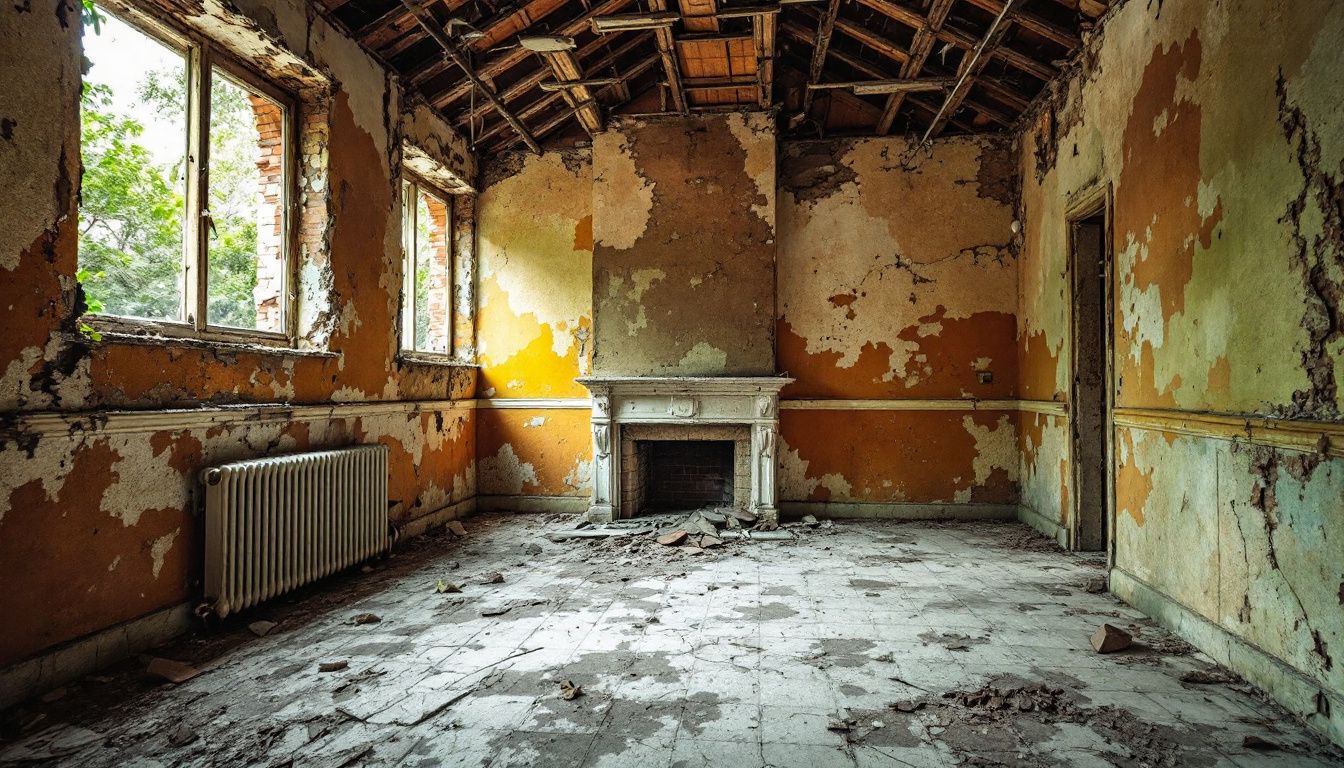
Asbestos Is Still Out There — And It Still Kills
If your property was built before 2000, there is a very real chance asbestos-containing materials (ACMs) are hidden somewhere inside it. Demystifying asbestos health safety protocols for safe handling and removal is not a bureaucratic exercise — it is a matter of life and death. Asbestos was banned in the UK in 1999, but that ban did not make existing materials disappear overnight.
Millions of buildings still contain it. The fibres are invisible to the naked eye, and once inhaled, they embed in lung tissue and cause diseases that take decades to develop. By the time symptoms appear, the damage is already done. Understanding the risks, the regulations, and the right course of action is the only way to genuinely protect people.
Why Asbestos Remains a Serious Hazard in UK Buildings
Asbestos was used extensively in UK construction from the 1950s through to the late 1990s. It was cheap, fire-resistant, and an excellent insulator — which is precisely why it ended up in so many building materials across the country.
Roof sheets, floor tiles, ceiling tiles, pipe lagging, boiler insulation, textured coatings such as Artex, and even some door panels can all contain asbestos. The material itself, when undisturbed and in good condition, does not pose an immediate risk. The danger begins the moment it is disturbed.
When ACMs are drilled into, sanded, cut, or broken apart, microscopic fibres are released into the air. Those fibres are breathed in without anyone realising. That is when the damage begins — silently, invisibly, and irreversibly.
The Diseases Caused by Asbestos Exposure
Asbestos exposure is linked to four serious conditions, all of which can be fatal:
- Mesothelioma — a cancer of the lining of the lungs or abdomen, almost exclusively caused by asbestos exposure
- Asbestos-related lung cancer — particularly prevalent in those who have been exposed and also smoke
- Asbestosis — progressive scarring of the lung tissue that causes worsening breathing difficulty over time
- Pleural thickening — thickening of the membrane surrounding the lungs, which restricts breathing capacity
These diseases have long latency periods — often 20 to 50 years between initial exposure and diagnosis. Many people currently being diagnosed were exposed during the 1970s and 1980s, when asbestos use was at its peak and protective measures were minimal or entirely absent.
Identifying Asbestos in Your Property
You cannot identify asbestos by looking at a material. The only way to confirm whether something contains asbestos is through laboratory analysis of a sample — which is exactly why professional surveys are essential, and why guesswork is genuinely dangerous.
If your building was constructed or refurbished before 2000, treat any suspicious material as potentially containing asbestos until proven otherwise. Common locations include:
- Textured wall and ceiling coatings
- Vinyl floor tiles and the adhesive beneath them
- Roof sheets and soffit boards
- Pipe and boiler lagging
- Ceiling tiles in suspended systems
- Insulation boards around fireplaces and in partition walls
- Garage roofs and outbuildings
If you are based in the capital, a professional asbestos survey London service will identify and assess all suspected materials before any work begins. The same applies across the country — whether you require an asbestos survey Manchester or an asbestos survey Birmingham, qualified surveyors will locate ACMs and provide a clear picture of exactly what you are dealing with.
Demystifying Asbestos Health Safety Protocols for Safe Handling and Removal
This starts with one clear principle: if in doubt, do not touch it. Professional removal is always the safest option, but understanding the protocols helps duty holders, property managers, and contractors make genuinely informed decisions rather than costly assumptions.
Personal Protective Equipment (PPE)
Anyone working near or with ACMs must wear appropriate PPE. This is not optional — it is a legal and moral requirement under the Control of Asbestos Regulations. The minimum standard for most asbestos work includes:
- Disposable coveralls (Type 5, Category 3) — these must be disposed of as asbestos waste after each use, not reused
- Respiratory protective equipment (RPE) — at minimum a half-face disposable FFP3 mask, or a full-face respirator for higher-risk work
- Disposable nitrile gloves — changed regularly and disposed of as asbestos waste
- Robust, covered footwear that can be fully decontaminated before leaving the work area
RPE must be fit-tested to the individual wearer. A mask that does not seal properly offers little real protection — this is a requirement under HSE guidance, not simply a recommendation. Fit-testing records should be maintained and kept up to date.
Controlling Fibre Release During Work
The goal of every safe handling procedure is to minimise the number of fibres released into the air. Practical methods used by competent contractors include:
- Wetting materials before and during removal — saturating ACMs with water dramatically reduces airborne fibre release
- Avoiding power tools — drilling, grinding, and sanding release far more fibres than hand tools; hand tools should be used wherever possible
- Sealing the work area — for licensed work, the area must be enclosed with polyethylene sheeting and sealed with duct tape to contain fibres
- Negative pressure units (NPUs) — for licensed removal, NPUs create negative air pressure within the enclosure so that any air leakage flows inward rather than outward
- Controlled removal — removing materials in sections, keeping them as intact as possible, rather than breaking them up unnecessarily
Safe Disposal of Asbestos Waste
Asbestos waste is classified as hazardous waste under UK law. It cannot be placed in a standard skip or taken to a general waste facility. The correct procedure is:
- Double-bag all waste in asbestos-specific heavy-duty polythene bags
- Seal each bag securely and label it clearly as asbestos waste
- Transport waste only to a licensed hazardous waste disposal facility
- Maintain records of disposal — a consignment note system applies to all hazardous waste movements
Any contractor who cannot demonstrate they are using a licensed waste carrier and a licensed disposal facility should not be trusted with asbestos removal work. This is non-negotiable.
Legal Regulations and Compliance for Asbestos Management
The primary legislation governing asbestos in the UK is the Control of Asbestos Regulations. These place clear duties on employers, building owners, and those who manage non-domestic premises. Ignorance of the law is no defence, and the consequences of non-compliance can include prosecution, unlimited fines, and imprisonment.
The Duty to Manage Asbestos
For non-domestic premises, there is a legal duty to manage asbestos. This means duty holders must:
- Identify whether asbestos is present, and if so, what type and in what condition
- Assess the risk it poses to occupants, visitors, and maintenance workers
- Create and maintain an asbestos management plan
- Ensure anyone who might disturb ACMs is made aware of their location
- Regularly review and update the management plan as conditions change
This duty applies to the person responsible for maintenance and repair of the building — which may be a landlord, facilities manager, or employer depending on the circumstances. A management survey is the standard starting point for fulfilling this duty, providing a thorough assessment of all ACMs present in occupied premises.
Licensing Requirements for Removal Work
Not all asbestos removal work requires an HSE licence, but the highest-risk work does. Licensed work includes the removal of sprayed coatings, lagging, and asbestos insulating board (AIB) — for these materials, only an HSE-licensed contractor may legally carry out the removal.
The HSE must be notified at least 14 days before licensed asbestos removal work begins. This notification requirement allows the HSE to plan inspections and maintain oversight of the most dangerous work being carried out across the country.
HSG264 and Survey Standards
The HSE’s guidance document HSG264 sets out the standards for asbestos surveys. It defines what each survey type must cover, the qualifications required of surveyors, and the standard of reporting expected. Always verify that your surveyor holds the BOHS P402 qualification or equivalent, and that their laboratory holds UKAS accreditation for asbestos analysis.
Understanding Which Survey Type You Actually Need
One of the most common points of confusion for property owners and managers is understanding which survey type applies to their situation. Getting this wrong is a compliance failure — and it puts workers at serious risk.
Management Survey
A management survey is used for occupied buildings where the aim is to locate and assess ACMs so they can be managed safely on an ongoing basis. It does not involve breaking into walls or lifting floor sections — it is designed to be minimally intrusive while giving you a reliable picture of what is present.
Refurbishment Survey
A refurbishment survey is required before any renovation, fit-out, or structural alteration work begins. It is considerably more intrusive than a management survey because it needs to locate ACMs that could be disturbed during planned works — including those hidden inside walls, floors, and ceilings. Commissioning a management survey when a refurbishment survey is required is a serious compliance failure.
Demolition Survey
A demolition survey is required before any demolition work takes place. This is the most thorough survey type, designed to locate every ACM within the entire structure — including areas not normally accessible — so that nothing is missed before demolition begins. It is highly intrusive and destructive by nature, and it must be completed before any demolition contractor sets foot on site.
If you are unsure which survey applies to your situation, speak to a qualified surveyor before proceeding. Making the wrong call is not a minor administrative error — it has real consequences for worker safety and legal liability.
When to Call a Licensed Contractor for Removal
The safest rule is straightforward: if you are not certain whether something contains asbestos, do not disturb it. Commission a survey first. If asbestos is confirmed, assess whether removal is necessary or whether managing the material in place is the appropriate course of action.
Some ACMs in good condition and unlikely to be disturbed can be safely left and managed. Others — particularly those in poor condition, or in areas where they will be disturbed during planned works — should be removed by a licensed contractor before any other work begins.
Professional asbestos removal carried out by licensed contractors follows strict procedures: full enclosure of the work area, continuous air monitoring during removal, a four-stage clearance procedure, and independent air testing to confirm the area is safe before it is handed back for normal use.
What to Expect from a Reputable Removal Contractor
When engaging a licensed asbestos removal contractor, you should expect the following as standard:
- A written method statement and risk assessment before work begins
- Evidence of their HSE licence — verifiable on the HSE’s public online register
- Clearly defined work area with appropriate signage and access controls
- Air monitoring throughout the job by a competent analyst
- A four-stage clearance certificate from an independent analyst on completion
- Full documentation of waste disposal, including consignment notes
If a contractor cannot provide any of these, walk away. The consequences of cutting corners with asbestos removal are severe — both for the health of everyone involved and for your legal liability as the duty holder.
Protecting Workers and Residents During Asbestos Work
Anyone who might be affected by asbestos work — whether directly involved or simply occupying adjacent areas — has a right to be protected. This means clear communication about what work is taking place, effective containment of the work area, and air monitoring to verify that fibres are not spreading beyond the enclosure.
Workers directly involved in removal must receive appropriate asbestos awareness training as a minimum. Those carrying out licensed work must hold specific asbestos training relevant to their role, and training records should be maintained and updated at regular intervals.
Residents in domestic properties should be moved out of the affected area — ideally the property entirely — while licensed removal work is underway. This is not always a legal requirement in every circumstance, but it is always the right thing to do. The risk of accidental exposure during removal is real, and no one should be placed in that position unnecessarily.
Frequently Asked Questions
Can I remove asbestos myself from my own home?
In some limited circumstances, homeowners may handle small amounts of certain non-licensed ACMs in their own domestic property. However, this carries significant risk, and the rules around what constitutes non-licensed work are specific and technical. For any meaningful quantity of ACM, or for higher-risk materials such as asbestos insulating board or lagging, a licensed contractor must be used. The safest approach for any homeowner is always to commission a professional survey first, then take professional advice on whether removal is necessary and what type of contractor is required.
How do I know if my building has asbestos?
You cannot tell by looking. The only reliable way to determine whether a material contains asbestos is through laboratory analysis of a sample taken by a qualified surveyor. If your building was constructed or refurbished before 2000, it should be treated as potentially containing asbestos until a professional survey has been completed. Do not assume that because a building looks modern or has been recently decorated, it is asbestos-free — ACMs are frequently hidden beneath newer finishes.
What is the difference between a management survey and a refurbishment survey?
A management survey is designed for occupied buildings in normal use. It locates and assesses ACMs that could be disturbed during routine maintenance and day-to-day activities, without being highly intrusive. A refurbishment survey is required before any renovation or structural work begins, and it is far more intrusive — it involves accessing areas that would be disturbed during the planned works, including inside walls, floors, and ceilings. Using a management survey where a refurbishment survey is required is a compliance failure and puts workers at risk.
What happens if asbestos is found during building work?
Work must stop immediately. The area should be vacated and secured to prevent further disturbance and potential exposure. A qualified asbestos surveyor should be called to assess the material, and no work should resume until the ACM has been properly identified, assessed, and either removed by a licensed contractor or confirmed safe to manage in place. Continuing to work around suspected asbestos without taking these steps is a serious breach of the Control of Asbestos Regulations and puts everyone on site at risk.
How long does asbestos removal take?
The duration depends entirely on the quantity and type of ACMs involved, the complexity of the work area, and whether the work is licensed or non-licensed. A small area of non-licensed material might be dealt with in a day. Larger licensed removal projects — such as stripping lagging from a plant room or removing asbestos insulating board from a multi-storey building — can take several weeks. Your contractor should provide a clear programme of works before the project begins, along with realistic timelines for each stage including the four-stage clearance procedure at the end.
Supernova Asbestos Surveys has completed over 50,000 surveys nationwide, working with property managers, landlords, facilities teams, and contractors across the UK. Whether you need a survey to fulfil your duty to manage, to support a planned refurbishment, or to get clarity on a material you are concerned about, our qualified surveyors are ready to help.
Call us on 020 4586 0680 or visit asbestos-surveys.org.uk to book your survey or speak to a member of our team.