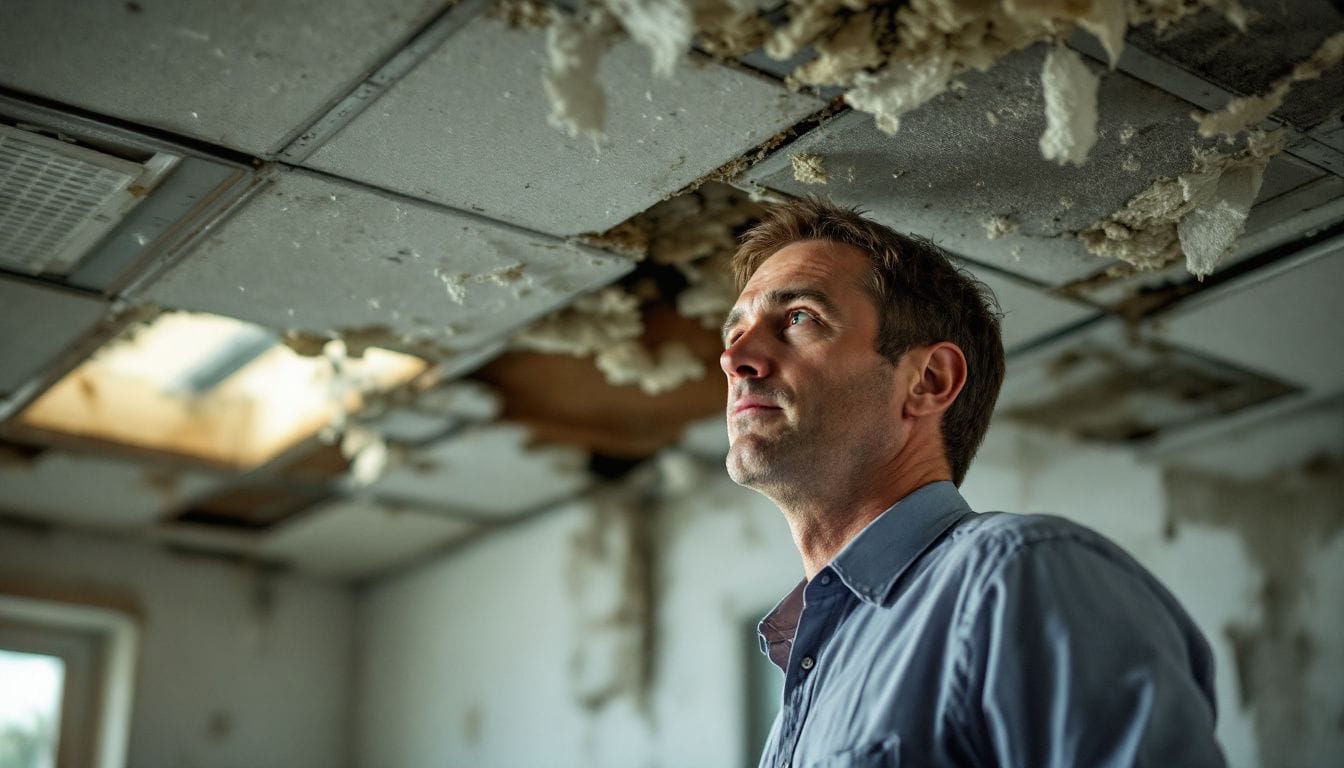
What Every Commercial Property Dutyholder Must Know About Asbestos
If you manage or own a commercial property built before 2000, asbestos is almost certainly on your risk register — or it should be. Commercial property asbestos awareness isn’t a box-ticking exercise; it’s a legal duty that directly affects the health of everyone who works in or visits your building.
Get it wrong and you’re looking at unlimited fines, potential imprisonment, and — far more seriously — preventable deaths. The UK has the highest rate of asbestos-related disease in Europe, and the legacy of widespread asbestos use in commercial construction is still being felt today.
Understanding your obligations, knowing what to look for, and acting on what you find is the only responsible approach.
Why Asbestos Remains a Live Issue in Commercial Buildings
Asbestos was banned in the UK in 1999. But banning its use didn’t make it disappear from the millions of buildings where it had already been installed over the preceding century.
The Health and Safety Executive (HSE) estimates that hundreds of thousands of non-domestic buildings across Great Britain still contain asbestos-containing materials (ACMs). Commercial properties are particularly affected — offices, warehouses, schools, hospitals, retail units, and industrial premises built or refurbished before 2000 routinely used asbestos in:
- Floor tiles and ceiling tiles
- Pipe lagging and boiler insulation
- Roofing sheets and corrugated panels
- Spray coatings on structural steelwork
- Insulating boards and partition walls
- Textured coatings such as Artex
When ACMs are in good condition and left undisturbed, they don’t necessarily pose an immediate risk. The danger arises when they’re damaged, deteriorating, or disturbed during maintenance and refurbishment work — releasing microscopic fibres that, once inhaled, can cause mesothelioma, asbestosis, and lung cancer decades later.
Your Legal Duties Under the Control of Asbestos Regulations
The Control of Asbestos Regulations place a clear legal duty on anyone responsible for the maintenance or repair of non-domestic premises. This is known as the Duty to Manage, and it applies to building owners, landlords, facilities managers, and anyone else with responsibility for a commercial property.
The duty requires you to:
- Take reasonable steps to find out whether ACMs are present in your premises
- Assess the condition and risk of any ACMs identified
- Prepare and maintain an up-to-date asbestos register
- Create an asbestos management plan and act on it
- Provide information about the location and condition of ACMs to anyone who might disturb them
- Review and monitor the plan regularly
Failure to comply is a criminal offence. Penalties include unlimited fines and up to two years in prison. Beyond the legal consequences, failing to manage asbestos puts lives at risk — including those of your own maintenance staff and contractors.
Who Is Classed as a Dutyholder?
If you own the freehold of a commercial building, you are a dutyholder. If you have a lease that gives you responsibility for maintenance and repair, you are also a dutyholder.
In some cases, responsibility is shared between landlord and tenant — in which case both parties carry obligations. Managing agents and facilities managers acting on behalf of building owners carry responsibilities too.
If you’re unsure where your legal obligations begin and end, seek specialist advice before assuming someone else is covering it.
Commercial Property Asbestos Awareness: Choosing the Right Survey
Not all asbestos surveys are the same. The type of survey you need depends on what you’re planning to do with the building and what information you already have. Getting the right survey for the right situation is a core part of commercial property asbestos awareness.
Management Survey
A management survey is the standard survey required to manage asbestos in a building during normal occupation and use. It locates ACMs that could be disturbed during everyday activities — including routine maintenance work — and assesses their condition and risk level.
This is the survey you need if you don’t yet have an asbestos register for your property, or if your existing register is out of date. It forms the foundation of your asbestos management plan and your legal compliance under the Duty to Manage.
Refurbishment Survey
Before any significant building work begins — whether that’s a partial refurbishment, a full fit-out, or anything in between — you need a refurbishment survey. This is a more intrusive inspection that locates all ACMs in the areas to be disturbed, including those concealed within the building fabric.
Skipping this step before refurbishment work is one of the most common ways tradespeople are unknowingly exposed to asbestos. It’s also one of the most common ways commercial property owners find themselves in breach of the law.
Demolition Survey
If a building is being taken down entirely, a demolition survey is required before any demolition work begins. This is the most intrusive type of survey and must cover the entire structure — not just the areas where demolition will start.
All ACMs must be identified and removed by a licensed contractor before demolition proceeds. There are no shortcuts here, and the HSE takes enforcement seriously.
Re-Inspection Survey
If you already have an asbestos register in place, it needs to be reviewed and updated regularly. A re-inspection survey checks the current condition of known ACMs and identifies any changes in risk.
The HSE recommends that ACMs are re-inspected at least annually, though higher-risk materials may require more frequent checks. Don’t assume that because nothing has changed visibly, the condition of ACMs hasn’t deteriorated.
How Asbestos Is Detected and Tested
Visual inspection alone cannot confirm the presence of asbestos. Many ACMs look identical to non-asbestos materials — the only way to know for certain is through laboratory analysis of a physical sample.
During a survey, a qualified surveyor will take bulk samples from suspect materials using correct containment procedures to prevent fibre release. These samples are then sent to a UKAS-accredited laboratory for analysis under polarised light microscopy (PLM), which can identify the type and concentration of asbestos fibres present.
If you have a single suspect material and want a result without commissioning a full survey, our testing kit allows you to collect a sample yourself and send it for professional laboratory analysis. This can be a cost-effective option for landlords dealing with a specific material query, though it doesn’t replace a full survey for compliance purposes.
Our dedicated asbestos testing service covers exactly what’s involved and what your results will tell you. All samples taken as part of a Supernova survey are analysed in our UKAS-accredited laboratory.
Building a Robust Asbestos Management Plan
Once you know what ACMs are present in your building and what condition they’re in, you need a management plan. This is a working document — not something you file away and forget — that sets out how you’re going to manage each ACM to keep risk at an acceptable level.
A robust asbestos management plan should include:
- A complete asbestos register with the location, type, and condition of every ACM
- A risk assessment for each ACM, taking into account its condition, accessibility, and likelihood of disturbance
- Decisions about whether each ACM will be managed in situ, encapsulated, or removed
- A schedule for regular re-inspections
- Arrangements for informing contractors and maintenance staff about ACM locations before they start work
- Records of any work carried out on or near ACMs
The plan must be reviewed annually as a minimum, and immediately whenever conditions change — for example, if an ACM is damaged, or if you’re planning building work that could disturb it.
Communicating Asbestos Information to Contractors
One of the most frequently overlooked aspects of the Duty to Manage is the requirement to share asbestos information with anyone who might disturb ACMs. This means giving contractors access to your asbestos register before they begin any work, and ensuring they understand the location and condition of any ACMs in the areas they’ll be working.
This isn’t optional — it’s a legal requirement under the Control of Asbestos Regulations, and it’s also basic common sense. A plumber who doesn’t know there’s asbestos insulating board behind the wall panel they’re about to cut into is a plumber at serious risk.
Make it standard practice to issue your asbestos register to every contractor before they set foot on site. Keep a record that you’ve done so. If your register is incomplete or out of date, that’s a problem you need to fix before any further maintenance or building work takes place.
When Asbestos Removal Becomes Necessary
Not all ACMs need to be removed. In many cases, managing them in situ is the safer and more practical option — particularly where removal would cause more disturbance and fibre release than leaving the material alone.
However, removal becomes necessary when:
- An ACM is in poor condition and cannot be adequately managed or encapsulated
- Building work will disturb the material and it cannot be avoided
- The building is being demolished
- The material poses an unacceptable ongoing risk to occupants
Licensed asbestos removal must be carried out by a contractor holding a licence from the HSE. Not all asbestos work requires a licence — some lower-risk materials can be handled by trained non-licensed operatives — but the most hazardous ACMs, including sprayed coatings, pipe lagging, and asbestos insulating board, always require a licensed contractor.
Our asbestos removal service connects you with fully licensed contractors who operate in strict compliance with the Control of Asbestos Regulations and HSE guidance.
Asbestos Awareness Training for Staff
Commercial property asbestos awareness isn’t just a management responsibility — it extends to everyone who works in or maintains your building. The Control of Asbestos Regulations require that any employee who might come into contact with asbestos, or who supervises such work, receives appropriate training.
For most building occupants and general maintenance staff, this means Category A asbestos awareness training — an introduction to what asbestos is, where it’s found, and what to do if you suspect you’ve encountered it. For those who carry out non-licensed asbestos work, more detailed Category B training is required.
Awareness training doesn’t turn your staff into asbestos workers. What it does is ensure that no one accidentally disturbs an ACM through ignorance, and that everyone knows to stop work and report immediately if they suspect asbestos has been disturbed.
The Overlap Between Asbestos Management and Fire Safety
Asbestos management and fire safety are two distinct legal obligations, but they intersect in ways that commercial property managers need to understand. Certain ACMs — particularly asbestos insulating board and asbestos ceiling tiles — are often found in the same locations as fire-stopping and fire-protection systems.
If fire safety works are planned, or if fire-stopping needs to be inspected or upgraded, an asbestos survey must come first. Disturbing fire-protection materials that contain asbestos without prior assessment creates a dual hazard that puts contractors and occupants at serious risk.
Supernova also provides fire risk assessments, allowing you to address both obligations through a single trusted provider. This ensures there are no gaps between your asbestos management plan and your fire safety strategy — a critical consideration for any responsible dutyholder.
What to Expect From a Supernova Survey
Supernova Asbestos Surveys has completed over 50,000 surveys across the UK. Every survey is carried out by qualified surveyors working to the standards set out in HSG264, the HSE’s definitive guidance on asbestos surveying.
When you commission a survey through Supernova, you can expect:
- A thorough inspection of all accessible areas by a qualified surveyor
- Bulk sampling of all suspect materials using correct containment procedures
- Laboratory analysis in our UKAS-accredited facility
- A clear, compliant survey report including your asbestos register and risk assessments
- Plain-language recommendations on how to manage identified ACMs
- Ongoing support for re-inspections, management plan updates, and any follow-up work required
We work with commercial property owners, landlords, facilities managers, and managing agents across the country. Whether you need a first-time management survey, a pre-refurbishment inspection, or a full demolition survey, we have the expertise and accreditation to deliver it.
Practical Steps to Strengthen Your Asbestos Compliance Right Now
If you’re not confident your current asbestos management is where it needs to be, here’s where to start:
- Check whether your building has an asbestos register. If it doesn’t, or if it’s more than a year old, commission a management survey or re-inspection survey immediately.
- Review your asbestos management plan. Is it up to date? Does it reflect the current condition of all ACMs? Has it been reviewed since any recent building work?
- Audit your contractor communication process. Can you demonstrate that every contractor who has worked in your building has been given access to your asbestos register? If not, put a formal procedure in place now.
- Check training records. Do all relevant members of staff hold current asbestos awareness training? Training should be refreshed regularly — it’s not a one-time event.
- Plan ahead for any upcoming works. If refurbishment, maintenance, or demolition is on the horizon, make sure the correct survey type is commissioned before any work begins.
None of this needs to be complicated. With the right survey data, a clear management plan, and a straightforward communication process, managing asbestos in a commercial property is entirely achievable. The risk comes from inaction — not from the task itself.
Frequently Asked Questions
Does every commercial property need an asbestos survey?
Any non-domestic building that was built or refurbished before 2000 should be presumed to contain asbestos-containing materials until a survey proves otherwise. If you don’t have a current asbestos register, commissioning a management survey is the correct first step to fulfil your legal obligations under the Control of Asbestos Regulations.
What is the difference between a management survey and a refurbishment survey?
A management survey is designed for buildings in normal occupation — it identifies ACMs that could be disturbed during everyday use and routine maintenance. A refurbishment survey is required before any intrusive building work begins and is more thorough, including areas within the building fabric. The two serve different purposes and one does not substitute for the other.
How often does an asbestos register need to be updated?
Your asbestos management plan and register should be reviewed at least annually. ACMs should be re-inspected at least once a year, and more frequently if they are in a poor or deteriorating condition. Any change in the building — including damage to an ACM or planned refurbishment — should trigger an immediate review.
Can I remove asbestos myself from a commercial property?
In most cases involving commercial properties, no. The most hazardous ACMs — including sprayed coatings, pipe lagging, and asbestos insulating board — must be removed by a contractor holding a current HSE licence. Some lower-risk non-licensed work may be carried out by trained operatives, but this is strictly defined. Attempting removal without the correct licence and training is illegal and extremely dangerous.
What should I do if asbestos is accidentally disturbed in my building?
Stop all work in the affected area immediately. Evacuate the area and prevent anyone else from entering. Do not attempt to clean up the material yourself. Contact a licensed asbestos contractor to assess the situation and carry out any necessary remediation. Report the incident as required under the Reporting of Injuries, Diseases and Dangerous Occurrences Regulations (RIDDOR) if applicable, and review your asbestos management plan to prevent recurrence.
Get Expert Help From Supernova Asbestos Surveys
Supernova Asbestos Surveys is the UK’s leading asbestos surveying company, with over 50,000 surveys completed nationwide. We provide the full range of asbestos services for commercial properties — from initial management surveys through to re-inspections, testing, and licensed removal.
Call us on 020 4586 0680 to speak with a specialist, or visit asbestos-surveys.org.uk to find out more about our services and book a survey online. Don’t leave your legal compliance to chance — get the right survey, get the right advice, and protect everyone in your building.