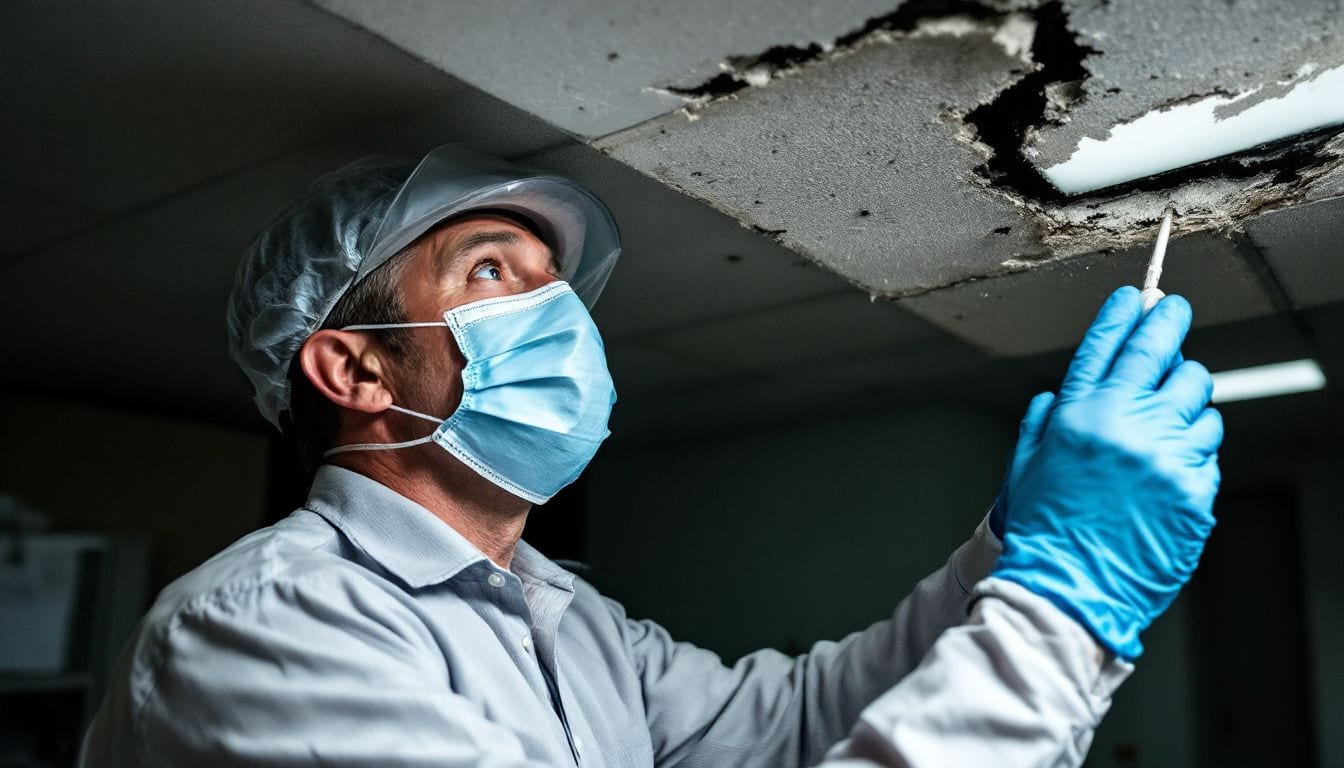
Asbestos at Work: What Every Employee and Employer Needs to Know
Asbestos at work remains one of the most serious occupational health hazards in the United Kingdom. Despite a full ban on its use, asbestos-containing materials (ACMs) are still present in thousands of commercial and industrial buildings constructed before 2000 — and every year, workers are unknowingly put at risk. Understanding your rights, your employer’s legal obligations, and the practical steps that reduce exposure is not optional. It could save your life.
Why Asbestos at Work Is Still a Deadly Problem
Asbestos was widely used in UK construction throughout the 20th century. It appeared in insulation, floor tiles, ceiling panels, pipe lagging, roofing sheets, and dozens of other building materials. When those materials are disturbed — during maintenance, renovation, or demolition — microscopic fibres are released into the air and can be inhaled.
The consequences are severe. Asbestos-related diseases include mesothelioma, lung cancer, asbestosis, and pleural thickening. None of these conditions develop immediately — symptoms typically emerge decades after exposure, which is part of what makes asbestos so dangerous. Workers exposed in the 1970s and 1980s are still dying today.
Approximately 5,000 people in the UK die each year from asbestos-related diseases, and around 20 tradespeople die every week as a direct result of past occupational exposure. These are not abstract figures — they represent builders, plumbers, electricians, teachers, and office workers who encountered asbestos during the course of their working lives.
Which Workers Are Most at Risk?
Any worker who regularly enters older buildings faces some level of risk, but certain trades carry a significantly higher exposure risk than others. The HSE identifies the following groups as particularly vulnerable:
- Plumbers and heating engineers — pipe lagging frequently contained asbestos
- Electricians — drilling through asbestos insulation boards was common practice for decades
- Carpenters and joiners — cutting and sanding textured coatings and boards
- Plasterers — working with textured coatings such as Artex, which often contained asbestos
- Demolition workers — high risk of disturbing multiple ACMs simultaneously
- Roofers — asbestos cement sheets were widely used in industrial and agricultural roofing
- HVAC engineers — insulation materials around ductwork regularly contained asbestos
Office workers and teachers in older buildings also face risk, particularly if maintenance work is carried out without proper asbestos management procedures in place. Risk does not only exist on building sites — it exists wherever older fabric is disturbed without prior assessment.
The Legal Framework: What the Law Requires
The primary legislation governing asbestos at work is the Control of Asbestos Regulations. These regulations set out clear duties for both employers and building owners, covering everything from identification and risk assessment through to worker training and licensed removal work.
The Duty to Manage
Regulation 4 of the Control of Asbestos Regulations places a legal duty on those responsible for non-domestic premises to manage asbestos. This applies to employers, building owners, and anyone who has control over maintenance of a building.
The duty to manage requires the responsible person to:
- Find out whether asbestos is present — and if so, where it is and what condition it is in
- Assess the risk of anyone being exposed to fibres from these materials
- Prepare and implement a written asbestos management plan
- Provide information about the location and condition of ACMs to anyone who might disturb them
- Review and monitor the plan on a regular basis
Failure to comply with the duty to manage is a criminal offence. Fines can be significant, and prosecutions by the HSE are not uncommon.
HSG264 and Survey Requirements
The HSE’s guidance document HSG264 sets out the standards for asbestos surveying in the UK. It defines two main survey types: the management survey, used for routine occupation and maintenance, and the refurbishment and demolition survey, required before any intrusive works begin.
If you are responsible for a building and have not had it surveyed, a management survey is the appropriate starting point. It identifies ACMs in accessible areas, assesses their condition, and forms the basis of your asbestos register and management plan.
Before any renovation, refurbishment, or demolition work takes place, a refurbishment survey must be carried out. This is a more intrusive inspection of all areas that will be disturbed, and it is a legal requirement — not a recommendation. Similarly, where a structure is being taken down entirely, a demolition survey is required to ensure all ACMs are identified before work commences.
Licensing Requirements for Removal Work
Not all asbestos work can be carried out by anyone. The Control of Asbestos Regulations establishes three categories of work: licensed, notifiable non-licensed (NNLW), and non-licensed.
The most hazardous materials — such as sprayed coatings, lagging, and asbestos insulating board — must only be removed by a contractor holding a licence issued by the HSE. If your survey identifies materials that require removal, Supernova’s asbestos removal service connects you with licensed contractors who work to the highest safety standards.
Employee Rights When It Comes to Asbestos at Work
Employees have clear legal protections when it comes to asbestos at work. Knowing these rights is the first step to exercising them.
The Right to Refuse Unsafe Work
Under health and safety law, employees have the right to refuse work they reasonably believe poses a serious and imminent risk to their health. If you are asked to carry out work in an area where asbestos may be present and no risk assessment or survey has been completed, you are within your rights to refuse until the situation is properly assessed.
Employers cannot lawfully penalise, dismiss, or disadvantage an employee for raising health and safety concerns in good faith. This protection applies regardless of employment status or length of service.
The Right to Information
If asbestos is present in your workplace, your employer is legally required to inform you of its location and condition. This information must be provided to any contractor or maintenance worker who might disturb ACMs. Keeping this information from workers is not just poor practice — it is a breach of legal duty.
The Right to Training
The Control of Asbestos Regulations requires employers to provide asbestos awareness training to any worker who may encounter asbestos during their normal duties. This training must explain what asbestos is, where it is likely to be found, how to recognise it, and what to do if you suspect you have disturbed it.
Training is typically delivered through UKATA (UK Asbestos Training Association) approved courses. If you work in a trade that regularly takes you into older buildings and you have not received this training, raise it with your employer or union representative immediately.
Health Surveillance
Workers who are regularly exposed to asbestos — particularly those involved in licensed asbestos work — are entitled to health surveillance. This includes regular medical examinations, chest X-rays, and lung function tests, typically carried out every two to three years.
The purpose is to detect any early signs of asbestos-related disease and ensure ongoing fitness for work. Employers who fail to arrange health surveillance for eligible workers are in breach of their legal obligations.
Employer Responsibilities: A Practical Checklist
If you manage a building or employ workers who enter older premises, your responsibilities are substantial. Here is a practical summary of what you must have in place:
- Asbestos survey completed — appropriate to the type of work being carried out
- Asbestos register maintained — documenting the location, type, and condition of all known or presumed ACMs
- Written management plan — setting out how ACMs will be managed, monitored, and reviewed
- Regular re-inspections — ACMs in good condition can be managed in situ, but must be formally reviewed at least annually. A re-inspection survey ensures the condition of known materials is properly recorded
- Information shared with contractors — anyone carrying out maintenance or refurbishment must be told about asbestos before work begins
- Asbestos awareness training provided — to all workers who may encounter ACMs
- Licensed contractors used — for any work involving licensable asbestos materials
- Health surveillance in place — for workers undertaking notifiable or licensed asbestos work
If any of these elements are missing from your current arrangements, you are potentially non-compliant and your workers are at risk.
What to Do If You Suspect Asbestos Has Been Disturbed
If you believe asbestos-containing material has been disturbed in your workplace, act quickly and follow these steps:
- Stop work immediately — do not continue in the affected area
- Evacuate the area — move everyone away from the potential contamination zone
- Do not disturb the material further — avoid sweeping, vacuuming with a standard vacuum, or touching the material
- Inform your employer or safety officer — they must be notified as soon as possible
- Do not re-enter the area — until a qualified assessor has confirmed it is safe to do so
- Seek testing — if you are unsure whether a material contains asbestos, a testing kit allows you to collect a sample safely for laboratory analysis
Speed matters. The sooner the situation is properly assessed and controlled, the lower the risk of ongoing exposure to anyone in the building.
Asbestos Management and Fire Safety: An Overlooked Connection
Many building managers focus on asbestos management in isolation, but fire safety and asbestos risk are closely linked. Asbestos-containing materials can be disturbed during fire damage, emergency repairs, or fire safety improvement works. Equally, some fire-stopping and insulation materials in older buildings may themselves contain asbestos.
If your building requires both asbestos management and a fire risk assessment, it makes sense to coordinate both assessments together. This ensures that any overlapping risks are identified and managed holistically, rather than addressed in silos that leave gaps in your overall safety arrangements.
Getting a Survey: What the Process Looks Like
If your workplace has not been surveyed for asbestos, or if your existing survey is out of date, booking a professional survey is the most important step you can take. Here is what the process looks like with Supernova Asbestos Surveys:
- Booking — contact us by phone or online; we confirm availability and send a booking confirmation, often with same-week appointments available
- Site visit — a BOHS P402-qualified surveyor attends at the agreed time and carries out a thorough inspection of the property
- Sampling — representative samples are collected from suspect materials using correct containment procedures
- Laboratory analysis — samples are analysed under polarised light microscopy at our UKAS-accredited laboratory
- Report delivery — you receive a detailed asbestos register and risk-rated management plan in digital format within 3–5 working days
All reports are fully compliant with HSG264 guidance and satisfy the legal requirements under the Control of Asbestos Regulations.
Survey Costs
Supernova offers transparent, fixed-price surveys with no hidden fees:
- Management Survey — from £195 for a standard residential or small commercial property
- Refurbishment & Demolition Survey — from £295, covering all areas to be disturbed prior to works
- Re-inspection Survey — from £150, plus £20 per ACM re-inspected
- Bulk Sample Testing Kit — from £30 per sample, posted to you for collection
- Fire Risk Assessment — from £195 for a standard commercial premises
All prices vary depending on property size and location. You can get a free quote tailored to your specific requirements with no obligation.
Supernova Covers the Whole of the UK
We operate nationwide, with surveyors available across England, Scotland, and Wales. Whether you need an asbestos survey in London or an asbestos survey in Manchester, our team can be with you quickly — often within the same week.
With over 50,000 surveys completed and more than 900 five-star reviews, Supernova is the UK’s most trusted asbestos surveying company. Our surveyors are BOHS P402-qualified, our laboratories are UKAS-accredited, and every report we produce meets the standards set out in HSG264.
To book a survey or discuss your requirements, call us on 020 4586 0680 or visit asbestos-surveys.org.uk. Protecting your workers starts with knowing what is in your building.
Frequently Asked Questions
Who is legally responsible for managing asbestos at work?
The legal duty to manage asbestos in non-domestic premises falls on the “dutyholder” — typically the building owner, employer, or anyone who has taken on responsibility for maintenance and repair of the building through a contract or tenancy agreement. This duty is set out in Regulation 4 of the Control of Asbestos Regulations and cannot be ignored or delegated away without proper arrangements in place.
Do I need an asbestos survey before carrying out building work?
Yes. Before any refurbishment, renovation, or demolition work begins in a building that may contain asbestos, a refurbishment or demolition survey is a legal requirement under the Control of Asbestos Regulations. A standard management survey is not sufficient for this purpose, as it does not involve intrusive inspection of areas that will be disturbed during works.
Can I be forced to work in an area where asbestos may be present?
No. Under UK health and safety law, employees have the right to refuse work they reasonably believe poses a serious and imminent risk to their health. If asbestos has not been properly assessed in an area where you are being asked to work, you are within your rights to refuse until a suitable survey and risk assessment has been completed. Employers cannot lawfully penalise you for doing so.
How do I know if a material at work contains asbestos?
You cannot tell whether a material contains asbestos by looking at it — laboratory analysis is the only reliable method. If you suspect a material may contain asbestos, do not disturb it. Report your concern to your employer or safety officer, and arrange for a sample to be taken and tested by a qualified professional. A testing kit is available for situations where you need to collect a sample safely before sending it for analysis.
How often does an asbestos management plan need to be reviewed?
There is no fixed statutory interval, but HSE guidance makes clear that the asbestos management plan must be reviewed regularly and kept up to date. In practice, most dutyholders carry out a formal re-inspection of known ACMs at least annually. Any change in the condition of materials, or any planned works that might disturb them, should trigger an immediate review of the plan.