One damaged ceiling tile or a rushed strip-out can turn asbestos removal from a routine building issue into a health risk, a legal problem and an expensive delay. If you manage, maintain or refurbish property built before 2000, the safest approach is simple: identify first, plan properly, then decide whether asbestos removal is actually required.
That matters because asbestos is not always removed straight away. In many cases, the right course is to manage it in place. But where materials are damaged, likely to be disturbed or standing in the way of planned works, asbestos removal has to be handled with the right survey information, competent contractors, suitable controls and lawful disposal.
Why asbestos removal should never start without proper identification
The biggest mistake property managers make is treating every suspect material as a removal job before they know what it is. That leads to wasted money, project delays and avoidable disruption.
Before any asbestos removal is considered, you need reliable information about the material, its location, condition and the likelihood of disturbance. That usually starts with a survey, and the correct survey depends on what is happening in the building.
- For normal occupation and the duty to manage, an management survey is usually the starting point.
- Before intrusive upgrades, strip-out or major alterations, a refurbishment survey is normally required.
- Before full structural takedown, a demolition survey is the correct route.
Surveying should be carried out in line with HSG264. That is not just a technical detail. Every later decision, from scope of work to waste handling, depends on the quality of the information collected at the start.
If there is only one suspect item, sampling may be enough to confirm whether asbestos is present. Professional sample analysis can provide a clear answer, and in some domestic situations a testing kit may be a practical first step.
For workplaces, communal areas, schools, shops and refurbishment projects, professional surveying is usually the safer and more defensible option. If the material will affect contractors, occupants or compliance records, guessing is never acceptable.
The step-by-step process for safe asbestos removal
Good asbestos removal follows a clear sequence. When one stage is skipped, the risk of fibre release, contamination or non-compliance rises quickly.
- Identify the material through a survey or sampling.
- Review the findings, including product type, condition, accessibility and likely disturbance.
- Choose the right response such as removal, encapsulation, enclosure or management in place.
- Confirm the work category under the Control of Asbestos Regulations and current HSE guidance.
- Appoint competent specialists with suitable training, procedures and documentation.
- Plan the work area, including access restrictions, segregation, equipment, cleaning methods and waste arrangements.
- Carry out the work using suitable controls to minimise fibre release.
- Dispose of waste lawfully as hazardous waste with the correct paperwork.
- Update your records, including the asbestos register, work records and any reinspection information.
If removal is likely, it helps to speak to a specialist early. Supernova can advise on asbestos removal based on actual site conditions rather than assumptions made from photos or verbal descriptions.
What a property manager should confirm before work starts
Client-side planning matters just as much as contractor performance. A poorly briefed job creates confusion over access, isolation, waste, clearance and responsibility.
- Has the correct survey or sampling been completed?
- Is the exact scope of asbestos removal clearly defined?
- Do you know whether the work is licensed, non-licensed or notifiable non-licensed?
- Have tenants, staff and visitors been protected from access to the area?
- Are service isolations, permits and access arrangements agreed?
- Is waste collection and disposal included in the plan?
- Will air monitoring or clearance be needed?
- Have you planned how records will be updated afterwards?
If any of these points are unclear, stop and get clarification before the job begins. Proper asbestos removal is controlled from the planning stage, not improvised once operatives arrive.
Licensed, non-licensed and notifiable asbestos removal work
Not all asbestos work is treated in the same way. Under the Control of Asbestos Regulations and current HSE guidance, the category depends on the type of asbestos-containing material, its condition and how likely the task is to release fibres.
Higher-risk materials
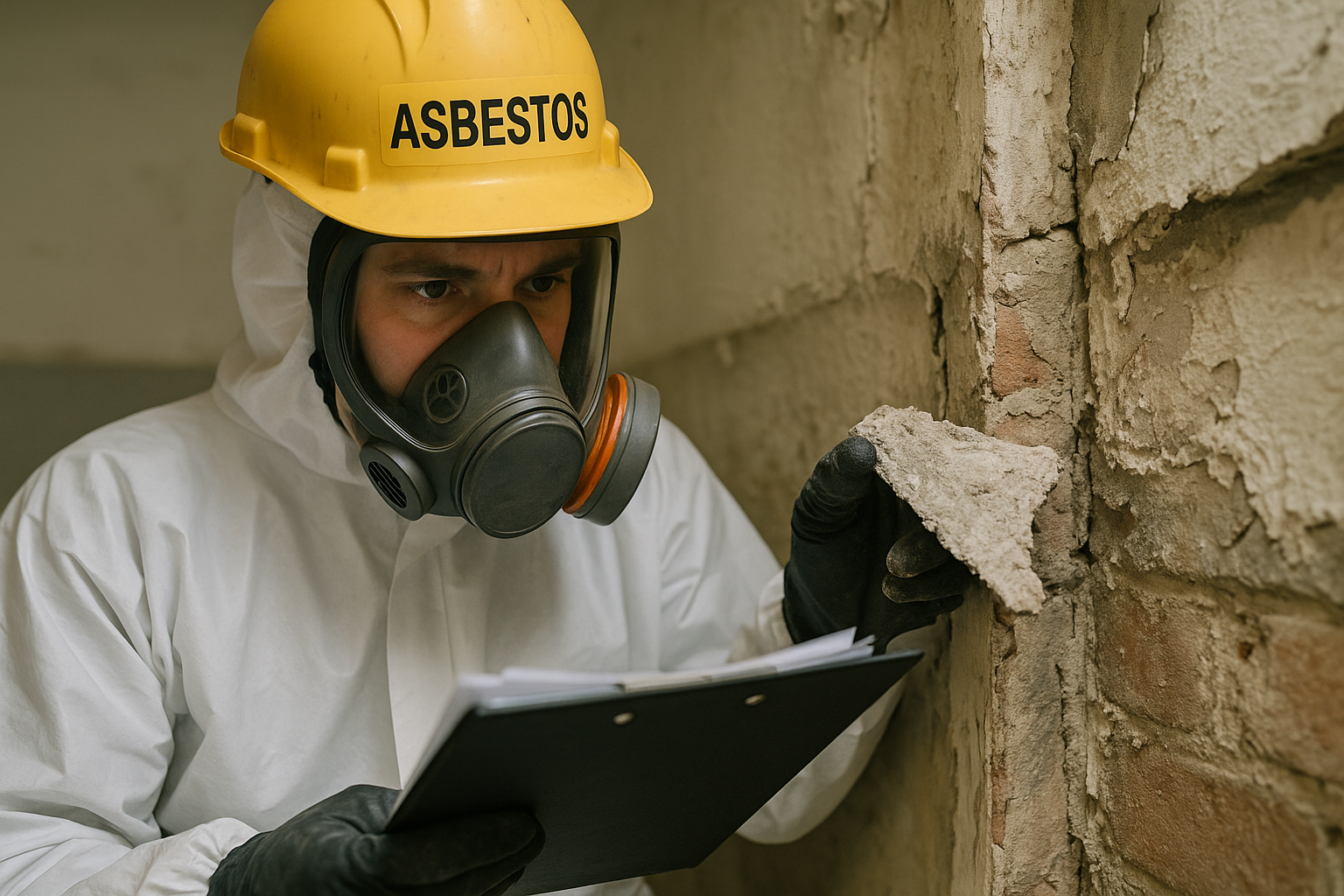
Some materials are more friable and need tighter controls. These often include asbestos insulating board, pipe lagging, sprayed coatings and loose fill insulation.
Where the risk is higher, licensed contractors are often required. If you are managing a project, never assume a general builder can deal with asbestos removal simply because the area looks small or easy to access.
Lower-risk materials
Some firmly bound products, such as certain asbestos cement items, may fall within non-licensed or notifiable non-licensed work depending on the task and the condition of the material. That does not mean the standard can be casual.
Even where a licence is not required, the work still needs:
- A suitable risk assessment
- Workers with appropriate training
- Correct PPE and RPE
- Controlled methods to reduce fibre release
- Lawful packaging, transport and disposal of waste
The phrase non-licensed is often misunderstood. It means a different regulatory route, not a free pass.
Textured coatings containing asbestos
Textured coatings can contain asbestos, commonly chrysotile. Some short-duration tasks may be non-licensed, but they still require competent planning and suitable controls.
If textured coating asbestos removal is being considered, use these practical checks:
- Confirm the material by survey or sample first
- Avoid aggressive dry scraping
- Do not use power tools unless the method and controls are suitable
- Use PPE and RPE selected for the task
- Restrict access and segregate the area
- Package and label waste correctly as hazardous waste
If the coating is damaged, widespread or part of a larger refurbishment, specialist advice is the sensible next step. Small mistakes can contaminate a much larger area than most people expect.
When asbestos removal is necessary and when it is not
Asbestos removal is not always the only safe option. In many premises, the right decision is to manage asbestos-containing materials in place if they are in good condition and unlikely to be disturbed.
The goal is risk reduction, not removal for its own sake. A sealed panel in a low-access riser is very different from damaged insulating board in a busy corridor or a plant room due for refurbishment.
When asbestos removal is usually the sensible option
- The material is damaged, deteriorating or already disturbed
- Refurbishment or demolition work will affect it
- It is in a high-traffic area or vulnerable location
- Ongoing management would be unreliable
- Future contractor access makes disturbance likely
When management in place may be acceptable
- The asbestos-containing material is in good condition
- It is sealed, enclosed or otherwise protected
- It is unlikely to be disturbed during normal occupation
- The asbestos register is current and accessible
- Staff and contractors can be informed effectively
If you choose encapsulation or enclosure instead of asbestos removal, record that decision properly. Future contractors need to know what is present, what treatment was carried out and what restrictions still apply.
Disposal rules after asbestos removal
Removing the material is only part of the job. Once asbestos waste has been produced, it must be handled, packaged, labelled, transported and disposed of correctly as hazardous waste.
For property managers, the practical advice is straightforward: ask in advance who is responsible for waste, where it is going and what paperwork you will receive. Keep those records with your asbestos file.
You should expect:
- Suitable packaging to prevent fibre release
- Clear asbestos warning labels where required
- Controlled transfer from the work area
- Transport arranged in line with legal requirements
- Disposal at a facility permitted to accept the waste
- Waste documentation retained with project records
Do not treat asbestos waste as ordinary construction debris. Mixed skips, informal bagging or ad hoc disposal arrangements can expose workers, cleaners, tenants and waste handlers to unnecessary risk.
Fly-tipped asbestos waste on your site
Fly-tipped material is one of the more awkward asbestos issues because it appears without warning and outside any planned works. If dumped waste could contain asbestos, do not move it or ask caretakers or maintenance staff to deal with it.
Common examples include:
- Broken cement sheets
- Soffit panels
- Flue sections
- Insulating board fragments
- Rubble from stripped textured coatings
- Red or clear bags marked with asbestos warnings
Take these steps straight away:
- Restrict access to the area
- Do not sweep, break, hose down or handle the material
- Photograph it from a safe distance
- Arrange assessment by a competent asbestos professional
- Use a suitable contractor for collection and disposal
- Record what was found and what action was taken
If the waste is on land you control, act quickly and keep a clear paper trail for insurers, tenants and regulators.
Equipment, competence and documentation during asbestos removal
Reliable asbestos removal depends on more than protective clothing. The quality of the equipment, the standard of supervision and the strength of the paperwork all matter.
Equipment standards
Where control equipment is needed, it should be suitable for the task and properly maintained. If this is unclear, ask direct questions.
- Are H-type vacuums inspected and maintained?
- Are negative pressure units tested where used?
- Is decontamination equipment checked routinely?
- Is RPE face-fit tested and maintained?
- Are servicing records available where relevant?
If a contractor cannot explain how equipment is maintained, treat that as a warning sign. Good asbestos removal relies on method, training and equipment working together.
Competence checks
Competence is not one certificate. It is a combination of training, experience, supervision, procedures and evidence that the team understands the specific work being proposed.
Useful indicators include:
- Relevant licensing where licensed asbestos work is involved
- Surveying carried out in line with HSG264
- Appropriate qualifications for surveyors and analysts
- Clear risk assessments and method statements
- Practical answers to site-specific questions
- Accurate documentation before and after the work
Ask to see paperwork that matches your job, not just generic company documents. A competent contractor should be able to explain the plan in plain English.
Asbestos removal across different types of property
Asbestos appears in more places than many dutyholders expect. The legal duties and practical risks vary by sector, but the need for proper assessment stays the same.
Common property types include:
- Commercial offices
- Schools and education buildings
- Retail units and shopping premises
- Healthcare settings
- Factories, warehouses and industrial units
- Hotels, leisure sites and hospitality venues
- Residential blocks and mixed-use buildings
- Construction and fit-out projects
In occupied premises, planning is especially important. Access routes, tenant communication, work hours and segregation measures all need to be thought through before asbestos removal starts.
If you are coordinating broader building safety work at the same time, it can be practical to combine asbestos planning with a fire risk assessment. That can reduce disruption and help you organise compliance work more efficiently.
Regional support for multi-site portfolios
If you manage properties across different locations, consistency matters. Using the same reporting standards and a clear escalation route makes asbestos removal easier to plan and defend.
Supernova supports clients nationally, including through local services such as asbestos survey London, asbestos survey Manchester and asbestos survey Birmingham. For property managers with mixed portfolios, that helps keep survey information and removal planning aligned across sites.
Keeping asbestos information easy to find inside your organisation
Many asbestos failures are really information failures. The building may have been surveyed and the material may be known, but the register is buried in an inbox or no one on site knows where to find it.
That becomes a serious problem when contractors arrive, maintenance starts unexpectedly or an emergency repair is needed. If asbestos information is not accessible, the risk of accidental disturbance rises sharply.
Make these steps routine:
- Keep the asbestos register in a known, accessible location
- Make sure site teams know how to check it before work starts
- Link survey findings to permit-to-work or contractor control systems
- Update records after asbestos removal, repair, encapsulation or reinspection
- Retain waste notes, certificates and related job records together
For larger organisations, nominate someone to own the process. A register that nobody updates is not a working control measure.
Practical mistakes to avoid during asbestos removal projects
Most serious problems are not caused by exotic materials or unusual buildings. They come from ordinary mistakes made under time pressure.
- Starting strip-out before the right survey has been completed
- Assuming a small job cannot involve licensed asbestos removal
- Letting unbriefed contractors enter affected areas
- Failing to isolate services or protect nearby occupants
- Using poor waste arrangements or unclear transfer routes
- Forgetting to update the asbestos register after the work
- Relying on verbal assurances instead of written documentation
If you manage projects regularly, build asbestos checks into every pre-start process. That is far easier than trying to recover a job after contamination, complaints or enforcement attention.
Choosing the right next step
If you suspect asbestos, the next step is not always removal. It may be a survey, a sample, a review of planned works or a decision to manage the material safely in place.
What matters is making that decision on evidence, not assumption. The Control of Asbestos Regulations place duties on those who manage non-domestic premises, and HSE guidance is clear that asbestos risks must be identified and controlled properly.
If you need advice on surveys, sampling or asbestos removal, Supernova Asbestos Surveys can help. We provide nationwide support for property managers, landlords, contractors and dutyholders, with practical guidance that fits the building and the work planned. Call 020 4586 0680 or visit asbestos-surveys.org.uk to arrange the right service.
Frequently Asked Questions
Do I always need asbestos removal if asbestos is found?
No. If asbestos-containing material is in good condition and unlikely to be disturbed, it may be safer to manage it in place. Asbestos removal is usually necessary when the material is damaged, deteriorating or likely to be affected by planned works.
Can a general builder carry out asbestos removal?
Not automatically. Some asbestos work requires a licensed contractor, while lower-risk work may fall under non-licensed or notifiable non-licensed categories. The correct route depends on the material, its condition and the method of work, so the job should be assessed properly before work starts.
What survey do I need before refurbishment?
Before intrusive refurbishment works, you will normally need a refurbishment survey. A management survey is not designed for destructive inspection ahead of major alterations or strip-out.
How should asbestos waste be disposed of?
Asbestos waste must be packaged, labelled, transported and disposed of correctly as hazardous waste. You should keep the relevant waste documentation with your project records.
What should I do if I find suspected fly-tipped asbestos?
Do not move it, sweep it or break it up. Restrict access, photograph it from a safe distance, arrange assessment by a competent asbestos professional and use a suitable contractor for collection and disposal.