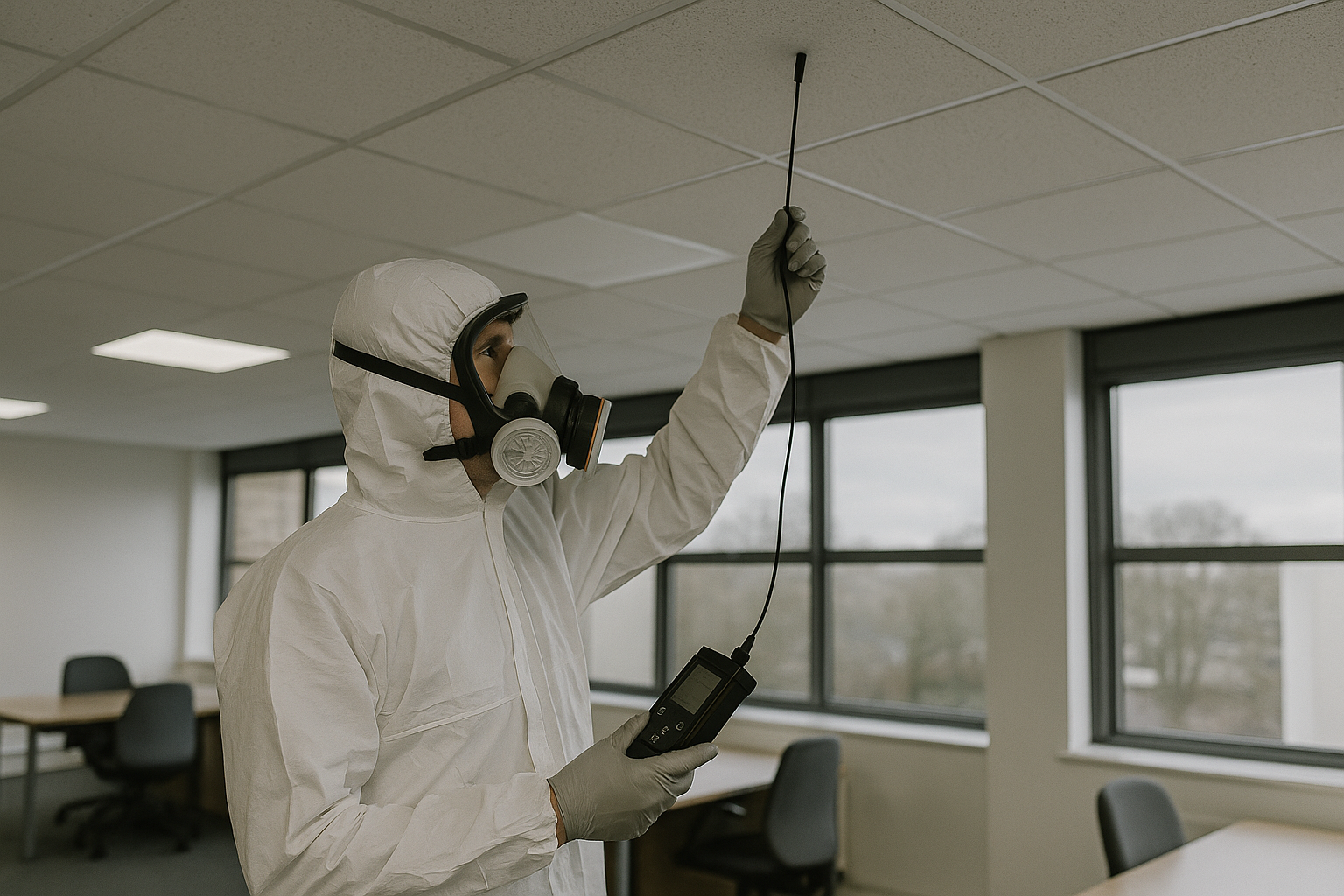
What Asbestos Report Requirements Actually Mean for UK Property Owners
Missing or inadequate asbestos paperwork can stop a refurbishment in its tracks, delay a property sale, and create serious legal exposure for whoever controls the building. Understanding asbestos report requirements is not a box-ticking exercise — it is how you prove you have identified the risk, recorded it properly, and given everyone the information they need before work begins.
If a building was constructed before 2000, asbestos may still be present in insulation, boards, textured coatings, floor tiles, cement products, or pipe lagging. That does not always mean immediate danger, but it does mean you need reliable, documented information. Getting the right survey, the right level of detail, and clear next steps is what asbestos report requirements are really about.
Why Asbestos Report Requirements Matter in Practice
An asbestos report is often the document sitting behind your asbestos register, contractor controls, maintenance planning, and risk management decisions. If it is vague, out of date, or based on the wrong survey type, it leaves significant gaps in your compliance process.
In practical terms, a fit-for-purpose asbestos report should help you answer the questions that contractors, buyers, tenants, and enforcement officers will ask:
- Where is the asbestos or presumed asbestos?
- What condition is it in?
- Which areas were inspected, and what was not accessed?
- What should happen next?
A compliant report should enable you to:
- Identify known or presumed asbestos-containing materials (ACMs)
- Understand the condition of those materials
- Assess the likelihood of disturbance during normal use or planned works
- Plan maintenance and refurbishment safely
- Brief contractors before they start work
- Support an asbestos register and management plan
- Decide whether monitoring, repair, encapsulation, or removal is needed
That is the real purpose of asbestos report requirements. They exist to support decisions on occupied buildings, planned works, and ongoing management — not simply to generate paperwork.
Who Needs to Meet Asbestos Report Requirements?
The duty to manage asbestos applies to those responsible for non-domestic premises and the common parts of certain residential buildings. That can include freeholders, landlords, managing agents, facilities managers, employers, and anyone with maintenance or repair obligations under a lease or contract.
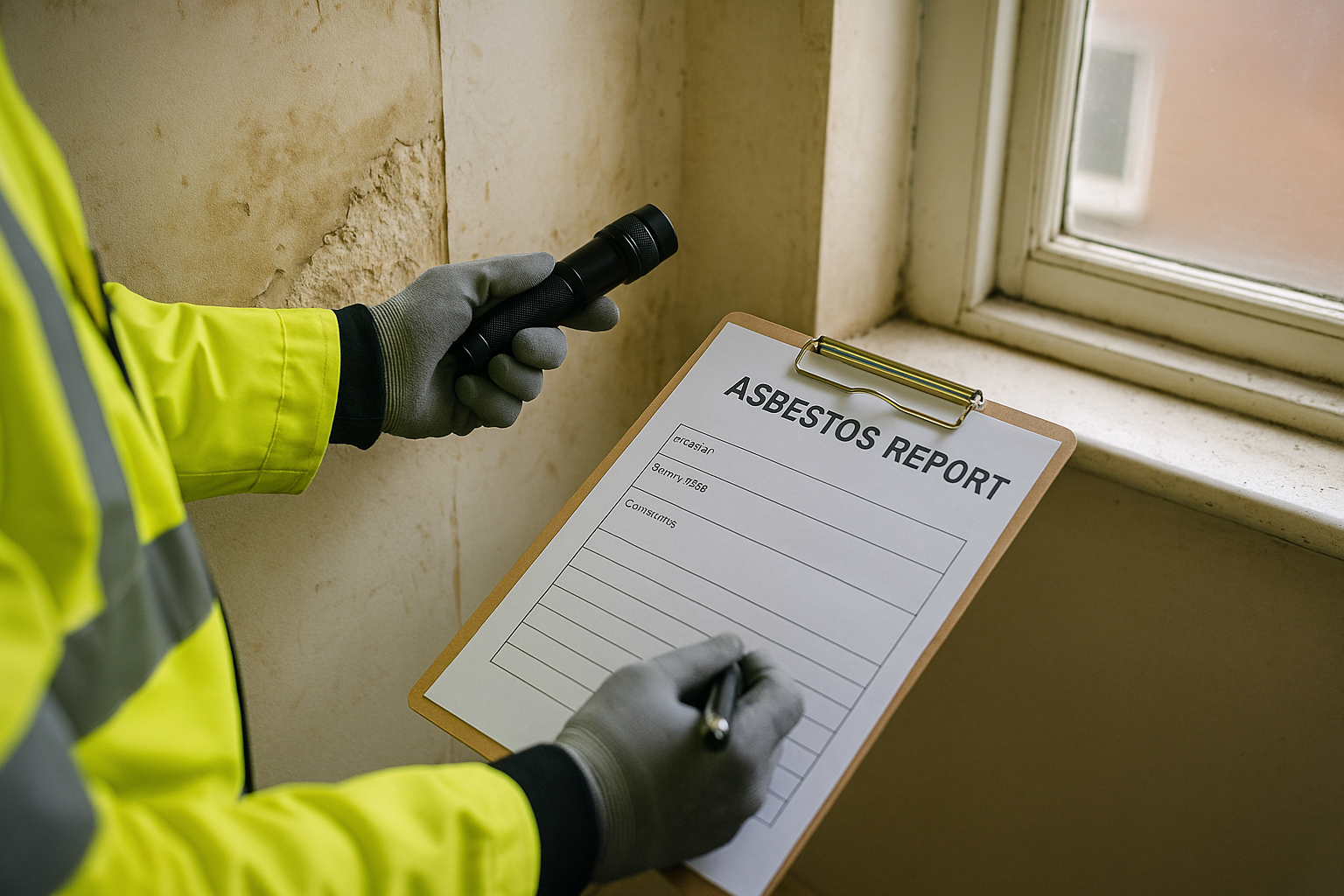
If you control the building, arrange works, or hold repair responsibilities, asbestos report requirements are relevant to you. Unclear contracts do not remove the need to manage asbestos risk properly.
You are likely to need an asbestos report if you are:
- Managing offices, shops, schools, warehouses, surgeries, or industrial units
- Responsible for communal areas in blocks of flats
- Planning refurbishment, strip-out, or intrusive maintenance
- Buying, leasing, or taking over a commercial property
- Reviewing old asbestos records that may no longer reflect the current building
- Instructing electricians, plumbers, roofers, decorators, or other trades
- Monitoring known ACMs left in place
Private homeowners do not usually carry the same statutory duty to manage within their own home. Even so, asbestos report requirements become highly relevant before renovation, demolition, or intrusive work. If a contractor could disturb asbestos, you need dependable information first.
Which Survey Produces the Right Asbestos Report?
One of the most common mistakes is assuming any asbestos survey will satisfy asbestos report requirements. It will not. The report must match the reason it was commissioned, and the survey type must match the task at hand.
Management Survey Report
A management survey is designed to locate, as far as reasonably practicable, asbestos-containing materials that could be damaged or disturbed during normal occupation, routine maintenance, or foreseeable use of the building. This is the standard starting point for occupied non-domestic premises and common parts of residential buildings.
The report produced supports your asbestos register and day-to-day management plan. It is not sufficient on its own where intrusive or refurbishment works are planned.
Refurbishment Survey Report
If intrusive works are planned, a refurbishment survey is required for the affected area before work starts. A management survey is not adequate where walls, ceilings, floors, service risers, ducts, or hidden voids may be opened.
Refurbishment surveys are more intrusive by design. They are intended to find asbestos that could be disturbed during planned works, even where it is concealed behind finishes or within the building fabric. Skipping this step is one of the most common causes of asbestos exposure incidents on site.
Re-Inspection Survey Report
Where ACMs have already been identified and left in place, a re-inspection survey confirms whether their condition has changed and whether your management arrangements remain suitable. There is no single fixed interval that suits every building — review frequency depends on condition, accessibility, occupancy, and the likelihood of disturbance.
Sampling and Testing Report
Sometimes you do not need a full building survey. Where there is one suspect material and you need confirmation, targeted asbestos testing may be the right option. That said, a testing report does not replace a survey where wider management duties apply. Sampling can confirm what a material is, but it will not tell you enough about the rest of the premises.
What a Compliant Asbestos Report Must Include
Strong asbestos report requirements are about quality as much as content. A report should be clear, site-specific, and useful to the person making decisions about occupation, maintenance, or planned works. Here is what a compliant report should contain.
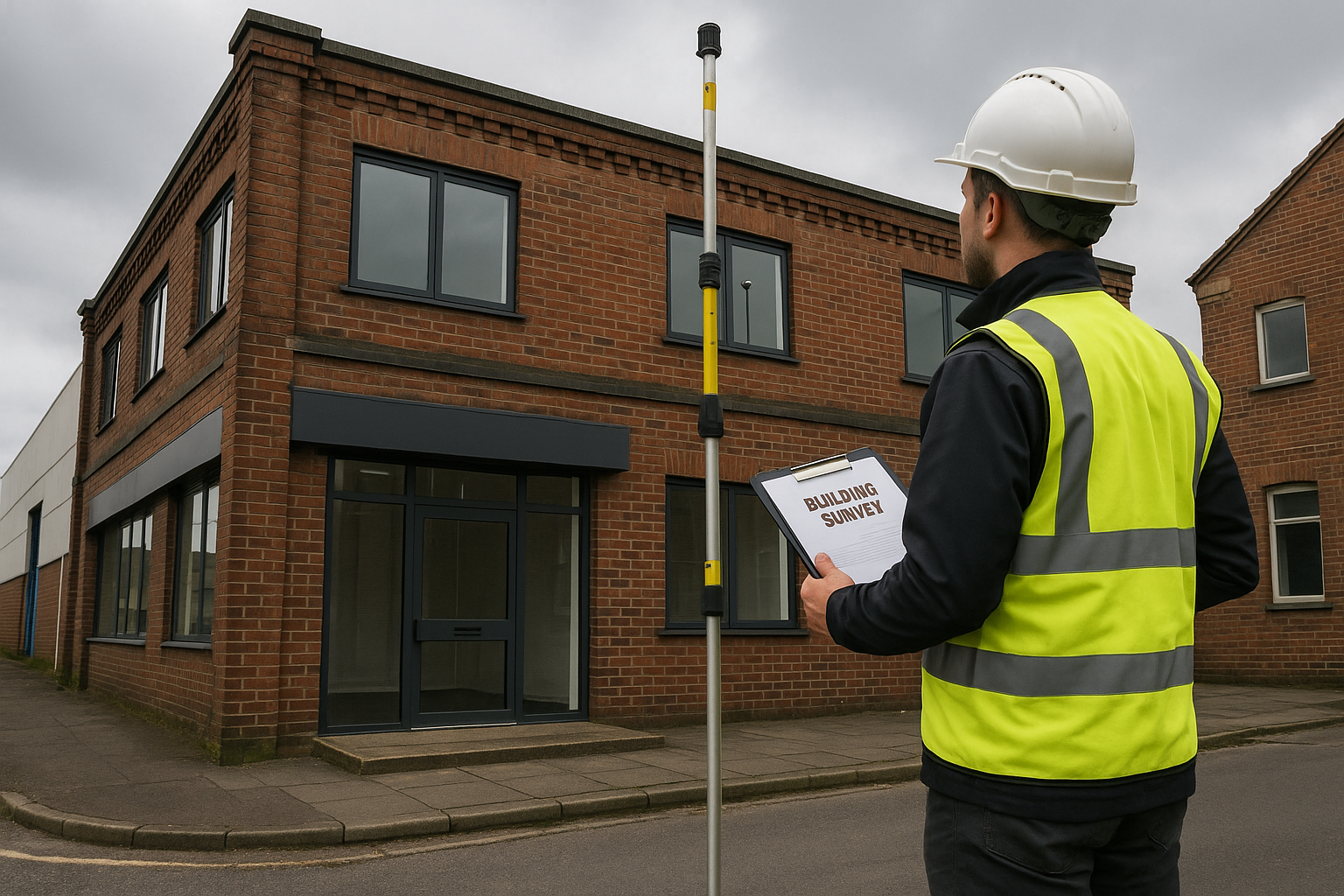
1. Property Details and Survey Type
The report should clearly identify the premises, the client, the date of inspection, and the type of survey carried out. It should never leave the reader guessing whether the document is a management survey, refurbishment survey, re-inspection, or sampling report. Ambiguity here causes real problems when contractors or enforcement officers review the document.
2. Scope of Inspection
The report must explain what was included and what was excluded. If areas were locked, unsafe, inaccessible, or outside the agreed scope, that must be stated plainly. Limitations affect whether the report is suitable for the task in hand — if contractors are about to work in an excluded area, the report may not be sufficient.
3. Methodology Aligned with HSG264
The survey approach should reflect HSG264. That means the inspection method, extent of access, and sampling strategy should suit the survey type and the building use. If suspect materials were presumed to contain asbestos rather than sampled, that must be recorded clearly. Presumption is acceptable in some circumstances, but it must be properly documented.
4. Material Descriptions and Locations
Each suspected or confirmed ACM should be described in practical terms — product type, surface treatment, extent, condition, and exact location. Good reports use room references, floor plans, photographs, and clear wording so there is little room for confusion on site. Vague descriptions like “ceiling material” or “wall board” are not good enough.
5. Sample References and Laboratory Results
Where samples have been taken, the report should include sample numbers, locations, and analytical results. The chain between sample and location must be easy to follow. If you need standalone confirmation of a suspect item, you can also arrange further asbestos testing where appropriate. If that chain is unclear, the report becomes significantly less useful for making decisions.
6. Material Assessment and Risk Information
Reports commonly include a material assessment to indicate how readily fibres may be released if the material is disturbed. For management purposes, a wider priority assessment may also be used to reflect occupancy, accessibility, and maintenance activity. This is where asbestos report requirements move beyond simple identification into practical risk control.
A board in poor condition near a busy service corridor needs a very different response from sealed cement sheeting in a low-traffic plant room. The report should make that distinction clear.
7. Recommendations for Action
A good report should tell you what to do next. That may include leaving the material in place and monitoring it, improving labelling, repairing damage, encapsulating the surface, restricting access, or arranging remedial work. If the report only identifies asbestos without giving practical direction, you are left doing too much interpretation yourself — which increases the risk of getting it wrong.
8. Plans, Photographs, and Register Information
Clear visual references reduce mistakes on site. Plans and photographs help maintenance teams and contractors identify the right material in the right place. Many reports also provide information suitable for creating or updating an asbestos register, which is especially useful for buildings with multiple rooms, plant spaces, or repeated materials across floors.
Asbestos Report Requirements Under UK Regulations
The legal position is straightforward in principle. If you are responsible for non-domestic premises, you must manage the risk from asbestos. The Control of Asbestos Regulations set out the duty to manage, while HSE guidance and HSG264 explain how surveys should be planned and carried out.
In practice, asbestos report requirements support your ability to:
- Take reasonable steps to find out whether asbestos is present
- Presume materials contain asbestos unless there is strong evidence otherwise
- Keep an up-to-date record of the location and condition of ACMs or presumed materials
- Assess the risk of exposure
- Prepare and implement a management plan
- Provide relevant information to anyone liable to disturb asbestos
Your report is not the whole compliance system, but it is a core part of it. It provides the evidence behind the asbestos register, informs contractor briefings, and supports decisions on monitoring, repair, or removal. Where higher-risk or damaged materials are identified, the report may lead directly to remedial action, and professional asbestos removal may be required depending on the material, its condition, and the planned works.
Common Mistakes That Create Asbestos Report Problems
Most failures around asbestos report requirements are avoidable. They usually come down to using the wrong survey type, relying on outdated records, or failing to act on what the report actually says.
Watch out for these common errors:
- Using a management survey where a refurbishment survey is needed. If intrusive works are planned, a management survey will not cover hidden materials that could be disturbed.
- Relying on old reports without checking their relevance. A survey carried out years ago may not reflect the current building layout, condition, or use. Alterations, repairs, and previous removal work all affect whether old records remain valid.
- Failing to provide adequate access. Limitations created by locked rooms, restricted plant areas, or inaccessible voids leave gaps in the report that may need addressing before works proceed.
- Not updating the asbestos register after new findings. A survey report is a snapshot. The register should be a live document that reflects the current state of the building.
- Ignoring recommendations. A report that recommends re-inspection, repair, or removal is not complete until those actions have been carried out or formally risk-assessed and deferred with clear reasoning.
- Assuming no asbestos means no report is needed. If a building has not been surveyed, you cannot safely assume it is asbestos-free. Presumption without evidence is not a defensible position.
How to Obtain the Right Asbestos Report
Getting the right report is usually straightforward when the purpose is clear from the start. Problems arise when a survey is booked without explaining what the building is used for, what information already exists, or what works are planned.
- Review existing records. Gather previous surveys, asbestos registers, management plans, sample certificates, and records of any repairs or removal. Older documents can still be useful, but only if they remain relevant to the current building layout and condition.
- Define the purpose. Decide whether you need day-to-day management information, pre-refurbishment information, or a condition review of known materials. The survey type should follow the task — not the other way round.
- Choose a competent surveyor. Use a specialist who works to HSG264 and understands how to produce practical, decision-ready reports. Accreditation and experience matter here.
- Provide adequate access. Make sure surveyors can reach plant rooms, risers, roof spaces, service ducts, locked cupboards, and other relevant areas within scope. Restricted access creates limitations that often need addressing later.
- Check the finished report. Confirm the right areas were inspected, limitations are clearly stated, sample results are included where needed, and recommendations make practical sense for the building.
- Act on the findings. Update the register, brief contractors, arrange re-inspections, and schedule any repairs or removal recommended in the report.
Asbestos Surveys Across the UK
Supernova Asbestos Surveys operates nationally, providing management, refurbishment, re-inspection, and sampling services to dutyholders, landlords, and property managers across England, Scotland, and Wales. Whether you need an asbestos survey London for a commercial property in the capital, an asbestos survey Manchester for an industrial or mixed-use site, or an asbestos survey Birmingham for a managed block or office building, our surveyors work to HSG264 and produce reports that are clear, actionable, and built around your specific situation.
With over 50,000 surveys completed nationwide, we understand what dutyholders need from a report — and we make sure the finished document is one you can actually use.
Get the Asbestos Report Your Building Actually Needs
If you are unsure which survey type applies, working from outdated records, or planning works that require pre-refurbishment information, speak to our team directly. We will help you identify the right approach, explain what the report will cover, and make sure you have the documentation you need to manage your obligations properly.
Call Supernova Asbestos Surveys on 020 4586 0680 or visit asbestos-surveys.org.uk to request a survey or get advice on your specific situation.
Frequently Asked Questions
What is the difference between an asbestos survey and an asbestos report?
The survey is the physical inspection of the building carried out by a qualified surveyor. The asbestos report is the written document produced as a result of that inspection. The report records what was found, where, in what condition, and what should happen next. Both are needed — the survey without a clear, detailed report is of limited practical use to a dutyholder.
Does every commercial building need an asbestos report?
If you are responsible for a non-domestic building constructed before 2000, you should assume asbestos may be present until a competent survey says otherwise. The Control of Asbestos Regulations place a duty on those responsible for such premises to manage the risk, which means having a survey carried out and maintaining an up-to-date record of findings. Buildings constructed after 2000 are generally lower risk, but a survey may still be advisable depending on the materials used.
How long is an asbestos report valid for?
There is no fixed expiry date for an asbestos report, but its validity depends on whether it still accurately reflects the building. If alterations have been made, materials have deteriorated, previous asbestos has been removed, or significant time has passed since the original survey, the report may no longer be sufficient. Re-inspection surveys help confirm whether findings remain current and whether management arrangements are still appropriate.
Can I use an old asbestos report when selling or leasing a property?
An old report can still be useful as background information, but buyers, tenants, and their advisers will often want to know whether it remains current and relevant. If the building has changed significantly or the report is many years old, a new survey may be advisable before sale or lease. Providing an outdated or incomplete report without flagging its limitations can create legal and commercial problems further down the line.
What happens if asbestos is found during a survey?
Finding asbestos during a survey does not automatically require immediate removal. The report will include a material assessment that indicates the condition and risk level of each material. Many ACMs are safely left in place and managed through monitoring and access controls. Where materials are in poor condition, at high risk of disturbance, or located in areas where works are planned, the report will recommend appropriate action — which may include repair, encapsulation, or removal by a licensed contractor.