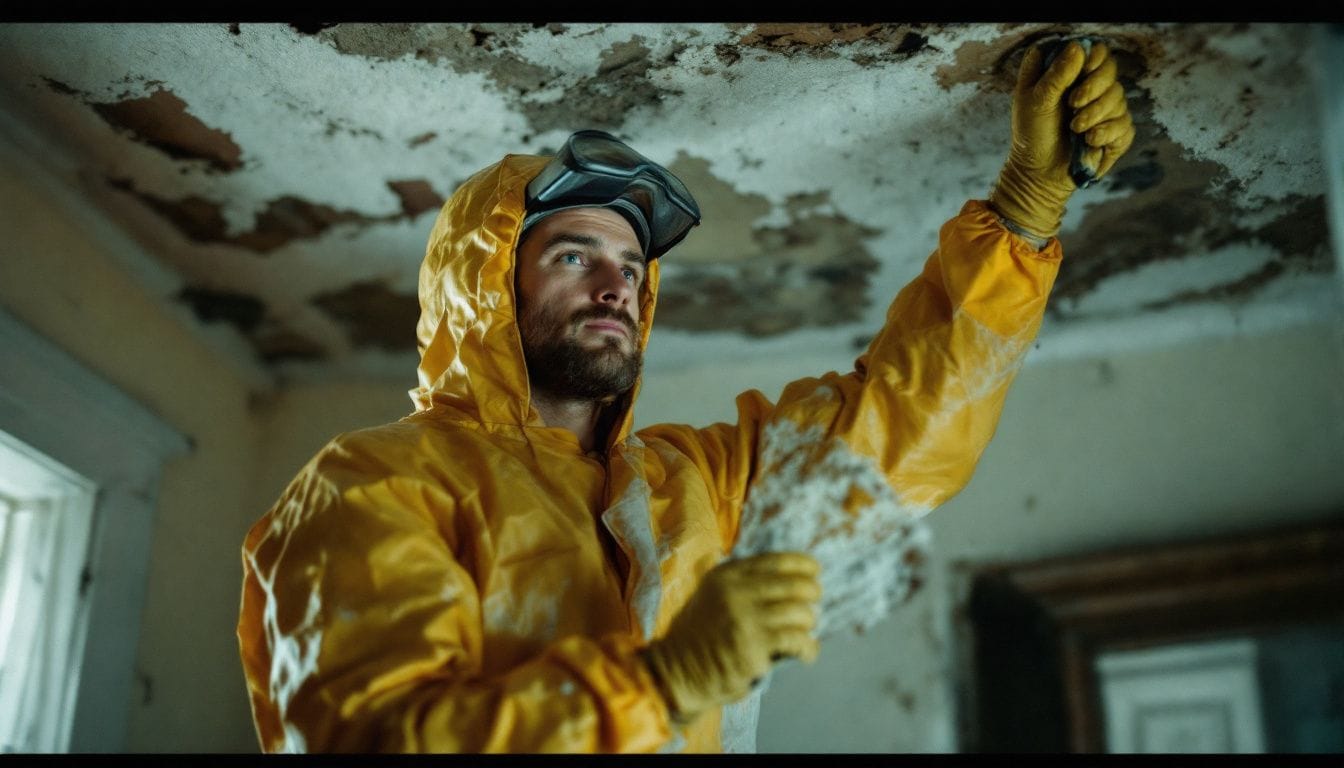
What Homeowners Really Need to Know About Asbestos Removal
Asbestos removal is one of those subjects that makes homeowners nervous — and understandably so. If your property was built before the 1990s, there is a genuine chance asbestos-containing materials (ACMs) are present somewhere in the fabric of the building. The question is not just whether they exist, but what you should actually do about them.
This post covers how to identify where asbestos hides in UK homes, when removal is genuinely necessary versus when management is the better option, how licensed professionals carry out the work safely, and how waste must be disposed of correctly under UK law.
Where Is Asbestos Found in UK Homes?
Asbestos was used extensively in UK construction from the 1950s through to the late 1990s. It was valued for its fire resistance, insulating properties, and durability — which is precisely why it ended up in so many building materials across so many property types.
Common locations where asbestos is found in domestic properties include:
- Artex and textured ceiling coatings
- Floor tiles and the adhesive beneath them
- Roof tiles, guttering, and soffit boards
- Insulation around boilers, pipes, and heating systems
- Garage and outbuilding roofing (corrugated cement sheets)
- Internal wall and ceiling panels
- Fireplace surrounds and hearth pads
- Lagging on older pipework
Asbestos cannot be identified by sight alone. A material that looks perfectly ordinary may contain fibres. This is why professional asbestos testing is the only reliable way to confirm whether a material is hazardous before you make any decisions about what to do with it.
Does Asbestos Always Need to Be Removed?
This is one of the most persistent misconceptions around asbestos. Asbestos does not automatically need to be removed simply because it is present in a building. If the material is in good condition and is not being disturbed, it is often safer to leave it in place and manage it properly.
The HSE’s guidance is clear on this point: asbestos that is intact and unlikely to be disturbed poses a low risk. The danger arises when fibres become airborne — through drilling, cutting, sanding, or the deterioration of the material over time.
There are broadly two approaches available to homeowners and property managers:
- Management in situ — The asbestos is recorded in an asbestos register, its condition is monitored regularly, and no work is carried out that would disturb it. This is often the preferred option for materials in good condition.
- Removal — The material is physically taken out by a licensed contractor. This is necessary before refurbishment or demolition work, or when a material is deteriorating and poses an ongoing risk.
A management survey will help you understand the condition and risk level of any ACMs in your property, so you can make an informed decision rather than acting on assumption or anxiety.
When Is Asbestos Removal Legally Required?
Under the Control of Asbestos Regulations, there are specific circumstances where asbestos removal becomes a legal obligation rather than a choice. Understanding these triggers is essential for any homeowner planning building work.
If you are planning any refurbishment, renovation, or demolition work — even something as routine as fitting a new kitchen or bathroom — a refurbishment survey must be carried out before work begins. This survey identifies all ACMs in the areas to be disturbed, and any materials that would be affected must be removed by a licensed contractor before the building work starts.
Failure to do this puts workers at risk and exposes homeowners and contractors to serious legal liability. The Health and Safety Executive takes enforcement action in these cases, and penalties can be severe.
Key triggers for mandatory asbestos removal include:
- Any refurbishment or demolition affecting areas where ACMs are present
- Deteriorating materials that can no longer be safely managed in place
- Materials that are repeatedly disturbed as part of normal building use
- Pre-sale or pre-lease requirements from buyers, tenants, or lenders
How Licensed Asbestos Removal Works
Asbestos removal is not a DIY job. For most types of asbestos — particularly higher-risk materials such as sprayed coatings, lagging, and products containing amosite or crocidolite — the work must be carried out by a contractor licensed by the HSE. Understanding what the process involves helps homeowners know what to expect and ask the right questions when appointing a contractor.
Site Assessment and Notification
Before any removal work begins, the licensed contractor must notify the relevant enforcing authority. This is a legal requirement under the Control of Asbestos Regulations, not an optional step. The contractor will also carry out a detailed assessment of the site to plan the work safely and prepare the appropriate method statement.
Containment and Preparation
The work area is sealed off using heavy-duty polythene sheeting, creating a controlled enclosure. This prevents asbestos fibres from migrating to other parts of the property during the removal process.
Air pressure within the enclosure is kept negative — meaning air flows inward rather than outward — using filtered extraction units. Decontamination units are installed at the entry and exit points of the enclosure, and workers pass through these units when entering and leaving to ensure no contaminated material is carried out of the work zone.
Personal Protective Equipment
All operatives working within the enclosure must wear appropriate personal protective equipment (PPE). This includes:
- Disposable coveralls (Type 5 minimum)
- Respiratory protective equipment — typically a full-face powered air-purifying respirator (PAPR) or a half-face respirator with P3 filters
- Disposable gloves
- Protective footwear
PPE is not reused across jobs. Disposable items are bagged as asbestos waste at the end of each shift, treated as contaminated material from the moment they enter the enclosure.
The Removal Process
Materials are carefully wetted down before and during removal to suppress dust. Asbestos is removed using hand tools where possible, avoiding power tools that generate additional airborne debris. The goal throughout is to keep fibre release to an absolute minimum.
Air monitoring is carried out during and after the work to confirm that fibre levels remain within safe limits. Once removal is complete, a thorough visual inspection and final air clearance test are conducted before the enclosure is dismantled and the area is handed back to the client. Our asbestos removal service follows this full process on every job, with no shortcuts.
Correct Disposal of Asbestos Waste
Asbestos waste is classified as hazardous waste under UK law, and its disposal is tightly regulated. Incorrect disposal is a criminal offence — fly-tipping asbestos waste in particular carries serious penalties including unlimited fines and potential prosecution.
The correct procedure for asbestos waste disposal is as follows:
- Double-bagging — All asbestos waste, including used PPE and polythene sheeting from the enclosure, is sealed in two layers of heavy-duty polythene bags, clearly labelled with the asbestos warning symbol.
- Rigid containers — Where the material is bulky or sharp (such as broken cement sheets), it is placed in sealed, leak-tight rigid containers rather than bags.
- Consignment notes — Licensed contractors must use hazardous waste consignment notes to track the movement of asbestos waste from the site to an approved disposal facility, creating an auditable paper trail.
- Licensed disposal site — Asbestos waste must be taken to a facility that is licensed to accept hazardous waste. It cannot simply be deposited at a standard household recycling centre without prior arrangement.
Some local councils do accept small quantities of asbestos waste from householders, but arrangements vary considerably by area and fees apply. Always contact your local authority in advance to confirm what they will accept and what charges apply. Private licensed waste collectors are also available for larger quantities.
Asbestos Testing Before Removal: Why It Matters
Before any removal work is commissioned, you need to know exactly what you are dealing with. Not every suspected material contains asbestos, and not every type of asbestos carries the same risk level. Professional sampling and analysis is the only way to get a definitive answer that stands up to regulatory scrutiny.
If you want to carry out initial sampling yourself from materials that are in good condition and can be safely accessed, a testing kit allows you to collect samples and send them to an accredited laboratory for analysis. This can be a practical first step before deciding whether to commission a full survey.
For a more thorough assessment — particularly before any planned works — a professional survey is the appropriate route. Our asbestos testing service uses UKAS-accredited laboratory analysis to provide results you can rely on and use for regulatory compliance.
Managing Asbestos Long-Term: The Role of Re-Inspection
If ACMs are present in your property and the decision has been made to manage them in place rather than remove them immediately, that is not a one-off decision you can forget about. The condition of those materials needs to be monitored over time — asbestos that is stable today may not remain so indefinitely.
A re-inspection survey provides a periodic review of known ACMs to check whether their condition has changed. If a material that was previously stable begins to deteriorate, the risk profile changes and removal may become necessary.
For non-domestic premises, the duty to manage under the Control of Asbestos Regulations requires that re-inspections are carried out at regular intervals — typically annually, or more frequently if the condition of materials warrants it. Even for domestic properties, periodic re-inspection is strongly advisable.
Asbestos Removal and Other Property Safety Obligations
Asbestos management rarely exists in isolation. If you are a landlord or managing a commercial property, you will have other statutory duties running alongside your asbestos obligations that require equal attention.
A fire risk assessment is a legal requirement for all non-domestic premises and for the common areas of residential blocks. It makes sense to address both asbestos and fire safety together as part of a broader property compliance programme, rather than treating them as entirely separate exercises with separate administrative burdens.
Supernova Asbestos Surveys can help with both, providing a joined-up approach to property safety that saves time and reduces the administrative burden on property managers and landlords.
Choosing a Licensed Asbestos Removal Contractor
Not all asbestos work requires a fully licensed contractor — some lower-risk work can be carried out by trained operatives under a notification-only regime. However, for the majority of domestic asbestos removal involving higher-risk materials, an HSE-licensed contractor is a legal requirement, not a preference.
When selecting a contractor, check the following:
- They hold a current HSE licence — this can be verified on the HSE’s public register
- They carry adequate insurance for asbestos removal work
- They provide a written method statement and risk assessment before work begins
- They use a UKAS-accredited laboratory for air clearance testing
- They issue proper hazardous waste consignment notes for all waste removed
- They provide a clearance certificate on completion
Never appoint a contractor who offers to remove asbestos without carrying out a prior assessment, or who cannot provide evidence of their HSE licence. The consequences of unlicensed removal — both for health and legal liability — are serious and long-lasting.
Asbestos Removal Costs: What to Expect
The cost of asbestos removal varies considerably depending on the type of material involved, the quantity, the accessibility of the affected area, and the location of the property. There is no single fixed price, and any contractor who quotes without a site assessment should be treated with caution.
Broadly speaking, the factors that influence cost include:
- Material type — Higher-risk materials such as sprayed coatings and pipe lagging require more stringent controls and therefore cost more to remove than lower-risk materials such as cement sheets.
- Quantity — Larger volumes of ACMs require more time, more PPE, and more waste disposal capacity.
- Access — Materials in confined spaces, at height, or within structural elements are more complex and costly to remove safely.
- Location — Labour and disposal costs vary across the UK. If you need an asbestos survey London or an asbestos survey Manchester, local rates and logistics will influence the overall cost of any subsequent removal work.
Getting multiple quotes from licensed contractors is sensible, but do not select on price alone. The cheapest quote is rarely the safest option when asbestos removal is involved. Always verify the contractor’s licence and ask for a full breakdown of what is and is not included in the quoted price.
Three Things Homeowners Often Get Wrong
After completing surveys across tens of thousands of properties, a few recurring mistakes stand out that homeowners make when dealing with asbestos.
Assuming Removal Is Always the Answer
Many homeowners instinctively want asbestos removed as soon as it is identified. In some cases, this is the right call. In others, removing intact, low-risk material creates more danger than leaving it in place — because the act of removal itself releases fibres. A professional assessment will tell you which approach is appropriate.
Attempting DIY Removal
Some homeowners attempt to remove materials themselves, particularly lower-risk items such as floor tiles or cement sheets. For licensed materials, this is illegal. For lower-risk materials, it is still inadvisable without proper training, equipment, and an understanding of the waste disposal requirements. The risks — both to health and to legal liability — are not worth it.
Not Telling Contractors About Known ACMs
If you know or suspect ACMs are present in your property and you instruct building contractors without disclosing this, you are potentially exposing those workers to harm and yourself to serious legal consequences. Under the Control of Asbestos Regulations, duty holders have clear obligations to share information about known asbestos with anyone who may disturb it.
Frequently Asked Questions
Can I remove asbestos myself from my own home?
For materials that require a licensed contractor — which includes most higher-risk asbestos types — DIY removal is illegal. For some lower-risk materials, it may technically be permissible for a homeowner working on their own domestic property, but it is strongly inadvisable without proper training and equipment. Incorrect removal can release fibres and create a hazard where previously there was none. Professional removal is always the safer and more legally sound option.
How do I know if a material in my home contains asbestos?
You cannot tell by looking at it. The only reliable way to confirm whether a material contains asbestos is through laboratory analysis of a sample. You can use a home testing kit to collect a sample safely and send it to an accredited laboratory, or commission a professional survey for a more thorough assessment of the whole property.
Is asbestos removal always required before selling a property?
There is no blanket legal requirement to remove asbestos before selling a domestic property. However, mortgage lenders and buyers may raise concerns, and you are legally obliged to disclose known material defects. If ACMs are in poor condition or present a risk, addressing them before sale is generally advisable. A management survey will give you a clear picture of what is present and what action, if any, is required.
How long does asbestos removal take?
This depends on the type and quantity of material, the complexity of the work area, and the number of operatives involved. A small domestic job — removing a section of insulation board, for example — might take a day or two including setup, removal, and clearance testing. Larger jobs involving multiple materials across a whole property can take considerably longer. Your contractor should provide a clear programme of works before starting.
What happens after asbestos removal is complete?
Once removal is complete, a licensed contractor will carry out a visual inspection of the work area followed by a final air clearance test using a UKAS-accredited analyst. If the area passes the clearance test, the enclosure is dismantled and a clearance certificate is issued. This certificate is an important document — keep it with your property records as evidence that the work was carried out correctly.
Get Professional Advice From Supernova Asbestos Surveys
Whether you have just discovered suspected asbestos in your property, are planning refurbishment work, or simply want to understand what is present and what your obligations are, Supernova Asbestos Surveys is here to help. With over 50,000 surveys completed across the UK, we have the experience and accreditation to give you accurate, reliable guidance — not guesswork.
Call us on 020 4586 0680 or visit asbestos-surveys.org.uk to book a survey, request a quote for removal, or find out more about our full range of asbestos and property safety services.