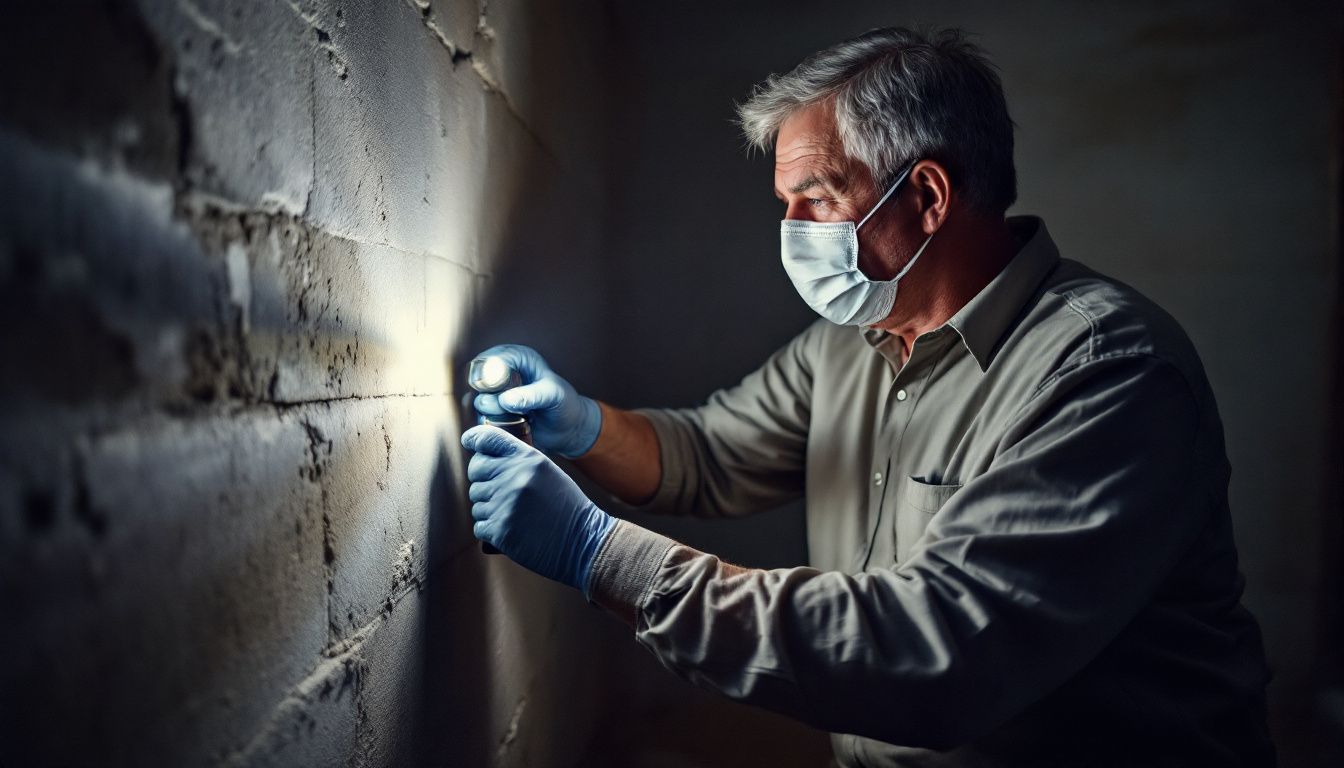
Why You Need an Asbestos Survey Before Renovation — And What Happens If You Skip It
Picking up a sledgehammer without knowing what’s inside your walls is one of the most dangerous things a homeowner or contractor can do. If your property was built or refurbished before 2000, there’s a real chance asbestos-containing materials are hiding behind perfectly ordinary-looking surfaces — and a 247 asbestos services asbestos survey before renovation is the only reliable way to find out before the dust starts flying.
Asbestos fibres are invisible to the naked eye. Once disturbed, they become airborne and can be inhaled without anyone realising. The diseases they cause — mesothelioma, lung cancer, asbestosis — can take decades to develop, which is exactly why so many people underestimate the risk when renovation work begins.
Where Asbestos Hides in Older Properties
Asbestos wasn’t used in just one or two building materials — it was used in hundreds. Its heat resistance, durability, and low cost made it a favourite across the construction industry for much of the twentieth century.
In homes and commercial buildings built before 2000, you’re likely to encounter asbestos-containing materials in some or all of the following locations:
- Textured coatings — Artex and similar ceiling finishes frequently contain chrysotile (white asbestos)
- Floor tiles — Vinyl floor tiles and the adhesive beneath them are common sources
- Pipe lagging and boiler insulation — Particularly in properties with older heating systems
- Cement panels and soffits — Asbestos cement was widely used in garages, outbuildings, and flat roofs
- Insulation boards — Found behind fireplaces, around boilers, and in ceiling voids
- Roof tiles and guttering — Especially in properties with pre-1980s construction
- Textiles and gaskets — Heat-resistant materials around older appliances
You cannot identify asbestos by looking at it. A material can appear perfectly ordinary and still contain dangerous fibres. Sampling and laboratory analysis are the only definitive methods of confirmation — visual inspection alone is never sufficient.
The Legal Position: What the Regulations Actually Require
Many homeowners assume asbestos regulations only apply to commercial buildings or large contractors. That’s a misconception that can have serious consequences.
The Control of Asbestos Regulations set out clear obligations for anyone carrying out work that could disturb asbestos-containing materials. These regulations apply to domestic properties as well as non-domestic premises, and they place duties on both employers and the self-employed.
Key Legal Points to Understand
- Before any refurbishment or demolition work, a refurbishment survey must be carried out in all areas to be disturbed
- For non-domestic premises, the duty to manage asbestos under Regulation 4 requires an up-to-date asbestos register and management plan
- Certain types of asbestos work — particularly involving higher-risk materials such as amosite or crocidolite — require a licensed contractor
- Asbestos waste must be double-bagged, correctly labelled, and disposed of at a licensed facility
The HSE’s HSG264 guidance sets out exactly how surveys should be conducted and what the resulting reports must contain. Any survey you commission should fully comply with this standard.
For non-domestic premises, owners and managers also have an ongoing duty to maintain an asbestos management survey and keep it current. Failure to comply can result in enforcement action, significant fines, and — far more seriously — preventable harm to workers and occupants.
What Type of Asbestos Survey Do You Need Before Renovation?
Not all asbestos surveys are the same. The type you need depends on what you’re planning to do with the property and the nature of the works involved. Getting this wrong can leave you legally exposed and your workforce at risk.
Refurbishment Survey
If you’re planning any work that will disturb the building fabric — knocking down walls, replacing flooring, removing ceilings, upgrading heating systems — you need a refurbishment survey. This is a more intrusive inspection than a standard management survey, with the surveyor accessing all areas that will be affected by the planned works.
The surveyor takes samples from suspect materials and provides a detailed, risk-rated report. This is the survey type that must legally be completed before renovation work begins — it’s not optional, and it cannot be substituted with a visual inspection alone.
Demolition Survey
If the entire structure is being demolished rather than refurbished, a demolition survey is required instead. This is a fully intrusive inspection covering the whole building, ensuring no asbestos-containing materials are missed before demolition proceeds.
It is a legal requirement — not an optional precaution. No responsible demolition contractor should begin work without one in place.
Management Survey
A management survey is designed for properties that are in normal occupation and not undergoing major works. It identifies the presence, location, and condition of asbestos-containing materials that could be disturbed during routine maintenance.
For non-domestic premises, this survey underpins the legal duty to manage asbestos. If you own or manage a commercial property and haven’t had one carried out, you may already be in breach of your legal obligations.
Re-inspection Survey
Once asbestos-containing materials have been identified and a management plan is in place, those materials need to be monitored over time. A re-inspection survey checks the condition of known ACMs and updates the risk assessment accordingly. This is typically required on an annual basis for commercial premises.
What Happens During an Asbestos Survey?
Understanding what to expect from the survey process helps you prepare properly and ensures nothing is missed. Here’s how the process works from start to finish.
Step 1 — Booking
Contact Supernova Asbestos Surveys by phone or through the website to discuss your requirements. We’ll confirm availability — often within the same week — and send a booking confirmation. You’ll be asked for details about the property type, age, size, and the scope of planned works.
Step 2 — Site Visit
A BOHS P402-qualified surveyor attends at the agreed time and carries out a thorough inspection of all relevant areas. For a refurbishment survey, this means accessing every part of the building that will be disturbed during the renovation.
Step 3 — Sampling
Representative samples are collected from suspect materials using correct containment procedures. This minimises disturbance and prevents fibre release during the sampling process itself.
Step 4 — Laboratory Analysis
All samples are sent for asbestos testing and analysed under polarised light microscopy at a UKAS-accredited laboratory. This is the only method that definitively identifies asbestos type and confirms its presence or absence.
If you’d prefer to collect your own samples from clearly accessible materials, a testing kit is available to order — though for pre-renovation purposes, a full professional survey is always the recommended route.
Step 5 — Report Delivery
You receive a detailed written report within 3–5 working days. This includes a full asbestos register, photographs, risk ratings for each identified material, and a management plan. The report is fully compliant with HSG264 and satisfies all requirements under the Control of Asbestos Regulations.
The Health Risks: Why This Goes Beyond Compliance
Regulations exist for a reason. Asbestos-related diseases are among the most serious occupational health conditions in the UK, and renovation work is one of the most common ways that fibres are disturbed in domestic settings.
When asbestos-containing materials are cut, drilled, sanded, or broken, microscopic fibres are released into the air. These fibres are so small they remain suspended for hours and can be inhaled without any obvious warning signs. There is no safe level of exposure.
The diseases caused by asbestos inhalation include:
- Mesothelioma — A cancer of the lining of the lungs or abdomen, almost exclusively caused by asbestos exposure. It is always fatal.
- Asbestos-related lung cancer — Particularly associated with higher levels of exposure
- Asbestosis — Scarring of the lung tissue that causes progressive breathing difficulties
- Pleural thickening — Thickening of the membrane surrounding the lungs, causing breathlessness
Symptoms can take anywhere from 15 to 60 years to appear after exposure. That long latency period means people often don’t connect their illness to work carried out decades earlier — and it also means that taking precautions now genuinely matters, even if consequences won’t be apparent for years.
If Asbestos Is Found: What to Do Next
Discovering asbestos in your property doesn’t automatically mean you’re in danger or that work has to stop indefinitely. Asbestos in good condition that won’t be disturbed can often be managed in place. But when renovation work is planned, materials in the affected areas must be addressed before work proceeds.
Don’t Disturb the Material
If asbestos is in good condition and won’t be touched during the works, it may be safe to leave it in place under a management plan. Review the risk assessment in your survey report carefully — each material will be risk-rated based on its condition, accessibility, and likelihood of disturbance.
Engage a Licensed Contractor Where Required
Higher-risk materials — particularly those containing amosite or crocidolite, or materials in poor condition — must be removed by a licensed contractor before any renovation work proceeds. Our asbestos removal service covers this work fully, from notification through to compliant waste disposal.
Ensure Correct Waste Disposal
Asbestos waste must be double-bagged in the correct packaging, labelled with hazard markings, and taken to a licensed disposal facility. This is a legal requirement, not a recommendation — and one that’s frequently overlooked by contractors unfamiliar with asbestos work.
Update Your Asbestos Register
Once removal or encapsulation work is complete, your records need to reflect the current state of the building. An up-to-date register is both a legal requirement for non-domestic premises and a practical safeguard for anyone working in the property in future.
Asbestos Testing: When Sampling Alone Is the Answer
Sometimes you don’t need a full survey — you need to know whether a specific material contains asbestos before deciding how to proceed. In these cases, targeted asbestos testing of a specific sample can provide a fast, cost-effective answer.
Our testing service uses UKAS-accredited laboratory analysis to confirm the presence or absence of asbestos fibres in submitted samples, with results typically returned within a few working days.
That said, for any planned renovation work, a full refurbishment survey is always the appropriate starting point. Targeted testing works best as a follow-up or for isolated queries about a specific material where the broader survey has already been completed.
Don’t Overlook Fire Risk During Renovation
Renovation projects — particularly in commercial properties — often trigger the need for an updated fire risk assessment as well. Changes to the building layout, the removal of fire-resistant materials (which may include asbestos-containing products), and alterations to escape routes can all affect your fire risk profile.
If you’re planning significant works, addressing both asbestos and fire risk at the same time avoids delays further down the line and ensures you’re fully compliant before work begins. It’s a straightforward step that many project managers overlook until it causes problems.
Survey Costs and What to Expect
Supernova Asbestos Surveys offers transparent, fixed-price surveys across the UK. There are no hidden fees — you receive a clear quote before any work begins, based on the property type, size, and survey type required.
Pricing varies depending on the scope of works, but the cost of a professional survey is negligible compared to the legal, financial, and health consequences of proceeding without one. A contractor who disturbs asbestos unknowingly faces potential prosecution, remediation costs, and civil liability — none of which are small numbers.
We operate nationwide, with surveyors available across England, Scotland, and Wales. Appointments are typically available within the same week, and reports are delivered within 3–5 working days of the site visit.
Common Mistakes Property Owners Make Before Renovation
Even well-intentioned property owners and project managers make avoidable errors when it comes to asbestos and renovation work. Here are the ones we see most often — and how to avoid them.
- Assuming a property is asbestos-free because it looks modern — Many buildings that appear to have been updated still contain original materials behind newer finishes. Age of the visible surface tells you nothing about what’s beneath.
- Commissioning a management survey when a refurbishment survey is needed — These are not interchangeable. A management survey is not sufficient to satisfy legal requirements before renovation work begins.
- Starting work before the report arrives — A verbal indication from a surveyor is not a substitute for the written report. Work must not begin until the full findings are in hand and reviewed.
- Relying on a previous survey without checking its scope — An older survey may not have covered the areas being disturbed, or may not have been intrusive enough to meet refurbishment survey standards.
- Using an unlicensed contractor for licensed work — Not all asbestos removal can be carried out by any contractor. Higher-risk materials require a Health and Safety Executive licensed contractor, and using an unlicensed one exposes everyone involved to serious legal risk.
- Failing to notify the HSE where required — Certain licensable asbestos work requires advance notification to the HSE. This is a legal obligation, not a formality.
Why Choose Supernova Asbestos Surveys
Supernova Asbestos Surveys has completed over 50,000 surveys nationwide. Our surveyors are BOHS P402-qualified, our laboratory analysis is carried out by UKAS-accredited facilities, and every report we produce is fully compliant with HSG264 and the Control of Asbestos Regulations.
We work with homeowners, landlords, property managers, contractors, and local authorities across the UK. Whether you need a single pre-renovation survey or ongoing asbestos management across a portfolio of properties, we can help.
Our reports are clear, actionable, and written to be understood — not just filed away. You’ll know exactly what’s been found, where it is, what condition it’s in, and what needs to happen before your renovation can proceed safely and legally.
To book a survey or discuss your requirements, call us on 020 4586 0680 or visit asbestos-surveys.org.uk. We’re available Monday to Friday and can usually confirm an appointment within 24 hours.
Frequently Asked Questions
Do I legally need an asbestos survey before renovating a domestic property?
The Control of Asbestos Regulations require that a refurbishment survey is carried out before any work that will disturb the building fabric in areas where asbestos-containing materials may be present. While the duty to manage asbestos under Regulation 4 applies specifically to non-domestic premises, the requirement to survey before refurbishment work applies more broadly — and any contractor or self-employed person carrying out such work has legal obligations under the regulations. For domestic properties, the responsibility typically falls on the contractor rather than the homeowner, but commissioning a survey before work begins is the only way to ensure those obligations are met.
What is the difference between a refurbishment survey and a management survey?
A management survey is designed for properties in normal use and identifies asbestos-containing materials that could be disturbed during routine maintenance. It is not intrusive enough to satisfy the legal requirement before renovation work. A refurbishment survey is more invasive — the surveyor accesses all areas to be disturbed by the planned works and takes samples from suspect materials. This is the survey type legally required before any refurbishment or renovation begins. Substituting one for the other is a common and serious mistake.
How long does an asbestos survey take?
The duration of a site visit depends on the size and complexity of the property and the type of survey being carried out. A standard residential refurbishment survey typically takes between one and three hours. Larger commercial properties or those with complex layouts will take longer. The written report is usually delivered within 3–5 working days of the site visit and includes a full asbestos register, photographs, risk ratings, and a management plan.
Can I remove asbestos myself?
Some lower-risk asbestos work — such as the removal of small amounts of asbestos cement in good condition — can be carried out by a non-licensed contractor following specific HSE guidance. However, higher-risk materials, including sprayed coatings, lagging, and most insulation boards, must be removed by an HSE-licensed contractor. Attempting to remove licensable materials without the appropriate licence is a criminal offence. If you’re unsure which category your material falls into, the safest course of action is to commission a survey and follow the recommendations in the report.
How much does an asbestos survey cost?
Survey costs vary depending on the property type, size, and the type of survey required. Supernova Asbestos Surveys provides transparent, fixed-price quotes with no hidden fees. To get an accurate price for your specific requirements, call us on 020 4586 0680 or visit asbestos-surveys.org.uk. The cost of a professional survey is always considerably less than the consequences of proceeding without one.