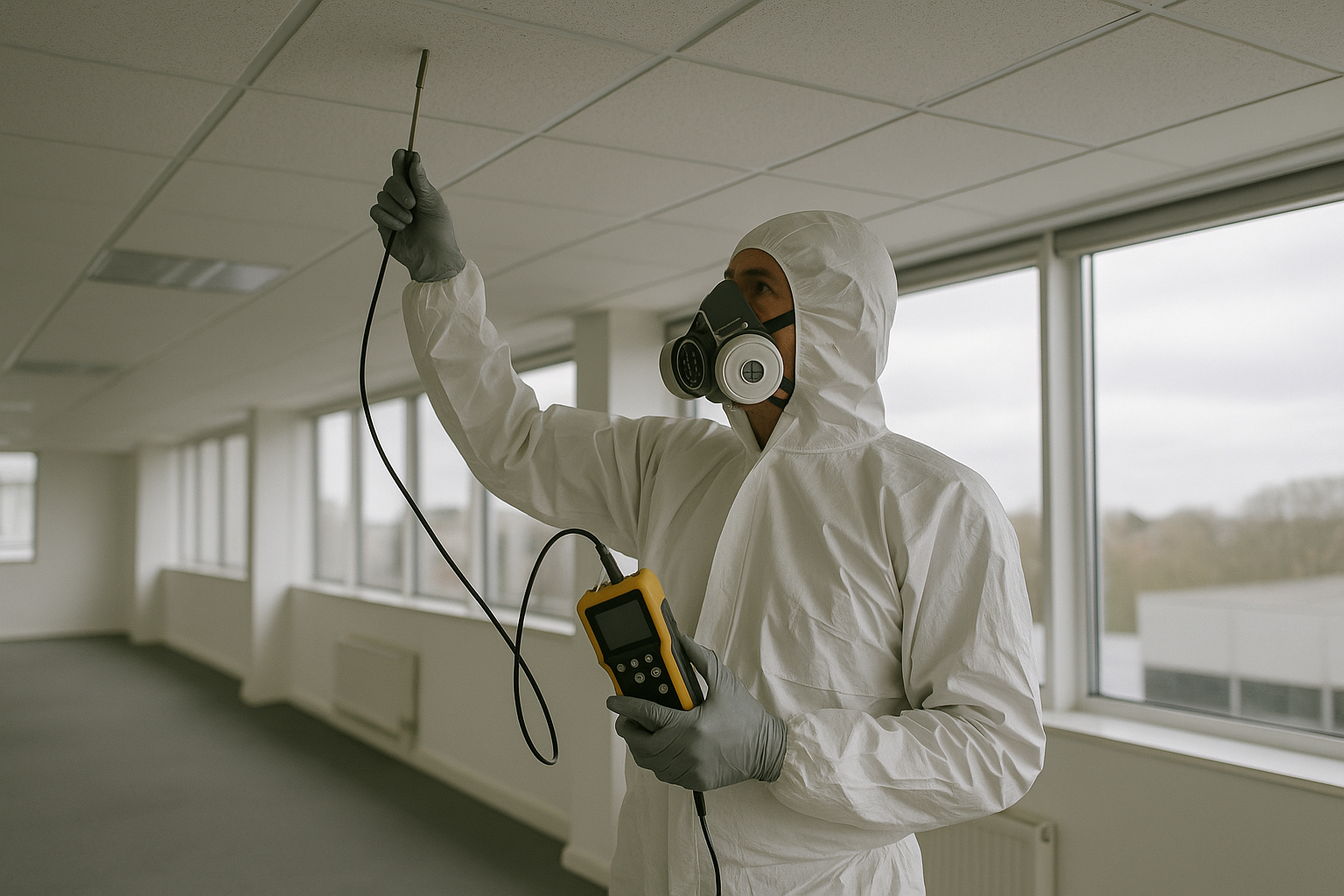
Disturb the wrong material during maintenance works and asbestos abatement can go from a routine control measure to a serious incident. For property managers, landlords, facilities teams and contractors, the issue is rarely just removal. The real challenge is knowing what is present, what risk it poses, and what must happen before anyone drills, strips, repairs or demolishes.
Done properly, asbestos abatement protects occupants, workers and your organisation. Done badly, it leads to contamination, delays, enforcement action and avoidable exposure. The safest route is always the same: identify the material, assess the risk, choose the right control method and use competent specialists.
What asbestos abatement actually means
Asbestos abatement is the process of controlling asbestos-containing materials so they do not put people at risk. That can include leaving materials in place and managing them, sealing them, enclosing them, repairing minor damage or arranging removal where safer options are not suitable.
Many people use asbestos abatement to mean removal alone, but that is too narrow. In practice, removal is only one possible outcome. If an asbestos-containing material is in good condition and unlikely to be disturbed, management in situ may be the most sensible and lawful approach.
Common forms of asbestos abatement
- Management in situ where asbestos remains in place and is monitored
- Encapsulation to seal and protect the surface
- Enclosure to prevent accidental disturbance
- Repair of minor damage where appropriate
- Removal where the risk cannot be controlled by other means
The right option depends on the product type, condition, accessibility, occupancy and planned works. A cement sheet on a detached outbuilding is a very different proposition from damaged insulation board in a busy service riser.
Why asbestos abatement matters for health and safety
Asbestos is dangerous when fibres are released and inhaled. Those fibres are microscopic, remain airborne easily and can lodge deep in the lungs. You cannot judge the risk by sight, and you cannot assume a material is safe just because it looks intact.
That is why asbestos abatement must be planned carefully and carried out under strict controls. General maintenance teams should never make assumptions on site. If a material might contain asbestos, treat it as suspect until it has been surveyed or tested.
Health conditions linked to asbestos exposure
- Mesothelioma
- Asbestos-related lung cancer
- Asbestosis
- Pleural thickening and other respiratory disease
The practical lesson is straightforward. A short delay to confirm what a material is will nearly always cost less than contamination, emergency clean-up or a claim arising from exposure.
Where asbestos is commonly found in buildings
Asbestos was used in a wide range of building products, not just lagging and insulation boards. Properties built or refurbished before the UK ban may still contain asbestos in both obvious and concealed locations.
Before any asbestos abatement work starts, you need a realistic picture of where asbestos-containing materials may be present. Hidden materials are often the ones that cause the biggest problems during refurbishment and maintenance.
Typical asbestos-containing materials
- Sprayed coatings
- Pipe and boiler insulation
- Asbestos insulating board
- Cement sheets, panels and flues
- Textured coatings
- Floor tiles and bitumen adhesives
- Soffits, gutters and downpipes
- Ceiling tiles
- Roofing products
- Fire doors, panels and service risers
Some materials are much higher risk than others. Friable products that release fibres easily need tighter controls than bonded products such as asbestos cement, although bonded materials can still become hazardous if they are cut, drilled, sanded or broken.
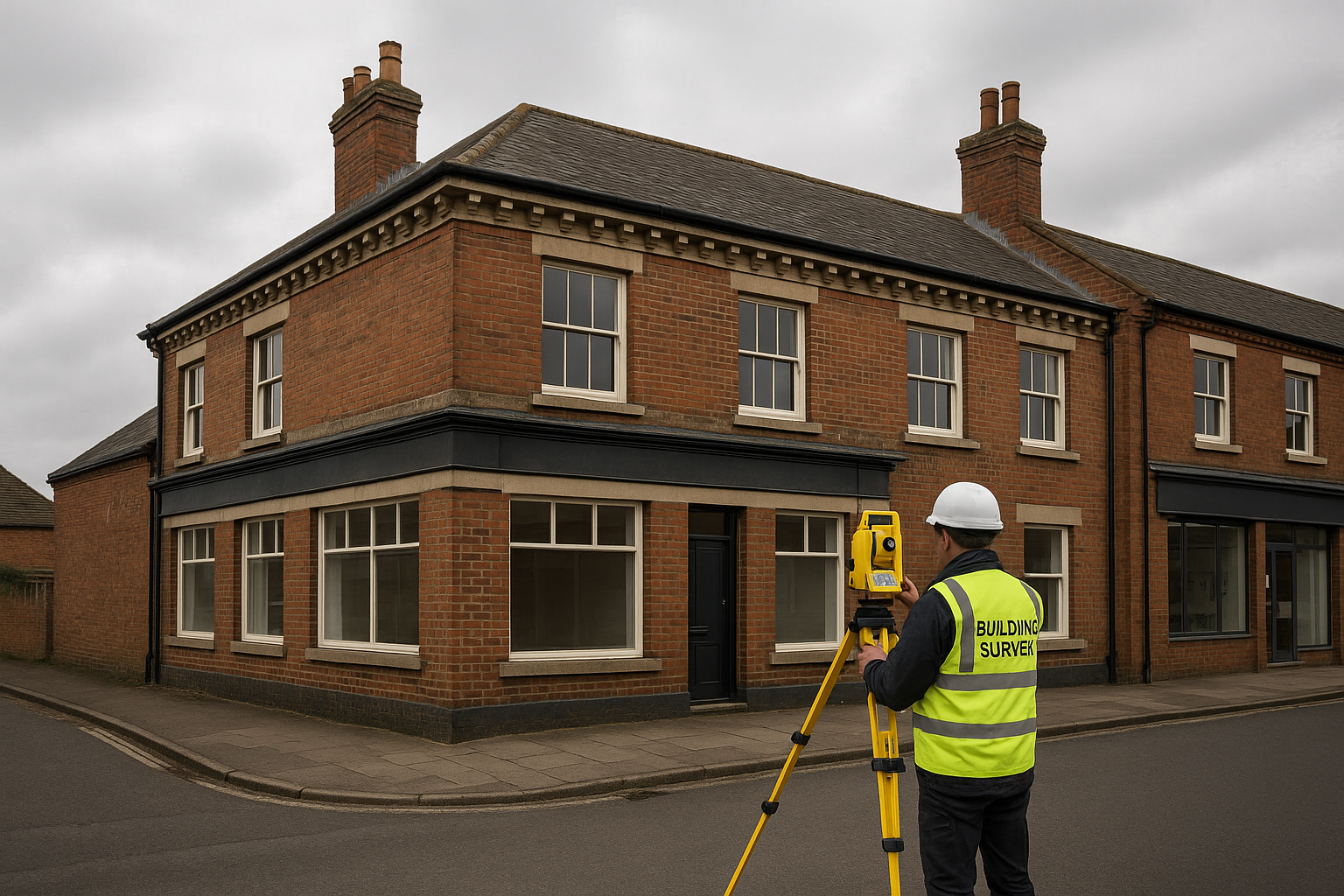
Start asbestos abatement with the right survey
The most common mistake in asbestos abatement is starting work without enough information. If you do not know what is present, where it is, what condition it is in and whether works will disturb it, you are relying on guesswork.
Surveying should align with HSG264 and relevant HSE guidance. A useful report should give you clear locations, material assessments where relevant, photographs and practical recommendations. If the report is vague or does not match the scope of the planned works, stop and get it reviewed.
When a management survey is appropriate
If the building is occupied and you need to manage asbestos during normal use, a management survey is usually the starting point. This supports the duty to manage under the Control of Asbestos Regulations and helps identify materials that could be disturbed during routine occupation, maintenance or minor works.
For property managers, this survey often underpins the asbestos register and management plan. It is not designed for major intrusive works, so do not rely on it for strip-out or refurbishment projects.
When a refurbishment survey is needed
If you are planning intrusive works, you will usually need a refurbishment survey in the affected area. This is more intrusive by design and aims to locate asbestos before the building fabric is disturbed.
This matters because hidden asbestos behind walls, above ceilings or within service voids is often what causes project shutdowns. Getting the survey scope right before the contractor arrives can save weeks of disruption.
Why re-inspection matters
Where asbestos remains in place, condition can change over time. A re-inspection survey helps confirm whether previously identified materials are still in good condition and whether the management plan remains suitable.
If you manage multiple sites, build re-inspection into your compliance routine. It is one of the clearest ways to show that asbestos abatement decisions are being monitored rather than forgotten.
What a compliant survey should provide
- Identification of suspected or confirmed asbestos-containing materials
- Clear room-by-room locations
- Photographs and plans where relevant
- Material information and condition details
- Recommendations for management or further action
- An asbestos register to support compliance
When testing is useful before asbestos abatement
Not every situation needs a full survey immediately. If you have one or two suspect materials and need to establish whether asbestos is present, sampling can be useful. For simple sample submission where it is safe and appropriate, a testing kit can be a practical first step.
That said, testing should never be approached casually. If the material is damaged, friable, overhead, difficult to access or part of a wider commercial risk, use a competent surveyor instead of attempting to sample it yourself.
Testing is especially useful when
- You need to confirm whether a single material contains asbestos
- You are checking a garage roof, outbuilding or floor tile
- You want evidence before deciding on repair, encapsulation or removal
- You are trying to avoid unnecessary disruption before planning works
Accurate identification is the foundation of sensible asbestos abatement. Guesswork usually leads to one of two bad outcomes: unsafe decisions or unnecessary cost.
How asbestos abatement is planned safely
Once asbestos has been identified, the next step is deciding how the risk will be controlled. This is where successful projects separate themselves from expensive mistakes. Good planning protects workers, occupants, neighbouring trades and the programme.
A proper asbestos abatement plan should consider the type of material, its condition, accessibility, occupancy, emergency procedures, waste route and whether the work is licensed, notifiable non-licensed or non-licensed under the Control of Asbestos Regulations.
Key planning steps
- Review the survey and confirm exactly which materials are affected.
- Assess whether removal is necessary or whether management, sealing or enclosure is more suitable.
- Determine the work category and whether a licensed contractor is required.
- Prepare a risk assessment and plan of work with site-specific controls.
- Inform occupants, contractors and facilities teams before work starts.
- Set up the work area properly before any disturbance begins.
- Plan inspection, cleaning and handover arrangements in advance.
If your project involves multiple hazards, asbestos controls should be coordinated with wider safety management. For example, temporary closures, compartmentation issues and escape route changes may affect your fire risk assessment as well.
Site controls used during asbestos abatement
Safe asbestos abatement depends on preventing fibre release and stopping fibres from spreading beyond the work area. The exact controls vary by material and method, but the principles are consistent.
Typical site controls
- Segregating the area with barriers and warning signage
- Restricting access to authorised personnel only
- Using enclosures where required
- Installing negative pressure units where appropriate
- Applying wet removal techniques to reduce airborne fibre release
- Using suitable Class H vacuum equipment
- Avoiding unnecessary breakage
- Using hand tools rather than aggressive power tools where possible
- Providing decontamination arrangements for workers
These are not optional extras. They should be built into the plan of work, supervised properly and checked throughout the job. If controls are being improvised on the day, the project is already off course.
Personal protective equipment
Workers involved in asbestos abatement may need suitable respiratory protective equipment, disposable coveralls, gloves and other protective clothing depending on the task. PPE is the last line of defence, not the first.
If you are appointing a contractor, ask how exposure will be controlled at source. A strong answer will focus on method, containment and cleaning before it mentions masks and overalls.
Licensed and non-licensed work: know the difference
One of the biggest points of confusion is whether all asbestos abatement requires a licensed contractor. It does not. However, higher-risk work certainly does, and getting this wrong can have serious legal and safety consequences.
Some lower-risk tasks involving certain asbestos-containing materials may be non-licensed or notifiable non-licensed work if the material is in the right condition and the method is suitable. Higher-risk materials such as pipe insulation, loose fill insulation and many tasks involving asbestos insulating board often require a licensed contractor.
If there is any doubt, get specialist advice before works begin. A competent contractor should be able to explain clearly why the work category is appropriate and what controls are required.
Questions to ask before appointing a contractor
- What category of asbestos work applies to this task?
- Is a licensed contractor required?
- What training and competence do the operatives have?
- What does the plan of work include?
- How will the area be cleaned, inspected and handed back?
- How will asbestos waste be packaged and removed from site?
If removal is needed, use a specialist provider for asbestos removal rather than relying on a general builder to arrange it informally. Informal arrangements are where documentation, control measures and accountability often start to fall apart.
Waste handling and disposal during asbestos abatement
Removing asbestos safely is only part of the job. Waste handling is just as important. Poor packaging, bad storage or the wrong disposal route can create fresh contamination risks after the main work is finished.
Asbestos waste must be packaged, labelled, transported and disposed of in line with the relevant hazardous waste requirements. The contractor should have clear procedures for sealing waste, moving it from the work area and taking it to an authorised facility.
Good waste practice includes
- Double-bagging or wrapping waste in suitable approved packaging where required
- Using clear asbestos warning labels
- Keeping waste secure during storage and transport
- Preventing tears, punctures and leakage
- Maintaining the correct paperwork and consignment details
Do not allow asbestos waste to be mixed with general construction waste. If skips, corridors, loading bays or bin stores are involved, make sure the route has been planned before work starts.
Legal duties property managers need to understand
Asbestos abatement sits within a wider legal framework. The key law is the Control of Asbestos Regulations, which sets out duties around identification, management, training, prevention of exposure and the use of licensed contractors where required.
For non-domestic premises, the duty to manage is central. If you are responsible for maintenance or repair, you may need to identify asbestos-containing materials, assess their condition, keep records and make sure anyone liable to disturb them has the right information.
HSE guidance and HSG264 support how surveys should be carried out and how asbestos information should be used in practice. Compliance is not about having a report buried in a folder. It is about using that information before work starts and acting on the findings.
Practical compliance checklist
- Keep an up-to-date asbestos register
- Review survey information before any works
- Share asbestos information with contractors in advance
- Arrange re-inspections where asbestos remains in place
- Use competent specialists for surveying, sampling and removal
- Keep records of actions taken and decisions made
- Check that plans of work reflect the actual site conditions
Choosing the right asbestos abatement strategy
Not every asbestos-containing material needs to be removed. Good asbestos abatement is about proportionate risk control, not defaulting to the most disruptive option.
When deciding what to do, look at four things first: material type, condition, likelihood of disturbance and future building plans. A material in good condition in a low-traffic area may be manageable. The same material in a plant room due for rewiring may need removal.
Management in situ may be suitable when
- The material is in good condition
- It is unlikely to be disturbed
- It can be clearly recorded and monitored
- Occupants and contractors can be informed properly
Encapsulation or enclosure may be suitable when
- The material is stable but needs added protection
- Minor surface damage can be controlled
- Removal would create greater disruption than benefit
Removal is often the better option when
- The material is damaged or deteriorating
- Refurbishment or demolition will disturb it
- Access for future maintenance would repeatedly create risk
- The location makes long-term management unrealistic
This is why survey quality matters so much. The best asbestos abatement decision is only possible when the initial information is reliable.
Common mistakes that make asbestos abatement harder
Most asbestos problems in buildings are not caused by the material itself. They are caused by poor decisions around it. Small errors early on tend to become expensive problems later.
Frequent mistakes to avoid
- Starting works with the wrong survey or no survey at all
- Assuming a management survey is enough for refurbishment
- Letting contractors rely on verbal asbestos information
- Sampling suspect materials without checking whether it is safe to do so
- Using non-specialists for higher-risk work
- Failing to update the asbestos register after works
- Ignoring materials that remain in place after partial removal
If you manage a portfolio, standardise your process. Require asbestos information to be reviewed at pre-start stage, not once the contractor is already on site asking questions.
Asbestos abatement across multiple locations
Consistency matters when you manage buildings in different regions. The legal duties do not change just because your sites are spread across several cities, but response times, contractor coordination and access arrangements often do.
If you need local support, Supernova can help with an asbestos survey London appointment, an asbestos survey Manchester service or an asbestos survey Birmingham visit. Using one experienced provider across multiple sites can make reporting, record-keeping and follow-up much easier to manage.
For property managers, that consistency reduces the chance of one site operating to a different standard from another. It also makes it easier to brief contractors and maintain a reliable asbestos register across the whole portfolio.
Practical steps to take before any work starts
If there is even a small chance that planned works could disturb asbestos, pause and run through a simple pre-start check. This takes minutes and can prevent months of disruption.
- Check whether asbestos information already exists for the area.
- Confirm whether the existing survey matches the planned work scope.
- Arrange testing or a new survey if information is missing or unclear.
- Review whether the material can be managed or needs active asbestos abatement.
- Appoint competent specialists and ask for a clear plan of work.
- Brief everyone affected, including maintenance teams and occupants.
- Make sure waste routes, access controls and handover arrangements are agreed.
That is the practical difference between controlled asbestos abatement and reactive problem-solving. The first protects people and programmes. The second usually creates avoidable cost.
Frequently Asked Questions
Is asbestos abatement the same as asbestos removal?
No. Asbestos abatement is a wider term that includes management in situ, encapsulation, enclosure, repair and removal. Removal is only one option, and it is not always the best one.
Do I always need a survey before asbestos abatement?
In most cases, yes. You need suitable information before deciding how to manage the risk. A management survey may be enough for normal occupation, while intrusive works usually require a refurbishment survey in the affected area.
Can asbestos be left in place safely?
Yes, if it is in good condition, unlikely to be disturbed and properly managed. That means it should be recorded, monitored and communicated to anyone who may work on or near it.
Who is responsible for managing asbestos in a non-domestic building?
Responsibility usually sits with the dutyholder under the Control of Asbestos Regulations. In practice, that may be the owner, landlord, managing agent or another party with responsibility for maintenance and repair.
What should I do if a contractor finds suspect asbestos during works?
Stop work in the affected area immediately, prevent access and seek competent advice. Do not allow the material to be disturbed further until it has been assessed, surveyed or tested and the right asbestos abatement plan is in place.
If you need clear advice on asbestos abatement, surveys, sampling or removal, speak to Supernova Asbestos Surveys. We have completed more than 50,000 surveys nationwide and support property managers, landlords and contractors with practical, compliant solutions. Call 020 4586 0680 or visit asbestos-surveys.org.uk to book a survey or discuss your site.