One missing asbestos register or one contractor drilling into the wrong panel can turn a routine job into a reportable incident. That is why asbestos at work regulations matter so much. If you manage property, oversee maintenance or appoint contractors in an older building, you need more than a vague warning about asbestos. You need a clear system that stands up on site and under scrutiny.
Across the UK, asbestos is still present in many commercial premises, public buildings and shared residential areas. The law does not require every asbestos-containing material to be removed on sight. What it does require is that asbestos is identified, assessed and managed properly so workers, occupants and visitors are not exposed through avoidable disturbance.
For property managers, landlords, employers and contractors, the challenge is rarely whether rules exist. The real issue is understanding what asbestos at work regulations mean in practice, who carries the duty, and what records you need if the HSE asks questions.
What are asbestos at work regulations?
In the UK, the main legal framework is the Control of Asbestos Regulations. These regulations are supported by HSE guidance and by survey guidance in HSG264. Together, they set out how asbestos should be identified, assessed, managed, sampled, worked on and, where necessary, removed.
These duties apply wherever asbestos-containing materials could put people at risk. That includes offices, schools, retail units, warehouses, factories, healthcare settings, plant rooms, communal areas in blocks of flats and many domestic properties where tradespeople are asked to carry out work.
The practical principle is simple: if work could disturb asbestos, the risk must be considered before the job starts. Guesswork is not a defence, and an old survey that nobody checks is not a management system.
What the law expects in practice
- Identify whether asbestos is present or likely to be present
- Assess the risk from the material, its condition and its location
- Prevent exposure so far as reasonably practicable
- Use competent surveyors, analysts and contractors
- Provide relevant information to staff and contractors
- Train anyone who may encounter asbestos during their work
- Keep records current, accessible and useful
- Review arrangements when the building, occupancy or planned works change
Many duty holders fall short because they have paperwork but no working process. A survey saved in an inbox does not protect anyone if contractors never see it before starting work.
Who must comply with asbestos at work regulations?
Asbestos at work regulations affect far more people than many assume. They are not aimed only at licensed asbestos contractors or major construction projects. They apply to anyone responsible for premises, maintenance, repairs or work that could disturb asbestos.
Duty holders in non-domestic premises
The duty to manage asbestos usually sits with the person or organisation responsible for maintenance or repair. Depending on the property arrangement, that could be the owner, landlord, managing agent, facilities manager, tenant with repairing obligations or employer responsible for occupied premises.
If responsibility is shared, it should be set out clearly in writing. If nobody can say who owns the asbestos file, who updates the register or who briefs contractors, there is already a compliance gap.
Employers and contractors
Any employer whose staff may disturb asbestos has legal duties. This is especially relevant for electricians, plumbers, joiners, heating engineers, telecoms engineers, roofers, decorators and general maintenance teams.
If workers could encounter asbestos during normal tasks, asbestos awareness training is often the minimum requirement. If they are going to work on asbestos-containing materials, the training, controls and supervision must go much further.
Landlords and domestic properties
Private homes are treated differently from non-domestic premises, but asbestos risk still needs to be managed where contractors are involved. In pre-2000 properties, intrusive work should never begin on assumptions alone.
Communal areas in blocks of flats are generally treated as non-domestic for asbestos management purposes. That includes stairwells, corridors, risers, service cupboards, entrance halls and plant rooms.
The duty to manage asbestos in day-to-day property management
The duty to manage is ongoing. It is not enough to suspect asbestos is present and leave it there. You need evidence, records and a plan that people actually use.
In most occupied premises, the starting point is a professional management survey. This type of survey is designed to locate, as far as reasonably practicable, asbestos-containing materials that could be damaged or disturbed during normal occupation, including foreseeable maintenance.
Where the requirement is to maintain compliance across an occupied building, an asbestos management survey gives duty holders the information needed to create or update a register and management plan. It is one of the most common first steps for offices, schools, retail premises and mixed-use buildings.
The five core steps of asbestos management
- Find out whether asbestos is present and where it is located
- Assess the risk based on material type, condition and likelihood of disturbance
- Create and maintain an asbestos register
- Prepare an asbestos management plan
- Review and update the information regularly
If asbestos has already been identified, do not assume the risk stays the same. Materials can deteriorate, building use can change and repeated contractor access can increase the chance of disturbance.
That is why a scheduled re-inspection survey is so useful. It checks whether known or presumed asbestos-containing materials remain in the same condition and whether your records still reflect what is actually on site.
What an asbestos register should include
A good asbestos register should be clear enough for contractors to use before they start work. It should not be a technical document that only one person in head office understands.
- Location of suspected or confirmed asbestos-containing materials
- Product type or description
- Condition of the material
- Extent and accessibility
- Risk assessment findings
- Actions required, such as monitoring, labelling or repair
- Date of inspection and review
Keep the register accessible to anyone planning maintenance. A perfect register hidden away in an unread folder does not manage asbestos.
Choosing the right asbestos survey before work starts
One of the most common compliance failures is using the wrong survey for the job. The correct survey depends on how the building is used and what work is planned. Choosing properly is a key part of meeting asbestos at work regulations.
Survey for normal occupation and routine maintenance
Where premises remain in use and no major intrusive work is planned, a management-focused survey is usually appropriate. It helps duty holders identify accessible asbestos-containing materials and assess their condition so day-to-day occupation can continue safely.
This approach is often suitable for offices, schools, warehouses, shops and other buildings that remain operational, provided the planned work does not involve opening up the fabric of the building.
Survey before refurbishment work
If you are upgrading a building, opening walls, replacing services, altering layouts or carrying out intrusive works, a refurbishment survey is normally required before work starts. This survey is more intrusive because asbestos may be hidden within ceilings, ducts, boxing, risers, floor voids and other concealed areas.
Even modest projects can need this level of inspection. New lighting runs, washroom upgrades, kitchen replacements, partition changes and service alterations can all disturb concealed materials.
Survey before demolition
Where a structure, or part of a structure, is due to be demolished, a demolition survey is needed. This is the most intrusive survey type and is intended to locate asbestos throughout the area due for demolition.
These surveys are usually carried out in vacant areas because inspection needs to be thorough and often destructive. Demolition should never begin until asbestos risks have been properly identified and addressed.
Testing and targeted sampling
Sometimes the immediate question is narrower. You may simply need to know whether a specific board, textured coating, floor tile, insulation product or cement sheet contains asbestos. In that case, targeted asbestos testing may be the right next step.
For isolated suspect materials, laboratory sample analysis can confirm whether further action is required. Sampling still needs care. Disturbing a material without the right method can create the risk you were trying to avoid.
If you need a fast response for a project in the capital, arranging an asbestos survey London service can help keep works moving without cutting corners. The same applies elsewhere, whether you need an asbestos survey Manchester booking for a commercial site, school or residential block.
Where the requirement is a broader inspection or material confirmation through a separate service page, this alternative route for asbestos testing may also be useful when planning maintenance or checking suspect materials before instructing contractors.
When asbestos work needs a licence and when it does not
Not all asbestos work is treated the same under the regulations. The category depends on the type of material, its condition, the likelihood of fibre release and the method of work. Getting this wrong can expose workers and leave the duty holder facing enforcement action.
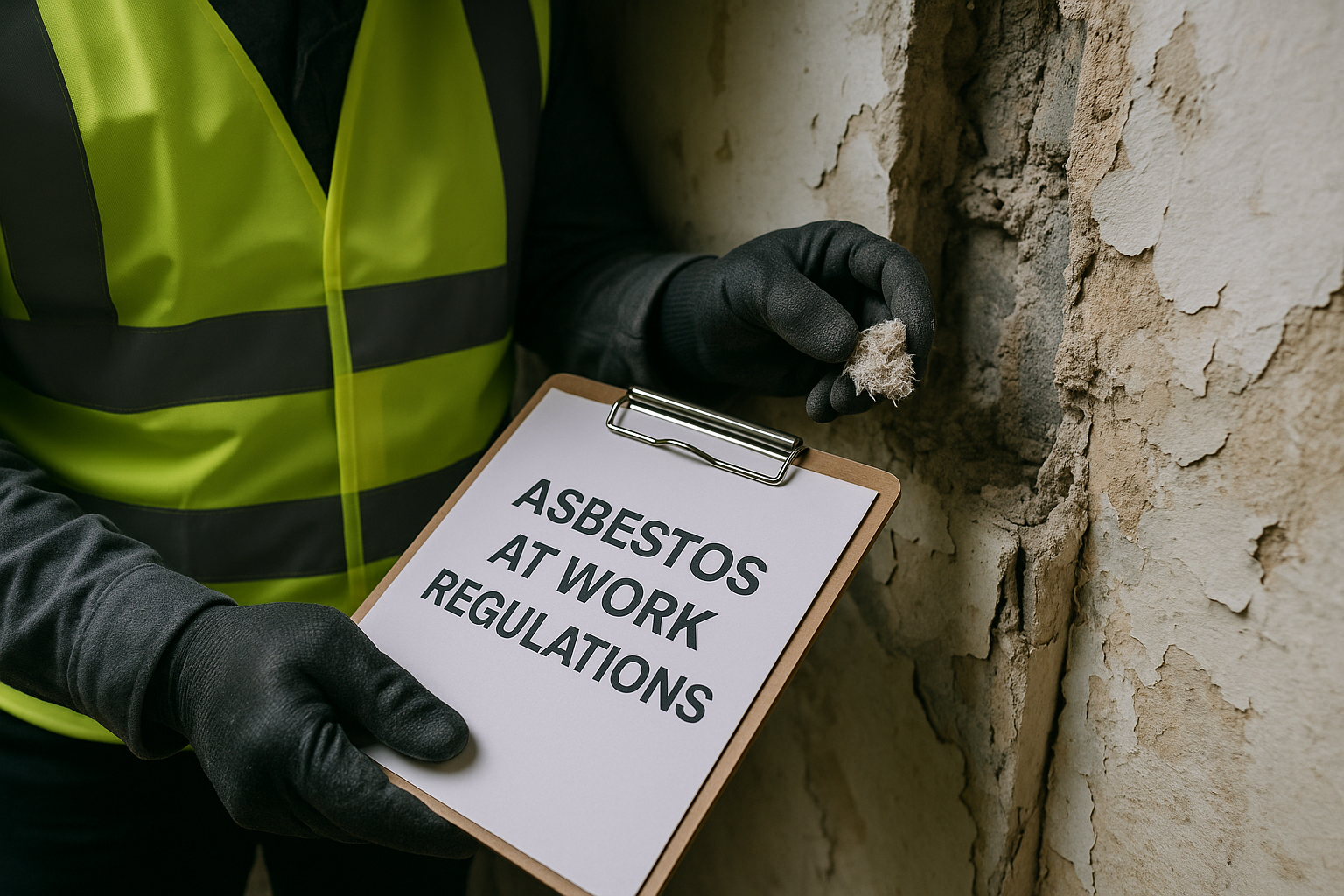
Licensed asbestos work
Higher-risk work must be carried out by an HSE-licensed contractor. This commonly includes work on more friable materials such as asbestos insulation, sprayed coatings and some asbestos insulating board where the risk of fibre release is significant.
If licensed work is required, do not try to package it as a general building task. Bring in a competent specialist, make sure the scope is clear and check that the plan of work matches the actual site conditions.
Notifiable non-licensed work
Some lower-risk work does not require a licence but still has to be notified. This is often referred to as notifiable non-licensed work. It still carries strict requirements around training, controls and record keeping.
Employers may also need to keep health records for workers carrying out this type of work. If you are unsure which category applies, get advice before the job starts rather than after exposure has happened.
Non-licensed work
A limited range of lower-risk tasks may fall into the non-licensed category, provided the material is in suitable condition and the method of work keeps exposure low. That does not mean the work can be done casually.
Workers still need appropriate training, suitable equipment and a clear method that prevents fibre spread. One of the most common mistakes is assuming non-licensed means low responsibility. It does not.
Training requirements under asbestos at work regulations
Training is one of the clearest duties under asbestos at work regulations. The level of training depends on whether someone may encounter asbestos accidentally, work on it directly, supervise asbestos-related tasks or manage buildings where asbestos is present.
Asbestos awareness training
This is the baseline for anyone who may disturb asbestos during their work. It helps staff recognise likely asbestos-containing materials, understand the health risks and know what to do if they come across something suspicious.
Awareness training does not qualify someone to remove or repair asbestos-containing materials. It is about recognition, avoidance and escalation.
Task-specific training
Anyone carrying out non-licensed or notifiable non-licensed work needs additional training relevant to the job. That training should cover:
- Safe methods of work
- Use of PPE and RPE
- How to reduce fibre release
- Waste handling and packaging
- Decontamination arrangements
- Emergency procedures
Training for licensed work
Workers involved in licensed asbestos work need more advanced training and close supervision. Employers should keep training records and refresh knowledge regularly so procedures remain effective.
If you manage contractors, ask for training evidence before work begins. Do not rely on verbal assurances where asbestos is involved.
How to control asbestos risk on site
The legal aim is straightforward. Prevent exposure so far as reasonably practicable, and where work must go ahead, reduce exposure to the lowest level possible. That requires planning, competent people and layered controls.
Essential control measures
- Carry out a suitable risk assessment before work starts
- Prepare a clear plan of work
- Restrict access to the work area
- Use appropriate PPE and RPE where required
- Choose methods that minimise fibre release
- Avoid dry brushing and uncontrolled breakage
- Use suitable cleaning methods and equipment
- Handle and dispose of waste correctly
- Check that emergency arrangements are understood
On a practical level, this means stopping people from walking into the area, avoiding unnecessary disturbance, and making sure everyone involved knows exactly what material they are dealing with. It also means checking the survey and register before the first tool comes out.
What to do if suspect asbestos is discovered unexpectedly
- Stop work immediately
- Keep people out of the area
- Do not sweep, drill, break or attempt to bag the material casually
- Report the issue to the person in control of the premises
- Arrange competent inspection and, where needed, testing
- Review whether the existing survey or register is still reliable
Unexpected finds are common in older buildings, especially where past alterations were poorly recorded. The safest response is always to pause, isolate and verify.
Records, communication and contractor control
Good asbestos management is as much about communication as it is about surveys. A duty holder can commission the right inspection and still fail if contractors are not briefed properly.
Documents you should have ready
- Current asbestos survey information relevant to the building and the planned works
- An up-to-date asbestos register
- An asbestos management plan for occupied premises
- Risk assessments and plans of work where asbestos-related tasks are involved
- Training records for relevant staff
- Records of reviews, re-inspections and remedial actions
Before any maintenance or project work starts, make it standard practice to issue the relevant asbestos information and obtain confirmation that it has been read. This should be part of your permit-to-work or contractor induction process, not an afterthought.
Questions to ask contractors before work starts
- Have you reviewed the asbestos survey and register for the area?
- Does the planned work involve disturbing the building fabric?
- Do your staff hold the right level of asbestos training?
- What will you do if you uncover suspect material?
- Do you need additional surveying or sampling before starting?
These questions are simple, but they prevent many of the failures that lead to accidental disturbance.
Common mistakes that lead to breaches
Most problems with asbestos at work regulations do not come from obscure legal points. They come from ordinary management failures that are entirely avoidable.
- Relying on an outdated survey after layout changes or refurbishment
- Assuming a management survey is enough for intrusive works
- Failing to share asbestos information with contractors
- Keeping a register that is incomplete or inaccessible
- Allowing maintenance teams to start work before checks are made
- Using untrained staff to sample or disturb suspect materials
- Confusing non-licensed work with no-control work
- Forgetting communal areas in residential blocks
If any of these sound familiar, the fix is usually straightforward: review the building information, match the survey type to the planned works, update the register and tighten the sign-off process before work begins.
Practical steps for staying compliant
If you are responsible for a building, the most effective approach is to treat asbestos management as a live operational process rather than a one-off purchase.
- Identify who holds the duty to manage for each premises
- Check whether your existing survey is suitable and current
- Make sure your asbestos register is easy to access and understand
- Put a written management plan in place for occupied buildings
- Schedule periodic reviews and re-inspections where needed
- Match the survey type to the scope of planned works
- Brief contractors before they arrive on site
- Verify training and competence, not just availability
- Stop work immediately if suspect materials are found unexpectedly
These steps are not complicated, but they need consistency. The organisations that manage asbestos well are usually the ones with clear responsibilities, simple procedures and records that are actually used.
Why professional support matters
Asbestos decisions affect legal compliance, project timelines and the safety of everyone on site. Professional support helps you avoid the two most common problems: overreacting and underestimating the risk.
A competent surveyor can tell you what type of inspection is appropriate, where the limitations are, and whether further investigation is needed before work starts. That saves time, prevents unnecessary disruption and reduces the chance of exposing workers to avoidable risk.
If you are managing a portfolio, planning maintenance or preparing for refurbishment, getting the right advice early is usually far cheaper than dealing with a stop-work order, emergency clean-up or enforcement investigation later.
Frequently Asked Questions
Do asbestos at work regulations apply to small maintenance jobs?
Yes. Small jobs can still disturb asbestos, especially in older buildings. Drilling, chasing, replacing services, lifting floor coverings or opening ceiling voids can all create risk. The size of the job does not remove the duty to assess asbestos before work starts.
Is a management survey enough before refurbishment?
No, not usually. A management survey is intended for normal occupation and routine maintenance. If the work is intrusive, a refurbishment survey is normally required for the affected area before the project begins.
Do landlords need to manage asbestos in communal areas?
Yes. Communal areas in blocks of flats are generally treated as non-domestic for asbestos management purposes. Landlords, managing agents or others with maintenance responsibility should make sure asbestos is identified, assessed and managed properly in those spaces.
Can my maintenance team take samples themselves?
That is rarely a sensible approach. Sampling can disturb the material and create exposure if it is not done correctly. In most cases, it is better to use competent professionals for inspection, sampling and analysis.
What should I do if I am not sure which survey I need?
Start by looking at the planned work, not just the building type. If the premises are occupied and the aim is day-to-day management, a management survey may be suitable. If the work is intrusive or destructive, you are more likely to need a refurbishment or demolition survey. Getting advice before works start is the safest route.
If you need clear, practical help with asbestos compliance, Supernova Asbestos Surveys can assist with surveys, testing, sampling and re-inspections nationwide. Call 020 4586 0680 or visit asbestos-surveys.org.uk to arrange the right service for your property.