One missing register entry or one contractor drilling into the wrong ceiling tile can turn a routine job into a dangerous incident within minutes. Asbestos at work regulations are there to stop that happening, and for anyone responsible for a building, they need to work in practice, not just sit in a file.
If you manage non-domestic premises, supervise maintenance, instruct contractors, or oversee the common parts of residential blocks, the legal duty is clear. You need to know where asbestos may be, assess the risk properly, keep records current, and make sure the right people see the right information before work starts.
What asbestos at work regulations actually require
In Great Britain, the main legal framework is the Control of Asbestos Regulations. Day-to-day compliance is supported by HSE guidance and by HSG264, which sets the standard for asbestos surveying.
The basic principle is straightforward. If asbestos is present, or likely to be present, you must identify it, assess the risk, prevent exposure, and communicate the information to anyone who could disturb it.
These duties commonly affect:
- Duty holders responsible for maintenance or repair of non-domestic premises
- Employers whose staff may work on or around the building fabric
- Landlords and managing agents
- Facilities managers and estate teams
- Contractors carrying out maintenance, refurbishment, installation, or demolition
- Self-employed tradespeople working in older premises
The law applies across offices, schools, warehouses, surgeries, shops, factories, hospitality sites, public buildings, and communal areas in residential blocks. If you control repair obligations or direct the work, you are likely to hold all or part of the duty.
The duty to manage asbestos in occupied buildings
The part of the asbestos at work regulations most property professionals deal with is the duty to manage. This is an ongoing responsibility. It is not satisfied by commissioning one survey and then forgetting about it.
Materials deteriorate. Rooms change use. Contractors access new areas. Ceiling voids, risers, plant rooms, ducts, service cupboards, and back-of-house spaces all create opportunities for accidental disturbance if information is out of date.
To comply, duty holders should:
- Take reasonable steps to find out whether asbestos is present
- Presume suspect materials contain asbestos unless there is strong evidence to the contrary
- Assess the risk based on condition, location, accessibility, and likelihood of disturbance
- Maintain an up-to-date asbestos register
- Prepare and implement a written asbestos management plan
- Share relevant information with staff and contractors
- Review the plan regularly and monitor known or presumed ACMs
Most compliance failures are practical rather than technical. The survey exists, but the contractor never sees it. The register exists, but it has not been updated after works. The plan exists, but no one checks whether damaged materials have worsened since the last inspection.
Who is the duty holder?
The duty holder is usually the person or organisation with responsibility for maintenance or repair. In some buildings, that is simple. In others, especially multi-let properties, it may be shared between landlord, tenant, managing agent, and facilities provider.
That is why leases, service agreements, and contractor appointments should clearly state who manages asbestos information, who updates the register, and who briefs contractors. If responsibility is vague, risk increases quickly.
What a workable management plan should include
A management plan needs to be usable by the people on site. It should not be a generic document copied from another property.
A practical plan should cover:
- The location of known or presumed asbestos-containing materials
- The condition of those materials
- Priority actions and timescales
- Who is responsible for review and communication
- How contractors access the register
- What happens if suspect asbestos is found unexpectedly
- When re-inspections are due
Why communication is central to asbestos at work regulations
Even a well-surveyed building can become unsafe if asbestos information is not passed on before work begins. Most accidental disturbances happen during ordinary tasks such as drilling, cable runs, plumbing repairs, alarm upgrades, access to risers, or ceiling tile removal.

Anyone liable to disturb asbestos needs relevant information before they start. That includes in-house maintenance teams as well as external contractors.
Good communication usually means:
- Issuing asbestos information with permits to work
- Making the register easy to access on site
- Requiring contractors to confirm they have reviewed relevant asbestos data
- Briefing staff before planned works in higher-risk areas
- Clearly identifying restricted or controlled areas where appropriate
- Stopping work immediately if suspect materials are uncovered
If your process relies on someone remembering to email a PDF at the last minute, it is too fragile. Build asbestos checks into every maintenance and project workflow.
Choosing the right survey for the right job
You cannot comply with asbestos at work regulations without the correct survey information. HSG264 is clear that survey type must match the purpose of the work.
Using the wrong survey is one of the most common reasons buildings are put at risk. A management survey is not enough for intrusive refurbishment, and historic reports may not reflect current conditions or areas that were previously inaccessible.
Management survey for routine occupation and maintenance
For normal use of an occupied building, the usual starting point is a management survey. This is designed to locate, as far as reasonably practicable, the presence and extent of asbestos-containing materials that could be disturbed during normal occupation or foreseeable maintenance.
A suitable survey helps you create or update:
- The asbestos register
- Material risk assessments
- Management actions
- Contractor communication procedures
If you are arranging a new asbestos management survey, make sure the scope reflects how the building is actually used. Access arrangements, maintenance patterns, plant areas, and any known limitations all matter.
Re-inspection surveys to keep records current
Known or presumed asbestos-containing materials should be reviewed at suitable intervals. A re-inspection survey helps confirm whether materials remain in the same condition and whether the risk profile has changed.
There is no single interval that suits every building. A busy school boiler room, a warehouse roof void, and a locked riser in an office block may all need different review frequencies depending on access, vulnerability, and condition.
Demolition and intrusive works
Before major structural work, strip-out, or demolition, routine management information is not enough. A more intrusive survey is needed to identify asbestos that may be hidden within the building fabric.
If a structure is due to come down, a demolition survey is essential. Starting intrusive work without the correct survey is one of the clearest breaches seen in practice and one of the fastest ways to trigger uncontrolled fibre release.
Licensed, notifiable and non-licensed asbestos work
The asbestos at work regulations do not treat all asbestos work in the same way. The controls depend on the type of material, its condition, and the likely level of fibre release during the task.
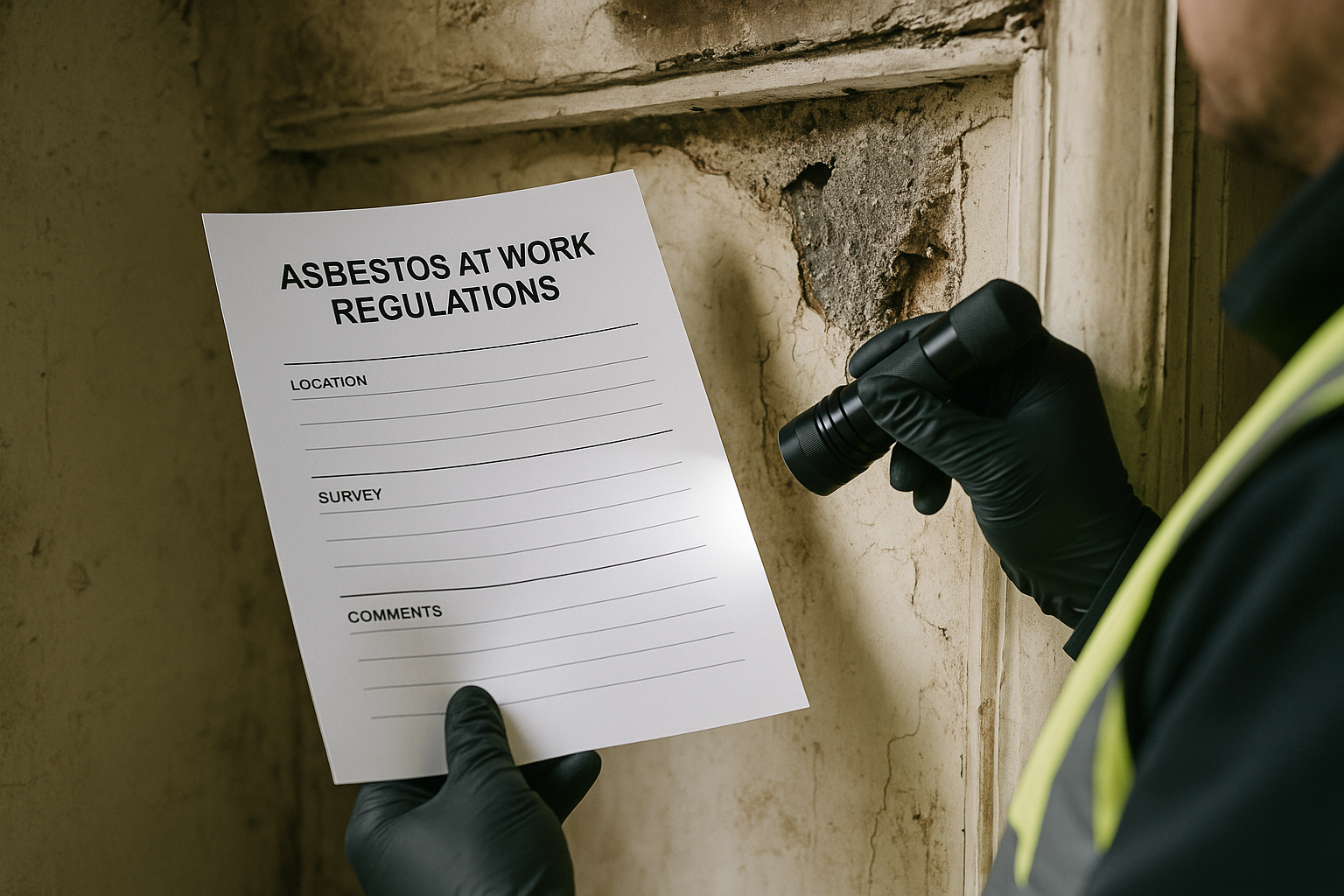
Getting this classification wrong can expose workers and leave duty holders facing enforcement action. Survey findings, material type, condition, and the proposed method of work all need to be considered together.
Licensed work
Higher-risk work involving materials such as asbestos insulation, asbestos coatings, and much asbestos insulating board must be carried out by a licensed contractor. These jobs typically require stricter controls, specialist equipment, decontamination arrangements, and formal notification.
Examples may include:
- Removal of pipe lagging
- Work on sprayed coatings
- Large-scale removal of damaged asbestos insulating board
- Tasks likely to generate significant fibre release
Notifiable non-licensed work
Some lower-risk activities do not require a licence but still require notification and additional controls. Depending on the task, employers may also need health records and medical surveillance for workers carrying out the work.
This category often causes confusion. If there is any doubt, get competent advice before work starts rather than relying on assumptions made on site.
Non-licensed work
Some short-duration, lower-risk tasks can fall under non-licensed work. That does not mean uncontrolled work. Suitable risk assessment, training, safe methods, PPE where appropriate, and correct waste handling still apply.
The practical rule is simple: never let work category decisions be made in isolation from the survey evidence.
Training, supervision and day-to-day site controls
Asbestos at work regulations affect far more than licensed asbestos contractors. Anyone who may disturb asbestos during their work needs suitable information, instruction, and training.
This applies across construction, education, healthcare, retail, manufacturing, logistics, hospitality, local authority estates, and commercial property management.
Who typically needs asbestos awareness training?
- Electricians
- Plumbers and heating engineers
- Joiners and carpenters
- Decorators
- Fire and security installers
- Telecoms and data cabling engineers
- Maintenance operatives
- Supervisors managing these trades
Good awareness training should explain what asbestos is, where it is commonly found, what the health risks are, how to use the asbestos register, and what to do if suspect materials are discovered.
Training also needs to match the actual work environment. A contractor working across schools, offices, and industrial units will face different layouts, access issues, and material types at each site.
Practical controls that reduce risk
If you want asbestos at work regulations to function properly on site, put simple controls into routine use:
- Check the asbestos register before every task that affects the fabric of the building.
- Make sure the survey information covers the exact area and activity.
- Pause work if access changes or hidden materials are exposed.
- Use a permit-to-work process for higher-risk maintenance areas.
- Keep records of who was briefed and when.
- Review incidents and near misses, not just formal asbestos events.
Property-specific issues duty holders should watch for
Different building types create different asbestos management challenges. The legal duty stays the same, but the practical risks vary.
Schools and colleges
Older education buildings often combine ageing materials with continuous occupation and short maintenance windows. Summer and half-term works can create pressure to move quickly, which is exactly when asbestos information gets missed.
Healthcare settings
Hospitals, clinics, and surgeries often have complex services, plant areas, and occupied environments that make intrusive work difficult to manage. Clear phasing, contractor control, and accurate area-specific information are essential.
Warehouses and factories
Industrial premises may contain asbestos cement roof sheets, wall panels, service ducts, and older plant insulation. Access equipment, roof work, and reactive repairs can all increase the chance of disturbance.
Offices and retail units
Frequent churn, fit-outs, IT upgrades, and tenant alterations mean many small jobs can create risk if the asbestos register is not checked each time. Ceiling voids, risers, floor tiles, and back-of-house service areas are common problem locations.
Residential blocks
The common parts of residential buildings can still fall within asbestos management duties. Service cupboards, lift motor rooms, plant rooms, corridors, soffits, and communal risers all need to be considered where maintenance or repair work is planned.
Where portfolios span multiple regions, consistency matters. Whether you need an asbestos survey London service for a central office, an asbestos survey Manchester service for a northern site, or an asbestos survey Birmingham service for a Midlands property, the duty remains the same: identify, assess, manage, and communicate.
What to do if suspect asbestos is disturbed
Even with good systems, incidents can still happen. The response in the first few minutes matters.
If suspect asbestos is damaged or uncovered unexpectedly:
- Stop work immediately.
- Keep people out of the area.
- Avoid sweeping, dry brushing, or any action that could spread debris.
- Isolate ventilation if this can be done safely.
- Report the incident to the responsible manager or duty holder.
- Arrange competent assessment, and sampling or remedial action where needed.
- Review why the controls failed before work restarts.
Do not ask general maintenance staff to clean up debris unless the task is clearly within an appropriate work category and properly controlled. A rushed clean-up can make the contamination worse.
Why records matter for years after the work is done
Asbestos-related disease can develop many years after exposure. That is one reason the law places so much emphasis on records, planning, and communication.
For employers and duty holders, good documentation is not bureaucracy. It is evidence that risks were identified and managed properly.
Your records should usually include:
- Current survey reports
- A version-controlled asbestos register
- The asbestos management plan
- Risk assessments and method statements where relevant
- Training records for staff and supervisors
- Contractor acknowledgements and permit records
- Inspection and re-inspection history
- Incident reports and follow-up actions
If information is scattered across inboxes, old folders, and disconnected contractor files, it will fail when you need it most. Keep one clear system and make ownership obvious.
Are asbestos regulations being updated and improved?
The original question behind this topic is whether there are ongoing efforts to update and improve asbestos regulation in the UK. The short answer is yes, but the more useful point for duty holders is this: the current legal framework already places substantial and enforceable duties on those responsible for premises.
HSE guidance continues to shape how those duties are interpreted and applied in practice. Survey standards, risk management expectations, and enforcement focus are all refined through guidance, inspection activity, and case experience.
For most property managers, the immediate issue is not waiting for a rule change. It is making sure existing asbestos at work regulations are properly implemented across surveys, registers, contractor control, and routine maintenance planning.
If your system still depends on outdated reports, unclear responsibilities, or inconsistent contractor briefings, that is the gap to fix first.
Practical steps to improve compliance now
If you want a stronger asbestos management process, start with the basics and make them repeatable.
- Review who the duty holder is for each property and record it clearly.
- Check whether your survey information is current, suitable, and complete.
- Update the asbestos register after any works or changes in condition.
- Schedule re-inspections based on risk, not habit.
- Make asbestos checks mandatory before fabric or services work begins.
- Train staff who instruct, supervise, or carry out maintenance.
- Audit contractor sign-off and permit-to-work processes.
- Escalate immediately when suspect materials are found.
These steps are practical, proportionate, and directly aligned with what HSE expects to see. They also make life easier for site teams because they reduce uncertainty before work starts.
Need help with asbestos surveys and compliance?
If you need clear, reliable support with asbestos at work regulations, Supernova Asbestos Surveys can help. We provide surveying, re-inspections, and practical advice for occupied buildings, refurbishment projects, and demolition works across the UK.
To arrange a survey or discuss your duty to manage, call 020 4586 0680 or visit asbestos-surveys.org.uk. Supernova can help you get the right information in place before routine maintenance or project work creates unnecessary risk.
Frequently Asked Questions
What are asbestos at work regulations?
Asbestos at work regulations generally refer to the legal duties under the Control of Asbestos Regulations that require duty holders and employers to identify asbestos, assess risk, prevent exposure, and manage asbestos-containing materials safely in premises.
Who is responsible for asbestos in a commercial building?
The duty holder is usually the person or organisation responsible for maintenance or repair of the premises. That may be the owner, landlord, tenant, managing agent, or a combination of parties depending on the lease and management arrangements.
Is a management survey enough before refurbishment work?
No. A management survey is intended for normal occupation and routine maintenance. If planned works are intrusive, a more intrusive survey is required before work starts so hidden asbestos can be identified.
How often should asbestos be re-inspected?
There is no fixed interval that suits every property. Re-inspection frequency should reflect the condition of the material, how accessible it is, how likely it is to be disturbed, and the way the building is used.
What should contractors do if they find suspect asbestos?
They should stop work immediately, keep others out of the area, avoid disturbing the material further, report it to the responsible person, and wait for competent assessment before work resumes.