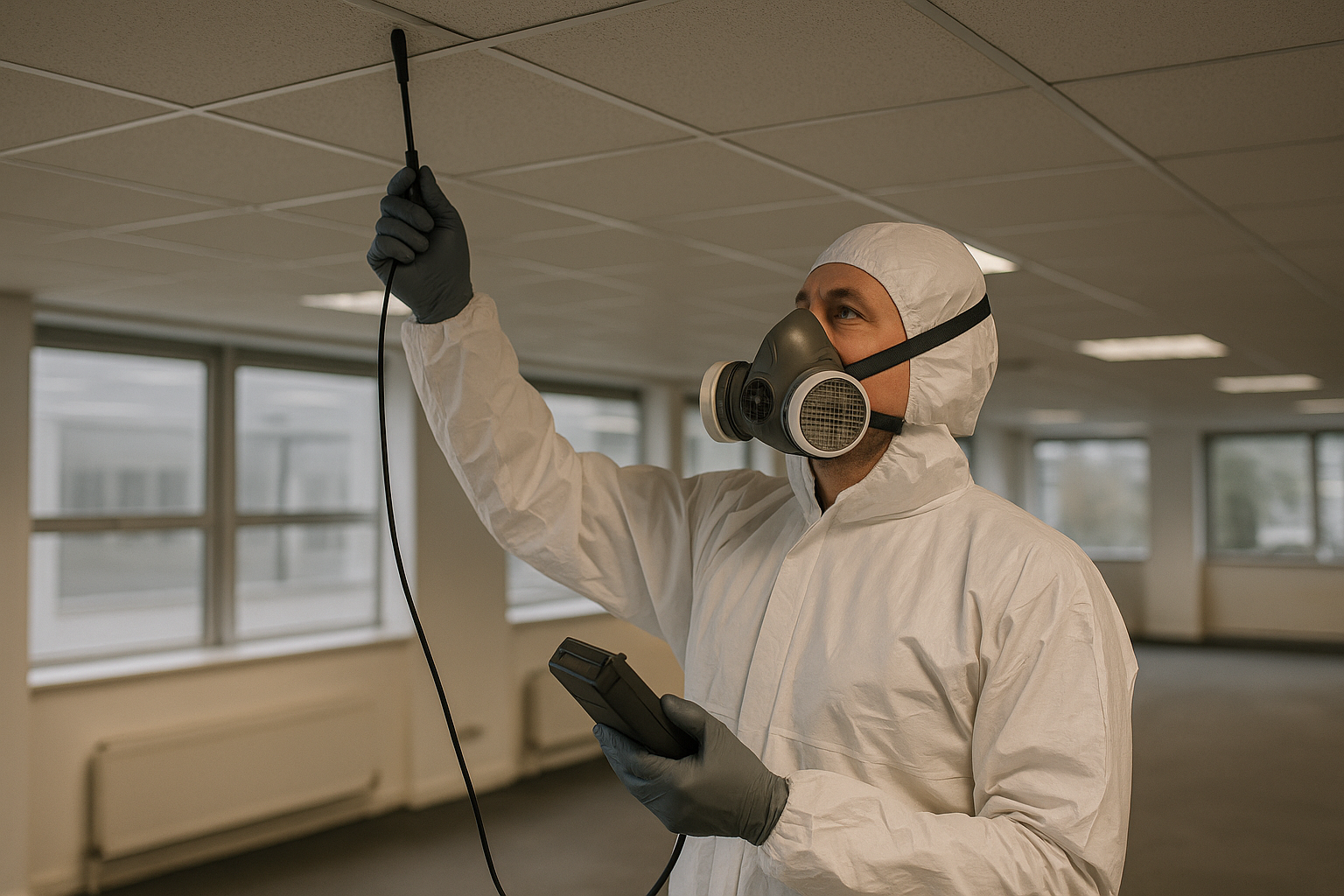
A worn rope seal in a boiler house can look like nothing more than old packing. In reality, asbestos textiles contain how much asbestos is a question with serious consequences for any commercial dutyholder, because many textile products were made with a very high asbestos content and can release fibres far more easily than harder materials.
That matters in offices, schools, hospitals, warehouses, theatres and industrial premises where older plant, service risers and hidden maintenance areas may still contain woven cloth, tape, rope, blankets, gloves or lagging fabrics. If you manage a pre-2000 non-domestic building, suspect textile materials should be treated with caution until a suitable survey and, where needed, laboratory analysis confirm exactly what is present.
Asbestos textiles contain how much asbestos in practice?
There is no single percentage that applies to every asbestos textile product. The amount depends on the product type, its intended use, the manufacturing method and whether asbestos was blended with other fibres or fillers.
For practical building management, the answer to asbestos textiles contain how much asbestos is usually this: many asbestos textiles were manufactured with a high asbestos content, often from around 50% to nearly pure asbestos by weight. The asbestos provided the heat resistance, insulation and durability that made the product useful.
Products at the higher end of that range were often designed for direct heat protection or sealing. Others mixed asbestos with cotton or synthetic fibres to improve flexibility or handling, but still contained enough asbestos to present a significant risk if damaged.
Common asbestos textile products found in commercial premises
- Woven asbestos cloth and insulation fabric
- Rope seals and braided packing
- Asbestos tape and webbing
- Heat-resistant gloves, aprons and blankets
- Lagging cloth wrapped around pipework and joints
- Fire curtains and specialist theatre textiles
- Heat pads, mats and protective covers
If the material is old, fibrous and located around heat, plant or service equipment, do not rely on appearance alone. Assume risk first, then verify through competent inspection.
Why asbestos was used in textile products
Asbestos fibres were woven into textiles because ordinary fabrics could not do the same job. They could tolerate high temperatures, resist flame, provide insulation and remain flexible enough to wrap around awkward shapes.
Manufacturers also valued asbestos because it could be spun, braided and woven into products that were durable in demanding environments. That made it attractive across plant rooms, workshops, public buildings and industrial settings.
Main reasons asbestos appeared in textiles
- Heat resistance around boilers, ovens, furnaces and hot pipework
- Fire resistance for blankets, curtains and protective clothing
- Insulation to reduce heat loss and shield nearby components
- Flexibility where rigid insulation would not fit
- Durability in high-wear or high-friction applications
- Chemical resistance in some specialist processes
The same fibrous structure that made these products useful is also what makes them hazardous. Once the weave starts to break down, fibres can be released into the air through handling, wear or maintenance work.
Where asbestos textiles are still found in commercial buildings
Asbestos textiles are not just an industrial relic. They still turn up in commercial properties that have had partial refurbishments, plant upgrades or repeated maintenance over decades while hidden service areas were left largely untouched.
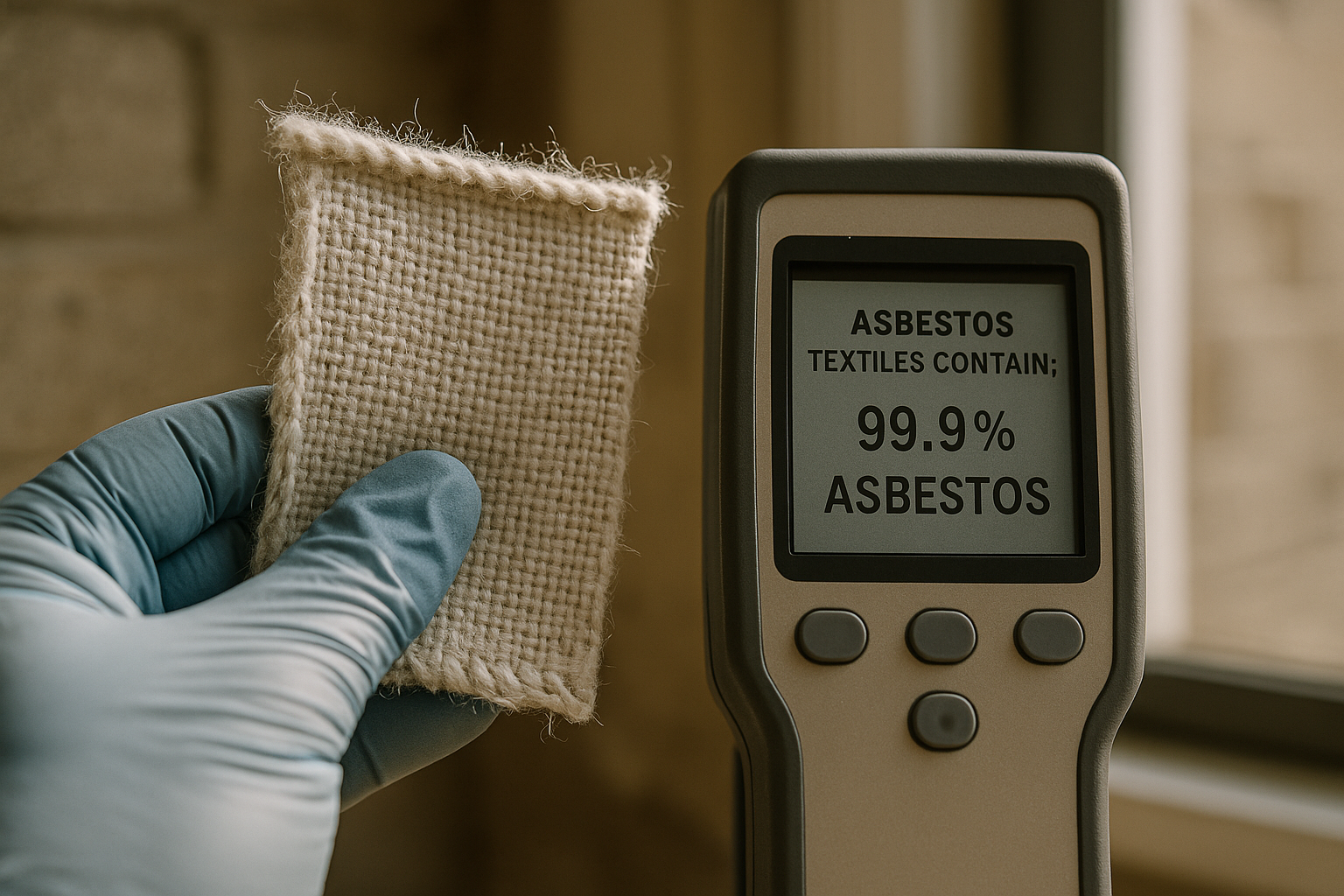
A modern reception or office fit-out can sit above an original basement plant room. New pipework can connect into old valves, hatches and flanges that still contain rope seals, lagging cloth or woven heat-resistant materials.
Typical locations to inspect
- Boiler houses and plant rooms
- Service risers and duct voids
- Pipework joints, valves and flanges
- Older heating systems and calorifiers
- Workshops and maintenance stores
- Theatre stages, fly towers and backstage areas
- Fire doors, hatches and access panels near heat sources
- Storage areas containing old blankets, gloves or mats
If you manage multiple sites, location-specific support can speed up identification and compliance. For example, arranging an asbestos survey London service is often the quickest way to clarify what is present in older service areas across a capital-based portfolio.
What asbestos cloth and textile materials look like
One reason these materials are missed is that they do not always look dramatic or obviously dangerous. They can resemble ordinary old fabric, tape, rope or a rough industrial blanket.
Colour is not a reliable guide. Asbestos cloth may appear white, grey, cream or brownish with age, and it may be stained by heat, coated in dust, painted over or patched during earlier repairs.
Common visual signs
- Woven, braided or fibrous texture
- Flexible sheet, strip, cord or rope form
- Frayed edges or loose fibres
- Scorching or heat damage near hot equipment
- Brittleness where material has aged
- Painted, wrapped or hidden surfaces
- Dust or debris collecting beneath degraded sections
You may see it wrapped around a valve, tucked behind a boiler cover, used as a heat shield near electrical equipment or packed into an old hatch. Blanket-type products may be folded away in stores and forgotten until someone moves them.
Visual clues only create suspicion. They do not confirm asbestos. Confirmation requires a suitable survey and, where appropriate, sampling and analysis by a competent laboratory.
What asbestos cloth was used for
Asbestos cloth and related textiles were used wherever heat resistance, flame protection or flexible insulation mattered. In commercial properties, that often means exactly the areas contractors still access today.
Typical uses in buildings and industrial settings
- Boiler and furnace insulation around doors and hot surfaces
- Pipe and valve wraps where rigid insulation would not fit
- Fire blankets in kitchens, workshops and plant areas
- Protective gloves, mitts, aprons and overalls
- Electrical insulation near older switchgear
- Curtains and screens in theatres and specialist facilities
- Gaskets and seals in hatches, flanges and access doors
- Heat-resistant mats and pads around machinery
This is why asbestos textiles contain how much asbestos is not just a technical question. These materials were built into active systems and may still be disturbed during servicing, repair or refurbishment.
Why asbestos textiles can be especially hazardous
The main hazard is fibre release. Textile products are often more friable than denser asbestos-containing materials because the fibres are woven, braided or packed rather than locked into a hard matrix.
Once the material frays, tears, cracks or degrades, fibres can become airborne through surprisingly minor disturbance. Opening a hatch, brushing against damaged cloth, removing an old seal or lifting a stored blanket can all create exposure.
Why the risk is often higher than expected
- Fibres may be loosely bound within the weave
- Wear and friction can release fibres over time
- Heat damage can make the material brittle
- Maintenance work brings people close to the breathing zone
- Textile products are easy to misidentify as harmless fabric
- Hidden locations mean they are often unmanaged
Exposure to airborne asbestos fibres can cause serious diseases including mesothelioma, asbestos-related lung cancer and asbestosis. The health effects may take many years to develop, which is why historical exposure remains such a major concern.
How dangerous is asbestos cloth when left in place?
When clients ask how dangerous asbestos cloth is, the honest answer is simple: it can be very dangerous if disturbed. The level of immediate risk depends on the asbestos type, the amount present, the condition of the material, whether it has a surface coating and the likelihood of contact.
Intact material that is sealed, protected and left undisturbed may present a lower short-term risk than torn lagging cloth or loose textile debris in a plant room. But lower risk does not mean no risk, and it does not remove the duty to manage.
Higher-risk situations to watch for
- Frayed cloth around boilers or hot pipework
- Old fire blankets removed from storage and handled
- Rope seals pulled from doors, hatches or flanges
- Textile insulation cut, drilled, scraped or stripped out
- Dust and debris beneath degraded woven material
- Unlabelled service voids where contractors may work unknowingly
HSG264 and current HSE guidance make clear that asbestos assessment should consider the product type, condition, extent of damage and likelihood of disturbance. Textile products often need careful attention because they can deteriorate and release fibres relatively easily.
Who is most at risk from asbestos textiles?
In commercial settings, exposure usually affects the people working behind the scenes rather than office staff at desks. The highest risks tend to arise during maintenance, repair, inspection, installation, cleaning and refurbishment.
Roles commonly at risk
- Heating and ventilation engineers
- Plumbers working on valves, boilers and old heating systems
- Electricians near older switchgear or backing materials
- Facilities and estates teams
- Demolition and strip-out contractors
- Caretakers and site managers handling stored materials
- Cleaners working in contaminated service areas
- Specialist maintenance contractors opening access panels and hatches
If your buildings in the North West have seen multiple refurbishments over time, a targeted asbestos survey Manchester inspection can help identify hidden textile materials before planned works begin.
Your legal duties under UK asbestos regulations
For non-domestic premises, the Control of Asbestos Regulations place a duty on those responsible for the building to identify asbestos-containing materials, assess the risk and manage that risk properly. Guesswork is not enough, and neither is relying on a contractor’s informal opinion.
HSG264 sets out survey expectations, while wider HSE guidance supports decisions on assessment, management and safe work. For commercial property managers, the practical message is clear: if asbestos textiles may be present, they must be identified, recorded and controlled.
Key actions dutyholders should take
- Arrange a suitable asbestos survey for the building and planned activity.
- Record confirmed or presumed asbestos-containing materials in an asbestos register.
- Assess condition, accessibility and likelihood of disturbance.
- Label, protect or isolate materials where appropriate.
- Share asbestos information with anyone liable to disturb the material.
- Reinspect materials at suitable intervals and update the register.
- Review the plan before maintenance, refurbishment or tenant works.
If textile materials are damaged or likely to be disturbed, seek advice before any work proceeds. Do not allow maintenance teams to remove suspect rope, cloth or blankets as part of routine repairs.
What to do if you suspect asbestos textiles in your building
The safest response is calm, practical and controlled. Do not touch the material, do not move it and do not ask a contractor to “just take a quick look” by pulling it apart.
Immediate steps to take
- Stop any work in the immediate area.
- Prevent access if there is a risk of disturbance.
- Avoid sweeping, vacuuming or brushing any debris.
- Photograph the material from a safe distance if needed for reporting.
- Check your asbestos register and previous survey records.
- Arrange a competent surveyor to inspect the area.
- Follow management or removal advice based on the findings.
If the material is in poor condition, treat the area as potentially contaminated until professional advice is obtained. Small actions made in haste can make the problem far worse.
Surveying and sampling asbestos textiles properly
Textile materials can be awkward to assess because they may be hidden, layered, painted or mixed with other products. A suitable survey should look not only at visible items but also at the plant, service routes and access points where these materials are commonly concealed.
Sampling may be recommended where it is safe and appropriate. The purpose is to confirm whether asbestos is present and support a sound management decision, not to create unnecessary disturbance.
When a management survey may be suitable
A management survey is usually appropriate where the building is occupied and the aim is to locate, as far as reasonably practicable, asbestos-containing materials that could be damaged or disturbed during normal occupation and routine maintenance.
When refurbishment or demolition survey work is needed
If planned works will disturb the fabric of the building, a more intrusive survey may be required in the affected area. This is especially relevant where old plant, pipework insulation, access hatches or service penetrations may conceal textile products.
For Midlands portfolios, booking an asbestos survey Birmingham before upgrade works can prevent delays, contractor exposure and costly surprises once ceilings, risers or plant enclosures are opened.
Should asbestos textiles be managed or removed?
There is no one-size-fits-all answer. Some asbestos textiles can remain in place if they are in good condition, properly protected, clearly recorded and unlikely to be disturbed. Others should be repaired, enclosed or removed because their condition or location creates an unacceptable risk.
The decision should be based on material assessment, priority assessment and the actual use of the building. A hidden rope seal in a locked plant enclosure is different from frayed cloth beside a routinely accessed valve.
Management may be suitable when
- The material is in good condition
- It is sealed or otherwise protected
- There is little chance of disturbance
- The location is controlled and documented
- Reinspection can be carried out reliably
Removal may be more appropriate when
- The material is damaged, fraying or contaminated
- Maintenance access is frequent
- Refurbishment works will disturb it
- The item is loose, stored or easily handled
- Its condition cannot be reliably monitored
Do not make that decision on appearance alone. Textiles can look minor but behave as a high-risk material once disturbed.
Practical tips for property managers and facilities teams
Most asbestos textile problems become expensive because they are discovered late, during live maintenance or project work. A few sensible controls can reduce that risk significantly.
Good practice to put in place now
- Review plant rooms, risers and service voids in older buildings first
- Check whether old blankets, gloves or mats are being stored on site
- Make sure asbestos registers are easy for contractors to access
- Brief engineers before they open hatches, boiler casings or valve enclosures
- Flag likely textile materials in permit-to-work systems
- Reinspect known asbestos textiles more closely if they are near heat or vibration
- Challenge assumptions that a woven product is just “old insulation” or “fireproof fabric”
If you inherit a building with poor records, start with the highest-risk service areas rather than waiting for a project to expose the issue. That approach is usually faster, safer and cheaper than dealing with an unplanned fibre release.
Frequently Asked Questions
Asbestos textiles contain how much asbestos?
There is no single percentage for every product, but many asbestos textiles contained a high proportion of asbestos, often from around 50% to nearly pure asbestos by weight. The exact amount depends on the product type and how it was made.
Are asbestos textiles more dangerous than asbestos cement?
They can be, especially when damaged. Asbestos cement is a harder material with fibres bound into a solid matrix, while textile products are often more friable and can release fibres more easily if frayed, handled or disturbed.
Can I identify asbestos cloth just by looking at it?
No. You can spot features that make asbestos more likely, such as woven or braided heat-resistant material in an older plant area, but visual inspection alone cannot confirm asbestos. A suitable survey and, where appropriate, sampling are needed.
What should I do if contractors find suspect rope or cloth during maintenance?
Stop work immediately, keep people away from the area, avoid disturbing the material further and seek advice from a competent asbestos surveyor. Do not allow anyone to pull it out, bag it up or clean debris without proper controls.
Do all asbestos textiles need to be removed?
No. Some can be managed safely if they are in good condition, protected and unlikely to be disturbed. Damaged, accessible or frequently disturbed materials may need enclosure, repair or removal depending on the risk assessment.
Need clear answers on suspect textile materials in your building? Supernova Asbestos Surveys provides nationwide asbestos surveys for commercial properties, with practical advice that aligns with the Control of Asbestos Regulations, HSG264 and current HSE guidance. Call 020 4586 0680 or visit asbestos-surveys.org.uk to book a survey or discuss your site.
Leave a Reply