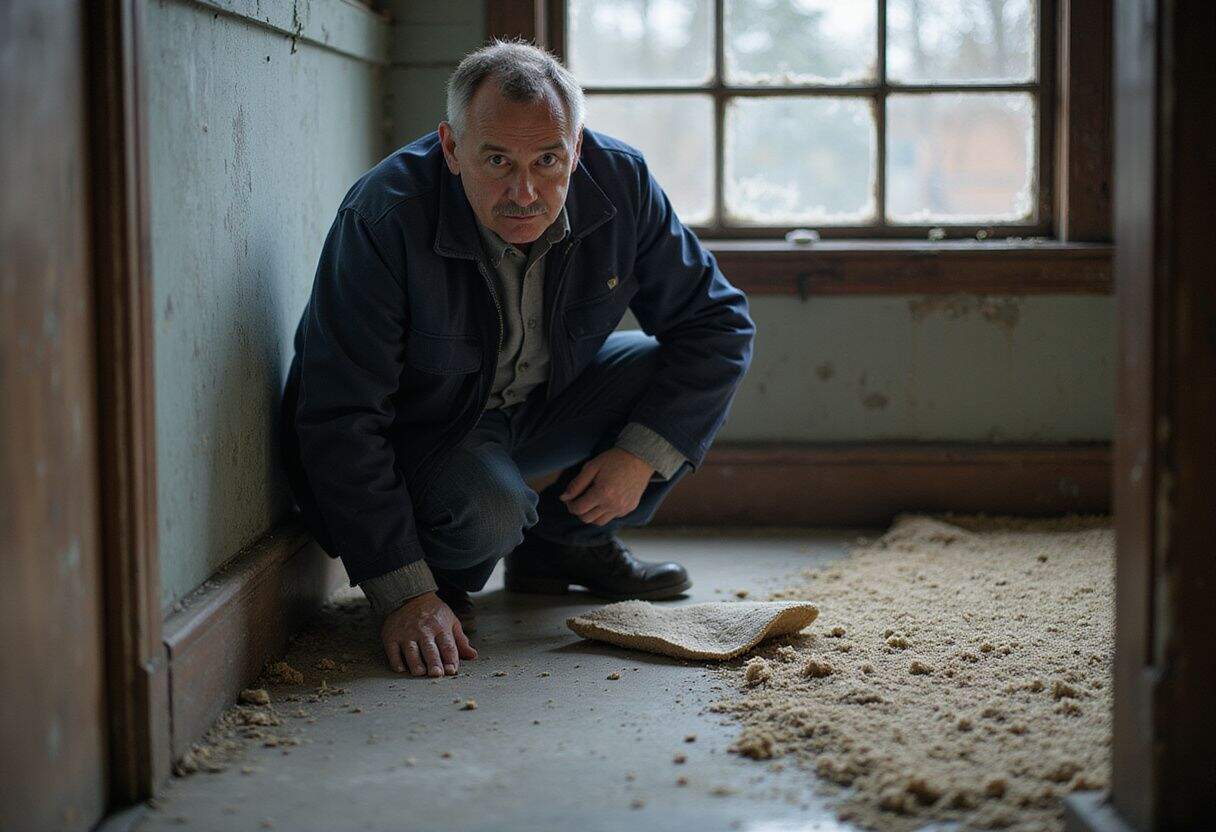
The Wonder Material That Became a Liability: Why Asbestos Was Used in Building Products
For most of the twentieth century, asbestos was not a dirty word — it was a selling point. Builders, architects, and manufacturers used it freely because it genuinely solved problems that no other affordable material could match. Understanding why asbestos was used in building products is not merely a history lesson — it tells you where to look, what risks remain, and why so many UK properties built before 2000 still contain it today.
If you own, manage, or work in an older building, this knowledge connects directly to your legal duties and the safety of everyone on site. The story of asbestos is one of remarkable utility followed by catastrophic consequence — and the consequences are still being managed right now, in buildings across the country.
What Is Asbestos? The Mineral Behind the Material
Asbestos is a naturally occurring group of silicate minerals. When processed, these minerals separate into microscopic fibres — incredibly thin, durable strands that resist burning, do not conduct electricity, and hold up against chemical attack.
There are two main families:
- Serpentine asbestos — includes chrysotile (white asbestos), which has curly, flexible fibres
- Amphibole asbestos — includes crocidolite (blue asbestos) and amosite (brown asbestos), which have straight, needle-like fibres
All types are hazardous when fibres become airborne and are inhaled. The body cannot break them down, and over time they can cause mesothelioma, asbestosis, and lung cancer — diseases with long latency periods that may not appear until decades after exposure.
Why Was Asbestos Used in Building Products? The Properties That Made It Irresistible
No single synthetic material offered the same combination of properties at such low cost. That is the honest answer. Builders were not being reckless — they were using the best tool available to them at the time. Several distinct characteristics made asbestos the material of choice across the construction industry for the better part of a century.
Exceptional Heat and Fire Resistance
Asbestos fibres can withstand temperatures that would destroy most organic materials. Chrysotile begins to degrade only above 500°C, while amphibole types are even more heat-stable. This made asbestos the default choice for fireproofing structural steelwork, wrapping boilers, insulating pipes, and lining fire doors.
In an era when large-scale fires in factories, shipyards, and public buildings were a genuine and frequent risk, this single property alone justified widespread use across the industry. There was simply nothing else that performed as well at the price.
Tensile Strength and Durability
Individual asbestos fibres are surprisingly strong. When mixed into cement, plaster, or vinyl, they reinforced the host material in the same way that steel rebar reinforces concrete — products lasted longer, resisted cracking, and stood up to physical wear. Asbestos cement sheets could be used outdoors for decades without significant degradation.
That durability is precisely why so many asbestos-containing materials are still in place today, long after the ban. The material did its job almost too well.
Electrical and Chemical Resistance
Asbestos does not conduct electricity, making it useful in electrical panels, switchboards, and cable insulation. It also resists attack from many acids, alkalis, and solvents — a valuable trait in industrial and chemical environments.
These combined properties made asbestos attractive not just in construction, but in shipbuilding, manufacturing, and power generation. It was genuinely versatile in a way that very few materials are, before or since.
Sound Insulation
Asbestos-containing materials were also valued for their acoustic properties. Ceiling tiles, wall boards, and sprayed coatings helped reduce noise transmission between rooms and floors. This made them popular in schools, offices, hospitals, and public buildings throughout the mid-twentieth century.
Low Cost and Ready Availability
After the Industrial Revolution, mining operations in Canada, South Africa, and the Soviet Union scaled up rapidly. Supply was plentiful, prices were low, and asbestos could be incorporated into manufactured products at scale with no specialist processing required.
For builders and manufacturers working to tight budgets — particularly during the post-war reconstruction period — asbestos was simply the most practical option on the market. There was no comparable alternative at the price point that the construction industry needed.
Common Building Products That Contained Asbestos
Because asbestos was used across such a wide range of building products, knowing the specific applications helps property managers and owners identify where asbestos-containing materials (ACMs) are most likely to be found today. The list is longer than most people expect.
Insulation and Sprayed Coatings
From the 1930s through to the 1970s, sprayed asbestos coatings were applied directly to structural steelwork, ceilings, and walls as a fireproofing and insulation measure. Loose-fill asbestos was also used in cavity walls and roof spaces.
Pipe lagging — the insulating wrap around heating and hot water pipes — frequently contained blue or brown asbestos. Boilers and heating systems were similarly wrapped. These materials are among the most hazardous found today because they can be friable, meaning they crumble easily and release fibres into the air.
Asbestos Cement Products
Asbestos cement was one of the most widely used building materials of the twentieth century. Manufacturers mixed asbestos fibres — typically white asbestos — into cement to improve tensile strength and reduce cracking. Products included:
- Corrugated and flat roofing sheets
- External wall cladding and soffits
- Rainwater gutters, downpipes, and drainage channels
- Partition walls and internal linings
- Flue pipes and duct systems
Asbestos cement is generally considered a lower-risk material when undamaged and undisturbed. However, weathering, drilling, cutting, or breaking these products can release fibres. Never assume age or condition makes a material safe without a professional assessment.
Flooring Materials
Vinyl floor tiles produced before the 1980s frequently contained white asbestos, as did the adhesive used to bond them to the subfloor. Even where tiles have been removed or overlaid, the adhesive layer beneath may still contain ACMs.
Thermoplastic floor tiles and bitumen-backed sheet flooring are also known to contain asbestos. Any sanding, grinding, or mechanical removal of old flooring in a pre-2000 building carries a real risk of fibre release.
Ceiling and Wall Tiles
Ceiling tiles were a staple of commercial interiors — offices, schools, hospitals, and public buildings — from the 1950s onwards. Many contained asbestos for fire resistance and sound absorption. Textured coatings applied to ceilings and walls, sometimes known by trade names such as Artex, may also contain asbestos.
These materials are frequently disturbed during routine maintenance work such as fitting light fittings, running cables, or installing partitions — activities that can release fibres if ACMs are not identified first.
Fire Protection Products
Fire doors, fire blankets, and heat shields regularly incorporated asbestos. Intumescent strips and door linings in older buildings may contain it. Asbestos rope and gaskets were widely used in boilers, furnaces, and industrial equipment — all areas worth flagging during any survey of a pre-2000 property.
Roofing and Guttering
Corrugated asbestos cement roofing was ubiquitous on industrial buildings, agricultural structures, garages, and schools. Flat roofing felt sometimes contained asbestos fibres. These materials are still present on a significant number of UK properties and require careful, ongoing management.
The Timeline: From Widespread Use to Complete Ban
Understanding when asbestos was used — and when restrictions came into force — helps you assess the risk profile of any building you are responsible for.
Peak Use: 1930s to Late 1970s
Large-scale use of asbestos in UK construction accelerated from the 1930s. Post-war rebuilding programmes in the 1940s and 1950s relied heavily on asbestos-containing materials for speed, cost, and fire compliance. Almost every large commercial, industrial, or public building constructed during this period will contain asbestos somewhere.
Growing Awareness and Partial Bans: 1980s
By the 1970s, the link between asbestos exposure and serious disease was becoming impossible to ignore. The UK banned the import and use of blue asbestos (crocidolite) and brown asbestos (amosite) in 1985. These were considered the most hazardous types due to the shape and durability of their fibres.
White asbestos (chrysotile) continued in use for some products beyond this date, which is why buildings constructed or refurbished in the late 1980s and 1990s may still contain it. Do not assume a building is clear simply because it was built after the partial ban.
Complete Ban: 1999 Onwards
All forms of asbestos were banned from use in the UK from 1999. The Control of Asbestos Regulations subsequently placed clear legal duties on those responsible for non-domestic buildings to identify, manage, and where necessary arrange the safe removal of ACMs. Any building constructed or substantially refurbished before 2000 should be treated as potentially containing asbestos until a professional survey confirms otherwise.
Why Those Useful Properties Became a Health Crisis
The very properties that made asbestos so valuable in building products — its durability and resistance to breakdown — are precisely what make it so dangerous to human health. When ACMs are disturbed, microscopic fibres become airborne. Once inhaled, they lodge in lung tissue and the lining of the chest cavity, and the body cannot dissolve or expel them.
Over years or decades, this can lead to:
- Mesothelioma — a cancer of the lining of the lungs or abdomen, almost exclusively caused by asbestos exposure
- Asbestosis — progressive scarring of lung tissue causing breathlessness and reduced lung function
- Asbestos-related lung cancer — risk is significantly increased in those with a history of exposure, particularly smokers
- Pleural plaques and pleural thickening — changes to the lining of the lungs that can cause discomfort and breathing difficulties
Symptoms typically appear many years — sometimes decades — after exposure. The Health and Safety Executive (HSE) states there is no safe level of asbestos fibre exposure. If you believe you may have been exposed to asbestos fibres, seek advice from your GP. This article provides general information only and is not a substitute for medical advice.
Your Legal Duties Under the Control of Asbestos Regulations
The Control of Asbestos Regulations place a duty to manage asbestos on anyone responsible for the maintenance or repair of non-domestic premises. This includes landlords, facilities managers, employers, and building owners. The core obligations are:
- Take reasonable steps to find out whether ACMs are present
- Assess the condition of any ACMs found
- Produce and implement a written asbestos management plan
- Monitor the condition of ACMs over time
- Ensure anyone who may work on or disturb ACMs is informed of their location and condition
Only licensed contractors may carry out notifiable non-licensed work or licensed asbestos removal. HSE guidance document HSG264 sets out the standards for asbestos surveying and should be the benchmark for any survey work you commission.
Identifying Asbestos in Your Building: Where to Start
If your building was constructed before 2000, the starting point is a professional asbestos survey. Do not rely on visual inspection alone — asbestos cannot be identified by appearance, and laboratory analysis of samples is required to confirm the presence and type of ACMs.
Management Survey
A management survey is the standard survey for buildings in normal occupation and use. It locates ACMs that could be disturbed during everyday activities, assesses their condition, and provides the information you need to build your asbestos management plan. If you do not already have a current survey in place, this is where you start.
Refurbishment and Demolition Survey
Before any significant construction, refurbishment, or demolition work, a demolition survey is required. This is a more intrusive inspection designed to locate all ACMs in areas that will be disturbed by the works. Skipping this step is not just a legal risk — it puts workers and future occupants directly in harm’s way.
Asbestos Removal
Where ACMs are in poor condition, at high risk of disturbance, or in the way of planned works, asbestos removal by a licensed contractor is the appropriate course of action. Removal is not always necessary — managed in-situ is a legitimate approach for stable, low-risk materials — but the decision must be based on a proper survey, not guesswork.
Why the History of Asbestos Still Matters Today
The reason why asbestos was used in building products so extensively is directly relevant to the work of anyone managing an older UK property. The properties that made it attractive — strength, durability, heat resistance, low cost — also ensured it was embedded throughout the fabric of millions of buildings. It was not used sparingly or only in specialist applications. It was used everywhere.
That ubiquity is why the HSE estimates that asbestos-related diseases remain a significant cause of occupational death in the UK. The exposure that causes those deaths is often not dramatic — it can result from routine maintenance, minor refurbishment, or simply not knowing what is in the ceiling above a workbench.
Knowing why asbestos was used helps you understand why it is so widespread, and why a professional survey is not an optional extra for older buildings — it is a legal requirement and a basic duty of care.
Asbestos Surveys Across the UK
Supernova Asbestos Surveys operates nationwide, with specialist teams covering major cities and surrounding regions. Whether you need an asbestos survey in London, an asbestos survey in Manchester, or an asbestos survey in Birmingham, our accredited surveyors follow HSG264 standards on every inspection.
With over 50,000 surveys completed across the UK, we have the experience to handle everything from a single commercial unit to a large multi-site estate. Surveys are carried out by qualified professionals, with clear, actionable reports delivered promptly so you can meet your legal obligations without delay.
To book a survey or discuss your requirements, call us on 020 4586 0680 or visit asbestos-surveys.org.uk.
Frequently Asked Questions
Why was asbestos used in building products so widely in the UK?
Asbestos offered a combination of fire resistance, tensile strength, electrical insulation, chemical resistance, and low cost that no other affordable material could match. During the post-war rebuilding period in particular, it was the most practical option available for a wide range of construction applications, from pipe lagging to roofing sheets to ceiling tiles.
Is asbestos still present in UK buildings today?
Yes. Any building constructed or substantially refurbished before 2000 may contain asbestos-containing materials. Because asbestos was so widely used and is extremely durable, a large proportion of the UK’s older building stock still contains it. A professional asbestos survey is the only reliable way to determine whether ACMs are present and in what condition.
What are the most common places to find asbestos in a building?
Common locations include pipe lagging and boiler insulation, sprayed coatings on structural steelwork and ceilings, asbestos cement roofing and wall cladding, vinyl floor tiles and their adhesive, ceiling tiles, textured wall and ceiling coatings, fire doors, and electrical panels. The full range of potential locations should be assessed by a qualified surveyor rather than assumed from a visual inspection.
When was asbestos banned in the UK?
Blue and brown asbestos were banned in 1985. All remaining forms of asbestos, including white asbestos, were banned from use in the UK in 1999. The Control of Asbestos Regulations subsequently established the legal framework for managing asbestos already present in existing buildings.
Do I need an asbestos survey if my building was built in the 1990s?
Yes. White asbestos continued to be used in some products after the 1985 partial ban, and buildings constructed or refurbished up to 1999 may still contain asbestos-containing materials. The Control of Asbestos Regulations apply to all non-domestic premises where ACMs may be present, and the duty to manage requires you to establish whether they are present before you can manage them appropriately.