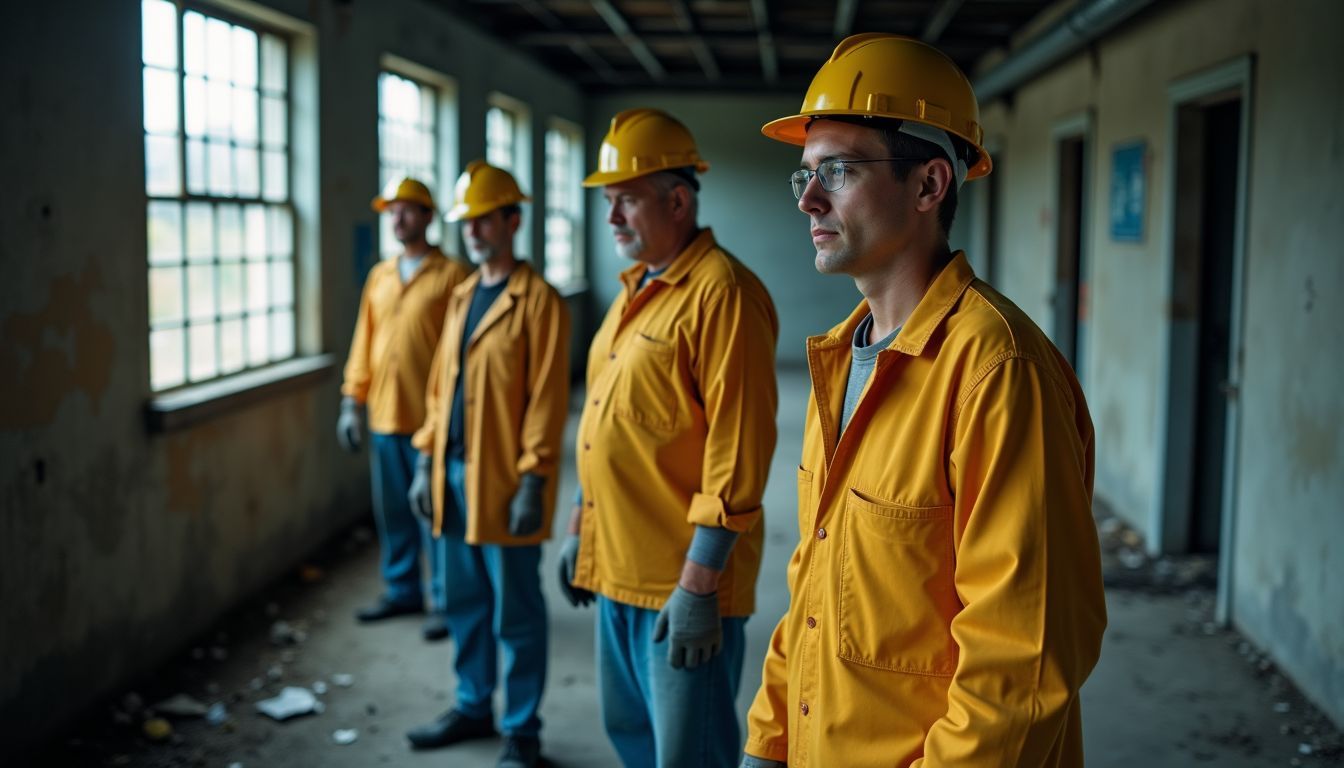
Can I Remove Asbestos Myself in the UK? Read This Before You Touch Anything
Asbestos is still present in millions of UK buildings, and the question can I remove asbestos myself in the UK is one of the most searched — and most dangerously misunderstood — topics in property management. The short answer is: occasionally, in very limited circumstances, and only if you know exactly what you are dealing with. The longer answer involves the law, serious and irreversible health consequences, and a clear-eyed understanding of what can go catastrophically wrong when this work is handled without proper expertise.
Before you pick up a crowbar or reach for a dust sheet, here is what you genuinely need to know.
What UK Law Actually Says About DIY Asbestos Removal
The Control of Asbestos Regulations set the legal framework for all asbestos-related work in the UK. These regulations apply to employers, dutyholders, landlords, and individual workers — they are not optional guidance, and breaching them can result in substantial fines or criminal prosecution.
Under these regulations, asbestos work is divided into three distinct categories:
- Licensed work — must only be carried out by an HSE-licensed contractor
- Notifiable non-licensed work (NNLW) — does not require a licence but must be formally notified to the enforcing authority before work begins
- Non-licensed work — lower-risk tasks that require neither a licence nor notification
Which category your job falls into depends on the type of asbestos-containing material (ACM), its condition, and the nature of the work being carried out. Getting this classification wrong is not a paperwork error — it is a health and legal risk with potentially severe consequences.
Which Asbestos Work Requires an HSE Licence?
Licensed work covers the highest-risk activities. If your job involves any of the following, a licensed contractor is a legal requirement — not a recommendation:
- Sprayed asbestos coatings
- Pipe lagging and thermal insulation
- Asbestos insulating board (AIB)
- Friable or heavily damaged asbestos materials
- Work where significant fibre release is likely
Blue asbestos (crocidolite) and brown asbestos (amosite) are the most hazardous types and almost always require licensed removal. Even white asbestos (chrysotile) falls under the licensed category in certain forms and conditions.
Carrying out licensed work without HSE approval is illegal — full stop.
What Is Notifiable Non-Licensed Work?
NNLW occupies the middle ground. It covers short-duration tasks involving lower-risk ACMs in good condition — for example, limited maintenance activities on AIB that is undamaged and unlikely to release fibres during the work.
You do not need an HSE licence for NNLW, but you must notify the relevant enforcing authority before starting. Employers undertaking NNLW must also arrange medical surveillance for workers every three years and maintain health records for 40 years — because asbestos-related diseases can take decades to develop, and that documentation matters.
Can I Remove Asbestos Myself in the UK — When Is It Technically Permitted?
There is a narrow set of circumstances where a householder can legally carry out minor asbestos removal without a licence or notification. This applies only to non-licensed, non-notifiable work involving very small amounts of lower-risk ACMs that are in good, undamaged condition.
Examples that may fall into this category include:
- Removing a small number of asbestos cement roof sheets that are intact and not crumbling
- Lifting a limited area of asbestos vinyl floor tiles that are undamaged
- Removing a single undamaged asbestos cement panel
Even in these cases, the HSE strongly recommends using a professional. The guidance exists precisely because even low-risk materials become high-risk the moment they are handled incorrectly. If you are not certain what type of ACM you are dealing with — and you cannot be certain without testing — you should not attempt removal under any circumstances.
Before any work begins, you should commission a proper survey. A management survey is appropriate for occupied buildings where you need to understand what ACMs are present and their current condition. If you are planning renovation or demolition, a demolition survey is a legal requirement before work commences.
The Real Health Risks of Removing Asbestos Yourself
Asbestos fibres are microscopic. You cannot see them, smell them, or taste them — but once disturbed, they can remain airborne for hours and settle on surfaces throughout a building. Breathing them in causes irreversible damage to lung tissue.
The diseases caused by asbestos exposure include:
- Mesothelioma — an aggressive cancer of the lining of the lungs with a very poor prognosis
- Lung cancer — risk is significantly increased by asbestos exposure, particularly in smokers
- Asbestosis — progressive scarring of lung tissue causing breathlessness and reduced quality of life
- Diffuse pleural thickening — thickening of the membrane surrounding the lungs, causing breathing difficulties
None of these conditions develop immediately. Symptoms can take 20 to 40 years to appear after exposure. This is precisely why people underestimate the risk — you will not feel anything on the day you disturb the material.
The HSE consistently identifies asbestos as the single greatest cause of work-related deaths in the UK. People are still dying today from exposures that occurred decades ago. That is not a historical footnote — it is an ongoing public health crisis.
Why DIY Removal Often Makes Things Significantly Worse
Without professional training and equipment, disturbing asbestos can spread contamination far beyond the original area. Fibres attach to clothing, tools, and surfaces. They travel through ventilation systems and settle on soft furnishings that are difficult or impossible to fully decontaminate.
A poorly managed DIY removal can turn a contained, manageable risk into a building-wide hazard. The cost of professional decontamination following an amateur attempt is typically far higher than the cost of having the work done properly in the first place.
How to Identify Asbestos-Containing Materials
You cannot identify asbestos by looking at it. This is one of the most dangerous misconceptions about the material. The only reliable way to confirm whether something contains asbestos is laboratory analysis of a sample taken by a trained surveyor.
That said, there are common locations in UK buildings where ACMs are frequently found:
- Textured coatings on ceilings and walls, such as Artex applied before 2000
- Asbestos cement roofing sheets, gutters, and downpipes
- Insulation around boilers, pipes, and ducts
- Asbestos insulating board used in partition walls, ceiling tiles, and fire doors
- Vinyl floor tiles and the adhesive beneath them
- Soffit boards and garage roofs
Any building constructed or refurbished before 2000 could contain ACMs. The HSE’s guidance document HSG264 sets out in detail how surveys should be conducted and what surveyors should look for — this is the standard that professional surveying companies follow.
Why Getting a Survey First Is Non-Negotiable
Attempting any building work without knowing whether asbestos is present is not just risky — in many cases it is illegal. Commercial premises, rental properties, and any building undergoing refurbishment or demolition must be surveyed before work begins.
A professional asbestos survey identifies the location, type, and condition of all suspected ACMs, assesses the risk each one presents, and provides a clear register that guides safe management or removal. This gives you the information you need to make lawful, informed decisions — and protects you legally if questions are ever raised about how the work was managed.
Supernova Asbestos Surveys operates across the UK. If you are based in the capital, our asbestos survey London service covers all London boroughs. We also provide a dedicated asbestos survey Manchester service and an asbestos survey Birmingham service for clients across the Midlands and the North West.
What Professional Asbestos Removal Actually Involves
Licensed asbestos removal contractors do not simply arrive with gloves and a bag. They follow a structured, highly controlled process designed to prevent fibre release at every stage — and understanding this process makes clear why professional asbestos removal is so different from any DIY approach.
Enclosure and Controlled Conditions
For licensed work, contractors erect a sealed enclosure around the work area with negative air pressure, so any fibres released cannot escape into the wider building. HEPA-filtered air filtration units run continuously throughout the job.
Workers enter and exit through airlocks, following strict decontamination procedures every time. This level of control is simply not achievable with DIY methods, regardless of how careful you intend to be.
Personal Protective Equipment
Appropriate PPE for asbestos work is highly specific. It includes:
- Respiratory protective equipment (RPE) — face-fit tested half-masks or full-face respirators with P3 filters, or powered air-purifying respirators for higher-risk work
- Disposable Type 5 coveralls
- Disposable gloves and boot covers
Standard dust masks offer no meaningful protection against asbestos fibres. Using inadequate RPE is not a minor oversight — it is the difference between protection and exposure.
Disposing of Asbestos Waste Legally
Asbestos waste is classified as hazardous waste and must be disposed of at a licensed facility. The correct procedure involves:
- Double-wrapping all waste — a red inner bag with asbestos hazard labels, sealed inside a clear outer bag with further hazard markings
- Labelling every package clearly and correctly
- Transporting waste securely to prevent fibre escape
- Taking waste only to a licensed hazardous waste disposal site
Contaminated PPE, cleaning materials, and tools that cannot be decontaminated must all be treated as asbestos waste. Putting asbestos in a standard skip or household bin is illegal and can result in prosecution.
Some local councils accept small quantities from householders at specific disposal facilities, but arrangements vary — contact your local authority before attempting any disposal.
When You Must Call a Licensed Asbestos Removal Specialist
If there is any doubt about the type, condition, or extent of asbestos in your property, call a licensed specialist. There is no scenario where the cost of professional advice outweighs the cost of getting it wrong.
Contact a licensed contractor immediately if:
- You have discovered damaged or crumbling material that may contain asbestos
- You are planning refurbishment, extension, or demolition work in a pre-2000 building
- A survey has identified ACMs that need to be removed before work can proceed
- You are a landlord or dutyholder with a legal obligation to manage asbestos in your property
- You have already disturbed material that you suspect may contain asbestos
What to Look for in an Asbestos Removal Contractor
Choosing the right contractor matters enormously. Before appointing anyone, confirm the following:
- They hold a current HSE licence for the type of work required
- They can provide a written risk assessment and method statement
- All operatives hold relevant asbestos training certificates
- They carry adequate public liability insurance
- They can evidence lawful waste disposal at a licensed facility
- They provide full documentation on completion of the work
Be cautious of contractors who offer unusually low quotes without conducting a survey first, who cannot demonstrate their HSE licence, or who suggest skipping the notification process for NNLW.
What to Do If You Have Already Disturbed Asbestos
If you believe you have disturbed asbestos and may have inhaled fibres, act quickly and calmly. A single exposure does not guarantee you will develop an asbestos-related disease — but the incident must be properly recorded and monitored.
Take these steps immediately:
- Leave the area and close it off to prevent others from entering
- Do not touch your face, eat, drink, or smoke
- Remove your clothing carefully and seal it in a plastic bag
- Wash your hands and any exposed skin thoroughly with soap and water
- Contact your GP and ask for the incident to be recorded on your medical notes
- Arrange for a professional assessment of the affected area before anyone re-enters
Do not attempt to clean up the area yourself. Vacuuming with a standard domestic vacuum will spread fibres further. Only HEPA-filtered industrial equipment operated by trained personnel should be used.
Frequently Asked Questions
Can I remove asbestos myself in the UK legally?
In very limited circumstances, yes. Non-licensed, non-notifiable work involving small quantities of lower-risk ACMs in good condition — such as a small number of intact asbestos cement sheets — can technically be carried out by a householder. However, the HSE strongly recommends using a professional in all cases, and you must be certain of what you are dealing with before touching anything. If in doubt, commission a survey first.
How do I know if a material contains asbestos?
You cannot tell by looking at it. The only reliable method is laboratory analysis of a sample taken by a trained asbestos surveyor. Any building constructed or refurbished before 2000 should be treated as potentially containing ACMs until a professional survey confirms otherwise.
What happens if I remove asbestos without a licence when one is required?
Carrying out licensed asbestos work without an HSE licence is a criminal offence under the Control of Asbestos Regulations. You could face substantial fines and, in serious cases, prosecution. Beyond the legal consequences, you would also be exposing yourself and others to potentially fatal health risks.
How much does professional asbestos removal cost compared to DIY?
Professional removal costs vary depending on the type, location, and quantity of ACMs involved. However, the cost of professional decontamination following a poorly managed DIY attempt — combined with potential legal penalties and the long-term health consequences — consistently exceeds the cost of doing the job properly from the outset. There is no meaningful financial case for DIY removal of anything other than the most minor, non-licensed materials.
Do I need a survey before asbestos is removed?
Yes, in most cases. A management survey establishes what ACMs are present and their condition in an occupied building. A demolition or refurbishment survey is a legal requirement before any structural work begins in a pre-2000 building. Attempting removal without a survey means you cannot know what you are dealing with, which creates both legal and health risks.
Get Professional Advice From Supernova Asbestos Surveys
Supernova Asbestos Surveys has completed over 50,000 surveys across the UK. Our UKAS-accredited surveyors follow HSG264 guidance as standard, and our team can advise you on the safest, most legally compliant approach to any asbestos concern — whether that is a survey, sampling, management plan, or referral to a licensed removal contractor.
Do not take risks with asbestos. Call us on 020 4586 0680 or visit asbestos-surveys.org.uk to book a survey or speak to one of our specialists today.