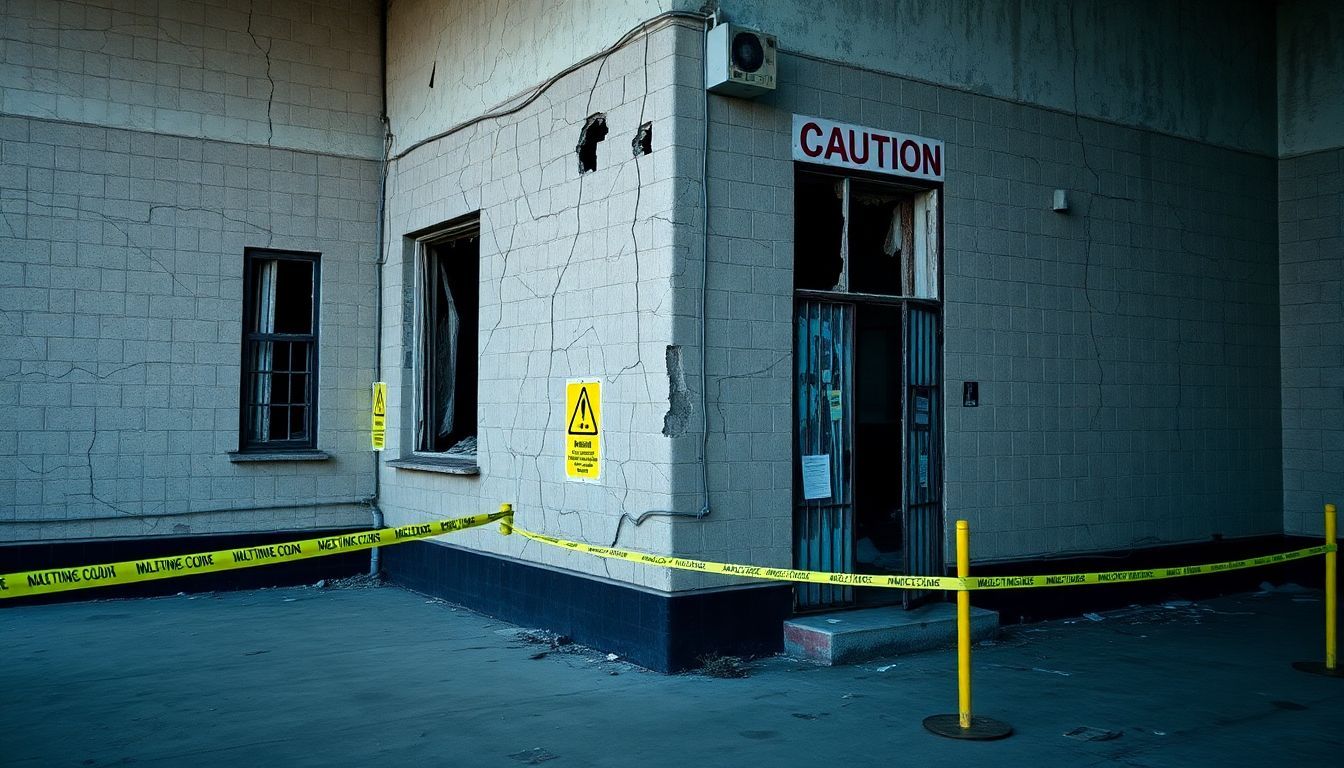
Asbestos Removal in Peterborough: What Property Owners and Managers Need to Know
Asbestos doesn’t announce itself. It hides inside walls, beneath floor tiles, above suspended ceilings, and wrapped around pipework — silent until someone disturbs it. For anyone managing a property in Peterborough built before 2000, asbestos removal in Peterborough is not a distant concern. It is a real, pressing responsibility that carries serious legal and health consequences if handled incorrectly.
Whether you’re planning a refurbishment, preparing a building for demolition, or simply trying to understand what’s lurking inside your property, read on. This post covers when removal is required, how the process works, and why a professional survey must always come first.
Why Asbestos Removal in Peterborough Is a Serious Matter
Peterborough has a substantial stock of older buildings — commercial premises, industrial units, schools, housing association properties, and private homes — many of which were constructed during the decades when asbestos-containing materials (ACMs) were used routinely in building work. Asbestos was popular precisely because it was cheap, durable, and fire-resistant. Its dangers were not widely acknowledged until much later.
When ACMs are disturbed — during renovation, maintenance, or demolition — microscopic fibres are released into the air. Inhaling those fibres causes diseases including mesothelioma, asbestosis, and lung cancer. These conditions have long latency periods, meaning symptoms may not appear for decades after exposure. By that point, the damage is irreversible.
The Control of Asbestos Regulations set out strict legal duties for anyone responsible for non-domestic premises. Dutyholders must manage asbestos safely, and anyone arranging work that could disturb ACMs must ensure the material is identified and, where necessary, removed by a licensed contractor before work begins.
Survey First: Why You Cannot Skip This Step
No responsible contractor will begin asbestos removal without a survey. Attempting removal without first identifying exactly what materials are present, where they are, and what condition they’re in is not just reckless — it’s unlawful.
There are three types of survey relevant to properties in Peterborough, and the right one depends entirely on what you’re planning to do with the building.
Management Survey
A management survey is the baseline requirement for any non-domestic premises. It’s a non-intrusive inspection designed to locate ACMs that could be disturbed during normal occupation and routine maintenance. The survey produces a register of all identified materials, along with condition assessments and risk ratings.
If your building contains ACMs that are in good condition and are not being disturbed, a management survey may confirm that removal isn’t immediately necessary — management in place may be the appropriate response. But you still need the survey to make that determination legally and safely.
Refurbishment Survey
If you’re planning any renovation work — knocking through walls, replacing pipework, upgrading electrical systems, or fitting out office space — you need a refurbishment survey before work starts. This is an intrusive inspection focused on the areas due to be worked on.
The surveyor will access cavities, lift floor coverings, and take samples for laboratory analysis. The affected area should be unoccupied during the survey. Results will confirm whether ACMs are present in the work zone and whether removal is required before the contractor can proceed.
Demolition Survey
Before any building in Peterborough is demolished, a demolition survey is legally required. This is the most thorough and intrusive type of survey, covering the entire structure — every room, void, roof space, and underground service. The building should be vacant before the survey takes place.
The demolition survey identifies every ACM present so that all hazardous materials can be safely removed before demolition crews move in. This protects workers and prevents widespread contamination of the surrounding area.
Understanding Asbestos Testing and Sample Analysis
Surveys involve physical sampling — small pieces of suspect material are taken from the building and sent to an accredited laboratory for analysis. This is the only reliable way to confirm whether a material contains asbestos and, if so, which type.
Professional asbestos testing should always be carried out by a UKAS-accredited laboratory operating to ISO 17025 standards. This ensures results are accurate and legally defensible.
If you’ve already collected a sample yourself and need it analysed, you can arrange standalone sample analysis through a specialist provider. Visual identification alone is not sufficient — many ACMs look identical to non-hazardous materials. Only laboratory analysis can confirm the presence of asbestos fibres.
If you’re uncertain whether a material in your property contains asbestos, the safest approach is to treat it as suspect until testing proves otherwise. Arrange asbestos testing promptly rather than waiting until work is already underway.
When Is Asbestos Removal Actually Required?
Not every ACM needs to be removed immediately. The decision depends on the type of asbestos, its condition, its location, and what’s planned for the building. Here’s a practical breakdown:
- Good condition, not being disturbed: Management in place is often the appropriate response. The material is monitored and recorded, but left undisturbed.
- Deteriorating condition: Damaged or friable ACMs release fibres more easily and typically require remediation — either encapsulation or removal.
- Located in a planned work zone: If refurbishment or maintenance will disturb the material, it must be removed before work begins.
- Pre-demolition: All ACMs must be removed before demolition, without exception.
- High-risk locations: Materials in areas with heavy footfall, or where accidental damage is likely, may require removal regardless of condition.
Your survey report will include a risk rating for each ACM and a recommended action. Follow that guidance — it’s produced in accordance with HSE guidance and HSG264, the definitive survey guide used across the UK.
Common ACMs Found in Peterborough Properties
Asbestos was used in hundreds of building products. Knowing where it’s typically found helps you understand what a surveyor is looking for and why certain areas receive closer attention.
- Artex and textured coatings on ceilings and walls
- Asbestos cement roof sheets and guttering
- Pipe lagging and boiler insulation
- Floor tiles and the adhesive beneath them
- Ceiling tiles in suspended systems
- Insulation board used in fire doors, partitions, and service ducts
- Sprayed coatings on structural steelwork
- Soffit boards and external cladding panels
- Gaskets and rope seals in older heating systems
Many of these materials are not immediately obvious. Artex looks like ordinary decorative plasterwork. Floor tiles may be hidden beneath newer coverings. This is precisely why professional surveying and sampling are essential — you cannot identify asbestos by sight alone.
The Asbestos Removal Process: What to Expect
Once your survey confirms that removal is necessary, the process follows a structured sequence. Understanding what’s involved helps you plan timelines and budgets accurately.
Engaging a Licensed Contractor
Certain types of asbestos work — particularly involving high-risk materials such as sprayed coatings, lagging, and insulation board — must be carried out by a contractor licensed by the HSE. Other lower-risk work may be carried out by a non-licensed contractor following specific control measures. Your survey report will indicate which category applies.
Always verify that your contractor holds the appropriate HSE licence and ask to see their insurance documentation. Reputable providers of asbestos removal will present this information without hesitation.
Notification and Planning
For licensed work, the contractor must notify the relevant enforcing authority at least 14 days before work begins. They will also produce a written plan of work detailing the methods, controls, and protective measures to be used.
The work area will be set up as a controlled zone — sealed off from the rest of the building, with negative pressure air units running to prevent fibre migration. Workers wear full protective equipment including respirators and disposable coveralls.
Removal and Waste Disposal
ACMs are carefully removed using wet methods where possible to suppress fibre release. All waste is double-bagged in heavy-duty polythene, labelled as hazardous waste, and transported to a licensed disposal facility.
Asbestos waste cannot go into general skips or landfill — it must be handled by a registered waste carrier under a waste transfer note. Keep copies of all waste transfer documentation as part of your compliance records.
Air Monitoring and Clearance Certificate
Once removal is complete, the area undergoes a thorough visual inspection followed by air monitoring. A UKAS-accredited analyst carries out a four-stage clearance procedure. Only when air fibre concentrations fall below the clearance criterion is a certificate of reoccupation issued.
This certificate is your legal proof that the area is safe. Keep this documentation — it forms part of your asbestos management records and will be required if you sell the property, apply for planning permission, or face an HSE inspection.
Legal Duties for Property Owners and Managers in Peterborough
If you manage a non-domestic property in Peterborough, you have a legal duty to manage asbestos under the Control of Asbestos Regulations. This means:
- Identifying whether ACMs are present through a suitable survey
- Assessing the condition and risk posed by any ACMs found
- Producing and maintaining an asbestos register and management plan
- Ensuring anyone who might disturb ACMs is informed of their location
- Monitoring the condition of ACMs regularly
- Arranging remediation or removal when materials deteriorate or work is planned
Failure to comply with these duties can result in enforcement action by the HSE, prohibition notices, and prosecution. The fines for asbestos-related breaches can be substantial, and in serious cases, individuals — not just organisations — can face criminal liability.
Landlords of residential properties also have responsibilities, particularly in common areas of HMOs and multi-occupancy buildings. If you’re unsure of your obligations, speak to a qualified asbestos consultant before assuming you’re not affected.
How Much Does Asbestos Removal Cost in Peterborough?
Costs vary considerably depending on the type and quantity of material, the access required, and whether licensed or non-licensed work is involved. There is no single fixed price, but the following factors will influence your quote:
- Material type: High-risk materials requiring licensed removal cost more than lower-risk ACMs
- Quantity: Larger areas or more extensive contamination increase costs
- Access: Roof spaces, confined areas, and multi-storey buildings add complexity
- Encapsulation vs removal: In some cases, encapsulation is a cost-effective alternative to full removal
- Waste disposal: Asbestos waste disposal is a regulated and costed element of every project
- Air monitoring and clearance: Four-stage clearance by an independent analyst is an additional cost but is mandatory for licensed work
Always obtain at least two or three written quotes from qualified contractors. Be wary of unusually low prices — cutting corners on asbestos removal creates serious liability. A higher quote should always be backed by clear methodology and appropriate accreditations.
Choosing the Right Surveying Partner in Peterborough
Before any removal work can take place, the survey has to be right. A poorly conducted survey can miss ACMs entirely, leaving workers and occupants at risk and exposing you to legal liability. When selecting a surveying company, look for the following:
- UKAS accreditation to ISO 17020 for inspection activities
- Surveyors qualified to the P402 standard or equivalent
- Clear, detailed reports that comply with HSG264 requirements
- Transparent pricing with no hidden charges
- Experience across a range of property types — commercial, industrial, residential, and public sector
Ask to see example reports before committing. A good survey report should clearly identify every suspect material, record its location and condition, assign a risk rating, and recommend a course of action. Anything vague or incomplete is a warning sign.
Asbestos Surveys Across the UK
Supernova Asbestos Surveys operates nationwide. If you need support in other major cities, our location pages cover the full range of services available in your area. We carry out asbestos survey London projects across the capital, handle asbestos survey Manchester commissions across Greater Manchester, and deliver asbestos survey Birmingham work throughout the West Midlands. Wherever your property is located, the same rigorous standards apply.
Frequently Asked Questions
Do I need a survey before asbestos removal in Peterborough?
Yes, without exception. A survey must be completed before any removal work begins. The type of survey required — management, refurbishment, or demolition — depends on the nature of the work planned. No reputable licensed contractor will commence removal without a valid survey report identifying the materials to be removed.
How long does asbestos removal take?
The duration depends on the quantity and type of material, the complexity of access, and whether licensed or non-licensed work is involved. A small residential job may take a day or two. A large commercial or industrial project could run for several weeks. Your contractor should provide a programme of works as part of their quotation.
Can I remove asbestos myself in Peterborough?
For most ACMs, the answer is no. Licensed asbestos removal must be carried out by HSE-licensed contractors. Some very limited categories of lower-risk, non-licensed work may be undertaken by a competent person following strict control measures, but this does not apply to the majority of ACMs found in buildings. Attempting DIY removal of notifiable materials is illegal and extremely dangerous.
What happens to asbestos waste after removal?
All asbestos waste is classified as hazardous waste. It must be double-bagged in heavy-duty polythene, clearly labelled, and transported by a registered waste carrier to a licensed disposal site. A waste transfer note must be completed and retained. You should receive a copy of this documentation as part of your compliance records.
Is asbestos removal always necessary, or can it be managed in place?
Not all ACMs require immediate removal. If a material is in good condition, is not being disturbed, and is not in a high-risk location, management in place — with regular monitoring — may be the appropriate response. However, if the material is deteriorating, is located in a planned work zone, or is in an area of high footfall where damage is likely, removal will be required. Your survey report will guide this decision in line with HSE guidance and HSG264.
Get Expert Help With Asbestos Removal in Peterborough
Supernova Asbestos Surveys has completed over 50,000 surveys across the UK. Our qualified surveyors work to HSG264 standards and produce clear, actionable reports that give you everything you need to manage asbestos safely and legally.
Whether you need a management survey, a pre-refurbishment inspection, or advice on arranging removal, we’re ready to help. Call us on 020 4586 0680 or visit asbestos-surveys.org.uk to book a survey or request a quote. Don’t leave asbestos to chance — get the right advice from a team that knows exactly what they’re doing.