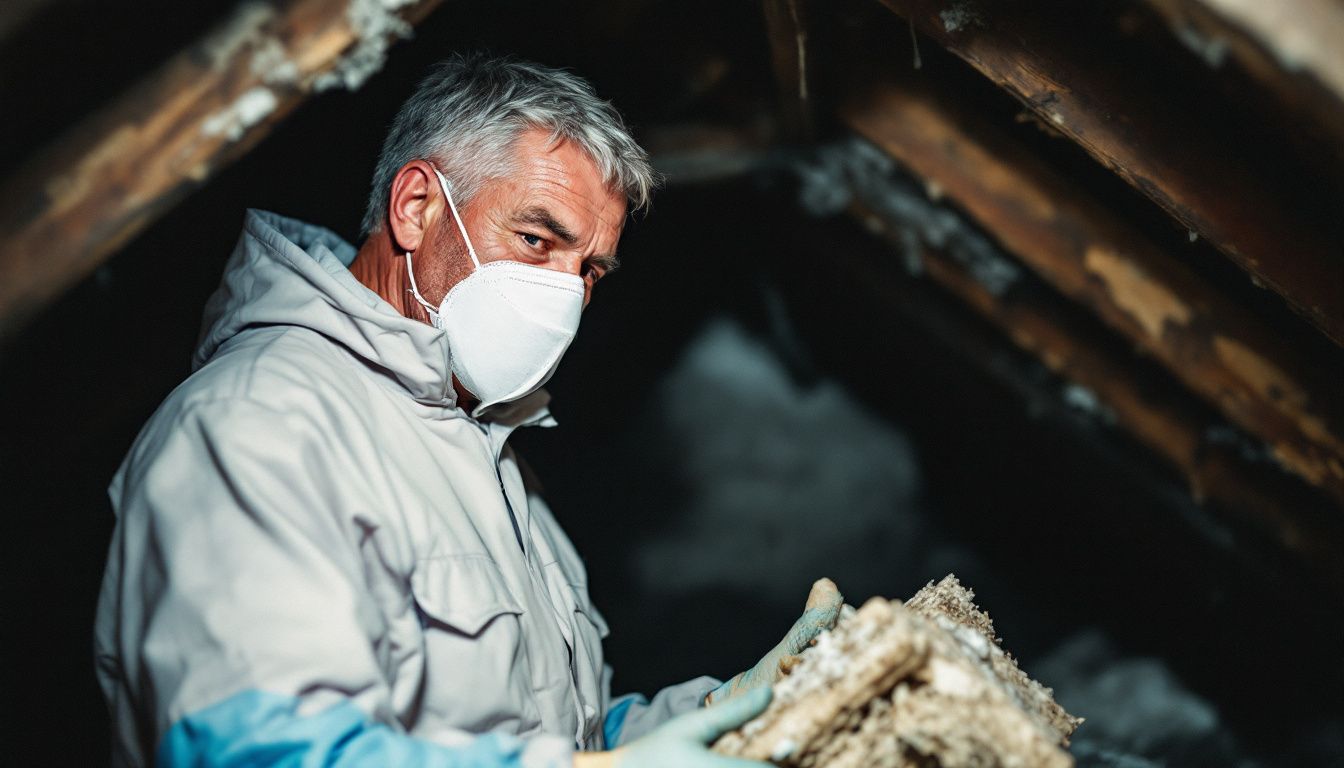
Is There Asbestos in Your Artex? What Every Property Owner Needs to Know
Millions of UK homes have textured ceilings, and a significant number of them contain asbestos in artex. If your property was built or refurbished between the 1960s and the late 1990s, there is a real chance that the swirled or stippled coating above your head includes chrysotile — white asbestos — mixed into the plaster compound. It was added for strength and fire resistance, and at the time, nobody thought twice about it.
The good news is that asbestos-containing artex does not automatically mean danger. The bad news is that disturbing it without knowing what you are dealing with can have serious consequences for your health and your legal standing.
Why Manufacturers Put Asbestos in Artex
Artex was one of the most popular decorative finishes in the UK from the 1960s onwards. The textured effect was easy to apply, hid imperfections in ceilings, and gave homes a fashionable look that was very much of its time.
Manufacturers added chrysotile asbestos fibres — typically in concentrations of around 1% to 4% — because the material improved the product’s durability and resistance to heat. It was a practical choice, not a reckless one, based on the knowledge available at the time.
Asbestos-free versions of textured coatings started appearing from 1976 onwards, but old stock containing asbestos continued to be sold and applied well into the late 1990s. Production of asbestos-containing artex effectively stopped in 1984, but the material was still being used on UK ceilings for years after that.
The key date to remember is 1999. Any ceiling installed before that year could contain asbestos-containing materials. Properties built after January 2000 are generally considered safe under current UK regulations, though it is always worth checking if a building has been refurbished with older materials at any point.
Can You Spot Asbestos in Artex Just by Looking?
No — and this is one of the most important points to understand. There is no visual test that can confirm whether artex contains asbestos. The same swirled, stippled, fan, or spike patterns appear on both asbestos-containing and asbestos-free textured coatings. Even a highly experienced surveyor cannot tell the difference by sight alone.
This matters because many homeowners and even some tradespeople assume that if a ceiling looks fine, it is fine. That assumption can lead to sanding, drilling, or scraping work that releases microscopic asbestos fibres into the air — fibres that are invisible to the naked eye and easy to inhale without realising it.
If your property dates from before 2000, treat any textured ceiling coating as potentially containing asbestos until it has been properly tested. That is the only safe and sensible approach.
How Building Age Shapes the Risk
Building age is your first and most useful indicator. The risk of asbestos in artex is highest in properties built or significantly refurbished between the mid-1960s and the late 1980s. Homes from the 1970s are particularly likely to have asbestos-containing textured coatings, as this was the peak period for their use.
Rented properties, older commercial premises, schools, and public buildings from this era all fall into the higher-risk category. If you manage a portfolio of properties or are responsible for a workplace, you have a legal duty under the Control of Asbestos Regulations to manage any asbestos-containing materials on site.
Even if a property was built after 1984, when asbestos artex production stopped, it may still have been decorated with leftover stock. Do not assume safety based on construction date alone — always verify through proper testing if there is any doubt.
The Health Risks of Disturbed Artex Containing Asbestos
Asbestos in artex that is in good condition and left undisturbed poses a low risk. The fibres are locked within the compound and are not being released into the air. The danger arises when the coating is damaged, flaking, or — most critically — when someone works on it without knowing what it contains.
Sanding an asbestos-containing ceiling to smooth it, drilling through it to hang a light fitting, or scraping it off as part of a renovation can all release significant quantities of airborne fibres. Once inhaled, those fibres can remain in the lungs for decades.
The diseases associated with asbestos exposure — including mesothelioma, lung cancer, and pleural thickening — typically develop 20 to 40 years after exposure, which makes it easy to underestimate the risk at the time. Anyone in the vicinity of disturbed asbestos-containing artex faces long-term health risks, not just those doing the work.
Protecting yourself and others starts with knowing what you are dealing with before any work begins. This is not overcaution — it is a basic duty of care.
How to Confirm Whether Your Artex Contains Asbestos
The only reliable way to confirm asbestos in artex is through laboratory analysis. There are no shortcuts, no visual checks, and no home remedies that will give you a definitive answer. You need a sample of the material to be examined by a UKAS-accredited laboratory using specialist techniques that can identify even trace quantities of asbestos fibres.
Professional Asbestos Testing
Hiring an accredited asbestos surveyor is the safest and most legally sound route. A qualified surveyor will attend your property, collect small samples from the textured coating using correct PPE and wet methods to suppress dust, and send those samples to an accredited laboratory for analysis.
The results will confirm whether asbestos is present, what type it is, and what concentration. This information then feeds into a clear plan of action — whether that is monitoring, encapsulation, or removal. Professional asbestos testing also provides documented evidence of compliance, which is essential for landlords, employers, and anyone managing a commercial property.
An asbestos management survey goes further than a single sample test. It covers the whole property, identifies all suspected asbestos-containing materials, assesses their condition, and produces a formal management plan. This is the appropriate starting point for most occupied buildings where you need a full picture of the risk.
DIY Sampling Kits — What You Should Know
Home testing kit options do exist, and they can be a cost-effective starting point for homeowners who want an initial indication. However, using one without proper training carries real risk. Breaking or scraping artex — even gently — can release fibres, and without the correct PPE and technique, you may expose yourself and others in the process.
If you do use a home kit, follow the instructions precisely, wear appropriate respiratory protection, and avoid disturbing more material than is absolutely necessary. The sample still needs to go to an accredited laboratory for analysis — the kit itself does not tell you anything.
For anything beyond a straightforward single-room check in a property you own and occupy yourself, professional sampling is the better choice. UK regulations make clear that sampling in commercial premises, rented properties, or buildings undergoing refurbishment should be carried out by trained, competent surveyors. This is not just best practice — it is a legal expectation.
If you are based in the capital and need a local expert, an asbestos survey London service can provide fast, accredited testing with results you can rely on.
What to Do If Asbestos Is Found in Your Artex
A positive result does not automatically mean you need to take immediate action. The right response depends on the condition of the ceiling, what you plan to do with the property, and the level of risk identified in the survey report.
Leaving Undisturbed Asbestos in Place
If the artex is in good condition — no cracks, no flaking, no water damage — leaving it in place is often the safest and most practical option. The fibres are bound within the compound and pose minimal risk as long as the surface remains intact and undisturbed.
The key responsibilities in this scenario are to document the finding, inform any tradespeople who work in the property, and arrange regular monitoring to check the condition has not deteriorated. A management survey will typically recommend a monitoring schedule as part of the management plan.
Never allow drilling, sanding, or scraping of a ceiling confirmed to contain asbestos without first consulting a licensed specialist. Even a single screw into an asbestos-containing ceiling can generate enough dust to be a health concern.
Encapsulation as a Practical Middle Ground
Where a ceiling shows minor wear or surface degradation but is not severely damaged, encapsulation can be an effective solution. A specialist applies an approved sealant that locks the fibres within the coating, preventing any release into the air.
This approach typically costs significantly less than full removal and can extend the safe life of the ceiling considerably. Encapsulation is not a permanent fix if major renovation work is planned — the artex will still need to be removed before any significant structural work takes place.
Always use licensed professionals for encapsulation work. Attempting to seal an asbestos-containing ceiling yourself risks disturbing the surface and releasing fibres in the process.
Professional Asbestos Removal for Damaged or High-Risk Ceilings
When artex is significantly damaged, flaking, or when you are planning renovation work that would disturb the ceiling, professional asbestos removal is the appropriate course of action. This is a permanent solution that eliminates the risk entirely.
Licensed contractors seal off the work area, use specialist equipment and full PPE, and follow strict procedures for dust suppression and waste management. All asbestos waste is double-bagged, labelled, and transported to a licensed disposal facility — it cannot go into general waste.
After removal, air testing confirms the space is clear before it is reoccupied. If you are planning significant building work, a demolition survey is a legal requirement before work begins. This type of survey is more intrusive than a management survey and is designed to locate all asbestos-containing materials that could be disturbed during refurbishment or demolition. Failing to commission one is a breach of the Control of Asbestos Regulations.
Your Legal Responsibilities Around Asbestos in Artex
The legal framework around asbestos in the UK is clear and applies to a wide range of property owners and managers. Under the Control of Asbestos Regulations, anyone with responsibility for maintaining or managing non-domestic premises has a duty to manage asbestos. This includes identifying asbestos-containing materials, assessing the risk they pose, and putting a management plan in place.
Landlords renting out residential properties also have responsibilities, particularly where communal areas or shared spaces are involved. Failing to manage asbestos properly can result in enforcement action from the HSE, significant fines, and — in serious cases — criminal prosecution.
HSE guidance, including HSG264, sets out in detail how asbestos surveys should be conducted and what standards surveyors must meet. Using accredited professionals who work to these standards is the only way to ensure your survey results are legally defensible.
If you are in the Midlands and need expert support, an asbestos survey Birmingham service can help you meet your legal obligations quickly and efficiently. Similarly, those in the North West can access an asbestos survey Manchester service with the same accredited standards.
Dos and Don’ts When Dealing With Suspected Asbestos in Artex
Knowing the right actions to take — and the ones to avoid — can make a significant difference to both your safety and your legal position.
- Do arrange a professional survey before any work on ceilings in pre-2000 buildings.
- Do treat any textured coating in an older property as potentially containing asbestos until tested.
- Do inform all tradespeople about confirmed or suspected asbestos-containing materials before they start work.
- Do keep records of all surveys, test results, and management plans.
- Do arrange regular monitoring of any confirmed asbestos that is being left in place.
- Don’t sand, scrape, drill, or otherwise disturb a textured ceiling in a pre-2000 property without testing first.
- Don’t assume a ceiling is safe because it looks undamaged or because the property appears well maintained.
- Don’t attempt to remove asbestos-containing artex yourself — this is illegal without the correct licences and training.
- Don’t dispose of asbestos waste in general refuse — it must go to a licensed disposal site.
- Don’t delay getting a survey if you are planning any renovation, sale, or change of use for the property.
Common Scenarios Where Asbestos in Artex Becomes a Problem
Understanding when asbestos in artex is most likely to become an active concern helps you plan ahead rather than react in a panic.
Buying or Selling a Property
If you are buying a pre-2000 property with textured ceilings, it is worth commissioning an asbestos testing service before exchange. Knowing the status of any asbestos-containing materials gives you negotiating power and prevents nasty surprises during renovation.
Sellers are not legally required to disclose asbestos in residential sales, but failing to investigate and then carrying out work that disturbs it creates significant liability. Get the information before you need it.
Renovation and Refurbishment Work
This is the highest-risk scenario. Builders, plasterers, and electricians working on older properties frequently encounter artex ceilings. If they are not told about the risk, they may sand, drill, or chase through it without taking any precautions.
As the property owner or manager, you have a responsibility to inform contractors before they start work. If you are commissioning refurbishment work on a commercial property, you are legally required to have a pre-refurbishment survey in place before work begins.
Schools, Care Homes, and Public Buildings
Older public buildings are particularly likely to have artex-coated ceilings, and the duty to manage asbestos in these settings is especially stringent. Regular inspections, documented management plans, and staff awareness training are all part of meeting your obligations under the Control of Asbestos Regulations.
If you manage premises of this type and have not yet had a formal survey, the time to act is now — not after an incident has occurred.
Frequently Asked Questions
How do I know if my artex ceiling contains asbestos?
You cannot tell by looking. The only way to confirm whether artex contains asbestos is through laboratory analysis of a sample taken from the ceiling. If your property was built or refurbished before 2000, treat any textured ceiling as potentially containing asbestos until testing proves otherwise. A professional asbestos surveyor can collect samples safely and send them to a UKAS-accredited laboratory for analysis.
Is it safe to live in a house with asbestos in the artex?
Yes, provided the artex is in good condition and is not being disturbed. Asbestos fibres only pose a risk when they become airborne, which happens when the material is damaged, flaking, or worked on. If your artex is intact and you are not planning any work that would disturb it, the risk is very low. However, you should still have it formally identified and documented, and arrange regular monitoring of its condition.
Can I remove artex containing asbestos myself?
No. Removing asbestos-containing artex without the correct licence, training, and equipment is illegal and extremely dangerous. The removal process releases large quantities of airborne fibres if not carried out using proper dust suppression techniques and specialist PPE. Always use a licensed asbestos removal contractor. Attempting DIY removal also creates significant legal liability and can result in prosecution under the Control of Asbestos Regulations.
What does an asbestos survey for artex involve?
A surveyor will visit your property, visually inspect all textured coatings, and take small samples from the artex using wet methods to minimise dust release. These samples are sent to a UKAS-accredited laboratory, which analyses them using polarised light microscopy or electron microscopy to identify asbestos fibres. You will receive a written report confirming whether asbestos is present, what type, and what the recommended course of action is. For occupied buildings, a management survey covers the whole property and produces a formal asbestos management plan.
How much does it cost to have artex tested for asbestos?
The cost varies depending on the size of the property, the number of samples required, and whether you need a single-room test or a full management survey. A basic sample test for a single room is generally the most affordable option, while a full management survey for a larger property will cost more but provides a complete picture of all asbestos-containing materials. Contact Supernova Asbestos Surveys on 020 4586 0680 or visit asbestos-surveys.org.uk for a tailored quote.
Get Expert Help From Supernova Asbestos Surveys
If you suspect asbestos in artex anywhere in your property, do not leave it to chance. Supernova Asbestos Surveys has completed over 50,000 surveys across the UK, working with homeowners, landlords, commercial property managers, and local authorities to identify and manage asbestos safely and in full compliance with UK regulations.
Our UKAS-accredited surveyors work to HSG264 standards, provide clear written reports, and give you straightforward advice on the best course of action — whether that is monitoring, encapsulation, or full removal. We cover the whole of the UK, with specialist teams in London, Manchester, Birmingham, and beyond.
Call us on 020 4586 0680 or visit asbestos-surveys.org.uk to book a survey or request a quote. Do not wait until work has already started — get the information you need before anyone picks up a tool.