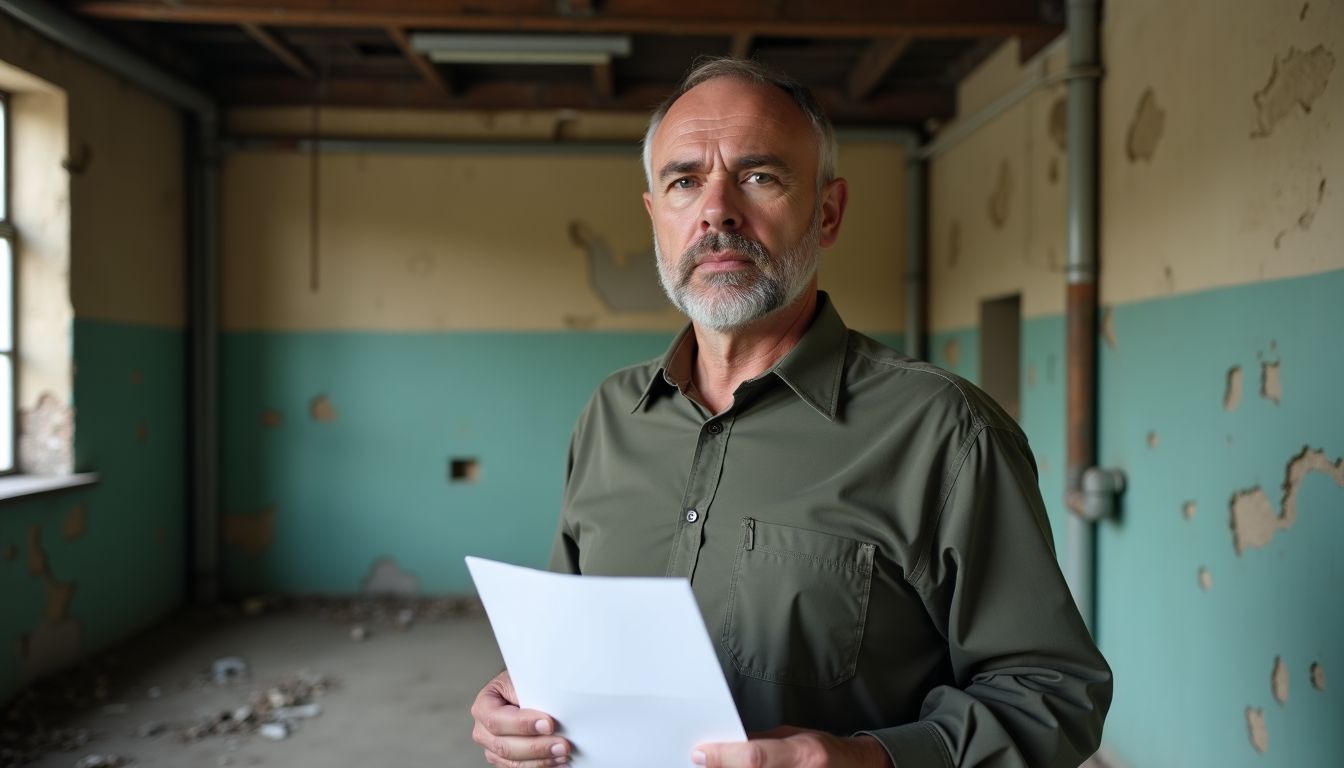
What Happens During an Asbestos Survey — and Why It Matters Before You Start Work
If your building was constructed before 2000, understanding what happens during an asbestos survey could be the difference between a smooth project and a costly, legally complicated stoppage. Asbestos-containing materials (ACMs) were used extensively in UK construction right up until the full ban in 1999, and millions of properties still contain them today.
Disturbing those materials without proper checks releases microscopic fibres into the air. Those fibres cause mesothelioma, lung cancer, and asbestosis — diseases with long latency periods that are entirely preventable with the right approach.
This post walks you through every stage of the survey process, the legal framework behind it, and what you need to do if asbestos is found.
The Legal Framework: Why Asbestos Surveys Are Not Optional
The Control of Asbestos Regulations place clear duties on anyone who owns, manages, or occupies non-domestic premises built before 2000. The same rules apply to the common parts of residential buildings — corridors, stairwells, plant rooms, and similar shared spaces.
Under Regulation 4, the dutyholder — typically the owner, landlord, or person in day-to-day control of the building — must identify ACMs, assess their condition, and manage the risk they present. That starts with a survey carried out by a competent surveyor.
Before any refurbishment or demolition work begins, Regulation 7 goes further: asbestos must be removed as far as reasonably practicable before intrusive work starts. Skipping this step is not a grey area.
The Health and Safety Executive can issue enforcement notices, impose unlimited fines, and in serious cases pursue prosecution leading to imprisonment. Beyond enforcement, there are practical consequences. Finding ACMs mid-project triggers unplanned stoppages, emergency removal costs, and potential liability for any workers already exposed. Doing the survey first is always the more cost-effective route.
The Two Main Survey Types and When You Need Each One
Not every survey is the same. The type you need depends on what the building is used for and what work is planned.
Management Asbestos Survey
A management survey is the standard survey for buildings in normal occupation. It covers accessible areas and is designed to identify ACMs that could be disturbed during routine maintenance or day-to-day use of the building.
The surveyor inspects areas including plant rooms, roof spaces, cellars, and service risers. They take samples of suspect materials — textured coatings, floor tiles, pipe lagging, ceiling tiles, and similar products — and send those samples to a UKAS-accredited laboratory for analysis.
The results feed directly into your asbestos register and asbestos management plan, both of which are legal requirements for non-domestic premises. Contractors, maintenance staff, and anyone else working in the building should be briefed from these documents before they start.
Refurbishment and Demolition Survey
A demolition survey — more formally called a refurbishment and demolition survey — is required before any intrusive work begins. This includes extensions, major fit-outs, strip-outs, and full demolitions.
Unlike a management survey, this type is deliberately intrusive. The surveyor will open up wall cavities, lift floor coverings, access ceiling voids, and expose concealed service runs to find hidden ACMs that a non-intrusive inspection would miss entirely.
This survey must be completed before work starts in the affected area. If the removal of certain high-risk materials is required, the HSE must be notified at least 14 days in advance, and only a licensed asbestos removal contractor can carry out that work.
What Happens During an Asbestos Survey: A Step-by-Step Breakdown
Understanding exactly what happens during an asbestos survey helps you prepare properly, give the surveyor the access they need, and interpret the report when it arrives. Here is exactly what to expect at each stage.
Stage 1: Pre-Survey Planning and Site Briefing
Before arriving on site, a competent surveyor will review any existing information about the building — previous survey reports, building plans, maintenance records, or known ACM locations. This shapes the scope of the inspection and helps the surveyor prioritise areas of higher risk.
On arrival, the surveyor will brief the site contact, confirm the scope, and identify any access restrictions or safety considerations. If the survey is intrusive, they will agree with you which areas will be opened up and what disruption to expect.
You should ensure the surveyor has full access to all areas within scope, including locked plant rooms, roof voids, and basement spaces. Restricted access leads to assumptions in the report, which increases risk.
Stage 2: Physical Inspection of the Building
The surveyor works systematically through the building, inspecting materials that could potentially contain asbestos. They use HSE guidance document HSG264 as the technical reference for how surveys should be conducted and reported.
Common materials they will check include:
- Textured coatings on ceilings and walls (such as Artex)
- Vinyl floor tiles and the adhesive beneath them
- Pipe lagging and boiler insulation
- Insulating board panels and partition walls
- Cement roof sheets, soffits, and guttering
- Ceiling tiles and suspended ceiling systems
- Sprayed coatings on structural steelwork
- Rope seals and gaskets in older plant and equipment
For a management survey, the inspection focuses on accessible areas without causing damage. For a refurbishment and demolition survey, the surveyor will deliberately break into voids and cavities to expose hidden materials — this is expected and necessary.
Stage 3: Sampling Suspect Materials
Where a material could reasonably contain asbestos, the surveyor takes a small physical sample. They wear appropriate personal protective equipment during this process to control any fibre release, and the sample area is sealed immediately after collection.
Each sample is clearly labelled with its exact location, the material type, and the date of collection. Samples are then sent to a UKAS-accredited laboratory for sample analysis using polarised light microscopy or similar approved techniques.
Surveyors carrying out this work are typically trained to BOHS P402 or an equivalent qualification. Where the survey is being carried out by a company holding UKAS accreditation for asbestos surveying, you can have confidence in the reliability of the methodology and results.
Some materials may be presumed to contain asbestos rather than sampled — particularly where sampling would cause disproportionate damage. Presumed ACMs are treated as if they contain asbestos until proven otherwise, which is the cautious and legally appropriate approach.
Stage 4: Laboratory Analysis
The UKAS-accredited laboratory analyses each sample and confirms whether asbestos fibres are present, and if so, which type. The three main types found in UK buildings are chrysotile (white asbestos), amosite (brown asbestos), and crocidolite (blue asbestos).
All three are hazardous; amosite and crocidolite are generally considered higher risk. Laboratory turnaround times vary, but most standard surveys return results within a few working days. Urgent analysis is available where project timescales demand it.
Stage 5: The Asbestos Survey Report
Once laboratory results are confirmed, the surveyor produces a formal written report. This document is central to your legal compliance and your ability to manage the building safely going forward.
A well-structured report will include:
- Exact locations of all ACMs identified, supported by floor plans or marked-up drawings
- Material and product type for each ACM found
- Condition assessment and a risk score based on the likelihood of fibre release
- Photographs of each ACM in situ
- Recommendations: manage in place, encapsulate, or remove
- Details of any areas not inspected and the reasons why
This report forms the basis of your asbestos register. It must be kept on site, shared with contractors before they start work, and reviewed regularly — particularly after any disturbance or change in condition of identified ACMs.
What to Do If Asbestos Is Found
Finding asbestos in a survey report is not a crisis — it is the whole point of the exercise. The survey gives you the information you need to manage the risk properly.
Managing Asbestos in Place
Not all ACMs need to be removed immediately. Where a material is in good condition, not likely to be disturbed, and not in an area where people regularly work, managing it in place with clear labelling is often the appropriate course of action.
Your asbestos management plan must record the location, condition, and control measures for every ACM. You must monitor condition at regular intervals and update the plan when anything changes. All contractors working in the building must be shown the register before they begin any work.
When Removal Is Required
Before major refurbishment or demolition, the law expects ACMs to be removed as far as reasonably practicable. Damaged, friable, or easily accessible materials generally require removal rather than management.
Certain high-risk removal tasks — including work on sprayed coatings, pipe insulation, and insulating board — must be carried out by a licensed asbestos removal contractor. The HSE must be notified at least 14 days before this type of work begins.
During removal, the work area is sealed and negative pressure units control airflow to prevent fibre spread. Air testing is carried out before the area is handed back for use. Waste is double-bagged, labelled, and disposed of at a licensed facility.
If your survey has identified materials that need to go, our asbestos removal service provides fully licensed, end-to-end management of the process.
Asbestos Surveys and Property Transactions
Mortgage lenders increasingly request asbestos survey reports for properties built before 2000. This applies to both commercial acquisitions and residential purchases where the property is being bought for investment or development purposes.
An up-to-date survey report supports the valuation process, demonstrates due diligence, and gives buyers and lenders a clear picture of any liability attached to ACMs on the site. If you are selling a property, having a current survey in place removes a common source of delay in the transaction.
When transferring assets into a pension scheme or completing a commercial lease, asbestos documentation is routinely requested as part of the legal pack. Getting the survey done early avoids last-minute complications.
How Long Does an Asbestos Survey Take?
Survey duration depends on the size and complexity of the building, the type of survey required, and the level of access available. A straightforward management survey of a small commercial unit might take two to three hours. A refurbishment and demolition survey of a large multi-storey building could run across multiple days.
The time between the physical inspection and receipt of the final report depends on laboratory turnaround. Most clients receive their completed report, including laboratory results, within five to seven working days of the inspection. Expedited services are available where timescales are tight.
To keep things moving, prepare the building in advance. Ensure all areas are accessible, arrange for a knowledgeable site contact to accompany the surveyor, and have any previous survey records or building plans ready to hand over at the start of the visit.
Choosing a Competent Asbestos Surveyor
The Control of Asbestos Regulations require that surveys are carried out by competent persons. In practice, this means surveyors trained to BOHS P402 or equivalent, working for a company with UKAS accreditation for asbestos surveying.
When selecting a surveyor, check:
- That the company holds UKAS accreditation — this is the recognised standard for asbestos survey organisations in the UK
- That individual surveyors hold relevant qualifications such as BOHS P402
- That the company can provide references or case studies relevant to your property type
- That the laboratory used for sample analysis is also UKAS-accredited
- That the report format follows HSG264 guidance and will be accepted by your insurers and contractors
Supernova Asbestos Surveys operates nationwide and holds the relevant accreditations to carry out both management and refurbishment and demolition surveys across all property types — commercial, industrial, residential, and public sector.
Asbestos Surveys Across the UK
Whether you manage a portfolio of commercial properties or a single building undergoing renovation, getting the right survey from a qualified team matters. Supernova covers the entire country, with dedicated teams operating in major cities and surrounding regions.
If you need an asbestos survey in London, our teams cover all London boroughs and can typically mobilise quickly to meet project deadlines. For clients in the north west, our asbestos survey in Manchester service covers Greater Manchester and the surrounding area. In the Midlands, our asbestos survey in Birmingham team serves the city and wider West Midlands region.
Wherever your property is located, the same standards apply — UKAS-accredited methodology, HSG264-compliant reporting, and results you can act on with confidence.
Frequently Asked Questions
What happens during an asbestos survey in a property that has already been partially refurbished?
The surveyor will still inspect all accessible areas and any remaining original fabric. If some areas have already been opened up or materials removed, they will note this in the report. Where previous work may have disturbed ACMs without proper controls, the surveyor may recommend air testing or further investigation. A refurbishment and demolition survey should always be commissioned before work begins — not partway through.
Do I need an asbestos survey for a residential property?
The legal duty to manage asbestos under the Control of Asbestos Regulations applies to non-domestic premises and the common parts of residential buildings. Private homeowners are not subject to the same statutory duty, but anyone planning renovation work on a pre-2000 home should strongly consider a survey before work starts. Tradespeople working in the property have their own legal obligations, and disturbing ACMs without prior identification puts both occupants and workers at risk.
How is a refurbishment and demolition survey different from a management survey?
A management survey is non-intrusive and designed for buildings in normal use. A refurbishment and demolition survey is intrusive — the surveyor deliberately opens up wall cavities, lifts floor coverings, and accesses concealed voids to locate hidden ACMs. The refurbishment and demolition survey is required before any work that will disturb the building fabric, and it must cover the specific areas where work is planned before that work commences.
What should I do with the asbestos survey report once I receive it?
The report forms the basis of your asbestos register and management plan. Keep a copy on site at all times. Share it with any contractors before they begin work. Review it whenever there is a change in the condition of identified ACMs or when new work is planned. If the survey identified materials requiring removal, arrange for a licensed contractor to carry out that work before any further disturbance occurs.
How quickly can an asbestos survey be arranged?
For most properties, a survey can be booked within a few working days. Urgent bookings are available where project timescales are tight. The physical inspection can often be completed in a single visit, and most clients receive their completed report — including laboratory analysis results — within five to seven working days of the inspection. Contact Supernova Asbestos Surveys on 020 4586 0680 to discuss availability for your site.
Book Your Asbestos Survey with Supernova
Supernova Asbestos Surveys has completed over 50,000 surveys nationwide. Our UKAS-accredited surveyors carry out management surveys, refurbishment and demolition surveys, and asbestos removal services for commercial, industrial, and residential clients across the UK.
If you need a survey before renovation, as part of a property transaction, or to meet your ongoing duty to manage, get in touch today. Call us on 020 4586 0680 or visit asbestos-surveys.org.uk to request a quote or book a survey online.