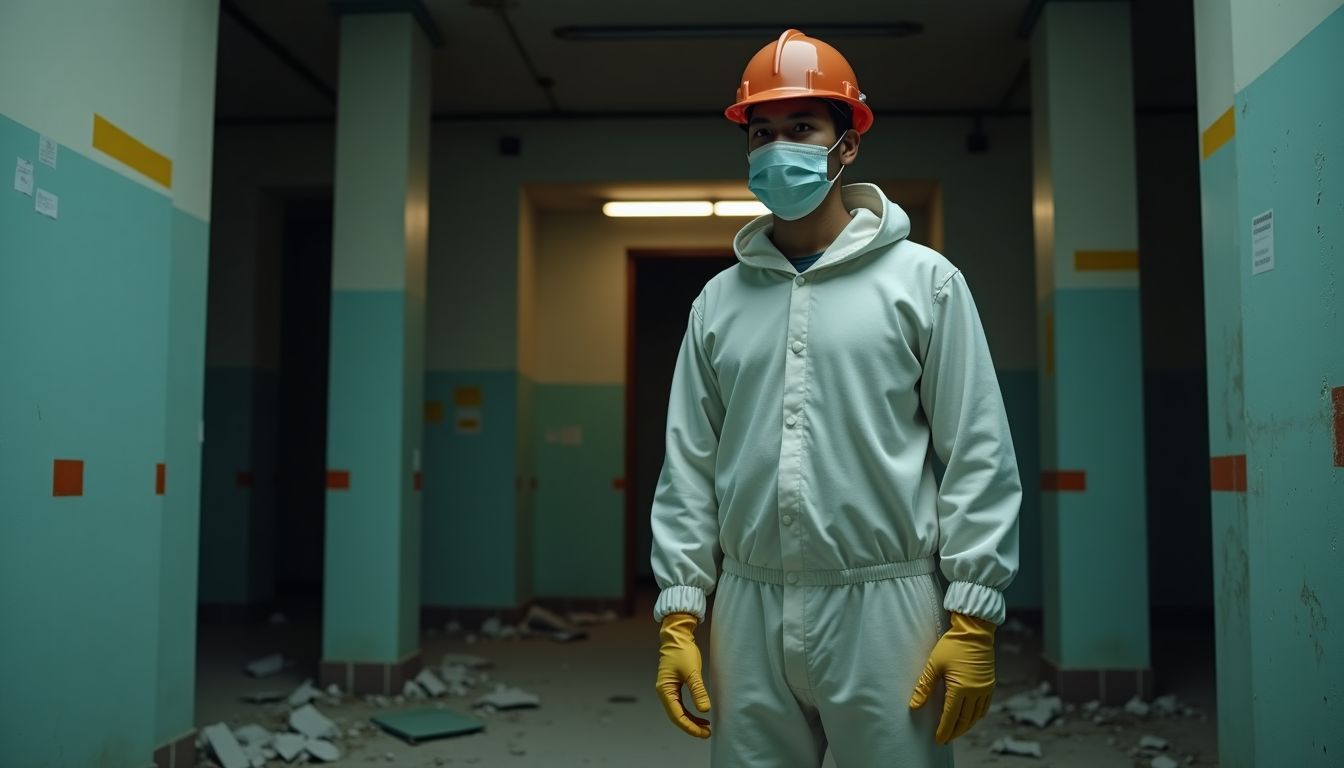
Asbestos in Bathroom Spaces: What UK Homeowners and Landlords Must Know Before Renovating
Ripping out an old bathroom suite feels like a straightforward weekend job — until you realise the walls, floor, or ceiling might contain asbestos. In properties built before 2000, asbestos in bathroom spaces is far more common than most people expect, and disturbing it without the right precautions can have life-altering consequences.
Before a single tile comes off or a pipe gets touched, you need to understand what you’re dealing with, what the law requires, and how to keep your renovation on track without putting anyone at risk.
Why Bathrooms Are One of the Highest-Risk Rooms for Asbestos
Bathrooms were among the most heavily asbestos-containing rooms in homes and commercial properties built throughout much of the twentieth century. The combination of heat, moisture, and extensive pipework made asbestos-containing materials (ACMs) a go-to choice for builders right up until the UK ban came into full effect.
Asbestos was prized precisely because it resisted fire, dampness, and decay — qualities that made it ideal for wet environments. The problem is that those same materials are still sitting behind tiles, under vinyl flooring, and around pipework in millions of UK properties today.
Where Asbestos Hides in Bathrooms
Asbestos in bathroom areas can turn up in a surprising number of places, many of them completely hidden from plain sight. A competent surveyor will check all of the following:
- Artex and textured ceiling coatings — extremely common in bathrooms built or decorated before the 1990s
- Vinyl floor tiles and the adhesive beneath them — both the tile itself and the bitumen adhesive can contain asbestos
- Pipe lagging and insulation — particularly around older hot water pipes and boiler connections
- Insulation boards behind bath panels and around airing cupboards
- Cement-based wall panels and soffits — often used instead of plasterboard in older builds
- Toilet cisterns and cistern lids — some older fittings were manufactured using asbestos cement
- Sealants and gaskets around pipework and plumbing fittings
- Textured or spray-applied coatings on walls
The critical point here is that asbestos-containing materials cannot be identified by sight alone. A material must be sampled and analysed in a UKAS-accredited laboratory to confirm whether asbestos is present and, if so, which type.
Anyone who tells you they can spot asbestos without testing it is wrong — full stop.
The Legal Position: What UK Law Requires Before You Start Work
UK law is unambiguous on this point. The Control of Asbestos Regulations place a legal duty on anyone responsible for a non-domestic property to manage asbestos risks. For any property — domestic or commercial — where renovation or refurbishment is planned, a refurbishment and demolition survey is required before work begins if the building was constructed before 2000.
This is not a recommendation. It is a legal requirement enforced by the Health and Safety Executive. Failure to comply can result in:
- Prohibition notices halting your project immediately
- Improvement notices requiring remedial action at your cost
- Significant financial penalties
- Prosecution in serious cases
- Personal liability for directors and property managers
Landlords have additional obligations. If you are aware of asbestos risks in a rental property, you are required to share that information with tenants and anyone carrying out maintenance or renovation work. Failing to do so puts your tenants, your tradespeople, and yourself at serious legal risk.
Does This Apply to Domestic Properties?
The duty to manage under the Control of Asbestos Regulations applies specifically to non-domestic premises. However, the requirement to commission a refurbishment and demolition survey before intrusive work applies wherever workers may be exposed to asbestos — and that includes domestic bathrooms where contractors are employed.
If you are a homeowner hiring tradespeople to renovate your bathroom, those contractors have a duty to protect themselves and their employees. In practice, a responsible contractor will either request sight of an existing asbestos survey or refuse to start work until one has been carried out. Any contractor who proceeds without checking is putting themselves — and you — at risk.
Which Type of Asbestos Survey Do You Need?
There are two main types of asbestos survey, and the right one depends entirely on what work you are planning.
Management Survey
A management survey is designed to locate and assess ACMs in areas likely to be accessed during normal use and maintenance of a building. It is non-intrusive — surveyors will not lift floorboards or remove fixtures. This type of survey is appropriate for ongoing management of a property where no major structural work is planned.
For a full bathroom renovation, a management survey alone is not sufficient. It will not identify materials hidden behind walls, under flooring, or inside ceiling voids — all of which are likely to be disturbed during a bathroom refit.
Refurbishment and Demolition Survey
Before any bathroom renovation, you need a refurbishment survey — more precisely, a refurbishment and demolition survey as defined in HSG264, the HSE’s asbestos survey guide. This is an intrusive survey. The surveyor will access concealed areas, lift floor coverings, remove bath panels, drill test holes in walls and ceilings, and inspect pipework and lagging.
The area being surveyed must be vacated before the survey takes place, because the inspection process itself can disturb materials. The outcome is a detailed report identifying every suspected or confirmed ACM, its location, condition, and recommended action. This report is what your contractors need before work begins — without it, no responsible tradesperson should touch the room.
Where a property is being stripped back entirely or demolished, a demolition survey will be required, which is even more thorough in scope.
What Happens During a Bathroom Asbestos Survey?
Understanding the process helps you prepare properly and ensures the survey delivers accurate, actionable results.
Step 1: Initial Scoping
Before the surveyor arrives, they will want to know the age of the property, the scope of the planned renovation, and any existing information about the building’s construction. The more detail you can provide, the more targeted the survey can be.
Step 2: On-Site Inspection
The surveyor will carry out a thorough inspection of the bathroom and any adjacent areas likely to be affected by the renovation. For a refurbishment survey, this includes intrusive access — removing panels, lifting tiles or vinyl, and inspecting voids and pipework. The bathroom must be cleared and vacated for this stage.
Step 3: Sampling
Where materials are suspected to contain asbestos, the surveyor will take small samples. These are sent to a UKAS-accredited laboratory for analysis. Only UKAS-accredited lab results should be used to make decisions about asbestos management or removal — this is not an area where cutting corners is acceptable.
Step 4: The Survey Report
You will receive a detailed written report, typically within 24 hours of the survey. A compliant report will include:
- The location of every ACM or suspected ACM inspected
- Photographs and floor plan drawings marking ACM locations
- Laboratory analysis results for all samples taken
- A risk assessment for each material, including its condition and the likelihood of fibre release
- Recommended actions — whether removal, encapsulation, or managed monitoring is appropriate
Keep this report. It is a legal document that must be passed to any contractor working in the space, and it should be retained for the lifetime of the property.
What Happens If Asbestos Is Found in Your Bathroom?
Finding asbestos does not automatically mean your renovation grinds to a halt. The appropriate action depends on the type of asbestos, its condition, and whether the planned work will disturb it.
Leave It in Place
If an ACM is in good condition and will not be disturbed by the renovation, it may be safest to leave it in place and manage it. Asbestos only poses a risk when fibres are released into the air. An intact, well-bonded material that will remain undisturbed is not an immediate hazard.
Encapsulation
In some cases, ACMs can be sealed with a specialist encapsulant to prevent fibre release. This is appropriate for certain materials in good condition where removal is not necessary. The encapsulated material must then be monitored and managed going forward.
Licensed Asbestos Removal
Where ACMs must be removed — because they are in poor condition, or because the renovation will inevitably disturb them — the work must be carried out by a licensed contractor. Certain high-risk materials, including sprayed coatings, pipe lagging, and insulating board, require a licensed contractor under the Control of Asbestos Regulations.
Attempting to remove these materials without the correct licence is illegal and extremely dangerous. Only once asbestos removal has been completed and the area has been cleared — with air testing confirming it is safe — can renovation work proceed.
The Health Risks: Why Getting This Right Matters
Asbestos-related diseases are entirely preventable, but they remain the UK’s single largest cause of work-related deaths. When asbestos-containing materials are disturbed, microscopic fibres are released into the air. These fibres are invisible to the naked eye and can remain airborne for hours.
Once inhaled, asbestos fibres become permanently lodged in lung tissue. The diseases they cause — mesothelioma, lung cancer, and asbestosis — typically develop 20 to 40 years after exposure. By the time symptoms appear, the damage is done. There is no cure for mesothelioma.
A bathroom renovation that disturbs asbestos without proper controls does not just put the contractor at risk. It puts everyone in the property at risk — including children and elderly residents who may be particularly vulnerable. Getting a proper survey done before work starts is the only way to know what you are dealing with.
How to Find a Qualified Asbestos Surveyor
Not everyone who offers an asbestos survey is qualified to carry one out. HSG264 is clear that surveys should be conducted by competent surveyors — in practice, this means individuals holding the BOHS P402 qualification or equivalent, working for a UKAS-accredited organisation.
When choosing a surveyor, check:
- That the company holds UKAS accreditation for asbestos surveying
- That surveyors hold BOHS P402 or equivalent qualifications
- That laboratory analysis is carried out by a UKAS-accredited lab
- That you will receive a full written report with photographs and drawings
- That the company carries adequate professional indemnity and public liability insurance
Supernova Asbestos Surveys meets all of these requirements. With over 50,000 surveys completed across the UK, we have the experience and accreditation to handle bathroom surveys of any size or complexity. Whether you need an asbestos survey in London, an asbestos survey in Manchester, or an asbestos survey in Birmingham, our local surveyors can typically be on site within 24 to 48 hours.
Planning Your Bathroom Renovation: A Practical Checklist
Before a single tool is picked up, work through this checklist:
- Confirm the age of the property. If it was built or refurbished before 2000, assume asbestos may be present until proven otherwise.
- Commission a refurbishment and demolition survey from a UKAS-accredited surveyor before any work starts.
- Share the survey report with every contractor involved in the renovation before they begin.
- If ACMs are identified for removal, appoint a licensed asbestos removal contractor and do not allow renovation work to proceed in that area until removal and clearance are confirmed.
- Keep the survey report on file — you will need it for future work, property sales, and compliance records.
- If ACMs are being managed in place, ensure they are recorded in an asbestos register and that anyone working in the property in future is made aware of their location and condition.
Common Mistakes That Put People at Risk
Even well-intentioned property owners and contractors make avoidable errors when it comes to asbestos in bathroom renovations. These are the ones we see most often.
Assuming a Visual Inspection Is Enough
No material can be confirmed as asbestos-free without laboratory testing. Assuming that tiles, panels, or coatings are safe because they look modern, undamaged, or unfamiliar is a dangerous shortcut that has caused serious harm.
Using a Management Survey Instead of a Refurbishment Survey
A management survey is designed for routine monitoring, not for pre-renovation planning. Using one in place of a proper refurbishment and demolition survey leaves hidden ACMs undetected — precisely the ones most likely to be disturbed when work begins.
Proceeding Without Sharing the Survey Report
A survey report is only useful if the people doing the work have read it. Every contractor, plumber, and tiler involved in the renovation must be given access to the report before they start. This is not just good practice — it is a legal requirement under the Control of Asbestos Regulations.
Attempting DIY Removal
Some homeowners attempt to remove suspected asbestos-containing materials themselves, believing that because they own the property, they are exempt from the rules. This is a serious misconception. While the duty to manage applies to non-domestic premises, the health risks of DIY asbestos removal are identical regardless of who owns the building. Licensed removal exists for good reason.
Ready to Book Your Bathroom Asbestos Survey?
Supernova Asbestos Surveys has completed over 50,000 surveys across the UK. Our UKAS-accredited surveyors hold the BOHS P402 qualification, and our laboratory partners are fully accredited for asbestos analysis. We provide detailed, photographic survey reports — typically within 24 hours of the site visit.
Whether you are a homeowner planning a bathroom refit, a landlord preparing a rental property for renovation, or a contractor who needs a survey completed quickly, we can help. We cover the whole of the UK, with local surveyors available at short notice in most areas.
Call us on 020 4586 0680 or visit asbestos-surveys.org.uk to get a quote or book a survey today.
Frequently Asked Questions
Is asbestos in bathrooms common in UK properties?
Yes. Bathrooms built or refurbished before 2000 frequently contain asbestos-containing materials. Common locations include textured ceiling coatings, vinyl floor tiles and their adhesive, pipe lagging, bath panel insulation boards, and cement-based wall panels. Because asbestos cannot be identified visually, the only way to know for certain is to have materials sampled and tested by a UKAS-accredited laboratory.
Do I legally need an asbestos survey before renovating a bathroom?
If the property was built before 2000 and you are employing contractors to carry out the work, a refurbishment and demolition survey is required before intrusive work begins. This applies to both domestic and non-domestic properties where workers may be exposed. The Control of Asbestos Regulations and HSE guidance under HSG264 are clear on this requirement. Failing to comply can result in prohibition notices, financial penalties, and prosecution.
What type of asbestos survey do I need for a bathroom renovation?
You need a refurbishment and demolition survey, not a management survey. A management survey is non-intrusive and is designed for routine property management, not pre-renovation planning. A refurbishment and demolition survey involves intrusive access to concealed areas — exactly what is needed to identify ACMs that will be disturbed when tiles, panels, flooring, and pipework are removed.
What happens if asbestos is found during a bathroom survey?
Finding asbestos does not necessarily stop your renovation. If the material is in good condition and will not be disturbed, it may be appropriate to leave it in place and manage it. If it must be removed, a licensed asbestos removal contractor must carry out the work. Only once removal is complete and air testing confirms the area is clear can renovation work proceed. Your survey report will set out the recommended course of action for each material identified.
Can I remove asbestos from my bathroom myself?
In most cases, no. Certain high-risk materials — including sprayed coatings, pipe lagging, and insulating board — must be removed by a licensed contractor under the Control of Asbestos Regulations. Even for lower-risk materials, DIY removal carries serious health risks. Asbestos fibres released during removal are invisible and can remain airborne for hours. The consequences of exposure — mesothelioma, lung cancer, asbestosis — can take decades to develop and are irreversible. Licensed removal contractors exist for good reason, and using one protects you, your family, and anyone else in the property.