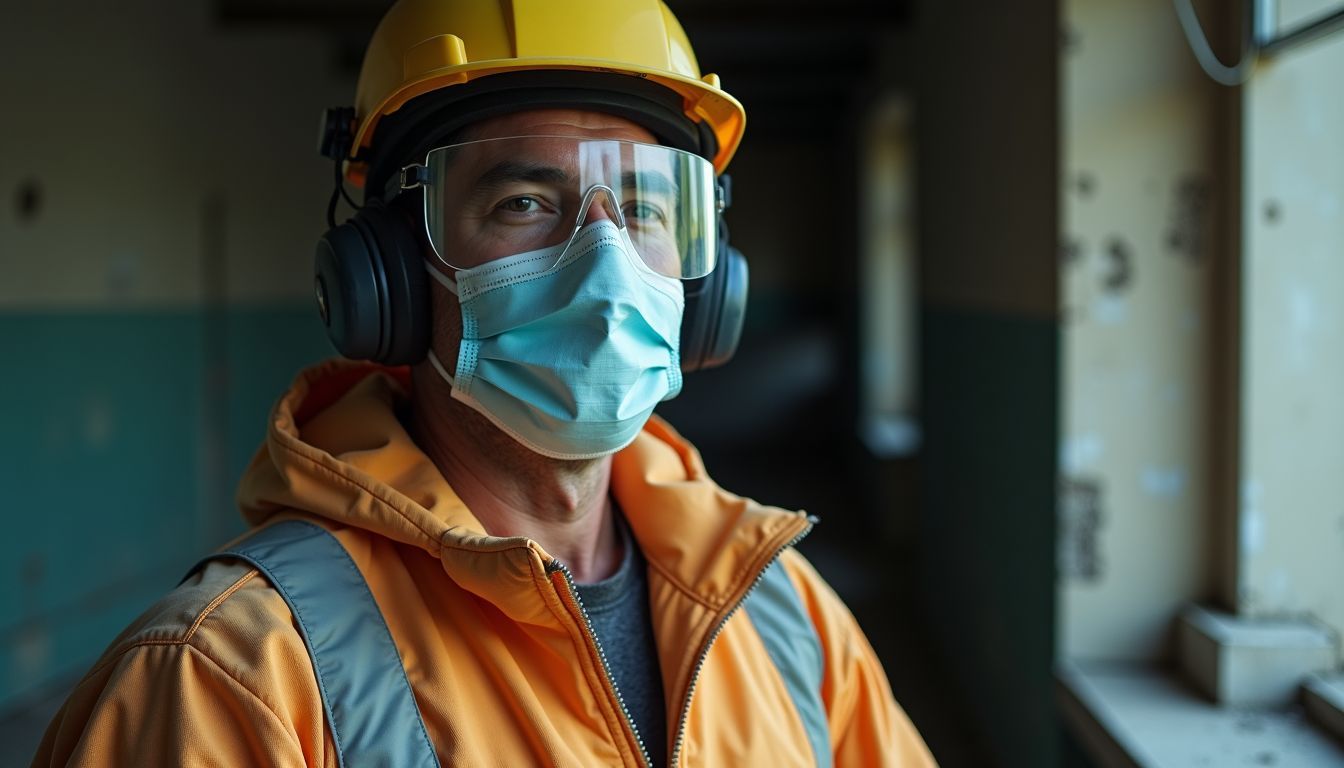
Asbestos Waste Disposal in Lewisham: What Property Owners Must Know
Asbestos doesn’t become less dangerous once it’s been identified and removed — in many ways, that’s when the real risk begins. Asbestos waste disposal in Lewisham is tightly regulated, and getting it wrong can result in serious harm to people, significant fines, and criminal liability. Whether you’re a landlord, facilities manager, or homeowner, understanding the legal framework and practical steps around asbestos waste is not optional.
Lewisham has a significant stock of pre-2000 properties — Victorian terraces, post-war council blocks, commercial units, and schools — all of which may contain asbestos-containing materials (ACMs). When those materials are disturbed, removed, or the building is demolished, the resulting waste must be handled in a very specific way.
Why Asbestos Waste Is Classified as Hazardous
Asbestos is classified as hazardous waste under UK legislation because of the serious health risks it poses. When asbestos fibres become airborne — even in tiny quantities — they can lodge permanently in lung tissue, causing conditions including mesothelioma, asbestosis, and lung cancer. These diseases have long latency periods, sometimes taking decades to develop after exposure.
This is why asbestos waste cannot be treated like ordinary building rubble. It cannot be skipped alongside general construction waste, left in a wheelie bin, or taken to a standard household recycling centre. Every stage of its handling — from removal through to final disposal — is governed by the Control of Asbestos Regulations and associated HSE guidance.
The consequences of improper disposal are serious. Fly-tipping asbestos waste is a criminal offence. Local authorities including Lewisham Council have the power to prosecute individuals and businesses, and penalties can include unlimited fines and imprisonment.
The Legal Framework for Asbestos Waste Disposal in Lewisham
Several pieces of legislation overlap when it comes to asbestos waste disposal in Lewisham. Understanding which applies to your situation is essential before any work begins.
The Control of Asbestos Regulations
These regulations set out the duties of employers, building owners, and contractors when working with asbestos. They require that any work involving asbestos — including its removal — is carried out by licensed contractors for higher-risk materials, and that waste is properly contained, labelled, and disposed of at a licensed facility.
The Environmental Protection Act and Hazardous Waste Regulations
Asbestos waste is classified as hazardous waste under these frameworks. This means it must be accompanied by appropriate documentation — including a consignment note — when transported. The waste must be taken to a site that is licensed to accept hazardous materials. Ordinary skips and general waste contractors are not suitable.
The Duty of Care
Anyone who produces, carries, or disposes of asbestos waste has a legal duty of care to ensure it is managed safely. This duty does not end when the waste leaves your site. If your contractor disposes of it illegally, you could still face liability if you failed to check their credentials and waste carrier licence.
What Happens Before Disposal: The Role of the Asbestos Survey
Before any asbestos waste is generated, you need to know exactly what you’re dealing with. That means commissioning the right type of survey for your situation — choosing the wrong one can leave you exposed to both health risks and legal liability.
If you’re managing a building and need to understand what ACMs are present without undertaking major works, a management survey is the starting point. This non-intrusive inspection identifies accessible asbestos-containing materials and helps you put a management plan in place.
If you’re planning renovation or refurbishment work — anything from a kitchen refit to structural alterations — you need a refurbishment survey before work begins. This is more intrusive, accessing wall cavities, ceiling voids, and floor spaces to locate hidden ACMs that could be disturbed during the works.
For properties being pulled down entirely, a demolition survey is legally required. This is the most thorough inspection available, covering every accessible and inaccessible area of the structure to ensure all asbestos is located before demolition begins.
Once ACMs have been identified and any removal work completed, a re-inspection survey helps you confirm the condition of any remaining materials and ensures nothing has been missed or deteriorated further.
If you’re unsure whether a material contains asbestos, sample analysis from a UKAS-accredited laboratory provides definitive confirmation before any decisions are made about removal or disposal.
How Asbestos Waste Must Be Packaged and Labelled
The way asbestos waste is packaged before leaving your site is not a matter of preference — it’s a legal requirement. Getting this wrong puts workers, waste carriers, and the public at risk.
Double Bagging
All asbestos waste must be double-bagged in heavy-duty polythene sacks that meet the required specification. The bags must be sealed securely and must not be overfilled, as this risks tearing during handling. Each bag must be clearly labelled with a hazard warning indicating that the contents contain asbestos.
Rigid Containers for Fragile Materials
Some asbestos materials — particularly asbestos cement sheets, floor tiles, and pipe sections — are too rigid or fragile to be safely bagged. These must be wrapped in heavy-duty polythene sheeting and sealed with tape, or placed in rigid containers such as sealed drums. The same labelling requirements apply.
Labelling Requirements
Every package of asbestos waste must carry a label that clearly states it contains asbestos, warns against inhaling dust, and identifies the waste as hazardous. Standard asbestos warning labels are available from safety suppliers and must meet the requirements set out in HSE guidance. Do not improvise labelling — non-compliant packaging is a prosecutable offence.
Transporting Asbestos Waste in Lewisham
Once packaged, asbestos waste must be transported by a registered waste carrier. Not every skip company or van driver is licensed to carry hazardous waste — you must check that your carrier holds the appropriate Environment Agency registration before a single bag leaves your property.
A consignment note must accompany every load of hazardous asbestos waste. This document records the producer, the carrier, the destination facility, and a description of the waste. Copies must be retained by all parties for a minimum of three years. This paper trail is not bureaucracy for its own sake — it’s your legal protection if questions are ever raised about how the waste was handled.
Never use a skip for asbestos waste unless the skip company has confirmed in writing that they are licensed to accept hazardous materials and will transport it correctly. Most standard skip hire companies are not equipped for this.
Licensed Disposal Sites: Where Asbestos Waste Goes
Asbestos waste must be taken to a facility that holds an environmental permit to accept hazardous waste. In and around Lewisham, there are licensed hazardous waste disposal facilities, but you should always confirm with your waste contractor that the destination site is appropriately licensed before any waste leaves your property.
Lewisham Council’s household waste recycling centres do not accept asbestos waste from domestic properties. If you are a homeowner who has had a small amount of asbestos removed — for example, a few asbestos cement roof tiles — you will need to arrange specialist collection. Some licensed contractors offer collection services for small quantities of domestic asbestos waste, but this must still follow all packaging, labelling, and documentation requirements.
Never attempt to dispose of asbestos waste in your general household bins, in a skip, or by leaving it at a recycling centre. These actions are illegal and carry serious penalties.
Who Can Remove Asbestos Before Disposal?
The type of asbestos and the nature of the work determines who is legally permitted to remove it. This directly affects what waste is generated and how it must be handled.
Licensed Asbestos Removal Contractors
For higher-risk asbestos materials — including sprayed coatings, lagging on pipes and boilers, and asbestos insulating board — only a contractor licensed by the HSE can carry out the removal. These materials are more likely to release fibres when disturbed and require controlled conditions, specialist equipment, and air monitoring throughout the process.
Supernova’s asbestos removal service is carried out by qualified professionals who manage the entire process — from enclosure and controlled removal through to correct packaging and disposal of the resulting waste.
Non-Licensed Work
Some lower-risk asbestos work — such as removing small areas of asbestos cement or vinyl floor tiles in good condition — may be carried out without an HSE licence, but it is still notifiable to the relevant authority and must follow strict control measures. Even for non-licensed work, the resulting waste must be disposed of as hazardous waste using the same procedures.
If you are ever uncertain whether work requires a licence, err on the side of caution and seek professional advice. The risk of getting it wrong is too significant.
Asbestos Waste Disposal and Fire Safety
One area that is often overlooked is the relationship between asbestos and fire safety in older buildings. Many of the same properties in Lewisham that contain asbestos also have fire safety deficiencies that require attention. If you are managing a commercial or multi-occupancy property, a fire risk assessment alongside your asbestos survey gives you a complete picture of the building’s safety profile.
Some asbestos-containing materials — such as asbestos insulating board used as fire barriers — may have been installed specifically for fire protection. Removing them without proper planning can inadvertently compromise fire compartmentation. Any removal must be accompanied by a plan to reinstate the fire protection using compliant modern materials.
Common Asbestos-Containing Materials Found in Lewisham Properties
Knowing where asbestos is likely to be found helps you plan surveys, removal, and disposal more effectively. In Lewisham’s housing stock and commercial buildings, the following ACMs are commonly encountered:
- Asbestos cement sheets — used in roofing, cladding, and outbuildings, particularly in post-war construction
- Artex and textured coatings — commonly found on ceilings in properties built or refurbished before the 1990s
- Vinyl floor tiles and adhesive — widespread in kitchens, bathrooms, and commercial spaces
- Pipe and boiler lagging — insulation on older heating systems, particularly in flats and commercial buildings
- Asbestos insulating board (AIB) — used in partition walls, ceiling tiles, and fire doors
- Roofing felt — some older flat roofs used asbestos-reinforced felt
- Soffit boards and fascias — particularly on 1960s and 1970s housing
Each of these materials requires a different approach to removal and generates waste that must be handled according to its risk classification. Never assume a material is low-risk without professional confirmation.
Practical Steps for Property Owners and Managers in Lewisham
If you own or manage property in Lewisham and need to address asbestos waste disposal, follow this sequence before any work begins:
- Commission the right survey. Identify what ACMs are present before any work begins. Do not assume — have the building inspected by a qualified surveyor.
- Get samples analysed. If you’re uncertain about a material, arrange laboratory analysis before deciding on a course of action.
- Use a licensed removal contractor. For higher-risk materials, only an HSE-licensed contractor can legally carry out the work. Verify their licence before engaging them.
- Ensure correct packaging and labelling. All waste must be double-bagged or wrapped, clearly labelled, and sealed before it leaves the site.
- Appoint a registered waste carrier. Check the Environment Agency register to confirm your carrier is licensed to transport hazardous waste.
- Complete the consignment note. Ensure documentation is completed for every load and that all parties retain copies for at least three years.
- Confirm the disposal facility is licensed. Ask your contractor to confirm in writing that the destination site holds an environmental permit for hazardous waste.
- Keep records. Maintain a full paper trail — surveys, removal certificates, consignment notes, and disposal confirmations — in case of future queries or enforcement action.
Asbestos Surveys Across the UK: Supernova’s National Coverage
Supernova Asbestos Surveys operates across the UK, delivering professional, accredited asbestos surveys wherever they’re needed. If you’re based in the capital, our asbestos survey London service covers the full range of survey types across all London boroughs, including Lewisham.
Beyond London, our teams are active nationwide. If you need an asbestos survey Manchester or an asbestos survey Birmingham, Supernova’s qualified surveyors are ready to assist with the same standard of service and the same commitment to accuracy.
With over 50,000 surveys completed nationwide, we have the experience to handle properties of every type — from single-occupancy homes to large commercial estates and public buildings.
Frequently Asked Questions
Can I dispose of asbestos waste myself in Lewisham?
In most cases, no. Asbestos waste is classified as hazardous waste and must be handled, transported, and disposed of in compliance with strict legal requirements. While a homeowner may handle very small quantities of lower-risk asbestos material under specific conditions, the waste must still be correctly packaged, labelled, and taken to a licensed disposal facility by a registered waste carrier. Attempting to dispose of it in household bins, skips, or recycling centres is illegal and can result in prosecution.
What documentation do I need for asbestos waste disposal in Lewisham?
You need a consignment note for every load of asbestos waste that leaves your property. This document identifies the waste producer, the carrier, and the destination disposal facility. All parties — producer, carrier, and disposal site — must retain copies for a minimum of three years. Failure to maintain this documentation can result in enforcement action even if the waste was otherwise disposed of correctly.
How do I find a licensed asbestos waste carrier in Lewisham?
You can verify whether a waste carrier is registered by checking the Environment Agency’s public register of waste carriers. Do not rely solely on a contractor’s word — check the register directly before any waste leaves your site. A reputable asbestos removal contractor, such as Supernova, will use registered carriers as a matter of course and can provide documentation confirming this.
Does asbestos waste disposal apply to small domestic jobs?
Yes. Even if you’ve only had a small amount of asbestos removed — such as a few roof tiles or a section of textured ceiling coating — the resulting waste is still classified as hazardous and must be disposed of correctly. The same packaging, labelling, carrier registration, and consignment note requirements apply regardless of the quantity involved. There is no minimum threshold below which the rules do not apply.
What happens if asbestos waste is disposed of illegally in Lewisham?
Illegal disposal of asbestos waste — including fly-tipping — is a criminal offence. Lewisham Council and the Environment Agency both have enforcement powers, and penalties can include unlimited fines and, in serious cases, imprisonment. Liability can extend to the property owner or manager who commissioned the work if they failed to take reasonable steps to verify that their contractor was properly licensed and compliant.
Get Professional Help with Asbestos in Lewisham
Asbestos waste disposal in Lewisham is not something to navigate alone. The legal requirements are precise, the health risks are real, and the consequences of getting it wrong are serious. Supernova Asbestos Surveys provides the full range of services you need — from initial survey and sample analysis through to licensed removal and correct disposal — all delivered by qualified professionals who understand exactly what’s required.
To discuss your property’s needs or to book a survey, call us on 020 4586 0680 or visit asbestos-surveys.org.uk. We’re here to make sure your asbestos is managed safely, legally, and with as little disruption to your property as possible.