Why an Asbestos Survey for Home Refurbishment Could Save Your Project — and Your Health
You’ve planned the layout, chosen the tiles, and briefed the builder. But if your home was built before 2000, there’s one step that should come before any of that: an asbestos survey for your home refurbishment. Skip it, and you risk releasing invisible fibres that cause fatal lung diseases — and potentially halting your project entirely once work has already begun.
Asbestos was used extensively in UK construction until its full ban in 1999. That means millions of homes across the country contain asbestos-containing materials (ACMs) hidden in walls, ceilings, floors, and service areas. You won’t see them. You won’t smell them. But disturb them with a drill or a sledgehammer, and the consequences can be severe.
This post covers everything homeowners and property managers need to know before starting any renovation work on a pre-2000 property.
What Is an Asbestos Survey for Home Refurbishment?
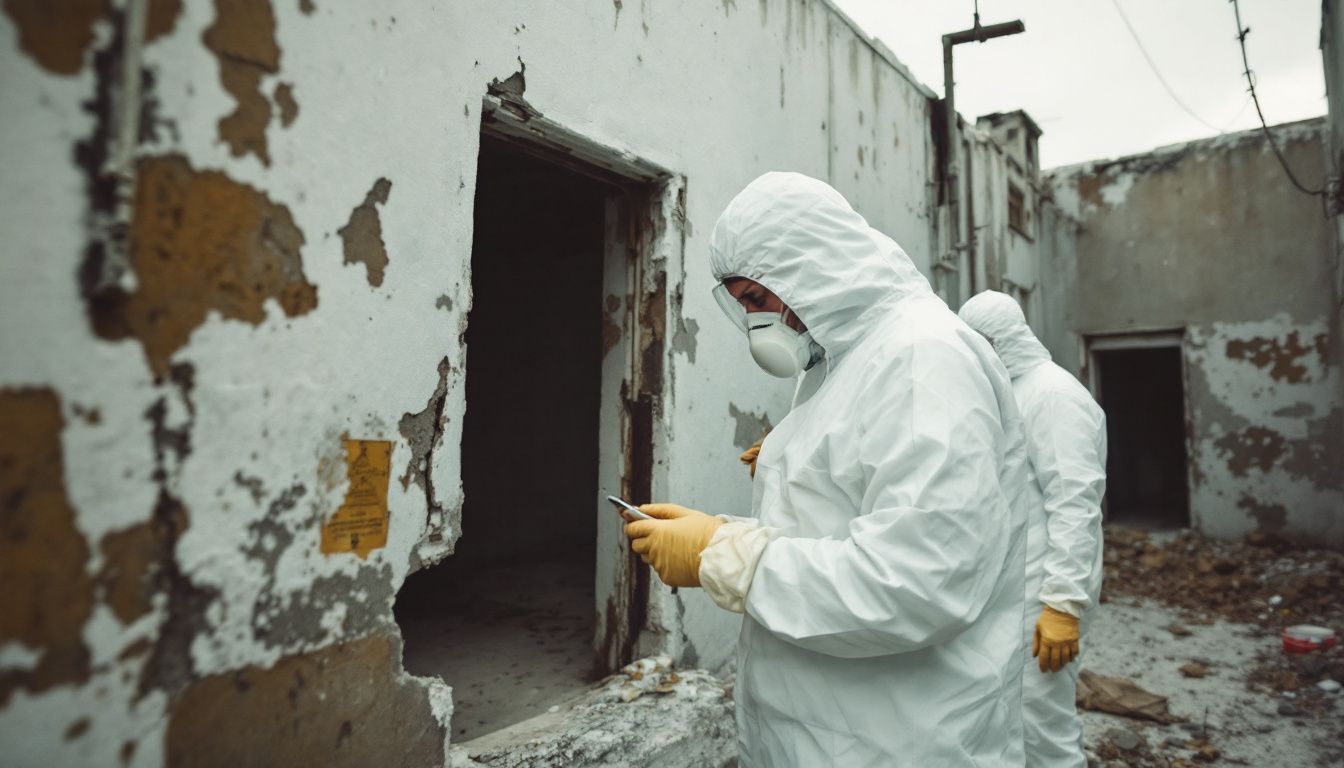
An asbestos survey is a professional inspection carried out by a qualified surveyor to identify the presence, location, type, and condition of ACMs in a building. For refurbishment work, a specific type of survey — the refurbishment and demolition survey — is required before any intrusive work begins.
This is different from a routine management survey, which is used for ongoing monitoring in occupied buildings. A refurbishment survey goes further. It involves accessing hidden voids, lifting floor coverings, drilling inspection holes, and checking behind wall linings and pipe boxing — areas that would be disturbed during renovation work.
The goal is straightforward: find every ACM that could be disturbed by the planned works before a single tool touches the structure.
Do You Legally Need an Asbestos Survey Before Home Renovation?
For commercial properties and non-domestic buildings, the Control of Asbestos Regulations makes a refurbishment and demolition survey a legal requirement before any structural work on buildings constructed before 2000. Duty holders who fail to comply face unlimited fines and, in serious cases, up to two years’ imprisonment.
For private residential properties, the legal picture is slightly different — homeowners are not directly subject to the same duty holder obligations as employers or landlords. However, the moment you bring in a contractor, the picture changes significantly.
Under the Control of Asbestos Regulations, contractors working in domestic premises are still bound by health and safety law. A competent contractor should not start refurbishment work in a pre-2000 home without understanding the asbestos risk. If they disturb ACMs and workers are exposed, there are serious legal and financial consequences — and as the homeowner commissioning the work, you could be implicated.
Beyond the legal position, the practical case for an asbestos survey home refurbishment is overwhelming. Discovering asbestos mid-project means halting work, evacuating the site, bringing in licensed contractors, and potentially starting from scratch with your timeline and budget.
Which Properties Are at Risk?
Any property built or refurbished before 2000 could contain ACMs. The risk is higher in homes built between the 1950s and 1980s, when asbestos use was at its peak. But properties constructed right up to 1999 may still contain materials with asbestos.
Common locations where ACMs are found in residential properties include:
- Textured coatings — Artex and similar decorative finishes on ceilings and walls
- Floor tiles — vinyl and thermoplastic floor tiles, particularly in kitchens and bathrooms
- Pipe lagging — insulation around boiler pipes and hot water systems
- Insulation boards — around boilers, in airing cupboards, and behind partition walls
- Roof and soffit materials — asbestos cement sheeting in garages, outbuildings, and extensions
- Guttering and downpipes — particularly in older properties
- Ceiling tiles — in suspended ceiling systems
- Loft insulation and boarding — some older loose-fill insulation contains asbestos
If you’re planning a kitchen or bathroom refit, loft conversion, extension, or any work involving walls, ceilings, or floors in a pre-2000 property, you should commission an asbestos survey home refurbishment before work starts.
The Two Main Types of Survey Explained
Management Survey
A management survey is designed for buildings in normal occupation. It identifies ACMs that could be disturbed during routine use, maintenance, or light repairs. Surveyors inspect accessible areas, check under floor coverings, above suspended ceilings, in lofts, and around service areas.
The resulting report gives you a full asbestos register — a record of where ACMs are, their condition, and the risk they pose. This is the foundation of any asbestos management plan and is essential for landlords and commercial property managers.
A management survey is not sufficient before major renovation work. If you’re planning anything more than superficial decorating, you need the survey type described below.
Refurbishment and Demolition Survey
A demolition survey — more accurately called a refurbishment and demolition survey — is the correct survey type before any intrusive work. It’s designed to locate all ACMs in the areas to be disturbed, including those hidden within the structure.
Surveyors will access voids, lift floor coverings, drill inspection holes, and inspect behind wall linings. The survey should be carried out with the area vacated where possible, as the inspection process itself can disturb materials.
This survey must be carried out by a competent surveyor following HSG264 guidance. Look for surveyors holding the BOHS P402 qualification, and use an organisation accredited by UKAS (United Kingdom Accreditation Service). UKAS accreditation confirms that the surveying body meets the technical standards required for inspection, sampling, and reporting.
The survey report will identify every ACM in the scope of works, rate the risk of fibre release, and set out what action is needed before renovation can proceed safely.
What Happens During an Asbestos Survey?
Understanding what to expect helps you prepare the property and get the most accurate result.
Initial inspection
The surveyor begins with a visual inspection of the areas in scope. They review the building’s age, construction type, and the materials present. Their training and experience allow them to identify suspect materials that require sampling.
Sampling
Small samples are taken from suspect materials using appropriate tools and personal protective equipment. The surveyor will typically collect samples from multiple locations across different material types to ensure accuracy. Samples are sealed, labelled, and sent to a UKAS-accredited laboratory for analysis.
Laboratory analysis
The laboratory uses polarised light microscopy or other approved methods to identify asbestos fibres in the samples. They will confirm whether asbestos is present and, if so, which type — chrysotile (white), amosite (brown), or crocidolite (blue), among others.
The survey report
You’ll receive a detailed written report — typically within 24 hours of the survey — covering:
- The location of every ACM identified
- The type and quantity of each material
- The condition and risk rating
- Photographs and diagrams showing ACM locations
- Recommendations for management, encapsulation, or removal
This report becomes the basis for your asbestos management plan and informs the decisions you and your contractor make before work begins.
What to Do If Asbestos Is Found
Finding asbestos in your home doesn’t automatically mean the renovation is off. The right response depends on the type, condition, and location of the ACMs, and whether they fall within the scope of your planned works.
Asbestos in good condition outside the work area
If ACMs are in good condition and won’t be disturbed by the renovation, they can often be left in place and managed. Your asbestos register should record their location, and anyone working in the property must be made aware. Regular re-inspection ensures the condition is monitored over time.
Asbestos that will be disturbed by the works
If the planned renovation will disturb any ACMs — even low-risk materials like textured coatings — those materials must be dealt with before work proceeds. The options are encapsulation (sealing the material to prevent fibre release) or removal.
For higher-risk materials such as pipe lagging, sprayed coatings, and insulation board, only a licensed asbestos contractor can carry out removal. These materials require strict controls, specialist equipment, and proper waste disposal at licensed sites.
Some lower-risk tasks — such as drilling into certain textured coatings in small quantities — can be carried out by workers who have completed UKATA non-licensed asbestos training. However, this is not a DIY option. Professional asbestos removal by a licensed contractor is always the safest route, and for many materials it is the only legal one.
After removal
Once removal is complete, a competent contractor should carry out a thorough visual inspection and air testing. A clearance certificate confirms the area is safe for reoccupation and further work. Keep this documentation — it’s part of your audit trail and may be required if you sell the property or commission further works.
How Much Does an Asbestos Survey Cost for a Home Refurbishment?
Survey costs vary depending on the size of the property, the scope of the works, and the type of survey required. As a general guide:
- Residential management survey: from £250 plus VAT
- Refurbishment and demolition survey: from £350 plus VAT, rising for larger or more complex properties
These costs are modest compared to the alternative. Mid-project asbestos discovery can cost thousands in delays, emergency contractor fees, and remediation work. A survey before you start is an investment in a smooth, compliant project.
Get a free quote from Supernova Asbestos Surveys in 15 minutes. Surveys can typically be arranged within 24 to 48 hours, with full reports delivered the following day.
Choosing the Right Asbestos Surveyor
Not all asbestos surveyors are equal. When choosing a provider for your asbestos survey home refurbishment, look for the following:
- BOHS P402 qualification — the recognised qualification for asbestos surveyors in the UK
- UKAS accreditation — confirms the organisation meets HSE standards for inspection and sampling
- Adherence to HSG264 — the HSE’s guidance document for asbestos surveys
- Independent and impartial — your surveyor should have no financial interest in the outcome
- Clear, detailed reports — with photographs, diagrams, and actionable recommendations
- Transparent pricing — no hidden costs or vague scope
Don’t choose on price alone. A cheaper, non-accredited survey may miss critical hazards, leave you non-compliant, and expose you to far greater costs down the line.
Supernova Covers the Whole of the UK
Supernova Asbestos Surveys has completed over 50,000 surveys across the UK, with qualified local surveyors available nationwide. Whether you need an asbestos survey in London, an asbestos survey in Manchester, or an asbestos survey in Birmingham, our BOHS P402 qualified surveyors can be on site within 24 to 48 hours.
All samples are analysed by a UKAS-accredited laboratory, and full reports are delivered within 24 hours of the survey. We work with homeowners, landlords, property managers, and contractors across residential and commercial properties.
Frequently Asked Questions
Do I need an asbestos survey before a home renovation?
If your property was built before 2000, you should commission an asbestos survey before any refurbishment work that involves disturbing walls, ceilings, floors, or service areas. While homeowners aren’t directly subject to the same duty holder obligations as commercial property managers, any contractor you employ is bound by health and safety law. Discovering asbestos mid-project causes costly delays and potential legal complications. A survey before work starts is the safest and most cost-effective approach.
What type of asbestos survey do I need before renovation?
For renovation work, you need a refurbishment and demolition survey. This is a more intrusive survey than a standard management survey — it accesses hidden areas of the structure to locate all ACMs that could be disturbed by the planned works. A management survey alone is not sufficient before major renovation.
How much does an asbestos survey cost for a home refurbishment?
Residential asbestos surveys start from around £250 plus VAT for a management survey, and from £350 plus VAT for a refurbishment and demolition survey. Costs vary by property size and complexity. Contact Supernova Asbestos Surveys on 020 4586 0680 for a free quote in 15 minutes.
How long does an asbestos survey take?
Most residential surveys take one to two hours on site. You’ll receive your full written report within 24 hours of the survey. Larger or more complex properties may take longer, but your surveyor will advise you in advance.
What happens if asbestos is found during a home renovation?
If asbestos is found, work in the affected area must stop immediately. A specialist will advise whether the ACMs can be managed in place, encapsulated, or must be removed. Higher-risk materials must be removed by a licensed asbestos contractor. Once removal is complete and a clearance certificate has been issued, renovation work can safely resume.
Ready to Book Your Asbestos Survey?
Don’t let an undiscovered ACM derail your renovation. Supernova Asbestos Surveys provides fast, accurate asbestos surveys for home refurbishment projects across the UK. Our BOHS P402 qualified surveyors and UKAS-accredited laboratory analysis give you the reliable information you need to proceed with confidence.
Call us on 020 4586 0680 or visit asbestos-surveys.org.uk to get your free quote in 15 minutes. Appointments available within 24 to 48 hours, with full reports the following day.