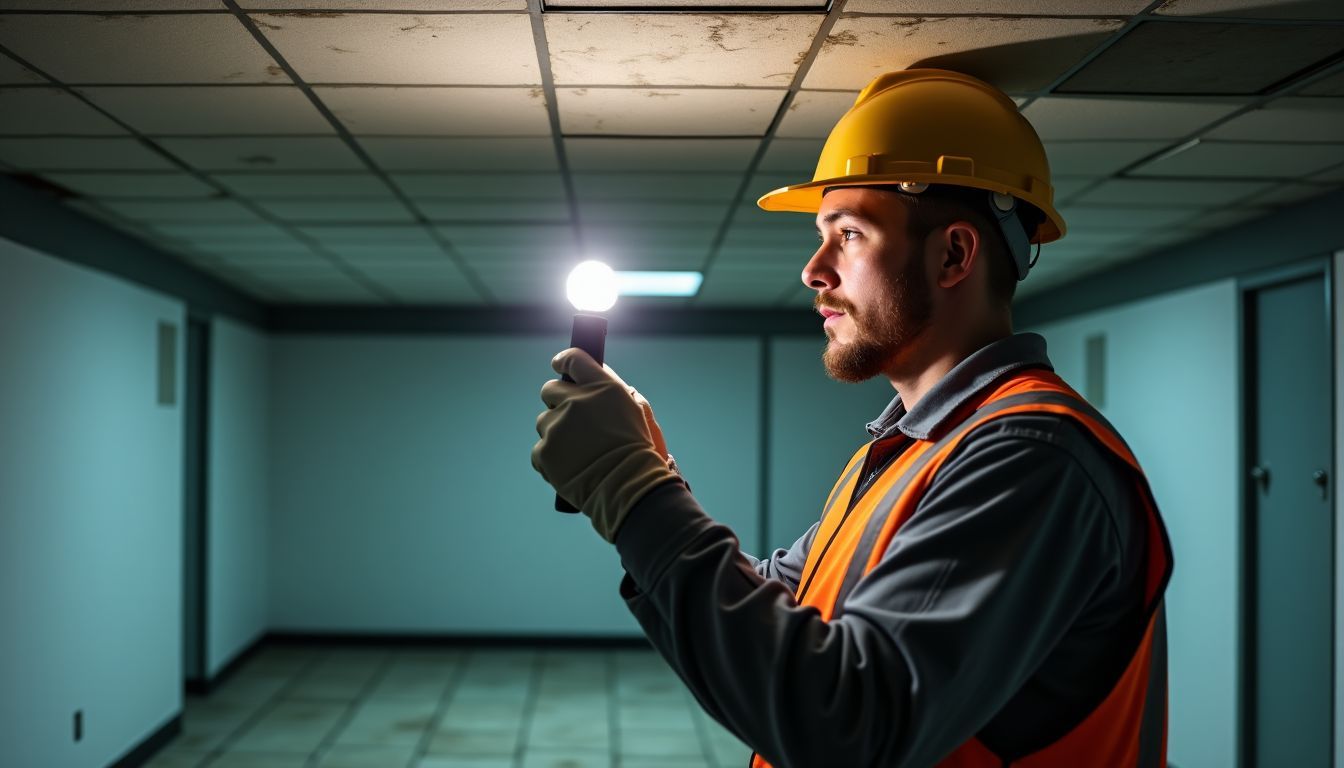
Asbestos Roof Problems in Reading: What Property Owners Need to Know
If your Reading property has a flat roof built before 2000, there is a real chance it contains asbestos. Asbestos roof problems in Reading are more common than many owners realise — the town’s large stock of post-war commercial units, industrial sheds, and older residential extensions means thousands of roofs could still harbour hazardous materials. Knowing what to look for, and what to do about it, could protect both your health and your legal standing.
Why Asbestos Was Used in Roofing
Asbestos was a builder’s favourite for decades. It was cheap, fire-resistant, durable in wet conditions, and easy to work with on site.
Flat roofs, in particular, made heavy use of asbestos-containing materials. Builders needed products that could handle standing water, temperature swings, and long-term weathering — and asbestos-based products ticked every box.
The UK banned most uses of asbestos in 1999, but any structure built or re-roofed before that date may still contain these materials. In Reading, that covers a significant proportion of commercial properties, light industrial units, garages, and older residential extensions.
Common Asbestos-Containing Materials Found in Flat Roofs
Asbestos Cement Sheets
Asbestos cement sheets were among the most widely used roofing materials in the UK from the 1950s through to the 1990s. They were applied as flat panels on roof decks and as corrugated sheets on outbuildings, garages, and industrial premises.
These sheets typically contain around 10–15% chrysotile (white asbestos) bound within a cement matrix. When the cement is intact and undamaged, the risk of fibre release is relatively low. The problem begins when sheets crack, weather, or get disturbed during maintenance.
Visually, asbestos cement sheets tend to appear grey or off-white with a matte, slightly rough finish. Moss and lichen growth is common on older sheets and often signals that the surface is breaking down — a warning sign that should not be ignored.
Asbestos Roofing Felt
Roofing felt manufactured before 1999 sometimes incorporated asbestos fibres to improve fire resistance and durability. You will still find it on older sheds, garages, and low-rise extensions across Reading and the surrounding area.
Old asbestos felt can be difficult to distinguish from modern products by eye alone. It may have a grey, fibrous texture and a noticeably tough, rigid surface compared to newer felt. If the roof is old and the felt appears worn, cracked, or delaminating, treat it as potentially hazardous until confirmed otherwise.
Other Roofing Components to Watch For
Asbestos was not limited to the main roof deck. Other components to be aware of include:
- Flashings and edge trims made from asbestos cement
- Roof soffits and fascias on older flat-roofed extensions
- Guttering and downpipes manufactured from asbestos cement
- Insulation boards used beneath the roof covering
- Textured coatings applied to internal roof surfaces
Any of these materials in a pre-2000 building should be treated with caution until asbestos testing has confirmed whether they are hazardous.
The Health Risks of Asbestos Roof Problems in Reading
Asbestos is not dangerous simply by existing in a roof. The risk comes when fibres become airborne and are inhaled. Once inside the lungs, asbestos fibres cannot be expelled, and they can cause serious, life-threatening diseases decades after exposure.
Diseases Linked to Asbestos Exposure
- Mesothelioma — a rare and aggressive cancer of the lining of the lungs or abdomen, almost exclusively caused by asbestos exposure
- Asbestosis — progressive scarring of lung tissue that causes increasing breathlessness and reduces quality of life
- Lung cancer — risk is significantly increased by asbestos exposure, particularly in combination with smoking
- Pleural thickening — scarring of the membrane surrounding the lungs, which can restrict breathing
Symptoms of these conditions can take 20 to 40 years to appear after initial exposure. This long latency period is precisely why prevention matters so much — by the time illness develops, the exposure event may be long forgotten.
When Do Roofing Materials Release Fibres?
Intact, well-bonded asbestos cement in good condition poses a lower risk. Fibre release becomes a serious concern when materials are:
- Cracked, broken, or heavily weathered
- Disturbed during maintenance, drilling, cutting, or repair work
- Damaged by storm impact or falling debris
- Affected by moss and lichen causing surface degradation
- Being removed or demolished without proper controls
Friable asbestos — material that crumbles easily and releases fibres with minimal force — is the highest-risk category and must only be handled by licensed contractors.
How to Identify Asbestos Roof Problems in Reading Properties
Visual identification alone is never sufficient. Even experienced surveyors cannot confirm the presence of asbestos without laboratory analysis of a sample. That said, there are clear visual indicators that should prompt you to arrange a professional inspection.
Visual Warning Signs
Look out for the following on any flat roof built before 2000:
- Grey or off-white panels with a matte, rough surface finish
- Corrugated cement sheets on outbuildings or garage roofs
- Moss, lichen, or algae growth indicating surface decay
- Cracks, chips, or flaking at panel edges
- Heavily weathered areas showing bare fibrous texture
- Brittle, rigid roofing felt that appears unusually tough or fibrous
These signs do not confirm asbestos, but they do confirm you need professional assessment before any work takes place.
Using an Asbestos Testing Kit
For property owners who want an initial indication before commissioning a full survey, an asbestos testing kit allows you to collect a small sample for laboratory analysis. This can be a cost-effective first step when you are unsure whether a material is hazardous.
However, sampling from roofing materials carries its own risks. If you are not confident about how to take a sample safely, or if the material appears damaged or friable, do not attempt self-sampling. In those situations, a professional survey is the correct course of action.
Professional Asbestos Surveys
A professional survey is the most reliable way to identify asbestos roof problems in Reading. Qualified surveyors carry out a physical inspection of the roof and associated components, collect samples under controlled conditions, and send them to an accredited laboratory for analysis.
There are two main survey types relevant to roofing:
- Management Survey — a management survey identifies the location, type, and condition of asbestos-containing materials in an occupied building. It is the starting point for ongoing compliance and is required for non-domestic premises under the Control of Asbestos Regulations.
- Refurbishment and Demolition Survey — a demolition survey is required before any major structural work, re-roofing, or demolition. It is more intrusive and ensures all asbestos is located before work begins.
Survey reports document the type of asbestos found (chrysotile, amosite, or crocidolite), its location, its condition, and recommendations for management or removal. This documentation is essential for legal compliance and for informing any contractors who will work on the building.
Managing Asbestos Roof Problems: Your Options
Once asbestos has been identified in a flat roof, you have three main management options. The right choice depends on the condition of the material, the planned use of the building, and any upcoming works.
Leave It in Place and Monitor
If asbestos-containing roofing materials are in good condition and are not being disturbed, leaving them in place under a documented monitoring programme is often the safest and most practical approach. This is consistent with HSE guidance under HSG264, which recognises that not all asbestos needs to be removed immediately.
A monitoring programme should include periodic visual inspections by a qualified surveyor, with records kept as part of your asbestos management plan. Any deterioration should trigger a reassessment of the management approach.
Encapsulation
Encapsulation involves applying a specialist coating — typically a polyurethane-based sealant — over intact asbestos cement sheets or other stable materials. This creates a barrier that prevents fibre release without the disruption and cost of full removal.
Encapsulation is only appropriate for materials that are structurally sound. It is not suitable for friable, crumbling, or heavily damaged asbestos. After encapsulation, regular inspections remain essential to ensure the coating remains intact.
Licensed Asbestos Removal
When roofing materials are damaged, deteriorating, or need to be removed as part of re-roofing or demolition works, licensed asbestos removal is required. Under the Control of Asbestos Regulations, work on most asbestos roofing materials must be carried out by a contractor licensed by the HSE.
The removal process involves:
- Sealing the work area with polythene sheeting and establishing negative air pressure to prevent fibre spread
- Dampening materials with water before dismantling to suppress dust
- Workers wearing full personal protective equipment including respirators and disposable coveralls
- Post-removal air monitoring to confirm the area is safe for re-entry
- Disposal of all asbestos waste at a licensed facility — disposing of asbestos with general waste is illegal
Never attempt to remove asbestos roofing materials yourself or instruct an unlicensed contractor to do so. The legal and health consequences are severe.
Legal Obligations for Property Owners in Reading
Understanding your legal position is essential, particularly if you manage or own commercial or industrial property in Reading.
The Control of Asbestos Regulations place a duty to manage asbestos on those responsible for non-domestic premises. This means identifying whether asbestos is present, assessing its condition, and putting in place a management plan to prevent exposure. Failure to comply can result in enforcement action, prohibition notices, and significant fines.
For residential landlords, obligations differ but the principle of protecting occupants from asbestos exposure applies. If you are planning any work on a pre-2000 property — including re-roofing, loft conversions, or structural alterations — a refurbishment survey is required before work begins.
HSE guidance document HSG264 sets out the standards for asbestos surveys in the UK. Surveys must be carried out by surveyors with appropriate competence, and samples must be analysed by a UKAS-accredited laboratory.
Choosing an Asbestos Surveyor in Reading
When selecting a surveyor to assess asbestos roof problems in Reading, look for the following:
- UKAS accreditation for asbestos surveying and bulk sample analysis
- Surveyors holding the British Occupational Hygiene Society (BOHS) P402 qualification or equivalent
- Experience with the specific type of property you own — commercial, industrial, or residential
- Clear, detailed written reports that meet the requirements of HSG264
- Transparent pricing with no hidden costs
Supernova Asbestos Surveys operates nationwide and has completed over 50,000 surveys across the UK. Whether you need an initial inspection or a full asbestos testing programme for a large commercial roof, our accredited surveyors can help.
We also provide services across major urban centres — including asbestos survey London and asbestos survey Manchester — so if you manage properties in multiple locations, we can coordinate surveys across all sites.
What to Do Right Now if You Suspect Asbestos in Your Roof
If you own or manage a pre-2000 property in Reading with a flat roof and you are not certain about the materials used, take these steps:
- Do not disturb the roof. Do not drill, cut, break, or attempt to repair suspect materials until you have confirmation of what they contain.
- Keep others away. If the roof appears damaged or deteriorating, restrict access to the area until it has been assessed.
- Arrange a professional survey. Contact a UKAS-accredited surveyor to carry out a management or refurbishment survey as appropriate.
- Review your asbestos register. If you already have one, check whether the roof was included and whether it is up to date.
- Plan for management or removal. Once you have survey results, work with a licensed contractor to implement the recommended approach.
If you are unsure which survey type you need, or want to use a testing kit as a preliminary step, speak to a qualified surveyor first. Taking the right action early is always less costly — financially and in terms of health risk — than dealing with the consequences of disturbed asbestos.
Frequently Asked Questions
How do I know if my flat roof in Reading contains asbestos?
You cannot confirm the presence of asbestos by visual inspection alone. If your property was built or re-roofed before 2000, asbestos-containing materials may be present. The only reliable method is laboratory analysis of a sample collected by a qualified surveyor. Arrange a professional survey before carrying out any maintenance or repair work on the roof.
Is it safe to leave asbestos cement sheets on my roof?
Intact, undamaged asbestos cement sheets that are not being disturbed pose a relatively low risk. HSE guidance allows for asbestos to be managed in place rather than immediately removed, provided it is monitored regularly and a management plan is in place. However, if sheets are cracked, weathered, or subject to regular foot traffic or maintenance, removal by a licensed contractor should be considered.
Do I need a licence to remove asbestos roofing in Reading?
Most asbestos roofing work, including the removal of asbestos cement sheets, requires a contractor licensed by the HSE under the Control of Asbestos Regulations. Unlicensed removal of licensable asbestos materials is illegal and can result in prosecution, fines, and serious health consequences. Always verify that any contractor you instruct holds a current HSE licence.
What type of asbestos survey do I need for a flat roof?
If the building is occupied and no major works are planned, a management survey is the appropriate starting point. If you are planning re-roofing, structural alterations, or demolition, a refurbishment and demolition survey is required before work begins. A qualified surveyor can advise on the correct survey type for your specific situation.
How much does an asbestos survey cost in Reading?
Survey costs vary depending on the size of the property, the number of materials to be sampled, and the complexity of access. Residential management surveys typically start from around £250 plus VAT. For an accurate quote tailored to your property, contact Supernova Asbestos Surveys on 020 4586 0680 or request a free quote via our website at asbestos-surveys.org.uk.
Speak to Supernova Asbestos Surveys Today
Asbestos roof problems in Reading require prompt, professional attention. Whether you need a management survey to establish what is present, a demolition survey before re-roofing, or a licensed removal team to deal with damaged materials, Supernova Asbestos Surveys can help.
With over 50,000 surveys completed nationwide and a team of UKAS-accredited professionals, we provide clear, legally compliant survey reports and practical guidance on next steps. Call us on 020 4586 0680 or visit asbestos-surveys.org.uk to request your free quote today.