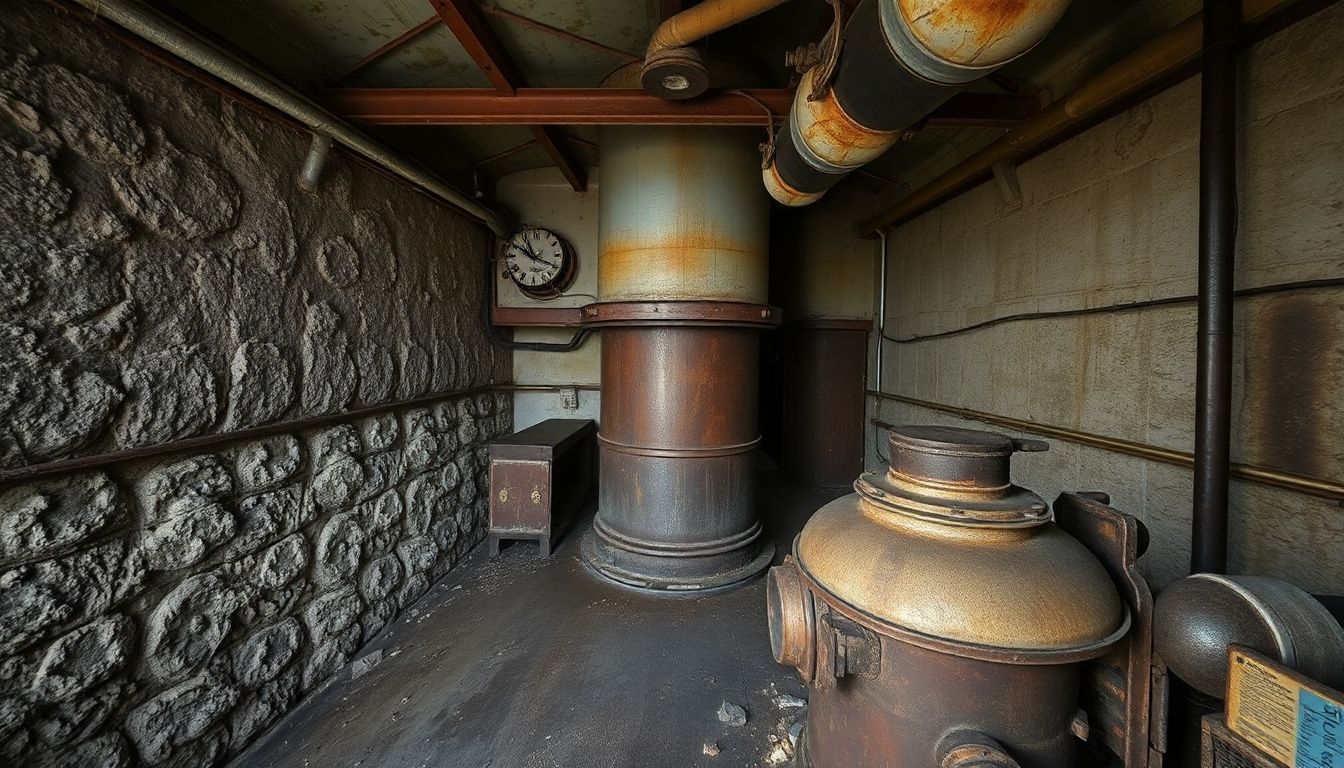
Around 5,000 People Die From Asbestos Every Year in the UK — and the Buildings Are Still Standing
Around 5,000 people die from asbestos-related diseases in Great Britain every single year. That figure has barely shifted in decades, and behind it sits a stark reality: asbestos is still present in millions of buildings across the UK, and the consequences of ignoring it are fatal.
Understanding asbestos statistics UK is not just an academic exercise — it directly shapes how property managers, employers, and dutyholders should be managing their buildings right now. The data tells a story of a public health crisis rooted not in history, but in buildings that still exist and are still in use today.
The Scale of the Problem: Key Asbestos Statistics UK
The Health and Safety Executive (HSE) publishes annual data on asbestos-related disease deaths, and the figures make uncomfortable reading. Asbestos remains the single largest cause of work-related deaths in the UK — outstripping all other occupational hazards combined.
Here is a breakdown of the headline figures from recent HSE data:
- Mesothelioma deaths (2023): 2,218 — a cancer of the lining of the lungs, almost exclusively caused by asbestos exposure
- Mesothelioma deaths (2022): 2,280 — showing a gradual but slow decline in male deaths
- Asbestosis deaths (2023): 497 — scarring of the lung tissue caused by prolonged fibre inhalation
- Estimated asbestos-related lung cancer deaths annually: approximately 2,200
- Proportion of deaths in those aged over 75: more than 70%
- Other occupational fatalities (2024): 138 — dwarfed by asbestos-related mortality
When you add mesothelioma, asbestos-related lung cancer, and asbestosis together, the total approaches or exceeds 5,000 deaths per year. That is not a historical footnote — it is an ongoing public health crisis rooted in buildings that still exist today.
Mesothelioma Trends: What the Data Shows
Mesothelioma is the most closely tracked asbestos-related disease because it is almost always caused by asbestos exposure. Unlike lung cancer, which has multiple causes, mesothelioma acts as a near-direct indicator of past asbestos use.
Male and Female Death Rates
Male mesothelioma deaths have been declining gradually. The annual average between 2011 and 2020 was 2,091 male deaths per year. By 2022 that had fallen to 1,856, and by 2023 it dropped further to 1,802.
This reflects the winding down of heavy industrial exposure — particularly in shipbuilding and large-scale construction — that characterised the mid-twentieth century. Female deaths have remained relatively stable, running at between 416 and 424 per year in recent years.
Women historically had lower direct occupational exposure, but many worked in older buildings — hospitals, schools, offices — where background exposure accumulated over decades.
Why the Decline Is Not a Reason for Complacency
The fall in male mesothelioma deaths is encouraging, but it masks a significant concern. Because mesothelioma has a latency period of 20 to 50 years, cases being diagnosed now reflect exposures from the 1970s, 1980s, and 1990s.
Exposures happening today — or that occurred in the 2000s and 2010s — will not show up in mortality data for decades. This is precisely why robust management of asbestos-containing materials in existing buildings is so critical right now.
The decisions made today will determine the death toll in 2040 and beyond.
Asbestos Statistics UK by Occupation: Who Is Most at Risk?
Not all workers face the same level of risk. HSE data and occupational health research consistently identify certain groups as significantly more vulnerable to asbestos-related disease.
Construction and Building Trades
Construction workers account for the highest number of mesothelioma deaths of any occupational group. Heavy exposure between 1950 and 1980 — when asbestos was used extensively in insulation, roofing, flooring, and fireproofing — has left a lasting legacy.
Plumbers, electricians, joiners, and general builders were all routinely exposed without adequate protection. Today, the risk has shifted. Rather than new asbestos being installed, the danger comes from disturbing materials that are already in place.
Refurbishment and maintenance work in pre-2000 buildings carries real risk if asbestos-containing materials are not properly identified beforehand.
Teachers and School Staff
Research suggests that teachers may be up to 84 times more likely than the general population to die from mesothelioma. This is attributed to long-term, low-level exposure in older school buildings, many of which still contain asbestos in ceiling tiles, pipe lagging, and wall panels.
Approximately 80% of state schools in England are estimated to contain asbestos. Many of these buildings were constructed during the post-war period when asbestos use was at its peak, and the Condition Data Collection programme has highlighted significant gaps in how schools manage and monitor their asbestos risks.
Healthcare Workers
Nurses and other healthcare staff can face a significantly elevated risk due to long careers spent in older hospital buildings. NHS estates include a large proportion of pre-2000 stock where asbestos-containing materials remain in situ.
Some research points to a substantially increased risk compared to the general population for those who spent entire careers in older NHS buildings.
Armed Forces Personnel
Between April 2016 and March 2020, 340 mesothelioma claims were made under the Armed Forces Compensation Scheme. Military buildings and vessels — particularly those in service during the mid-twentieth century — made extensive use of asbestos, and many personnel were exposed without adequate protection or awareness.
Maintenance Staff and Caretakers
Caretakers, maintenance operatives, and facilities managers face a particularly insidious risk. Their day-to-day work — fixing a leaking pipe, drilling into a wall, replacing ceiling tiles — can disturb asbestos-containing materials repeatedly over the course of a career.
Each disturbance releases fibres. Each exposure carries risk. This is the group that benefits most from a thorough management survey — because knowing exactly where asbestos is located in a building allows maintenance teams to work safely and avoid accidental disturbance.
Geographic Hotspots: Where Asbestos Risk Is Highest
Asbestos-related disease is not evenly distributed across the UK. Industrial history has left a clear geographic footprint, and asbestosis deaths and Industrial Injuries Disablement Benefit claims cluster heavily in areas with strong shipbuilding, heavy engineering, and manufacturing heritage.
- Scotland: 31.1 deaths per million — the highest rate in Great Britain, driven by the legacy of Clydeside shipbuilding
- North East England: 19.8 deaths per million — reflecting industries centred on Sunderland, Newcastle, and Teesside
- City-level hotspots: Sunderland, Plymouth, and Barking and Dagenham all show elevated rates based on Industrial Injuries Disablement Benefit claims data
If your properties are located in these regions, the statistical likelihood of encountering asbestos-containing materials is higher than average. Professional surveys are not optional — they are essential.
Supernova Asbestos Surveys operates across the country. Whether you need an asbestos survey in London, an asbestos survey in Manchester, or an asbestos survey in Birmingham, our accredited surveyors can assess your building and produce a fully compliant report.
Asbestos Still in UK Buildings: The Hidden Stockpile
The UK banned the use of all forms of asbestos in 1999. But that ban did not remove what was already in place. The vast majority of asbestos ever installed in UK buildings is still there — in walls, floors, ceilings, roofs, boiler rooms, and service ducts.
The scale of this legacy is significant:
- Around 80% of state schools are estimated to contain asbestos
- A large proportion of NHS hospital buildings predate the ban and contain asbestos-containing materials
- Millions of homes built before 2000 may contain asbestos in textured coatings such as Artex, floor tiles, soffit boards, and pipe lagging
- The HSE has acknowledged that only a fraction of the data needed to fully map asbestos risk across the UK’s building stock has been gathered
Asbestos-containing materials that are in good condition and left undisturbed do not pose an immediate risk. The danger arises when materials are damaged, deteriorating, or disturbed during maintenance or refurbishment work. Identification and management — rather than panic — is the correct response.
Types of Asbestos Still Found in Buildings
Three main types of asbestos fibre were used in UK construction:
- White asbestos (chrysotile): the most commonly used, found in cement products, roofing sheets, floor tiles, and textured coatings
- Brown asbestos (amosite): used heavily in insulation boards and ceiling tiles; considered particularly hazardous at low doses, especially for younger people
- Blue asbestos (crocidolite): the most dangerous fibre type, used in spray coatings and pipe insulation; the first to be banned in the UK
You cannot identify asbestos by sight alone. Only laboratory analysis of a sample taken by a competent surveyor can confirm the presence and type of asbestos in a material.
What the Projections Say About Future Deaths
The trajectory of asbestos-related disease in the UK is shifting, but it is not disappearing. HSE projections and independent research point to several trends worth understanding.
Male Mesothelioma Deaths Will Continue to Fall
The decline in male mesothelioma deaths is expected to continue through the 2020s and into the 2030s, as the cohort of men who experienced heavy occupational exposure in the mid-twentieth century ages out of the population. This is good news, but it reflects past improvements in workplace conditions rather than any current reduction in risk.
Female Deaths May Plateau Before Declining
Female mesothelioma deaths are projected to remain at around 400 to 500 per year for some time before beginning to fall. Women’s exposure patterns — typically lower-level and longer-duration, in buildings rather than industrial settings — mean the peak of female mortality may come later than for men.
A Potential Fourth Wave of Disease
Some occupational health experts warn of a possible fourth wave of asbestos-related disease, driven not by heavy industrial exposure but by background exposure in public buildings — schools, hospitals, offices, and commercial premises.
Teachers, office workers, and former pupils could feature prominently in future mortality data if building management remains inadequate. Brown asbestos in particular poses a heightened risk for younger people exposed at low levels over long periods.
A child exposed at age five carries a significantly higher lifetime risk than an adult exposed at thirty, even if the dose is identical. This is one reason why asbestos management in schools is treated as a priority concern by the HSE and public health bodies.
Your Legal Duties Under UK Asbestos Regulations
The Control of Asbestos Regulations place clear legal duties on those who manage non-domestic premises. If you are a dutyholder — a landlord, employer, facilities manager, or managing agent — you are required to:
- Identify whether asbestos-containing materials are present in your premises
- Assess the condition and risk of those materials
- Produce and maintain an asbestos register
- Implement a written management plan
- Ensure that anyone who may disturb asbestos-containing materials is informed of their location and condition
- Review and update the register and management plan regularly
HSE guidance document HSG264 sets out the standards that surveys must meet. There are two main types of survey: a management survey for normal occupation and maintenance, and a demolition survey before any intrusive refurbishment or demolition work begins.
Commissioning the wrong type of survey — or no survey at all — is not a minor administrative oversight. It is a breach of legal duty that can result in prosecution, unlimited fines, and, most critically, harm to the people in your building.
Management Surveys
A management survey is the standard survey for buildings in normal use. It identifies the location, extent, and condition of asbestos-containing materials that could be disturbed during routine maintenance or occupation.
The output is an asbestos register and a risk assessment that forms the basis of your management plan. It needs to be kept up to date and made available to anyone carrying out work in the building.
Refurbishment and Demolition Surveys
Before any significant refurbishment or demolition work, a more intrusive survey is required. A demolition survey is designed to locate all asbestos-containing materials in the areas affected by the planned work, including those that are hidden or inaccessible during normal occupation.
This survey is destructive by nature — it may involve breaking through surfaces and accessing voids. It must be completed before work begins, not during it.
Translating Asbestos Statistics UK Into Action
The data is clear. The legal framework is clear. What remains is action. If you manage, own, or occupy a building constructed before 2000, here is what you should do:
- Commission a survey if you do not have one. An asbestos register based on assumption is not a register — it is a liability.
- Review your existing register. Surveys have a shelf life. If yours is more than a few years old, or if significant work has been carried out since it was completed, it needs reviewing.
- Brief your maintenance team. The people most at risk from day-to-day disturbance need to know where asbestos is located and what they must not touch without further assessment.
- Plan ahead for refurbishment. If you are planning building work, commission a refurbishment or demolition survey before contractors arrive on site — not after.
- Keep records. Document every survey, every inspection, every incident involving asbestos-containing materials. This is not just good practice — it is a legal requirement.
The asbestos statistics UK data is not abstract. Every one of those 5,000 annual deaths represents a person who worked in or occupied a building where the risk was not managed adequately. The decisions made by dutyholders today will determine whether future statistics improve or worsen.
How Supernova Asbestos Surveys Can Help
Supernova Asbestos Surveys has completed over 50,000 surveys across the UK. Our accredited surveyors work to HSG264 standards and produce fully compliant asbestos registers, management plans, and refurbishment and demolition survey reports.
We work with property managers, local authorities, schools, NHS trusts, housing associations, and private landlords. Whether you need a straightforward management survey for a single commercial unit or a programme of surveys across a large estate, we have the capacity and expertise to deliver.
To discuss your requirements or book a survey, call us on 020 4586 0680 or visit asbestos-surveys.org.uk. Our team will advise on the correct survey type for your situation and provide a clear, competitive quote.
Frequently Asked Questions
How many people die from asbestos-related diseases in the UK each year?
Approximately 5,000 people die from asbestos-related diseases in Great Britain each year when mesothelioma, asbestos-related lung cancer, and asbestosis deaths are combined. Mesothelioma alone accounts for over 2,200 deaths annually, making asbestos the single largest cause of work-related death in the UK.
Which occupations are most at risk from asbestos exposure in the UK?
Construction workers — including plumbers, electricians, and joiners — face the highest risk due to historical exposure during the peak years of asbestos use. Teachers, healthcare workers, maintenance staff, and armed forces personnel are also identified as higher-risk groups. The common thread is time spent in older buildings where asbestos-containing materials remain in place.
Is asbestos still present in UK buildings?
Yes. The UK banned the use of asbestos in 1999, but that ban did not remove what was already installed. The vast majority of asbestos used in UK construction is still in place in schools, hospitals, offices, industrial premises, and homes built before 2000. Asbestos-containing materials that are in good condition and undisturbed do not pose an immediate risk, but they must be properly identified and managed.
What is the legal duty of a building owner or manager regarding asbestos?
Under the Control of Asbestos Regulations, dutyholders managing non-domestic premises must identify whether asbestos is present, assess its condition, produce an asbestos register, implement a written management plan, and ensure anyone who may disturb the materials is informed. HSG264 sets out the standards that surveys must meet. Failure to comply is a criminal offence.
What is the difference between a management survey and a demolition survey?
A management survey is carried out in buildings that are in normal use and identifies asbestos-containing materials that could be disturbed during routine maintenance or occupation. A demolition survey is a more intrusive survey required before significant refurbishment or demolition work, designed to locate all asbestos in the affected areas — including hidden or inaccessible materials. Both must be carried out by a competent surveyor working to HSG264 standards.