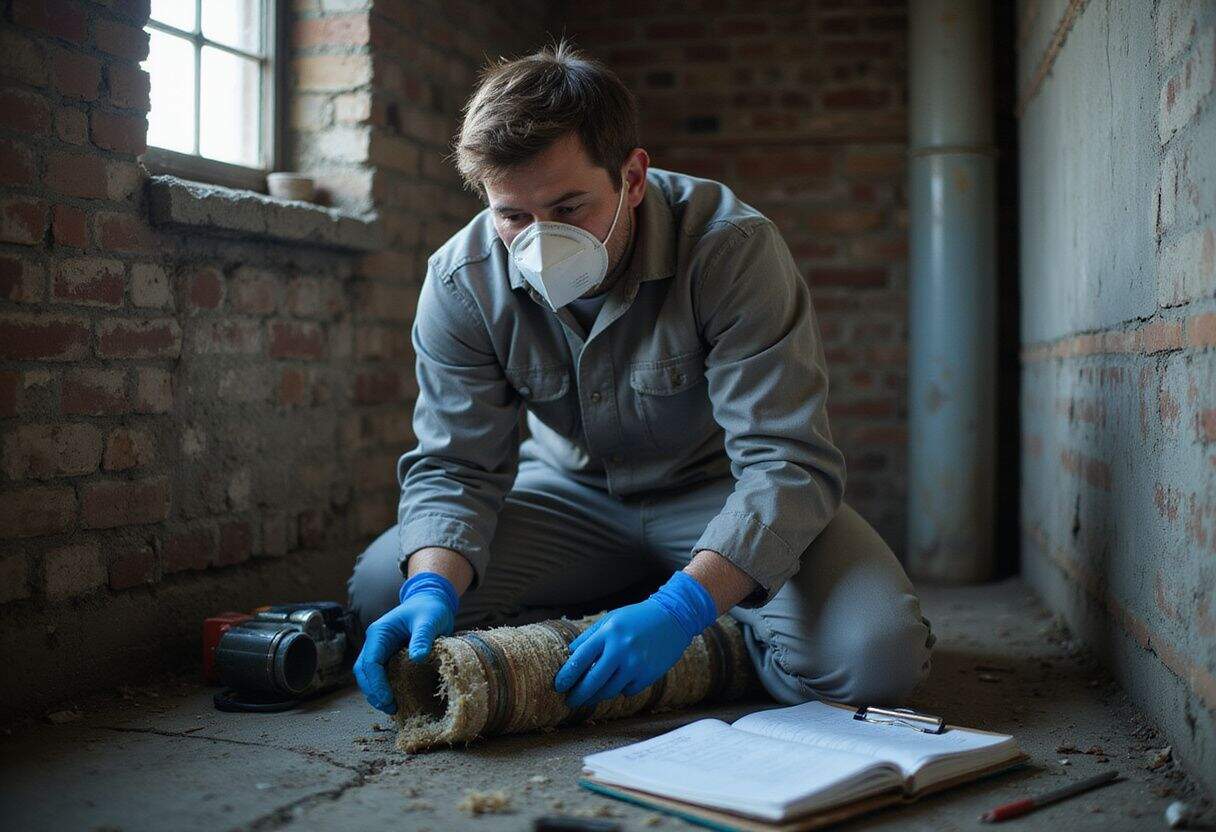
What to Look for When Choosing an Asbestos Surveying Company
Choosing the wrong asbestos surveying company doesn’t just waste money — it can leave dangerous materials undetected, expose occupants to serious health risks, and land duty holders in breach of UK law. With dozens of firms operating across the country, knowing how to separate the competent from the credible matters enormously.
Whether you manage a commercial property, own a residential block, or are planning a renovation, the checklist below will help you appoint a surveying company you can trust.
Accreditation: The Non-Negotiable Starting Point
Before anything else, confirm that any asbestos surveying company you’re considering holds recognised accreditation. UKAS — the United Kingdom Accreditation Service — is the benchmark. A UKAS-accredited firm has been independently assessed for technical competence and quality management, and operates in line with BS EN ISO/IEC 17020 for inspection bodies.
This matters because accreditation isn’t self-declared. It’s awarded after rigorous external scrutiny, and it has to be maintained. Ask to see current certificates, not just a logo on a website.
You should also check whether the laboratory used to analyse samples holds UKAS accreditation or ISO/IEC 17025 certification for asbestos analysis. A survey is only as reliable as the lab results that underpin it. Using an unaccredited laboratory can invalidate findings and leave you exposed.
Additional quality indicators include:
- ISO 9001 certification for quality management systems
- Membership of relevant professional bodies
- A clearly defined scope of accreditation covering your property type
Surveyor Qualifications and Practical Experience
Accreditation covers the company — but you also need to know about the individual carrying out your survey. The recognised minimum qualification for asbestos surveyors in the UK is the BOHS P402 award, which covers the identification and assessment of asbestos-containing materials (ACMs) in buildings.
A P402-qualified surveyor understands the requirements of HSG264 — the HSE’s definitive guide, Asbestos: The Survey Guide — and can plan and carry out surveys that comply with the Control of Asbestos Regulations. Always ask for proof of this qualification before work begins.
Beyond the certificate, experience matters. A surveyor who has worked on properties similar to yours will spot risks that a less experienced operative might miss. Ask specifically:
- Have you surveyed buildings of this type and age before?
- Can you provide examples of previous reports for similar properties?
- Do you have experience with intrusive surveys for refurbishment or demolition projects?
If you’re managing a school, a warehouse, a block of flats, or a listed building, the surveyor’s background should reflect that. Generic experience isn’t always enough.
References and Reviews
Ask for at least two or three references from recent, comparable projects, and follow them up. Speak directly to those clients about turnaround times, the clarity of reports, and how the company handled any issues that arose.
Independent online reviews can also provide useful signals about a company’s reliability and communication standards — particularly for smaller residential jobs where formal references are less common.
Survey Types: Knowing What You Actually Need
A competent asbestos surveying company will help you identify the right survey for your situation rather than defaulting to the cheapest or most profitable option. There are two main types under HSG264:
Management Survey
A management survey is the standard survey for properties in normal occupation and use. It locates ACMs that could be disturbed during routine maintenance or minor works, and supports the creation of an asbestos register and management plan. It is typically required for commercial properties where a duty to manage applies.
Refurbishment and Demolition Survey
A demolition survey — or refurbishment survey — is required before any structural work, renovation, or demolition on a building constructed before 2000. It is more intrusive than a management survey, involving destructive inspection to locate all ACMs before work begins. UK law requires this survey before contractors start on site.
If a company doesn’t ask about your plans for the building before recommending a survey type, treat that as a red flag. The correct survey depends entirely on what you intend to do with the property.
Insurance: Protecting Yourself if Things Go Wrong
Insurance is not a formality — it’s a practical safeguard. If a surveyor misses asbestos that is later disturbed, or provides advice that leads to a compliance failure, you need to know there is adequate cover in place.
Request written confirmation of the following before any work starts:
- Professional indemnity insurance: Covers claims arising from negligent advice or errors in reports. A minimum of £5 million is standard for established firms.
- Public liability insurance: Covers third-party injury or property damage during the survey. Again, £5 million is a reasonable minimum.
- Employers’ liability insurance: Legally required for any company with employees. Minimum cover is £5 million per claim.
Don’t just accept verbal assurances. Ask for policy schedules and check the renewal dates. Gaps in cover or low limits on a large commercial project are a genuine risk.
Survey Methodology and Compliance with HSG264
Any reputable asbestos surveying company should be able to explain exactly how they carry out a survey — and that methodology should align with HSG264. This HSE guidance sets out the requirements for survey planning, on-site procedures, sampling, and reporting. It is the standard against which competent surveyors are measured.
During your initial conversation, ask:
- How do you plan a survey for a property of this type?
- Which areas will be inspected, and what happens if access is restricted?
- How are samples collected and labelled, and which laboratory analyses them?
- How do you handle unexpected finds during a survey?
A surveyor who can answer these questions clearly and confidently is demonstrating genuine competence. One who is vague or evasive about methodology should not be appointed.
All accessible areas should be inspected — including roof spaces, risers, service ducts, and plant rooms. If any area cannot be accessed, this must be clearly documented in the report with a note on the associated risk.
Reporting Standards: What a Good Report Looks Like
The survey report is the deliverable that matters most. A thorough, well-structured report gives you the information you need to manage asbestos safely and meet your legal obligations. Before you appoint a company, ask to see a sample report.
A compliant, high-quality asbestos survey report should include:
- A full list of all areas inspected, with notes on accessibility
- Clear identification of all ACMs found, with photographs and floor plan markings
- Material risk assessments and priority risk assessments for each ACM
- Laboratory analysis results from a UKAS-accredited or ISO/IEC 17025-certified lab
- Specific recommendations for each ACM — removal, encapsulation, enclosure, or monitoring
- A suggested timetable for action and re-inspection triggers
- Sign-off by a qualified, named surveyor
Reports should be delivered promptly. For most residential and smaller commercial surveys, a 24-hour turnaround is reasonable. If a company cannot give you a clear commitment on delivery times, factor that into your decision.
Independence and Impartiality
There is an important distinction between a company that surveys for asbestos and one that also removes it. Where both services are offered by the same firm, there is a potential conflict of interest — and the HSE recognises this.
An independent asbestos surveying company has no financial incentive to overstate risk or recommend unnecessary removal. Their job is to report accurately on what is present, assess the risk, and advise on the most appropriate management approach.
That said, some clients do find it convenient to use a company that can handle both the survey and any subsequent asbestos removal if required. If you go down this route, ensure the survey report is produced independently and that any removal recommendation is clearly justified by the risk assessment — not by commercial interest.
Always ask whether the surveyor has a financial relationship with any removal contractor they might recommend.
Coverage and Turnaround Times
Practical considerations matter too. If you need a survey quickly — ahead of a sale, a lease event, or the start of building works — you need a company that can mobilise fast and deliver reports within a timeframe that works for your project.
Supernova Asbestos Surveys covers the whole of the UK, with local surveyors available in major cities including London, Manchester, and Birmingham. We regularly complete surveys within 24 to 48 hours of enquiry, with reports delivered the following day.
If you’re based in the capital and need a fast, reliable service, our asbestos survey London team can be with you quickly. For clients in the North West, our asbestos survey Manchester team provides the same standard of service. And for the Midlands, our asbestos survey Birmingham surveyors are equally accessible.
Questions to Ask Before You Appoint an Asbestos Surveying Company
Use this checklist during your initial call or email exchange. The answers will quickly reveal whether a company is worth appointing.
- Do you hold UKAS accreditation, and can you provide current certificates?
- Are your surveyors BOHS P402 qualified?
- Which laboratory analyses your samples, and is it UKAS or ISO/IEC 17025 accredited?
- What types of surveys do you offer, and how will you determine which is right for my property?
- Can I see a sample report before I commit?
- What are your professional indemnity and public liability insurance limits?
- How quickly can you carry out the survey, and when will I receive the report?
- Do you have experience surveying properties like mine?
- Are you independent of asbestos removal contractors?
- What support do you offer after the survey — for re-inspections, register updates, or queries?
If a company cannot answer these questions clearly and confidently, look elsewhere. A genuinely competent firm will welcome the scrutiny.
Why Supernova Asbestos Surveys
Supernova Asbestos Surveys has completed over 50,000 surveys across the UK, working with property managers, housing associations, local authorities, schools, and private landlords. Our surveyors hold BOHS P402 qualifications, all sample analysis is carried out by UKAS-accredited laboratories, and our reports are delivered within 24 hours as standard.
We offer management surveys, refurbishment and demolition surveys, and asbestos removal services — all carried out to the standards set out in HSG264 and the Control of Asbestos Regulations. Our team covers the whole of the UK, with rapid response times and a 4.9-star rating from over 1,200 verified reviews.
To get a free quote in under 15 minutes, call us on 020 4586 0680 or visit asbestos-surveys.org.uk. We’ll confirm your survey type, provide a fixed price, and have a qualified surveyor with you as quickly as possible.
Frequently Asked Questions
How do I know if an asbestos surveying company is properly accredited?
Ask for their UKAS accreditation certificate and check the scope covers the type of survey you need. You can verify UKAS accreditation directly on the UKAS website. Also confirm that the laboratory they use for sample analysis is independently accredited to ISO/IEC 17025 or holds UKAS approval.
What qualifications should an asbestos surveyor hold?
The recognised minimum qualification is the BOHS P402 award. This demonstrates that the surveyor has been trained to identify and assess asbestos-containing materials in buildings in line with HSG264 and the Control of Asbestos Regulations. Always ask for proof of this qualification before work begins.
Do I need an asbestos survey before renovation or demolition?
Yes. UK law requires a refurbishment and demolition survey before any structural work, renovation, or demolition on a building constructed before 2000. This applies to all types of building work, including kitchen and bathroom refits, extensions, and full demolition projects. Failing to carry out this survey before work starts is a breach of the Control of Asbestos Regulations.
How long does an asbestos survey take, and when will I get the report?
A typical residential survey takes one to two hours on site. Larger commercial properties may take longer depending on size and complexity. Most reputable asbestos surveying companies, including Supernova, deliver the written report within 24 hours of the survey being completed.
How much does an asbestos survey cost?
Costs vary depending on the type of survey, the size of the property, and its location. Residential management surveys typically start from £250 plus VAT. The best way to get an accurate price is to contact Supernova Asbestos Surveys directly — we provide a free, fixed quote in under 15 minutes. Call 020 4586 0680 or visit asbestos-surveys.org.uk.