What Is an Asbestos Re-Inspection Survey — and Why You Can’t Afford to Skip It
You’ve had your asbestos survey done. The report is filed. Job done, right? Not quite. An asbestos re-inspection survey is what keeps your asbestos management legally sound and practically effective over time — and without one, your duty of care has a serious gap in it.
Asbestos-containing materials (ACMs) don’t stay the same. They age, get disturbed during maintenance, suffer water damage, or deteriorate through everyday building use. A snapshot survey from two years ago tells you nothing about the condition of those materials today.
This post explains exactly what an asbestos re-inspection survey involves, who needs one, how often it’s required, and what happens if you neglect this part of your asbestos management duties.
What Is an Asbestos Re-Inspection Survey?
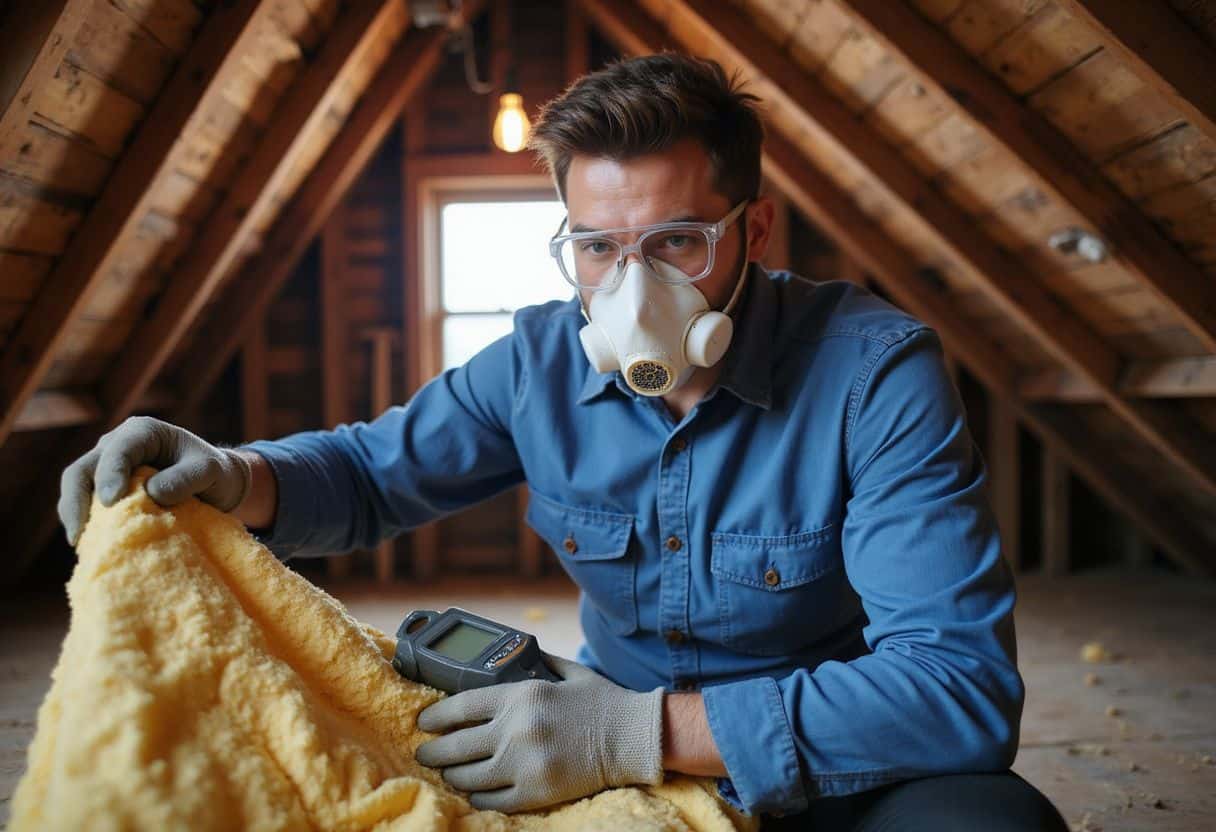
An asbestos re-inspection survey is a periodic, structured assessment of known ACMs within a building. It doesn’t involve fresh sampling or intrusive investigation — instead, a qualified surveyor revisits every item already recorded in your asbestos register and assesses its current condition.
The surveyor checks whether each ACM has deteriorated, been damaged, or had its risk profile changed since the last inspection. They update the condition scores and priority ratings in your register accordingly.
Think of it as the routine health check that sits alongside your original management survey. The management survey identifies what’s there. The re-inspection survey tells you whether the situation has changed — and whether your current controls are still adequate.
Who Needs an Asbestos Re-Inspection Survey?
If you are the dutyholder for a non-domestic premises built before 2000, you almost certainly need regular asbestos re-inspection surveys. This includes:
- Commercial offices and retail premises
- Schools, colleges, and universities
- Hospitals and healthcare facilities
- Industrial units, warehouses, and factories
- Hotels and hospitality venues
- Public sector buildings including local authority properties
- Housing association communal areas and managed blocks
Regulation 4 of the Control of Asbestos Regulations places a clear legal duty on those responsible for non-domestic premises to manage asbestos. That duty includes not just identifying ACMs but actively monitoring their condition over time.
If ACMs are present in your building and you have no re-inspection programme in place, you are likely in breach of that duty — regardless of how thorough your original survey was.
How Often Should You Carry Out an Asbestos Re-Inspection Survey?
HSE guidance, including HSG264, recommends that ACMs are re-inspected at least every 12 months. However, the correct frequency depends on the specific conditions in your building and the nature of the materials present.
Some situations call for more frequent inspections — every six months or even quarterly:
- ACMs in poor or damaged condition
- Materials in high-traffic areas prone to accidental disturbance
- Buildings undergoing active maintenance or partial refurbishment
- Sites where multiple contractors are regularly working
- ACMs exposed to moisture, vibration, or mechanical stress
Your asbestos management plan should specify the re-inspection frequency for each material based on its condition, location, and risk score. A competent surveyor can help you set a schedule that reflects the actual risk profile of your building rather than applying a blanket rule.
What Does an Asbestos Re-Inspection Survey Actually Involve?
A qualified surveyor will work through every ACM listed in your existing asbestos register. For each item, they will:
- Physically locate and visually assess the material
- Check for signs of deterioration, damage, or disturbance
- Update the condition score using the standard assessment criteria
- Reassess the priority score, factoring in condition, accessibility, and likelihood of disturbance
- Note any changes to the surrounding environment that could affect risk
- Flag any materials that now require urgent remedial action
- Identify any previously inaccessible areas that can now be assessed
The output is an updated asbestos register — a revised record of every ACM, its current condition, and its recommended management action. This document becomes the new baseline for your asbestos management plan.
It’s worth being clear: a re-inspection survey is not the same as a refurbishment survey or a demolition survey. Those are intrusive surveys carried out before specific works begin. A re-inspection is a non-intrusive, condition-based check of materials you already know about.
The Link Between Re-Inspection Surveys and Your Asbestos Register
Your asbestos register is a legal document. It records the location, type, and condition of every known ACM in your building — and it must be kept up to date.
A register that hasn’t been updated since your original asbestos management survey is, in practical terms, unreliable. Conditions change. Materials rated as low priority two years ago may now be damaged or deteriorating. Without a current re-inspection, you have no way of knowing.
The re-inspection survey is the mechanism that keeps your register accurate. Every re-inspection feeds directly into the register, updating condition scores, revising priority ratings, and recording any remedial actions taken since the last visit.
Contractors working in your building have a legal right to see your asbestos register before starting work. If that register is out of date, you are potentially exposing them — and yourself — to serious risk.
What Happens When an ACM Has Deteriorated?
When a re-inspection identifies a material that has worsened since the last assessment, the response depends on the severity of the deterioration and the risk it presents.
Minor Deterioration
If the material shows early signs of wear but remains largely intact and is not releasing fibres, the appropriate response is usually increased monitoring frequency. The risk score is updated in the register, and the next re-inspection is brought forward.
Significant Deterioration
Where a material is visibly damaged, friable, or in a location where disturbance is likely, remedial action is usually required. This might involve encapsulation — sealing the material to prevent fibre release — or controlled removal by a licensed contractor.
Urgent Risk
If a material presents an immediate risk of fibre release, the area must be secured, access restricted, and specialist remediation arranged without delay. Only licensed contractors may handle notifiable ACMs such as sprayed coatings, lagging, and pipe insulation.
Where asbestos removal is required, it must be carried out by an HSE-licensed firm following strict procedural controls. This is non-negotiable under the Control of Asbestos Regulations.
Re-Inspection Surveys After Refurbishment or Building Works
Any time work is carried out in a building containing ACMs, there is potential for disturbance. Even works that don’t directly involve asbestos — such as electrical rewiring, plumbing, or partition installation — can affect nearby materials.
A re-inspection survey following building works confirms whether any ACMs have been disturbed, damaged, or inadvertently removed during the project. It also allows the register to be updated to reflect any changes to the building’s layout or fabric.
This is particularly relevant when multiple contractors are on site over an extended period. Each trade may interact with the building’s fabric in different ways, and cumulative disturbance can degrade materials that were previously in good condition.
Treat any significant building works as a trigger for an unscheduled re-inspection, rather than simply waiting for the next planned visit. It’s a straightforward step that can prevent a manageable situation from becoming a serious one.
The Legal and Financial Consequences of Skipping Re-Inspections
Failing to carry out regular asbestos re-inspection surveys isn’t just a compliance oversight — it carries real legal and financial consequences.
Under the Control of Asbestos Regulations, dutyholders who fail to manage asbestos adequately can face enforcement action from the HSE. This can include improvement notices, prohibition notices, and prosecution. Fines for non-compliance can be substantial, and in cases involving serious risk to health, custodial sentences are possible.
Beyond regulatory penalties, there is the question of civil liability. If a worker, contractor, or occupant is exposed to asbestos fibres as a result of an inadequately maintained register or a failure to monitor ACM condition, the dutyholder may face civil claims for personal injury.
The cost of a regular re-inspection survey is a fraction of the cost of enforcement action, remediation under pressure, or litigation. It is one of the most straightforward risk management investments available to a property manager or dutyholder.
Building a Robust Asbestos Re-Inspection Programme
A well-structured re-inspection programme doesn’t just keep you compliant — it makes asbestos management genuinely manageable. Here’s how to build one that works.
Start With a Current, Accurate Register
If your existing asbestos register is out of date or based on an incomplete survey, address that first. A re-inspection cannot function properly without a reliable baseline. You may need a fresh survey before a re-inspection programme can begin.
Set Risk-Based Inspection Frequencies
Not every ACM needs the same inspection frequency. Use condition scores and priority ratings to determine how often each material should be checked. Higher-risk materials warrant more frequent attention — don’t apply a blanket 12-month rule where the risk profile demands more.
Assign Clear Responsibilities
Someone within your organisation should be accountable for ensuring re-inspections happen on schedule. This might be a facilities manager, a health and safety officer, or an external asbestos management consultant. Ambiguity about responsibility is one of the most common reasons re-inspection programmes lapse.
Document Everything
Every re-inspection must be documented. Updated registers, surveyor reports, photographs, and records of any remedial action taken all form part of your compliance evidence. In the event of an HSE inspection or a civil claim, these records are your primary defence.
Review After Any Significant Change
Building works, changes in use, new tenants, or significant weather events can all affect ACMs. Treat these as triggers for an unscheduled re-inspection rather than waiting for the next planned visit. Proactive monitoring is far less costly than reactive remediation.
Re-Inspection Surveys Across the UK
Asbestos management obligations apply equally across England, Scotland, Wales, and Northern Ireland. Whether you manage a portfolio of commercial properties or a single building, the duty to monitor ACMs does not vary by location.
Supernova Asbestos Surveys carries out re-inspection surveys nationwide. Our surveyors are active across major cities and regions, including asbestos survey London appointments, asbestos survey Manchester coverage, and asbestos survey Birmingham visits — as well as across the wider UK.
With over 50,000 surveys completed, we understand the practical realities of managing asbestos across different building types, ages, and uses. Our surveyors work efficiently to minimise disruption while delivering thorough, accurate assessments.
Frequently Asked Questions
What is the difference between an asbestos management survey and a re-inspection survey?
An asbestos management survey is carried out to locate and identify ACMs within a building — it establishes the baseline record held in your asbestos register. An asbestos re-inspection survey revisits those known materials periodically to assess whether their condition has changed. The management survey is a one-time exercise (repeated only if significant changes occur); the re-inspection is an ongoing, scheduled activity that keeps your register current and your management plan valid.
Is an asbestos re-inspection survey a legal requirement?
Yes. Regulation 4 of the Control of Asbestos Regulations requires dutyholders to manage asbestos in non-domestic premises, which explicitly includes monitoring the condition of known ACMs over time. HSE guidance in HSG264 recommends a minimum re-inspection frequency of every 12 months. Failing to carry out re-inspections leaves you in breach of your legal duty and exposes you to enforcement action and civil liability.
Can I carry out an asbestos re-inspection myself?
Whilst there is no absolute legal requirement for a re-inspection to be carried out by an accredited third party, HSE guidance strongly recommends using a competent, trained surveyor. The assessments require knowledge of ACM condition scoring, priority rating systems, and the ability to identify deterioration accurately. An unqualified inspection is unlikely to meet the standard of competence required under the Control of Asbestos Regulations and could leave you exposed if the assessment is later challenged.
What happens if a re-inspection finds a material has significantly deteriorated?
The surveyor will update the condition and priority scores in your asbestos register and recommend an appropriate course of action. Depending on the severity, this could range from increasing monitoring frequency to arranging encapsulation or full removal by a licensed contractor. If a material presents an immediate risk of fibre release, access to the area should be restricted immediately and remediation arranged without delay.
How much does an asbestos re-inspection survey cost?
The cost varies depending on the size of the building, the number of ACMs recorded in the register, and the location. As a general principle, a re-inspection survey is significantly less expensive than the original management survey because it is non-intrusive and works from an existing register rather than starting from scratch. Contact Supernova Asbestos Surveys for a site-specific quote — we provide transparent, competitive pricing with no hidden charges.
Book Your Asbestos Re-Inspection Survey with Supernova
If your asbestos register hasn’t been updated recently, or you don’t yet have a structured re-inspection programme in place, now is the time to act. Supernova Asbestos Surveys provides professional, accredited asbestos re-inspection surveys across the UK — helping dutyholders stay compliant, protect occupants, and manage risk with confidence.
Call us on 020 4586 0680 or visit asbestos-surveys.org.uk to request a quote or discuss your requirements with our team. With over 50,000 surveys completed, we have the experience and expertise to support your asbestos management obligations — wherever your properties are located.