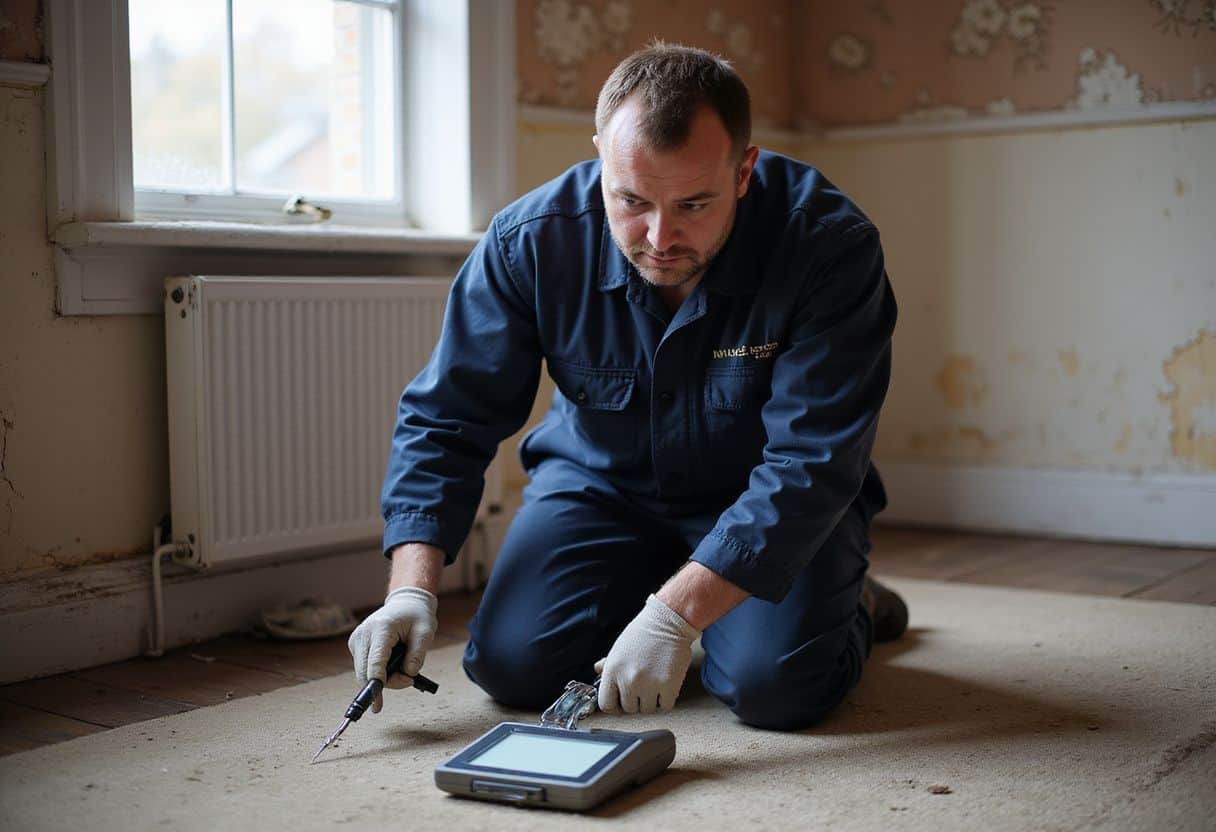
Brownfield Asbestos Assessment: What You Need to Know Before Breaking Ground
Brownfield sites carry history — and that history often includes asbestos. Any land or building previously developed before 2000 is likely to contain asbestos-containing materials (ACMs), sometimes buried, sometimes structural, and sometimes in forms you would never expect. A thorough brownfield asbestos assessment is not optional; it is the foundation of any safe, legally compliant redevelopment project.
Whether you are a developer, contractor, local authority, or property investor, understanding what a brownfield asbestos assessment involves — and why it matters — will save you from costly delays, enforcement action, and serious health risks further down the line.
Why Brownfield Sites Present Unique Asbestos Risks
Brownfield land differs from a standard occupied building in one critical way: the history of use is often incomplete, and the condition of materials can be severely degraded. Former industrial sites, old factories, warehouses, hospitals, schools, and housing demolition sites all present elevated asbestos risk.
Asbestos was used extensively in UK construction from the 1950s right through to 1999, when it was finally banned. On brownfield sites, ACMs may be present in:
- Buried rubble and demolition waste
- Remaining structural elements such as roofing sheets, soffits, and floor tiles
- Pipe lagging and insulation within service runs
- Sprayed coatings on steelwork and ceilings
- Cement-bonded products including guttering, downpipes, and cladding
- Textured coatings on walls and ceilings of any remaining buildings
- Underground service ducts and plant rooms
When these materials are disturbed during groundworks, demolition, or construction, asbestos fibres can become airborne. Exposure to those fibres causes mesothelioma, asbestosis, and lung cancer — diseases with long latency periods but devastating outcomes.
What the Law Requires on Brownfield Sites
The Control of Asbestos Regulations place clear duties on those responsible for non-domestic premises and any work that might disturb asbestos. On brownfield sites, those duties fall on developers, principal contractors, and clients under both the Control of Asbestos Regulations and the Construction (Design and Management) Regulations.
HSE guidance, including HSG264 — the definitive asbestos survey guide — makes clear that a refurbishment and demolition survey must be carried out before any structural work begins. This is not a box-ticking exercise. The results of your brownfield asbestos assessment directly inform the pre-construction phase, the site waste management plan, and the health and safety file.
Failing to commission a proper assessment before work starts can result in:
- Prohibition notices from the HSE
- Prosecution and significant fines
- Project shutdowns and programme delays
- Liability for worker and public exposure
- Remediation costs that dwarf the original survey fee
The Different Survey Types Used in a Brownfield Asbestos Assessment
Not every brownfield site requires the same approach. The survey type — or combination of types — depends on what structures remain, what groundworks are planned, and the intended end use of the site.
Management Survey
If there are standing buildings on the brownfield site that will remain occupied or in use during early phases of redevelopment, a management survey establishes a baseline. It identifies ACMs in accessible areas without major intrusion and supports safe day-to-day management of those structures.
This survey type follows HSG264 and is appropriate where no immediate demolition or refurbishment is planned. It feeds into an asbestos register and management plan, keeping you compliant while longer-term plans are developed.
Refurbishment Survey
Where buildings on the brownfield site are being converted or significantly altered rather than demolished, a refurbishment survey is required before work begins in any affected area. This is a fully intrusive inspection — walls may be opened, floors lifted, and voids accessed — to locate all ACMs that could be disturbed during the works.
The affected areas must be unoccupied during this survey, as the process itself can disturb materials. Results are used to plan safe removal or encapsulation before tradespeople enter the space.
Demolition Survey
For buildings being brought down entirely, a demolition survey is the most thorough option available. It is destructive by nature, accessing every part of the structure to ensure no ACMs are missed. Every area not inspected is presumed to contain asbestos until proven otherwise.
On brownfield sites with multiple structures in varying states of repair, demolition surveys are often the most appropriate starting point. They provide the complete picture needed to plan safe, sequenced removal before any demolition contractor moves on site.
Re-Inspection Survey
Where a brownfield project spans months or years, conditions change. A re-inspection survey revisits previously identified ACMs to assess whether their condition has deteriorated. On an exposed, partially demolished site, materials can degrade rapidly due to weather, vandalism, or accidental disturbance.
Regular re-inspection keeps your asbestos register current and ensures your risk controls remain appropriate throughout the project lifecycle.
Step-by-Step: How a Brownfield Asbestos Assessment Works
Understanding the process helps you plan effectively and avoid the delays that come from poor preparation. Here is what to expect at each stage.
Step 1: Desk Study and Pre-Survey Research
Before a surveyor sets foot on site, a competent assessor will review all available historical information. This includes planning records, Ordnance Survey maps, building plans, previous environmental reports, and any existing asbestos registers from prior occupants.
On brownfield sites, this desk study is particularly valuable. It helps identify what was on the site previously, what materials are likely to be present, and where the highest-risk zones are likely to be. It also informs the scope and methodology of the physical survey.
Step 2: Site Walkover and Inspection
The surveyor carries out a systematic physical inspection of all accessible areas. On a brownfield site, this includes standing structures, exposed foundations, buried rubble, service trenches, and any retained plant or equipment.
Surveyors are trained in asbestos identification and look for materials with the visual characteristics of ACMs — though visual identification alone is never sufficient. Photographs are taken, locations are mapped, and detailed notes are recorded for every suspect material found.
Step 3: Sampling and Laboratory Analysis
Suspect materials are sampled using wet methods to minimise fibre release. Samples are sealed, labelled, and sent to an accredited laboratory for analysis using Polarised Light Microscopy.
You can arrange asbestos testing as part of a full survey or, where you already have suspect materials identified, through standalone sample analysis. Laboratory results confirm whether asbestos is present and identify the fibre type — chrysotile, amosite, crocidolite, or others — which affects the risk level and the controls required.
Where sampling is not safe or practical, the surveyor will presume the material contains asbestos, as required under HSG264.
Step 4: Risk Assessment
Each identified or presumed ACM is assessed for its risk to health. The assessment considers:
- The type of asbestos present
- The condition and friability of the material
- The location and accessibility of the material
- The likelihood of disturbance during planned works
- The potential for fibre release
This risk assessment feeds directly into the site’s health and safety plan and the methodology for asbestos removal or encapsulation before groundworks or demolition begin.
Step 5: The Survey Report and Asbestos Register
The completed brownfield asbestos assessment report brings together all findings in a clear, usable format. It includes:
- An executive summary of findings and priority actions
- A full asbestos register listing every ACM by type, location, quantity, and condition
- Annotated site plans and photographs showing exact locations
- Risk ratings for each material
- Recommendations for management, encapsulation, or removal
- Laboratory certificates for all samples analysed
This report is a live document. It should be updated as works progress, materials are removed, and conditions change across the site.
Asbestos Removal on Brownfield Sites
Where the assessment identifies ACMs that will be disturbed by planned works, removal must take place before those works begin. Licensed asbestos removal contractors are required for the most hazardous materials, including sprayed coatings, lagging, and insulating board.
Other materials may be removed by trained operatives under a notification scheme. The distinction matters — using the wrong contractor, or attempting asbestos removal without proper controls, is a serious breach of the Control of Asbestos Regulations and puts everyone on site at risk.
Waste containing asbestos is classified as hazardous waste and must be double-bagged, labelled, and disposed of at a licensed facility. Your survey report and waste transfer documentation form part of the audit trail required by the Environment Agency.
Dealing with Buried and Hidden ACMs
One of the most significant challenges on brownfield sites is asbestos that is not visible at surface level. Buried demolition rubble, backfilled service trenches, and old underground plant rooms can all conceal ACMs that only emerge once groundworks begin.
If your desk study or initial walkover suggests buried materials are likely, trial pitting or targeted ground investigation may be needed as part of the brownfield asbestos assessment. This is particularly relevant on former industrial sites where large-scale demolition has taken place and materials were buried rather than removed.
Any unexpected discovery of ACMs during groundworks must trigger an immediate stop on the affected area. Work should not resume until a qualified surveyor has attended, the material has been sampled and confirmed, and a safe system of work has been agreed with a licensed removal contractor.
Brownfield Asbestos Assessment Across the UK
Urban regeneration projects, particularly in major cities, frequently involve brownfield land with complex asbestos histories. Former industrial land, Victorian terraces, post-war commercial buildings, and cleared housing estates all present specific challenges that require experienced surveyors who understand the built environment context.
If your project is in the capital, Supernova’s asbestos survey London service covers the full range of survey types needed for brownfield redevelopment, from initial desk studies through to post-removal clearance certification. For projects in the North West, our asbestos survey Manchester team brings the same expertise to some of the UK’s most active regeneration zones.
Supernova operates nationally with over 50,000 surveys completed. Our surveyors are BOHS P402 qualified and our laboratories are UKAS accredited, meeting the standards required under HSG264 and HSG248.
Practical Advice for Developers and Project Teams
Integrating your brownfield asbestos assessment into the wider project programme from the outset avoids the delays and costs that come from treating it as an afterthought. Follow these steps to keep your project on track:
- Commission the assessment early — ideally at feasibility or pre-planning stage, so findings can influence the design and phasing of the development.
- Share findings with your design team — architects and structural engineers need to know where ACMs are located before finalising details.
- Build removal time into your programme — licensed removal takes time to plan, notify, and execute; last-minute discovery of ACMs causes expensive delays.
- Keep the asbestos register live — update it as materials are removed, conditions change, or new areas are opened up.
- Brief all site operatives — anyone working on a brownfield site should know what to do if they encounter a suspect material unexpectedly.
- Retain all documentation — survey reports, waste transfer notes, clearance certificates, and air monitoring results form the health and safety file for the completed development.
If you are unsure which survey type is right for your site, or whether a previous assessment remains valid, a qualified surveyor can advise on scope and methodology before you commit to a programme. For sites where asbestos testing has already been carried out but findings are incomplete, a targeted re-inspection or supplementary sampling exercise may be all that is required to fill the gaps.
Frequently Asked Questions
What is a brownfield asbestos assessment and when is it required?
A brownfield asbestos assessment is a structured survey and risk evaluation carried out on previously developed land to identify asbestos-containing materials before redevelopment work begins. It is required under the Control of Asbestos Regulations and HSE guidance whenever demolition, refurbishment, or groundworks are planned on land that may have been built on or developed before 2000.
Which type of asbestos survey is needed for a brownfield site?
Most brownfield sites require a refurbishment or demolition survey — or a combination of both — depending on whether structures are being converted or demolished. Where buildings will remain in use during early project phases, a management survey may also be needed. A qualified surveyor will advise on the correct approach based on the site’s history, current condition, and planned works.
What happens if asbestos is found unexpectedly during groundworks?
Work in the affected area must stop immediately. The site manager should isolate the area, prevent access, and contact a qualified asbestos surveyor. The material must be sampled and confirmed before a safe system of work is agreed with a licensed removal contractor. Continuing work without addressing the discovery is a breach of the Control of Asbestos Regulations and puts workers and the public at risk.
How long does a brownfield asbestos assessment take?
Timescales depend on the size and complexity of the site. A desk study and initial walkover can often be completed within a few days, but laboratory analysis typically takes three to five working days, and the full report may take a week or more to complete after sampling. On large or complex sites with multiple structures, the assessment process may take several weeks. Commissioning early in the project programme avoids delays to the construction phase.
Can I use a previous asbestos survey report for a brownfield site?
Only if it remains current and covers the full scope of planned works. Survey reports have a limited shelf life — conditions on brownfield sites change rapidly, and a report produced several years ago may not reflect the current state of materials. If demolition or groundworks have taken place since the original survey, or if the planned works go beyond the original scope, a new or supplementary assessment will be required. A competent surveyor can review an existing report and advise on whether it remains valid.
Get Your Brownfield Asbestos Assessment Right — From Day One
A brownfield asbestos assessment carried out properly at the start of your project protects your workers, your programme, and your legal position. It is far less costly to survey thoroughly before breaking ground than to deal with the consequences of unexpected asbestos discovery mid-construction.
Supernova Asbestos Surveys has completed over 50,000 surveys across the UK. Our BOHS-qualified surveyors and UKAS-accredited laboratories provide the full range of survey types, sampling, and reporting services needed for brownfield redevelopment — from initial desk study through to post-removal clearance.
Call us on 020 4586 0680 or visit asbestos-surveys.org.uk to discuss your site and get a quote.