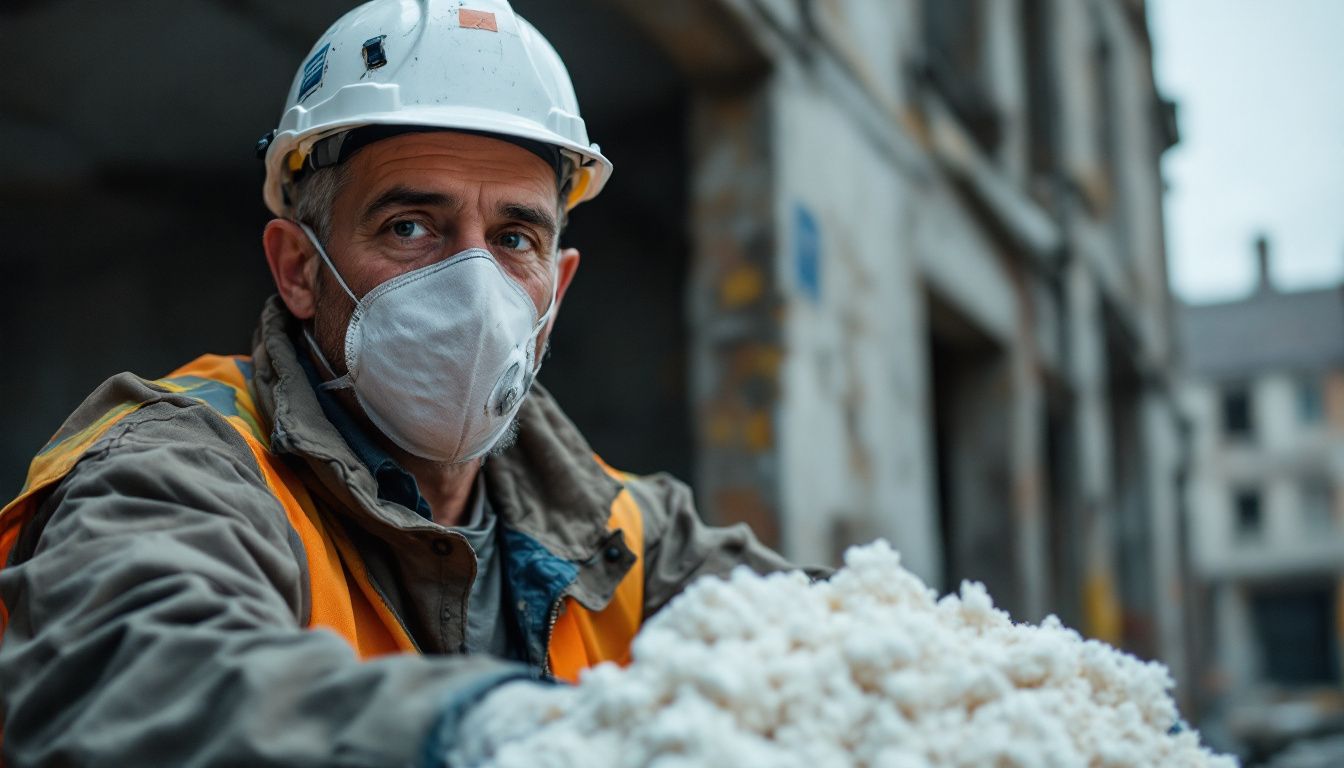
The Construction Health Risk Asbestos UK Workers Face Every Day
Asbestos kills more people in Great Britain than any other single work-related cause. Construction workers bear the heaviest burden — handling old building materials, drilling into walls, stripping out pipe insulation — often without knowing what they’re disturbing. The construction health risk asbestos poses in the UK is not something site managers, contractors, or building owners can afford to ignore. It’s a legal obligation and a moral one.
Where does asbestos hide on site? Who faces the greatest risk? What does the law actually demand? And what practical steps protect workers before someone gets seriously ill? Let’s get into it.
Where Asbestos Hides on UK Construction Sites
Asbestos wasn’t used in one or two building products — it was woven into the fabric of British construction for decades. The UK didn’t ban all forms of asbestos until 1999, which means any building constructed or refurbished before that date could contain it. That covers an enormous proportion of the existing building stock.
Common asbestos-containing materials (ACMs) found on UK sites include:
- Sprayed coatings on structural steelwork and ceilings
- Pipe and boiler lagging
- Insulating board used in partitions, ceiling tiles, and fire doors
- Textured decorative coatings such as Artex
- Roof sheets, gutters, and soffit boards made from asbestos cement
- Floor tiles and the adhesive beneath them
- Gaskets and rope seals in older heating systems
- Loose fill insulation in cavity walls and roof spaces
Three main fibre types appear across these materials. Crocidolite (blue asbestos) was used in sprayed coatings and is considered the most hazardous. Amosite (brown asbestos) appeared extensively in thermal insulation products. Chrysotile (white asbestos) is the most widely used type and turns up in cement products, floor tiles, and roofing sheets.
All three carry serious health risks — none should be treated as safe. You cannot identify asbestos by sight, colour, or texture alone. Laboratory analysis of a sample is the only reliable confirmation. If you’re unsure whether a material contains asbestos, treat it as though it does until proven otherwise.
Who Is Most at Risk? High-Risk Trades in UK Construction
The construction sector employs over a million workers in the UK, and a significant proportion will encounter asbestos-containing materials during routine work. The risk isn’t limited to specialist removal teams — it affects tradespeople across virtually every discipline.
Trades with the Highest Exposure Risk
Certain occupations consistently appear at the top of occupational exposure data:
- Plumbers and heating engineers — old pipe lagging and boiler insulation are among the most hazardous ACMs
- Electricians — drilling through insulating board and ceiling tiles during rewiring work
- Carpenters and joiners — cutting into asbestos insulating board used in partitions and fire doors
- Plasterers — working on or near textured coatings that may contain asbestos
- Roofers — handling asbestos cement sheets, which remain common in older commercial and agricultural buildings
- Demolition workers — high-disturbance work that can release large quantities of fibres if ACMs aren’t removed first
- Painters and decorators — sanding and scraping surfaces that may contain asbestos in the substrate
Maintenance workers in older buildings — schools, hospitals, local authority housing — also face repeated low-level exposures that accumulate over a career. The danger isn’t always a single dramatic incident. Chronic, repeated disturbance of ACMs over many years is responsible for the majority of occupational asbestos disease in the UK.
What Asbestos Does to the Body
The construction health risk asbestos presents is severe and, in most cases, irreversible. Asbestos fibres are microscopic — invisible to the naked eye — and when inhaled, they lodge deep in the lung tissue. The body cannot break them down or expel them. Over time, they cause progressive, often fatal disease.
Mesothelioma
Mesothelioma is a cancer of the lining of the lungs (pleura) or abdomen (peritoneum), caused almost exclusively by asbestos exposure. It has a latency period of between 20 and 60 years, meaning workers exposed in the 1970s and 1980s are still being diagnosed today. There is no cure, and median survival after diagnosis is typically less than 18 months.
The UK has one of the highest mesothelioma rates in the world — a direct legacy of heavy industrial and construction use of asbestos throughout the twentieth century. Construction workers account for a disproportionately high share of diagnoses.
Asbestosis
Asbestosis is a chronic scarring of the lung tissue caused by prolonged asbestos inhalation. It develops gradually, causing progressive breathlessness, a persistent dry cough, and reduced lung function. There is no treatment that reverses the scarring — management focuses on slowing progression and managing symptoms.
Workers with asbestosis are also at significantly elevated risk of developing lung cancer. The combination of asbestos exposure and smoking multiplies that risk considerably — the two factors don’t simply add together, they interact to produce a far greater combined risk.
Pleural Disease and Lung Cancer
Pleural plaques — areas of thickened, calcified tissue on the lung lining — are the most common consequence of asbestos exposure. While not cancerous themselves, they are a marker of significant past exposure and indicate elevated risk of more serious disease.
Asbestos-related lung cancer is clinically identical to lung cancer from other causes but is specifically attributable to occupational asbestos exposure. It typically presents 20 to 30 years after initial exposure, often at a stage where treatment options are limited.
There is no known safe level of asbestos exposure. The risk increases with the duration and intensity of exposure, but no threshold has been established below which exposure is considered harmless.
UK Regulations: What the Law Actually Requires
The UK regulatory framework for asbestos in the workplace is well-established and legally enforceable. Ignorance of the rules is not a defence — and the Health and Safety Executive (HSE) does prosecute.
The Control of Asbestos Regulations
The Control of Asbestos Regulations set out the legal duties for managing and working with asbestos in non-domestic premises. They apply to employers, building owners, and anyone with responsibility for maintenance or repair of non-domestic premises.
Key duties under the regulations include:
- Duty to manage — the dutyholder must identify the location, type, and condition of all ACMs in their premises, assess the risk, and produce a written management plan
- Pre-construction surveys — before demolition or major refurbishment, a full refurbishment and demolition survey must be carried out
- Worker training — anyone liable to disturb asbestos must receive appropriate training, refreshed regularly
- Air monitoring — employers must monitor airborne fibre concentrations and keep workers below the control limit
- Medical surveillance — workers engaged in licensed asbestos work must receive medical surveillance by an employment medical adviser or appointed doctor
- Notification and record-keeping — certain asbestos work must be notified to the HSE in advance, and records must be maintained
HSG264, the HSE’s guidance document on asbestos surveys, provides detailed technical guidance on survey types, methodology, and reporting requirements. Any dutyholder commissioning a survey should ensure their surveyor works to this standard.
Licensed vs Non-Licensed Work
Not all asbestos work requires a licensed contractor, but the highest-risk tasks do. The distinction matters enormously for site managers and principal contractors.
Licensed work requires a contractor holding an HSE licence and includes:
- Removal of sprayed asbestos coatings
- Removal of pipe and boiler lagging
- Removal of asbestos insulating board
- Any work with asbestos insulation where the material is in poor condition
Non-licensed notifiable work covers tasks with lower but still significant risk — such as work on asbestos cement in reasonable condition — and requires notification to the HSE, health records, and air monitoring, but does not require a licensed contractor.
Non-licensed, non-notifiable work applies to very low-risk, short-duration tasks. This category is often misunderstood and misapplied. When in doubt, treat the work as licensed until a competent assessment confirms otherwise.
Commissioning proper asbestos removal through a licensed contractor isn’t just best practice — for many tasks, it’s a legal requirement.
Practical Steps to Protect Construction Workers
Regulation sets the minimum. Good site management goes further. Here’s what effective asbestos risk management looks like in practice.
Commission the Right Survey Before Work Starts
The single most effective action a principal contractor or client can take is commissioning an appropriate asbestos survey before any intrusive work begins. For ongoing building management, a management survey identifies the location and condition of ACMs so they can be monitored and managed safely.
For refurbishment or demolition work, that isn’t sufficient — you need a demolition survey, which is fully intrusive and designed to locate every ACM that could be disturbed during the planned works. The survey report must be made available to every contractor working on site and treated as a live document — updated if unexpected ACMs are found during works.
Provide Adequate Training
Asbestos awareness training is legally required for workers who may encounter ACMs. This is not a tick-box exercise. Workers need to genuinely understand:
- What asbestos looks like and where it’s likely to be found
- Why it’s dangerous and how disease develops
- What to do if they suspect they’ve found asbestos
- How to use and maintain personal protective equipment correctly
- The site-specific asbestos management plan
Training must be refreshed regularly — annual refreshers are standard practice for workers with regular potential exposure.
Use Correct Personal Protective Equipment
For licensed asbestos work, PPE requirements are stringent. Workers must wear:
- FFP3 or P3 respirators — properly fitted and face-fit tested
- Disposable coveralls (Type 5, Category 3) — worn once and disposed of as asbestos waste
- Gloves and appropriate footwear
PPE is the last line of defence, not the first. Engineering controls — wetting down materials, using negative pressure enclosures, working with shadow vacuuming — should always be applied first to reduce fibre release at source.
Manage Waste Correctly
Asbestos waste is classified as hazardous waste and must be handled accordingly. It must be double-bagged in clearly labelled UN-approved sacks, stored in a secure area on site, and disposed of at a licensed facility.
Fly-tipping asbestos waste is a criminal offence and can result in significant prosecution. There is no grey area here.
Implement Clear Stop-Work Procedures
Every site should have a clear stop-work procedure for when unexpected asbestos is encountered. Workers must know to stop immediately, leave the area without disturbing anything further, seal off access, and report to the site manager.
Work must not resume until a competent person has assessed the situation and an appropriate plan is in place. This procedure should be communicated at induction — not after an incident has already occurred.
The Long Tail of Asbestos Disease: Why Complacency Kills
One of the most dangerous aspects of asbestos-related disease is the gap between exposure and diagnosis. A worker disturbing asbestos insulating board in the 1990s may not receive a mesothelioma diagnosis until decades later. By that point, the opportunity to prevent the illness has long passed.
This latency period creates a false sense of security on site. Because no one collapses immediately after disturbing asbestos, some workers and managers treat the risk as theoretical. It isn’t. The consequences are simply delayed — and when they arrive, they are often fatal.
The construction industry’s historical exposure burden means the UK will continue to see significant numbers of asbestos-related deaths for years to come. The decisions made on today’s sites will determine the disease burden of future decades. That is the weight of responsibility that sits with every dutyholder, principal contractor, and site manager.
Younger workers are not immune. Even relatively brief exposures during a long career can contribute to cumulative risk. The assumption that asbestos is only a problem for older workers who lived through the peak of its use is dangerously wrong.
Asbestos Surveys Across the UK: Getting the Right Help
The quality of an asbestos survey determines whether workers are protected or exposed. A survey carried out to HSG264 standards by a UKAS-accredited surveyor provides legally defensible, reliable information about what’s present and where.
Supernova Asbestos Surveys operates across the UK, with local teams who understand the building stock, regulatory requirements, and practical realities of construction work in their regions. Whether you need an asbestos survey London for a commercial refurbishment, an asbestos survey Manchester ahead of a demolition project, or an asbestos survey Birmingham for an ongoing management plan, the process is the same: rigorous, accredited, and fully compliant with current HSE guidance.
With over 50,000 surveys completed nationwide, Supernova’s surveyors have worked across every type of property — commercial offices, industrial units, schools, hospitals, residential blocks, and everything in between. Every survey report is clear, actionable, and designed to support the decisions that protect workers.
Don’t wait until an incident forces the issue. The time to understand what’s in your building is before work begins — not after fibres have already been released.
Call Supernova Asbestos Surveys on 020 4586 0680 or visit asbestos-surveys.org.uk to book a survey or discuss your requirements with a qualified specialist.
Frequently Asked Questions
What is the main construction health risk asbestos poses in the UK?
The primary health risk is the inhalation of microscopic asbestos fibres, which lodge permanently in lung tissue and can cause mesothelioma, asbestosis, pleural disease, and lung cancer. These diseases typically develop 20 to 60 years after exposure, are often fatal, and have no cure. Construction workers face elevated risk because their work frequently involves disturbing older building materials that contain asbestos.
Which construction trades are most at risk from asbestos exposure?
Plumbers, electricians, carpenters, roofers, plasterers, demolition workers, and painters and decorators are among the highest-risk trades. Maintenance workers in older public buildings — schools, hospitals, and local authority housing — also face significant cumulative exposure. Any trade that involves drilling, cutting, or disturbing older building fabric is potentially at risk.
Is asbestos still found on UK construction sites?
Yes. The UK banned all forms of asbestos in 1999, but a very large proportion of the existing building stock was constructed or refurbished before that date. Asbestos-containing materials remain in millions of buildings across the country. Any construction, refurbishment, or demolition work on a pre-2000 building carries a potential risk of encountering asbestos.
What survey do I need before starting construction or demolition work?
Before refurbishment or demolition, the Control of Asbestos Regulations require a refurbishment and demolition survey — sometimes called a demolition survey. This is a fully intrusive survey designed to locate all asbestos-containing materials that could be disturbed during the planned works. A standard management survey is not sufficient for this purpose. The survey report must be shared with all contractors working on the site.
What should workers do if they suspect they’ve found asbestos on site?
Workers should stop work immediately, leave the area without disturbing anything further, and seal off access to prevent others from entering. The site manager must be notified straight away. Work in that area must not resume until a competent person has assessed the situation and a safe plan of action is in place. This stop-work procedure should be communicated to all workers at site induction.