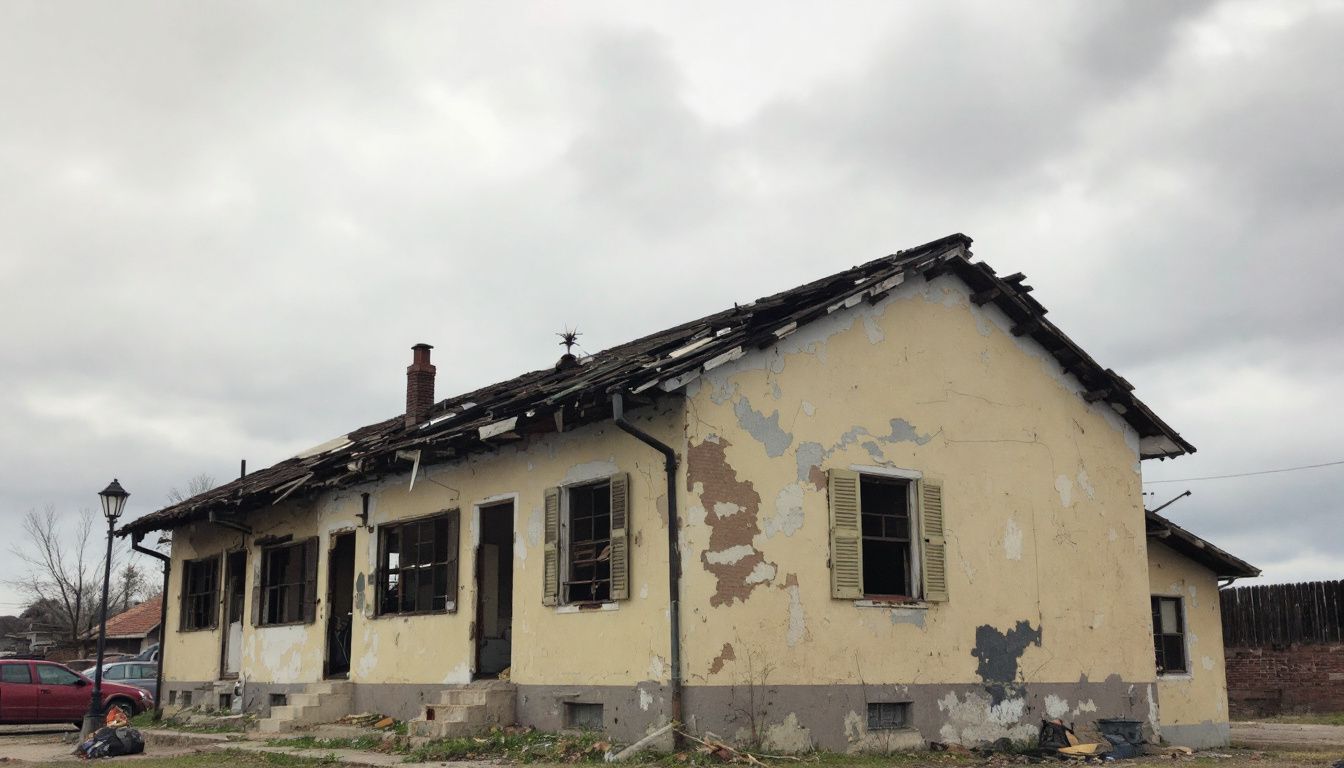
What an Asbestos Demolition Survey Report Actually Tells You — And Why It Drives Every Decision on Site
Before a single wall comes down, a demolition contractor needs one document above all others: a thorough asbestos demolition survey report. Without it, you are legally exposed, your workforce is at risk, and your project timeline is built on sand. This is not a box-ticking exercise — it is the document that dictates how the entire demolition process unfolds.
Any building constructed or refurbished before the year 2000 must be treated as potentially containing asbestos-containing materials (ACMs). The UK did not ban all forms of asbestos until 1999, which means decades of construction used it liberally in everything from roof sheeting and floor tiles to pipe lagging and textured coatings. A demolition survey finds all of it, and the resulting report tells you exactly what you are dealing with.
Why an Asbestos Demolition Survey Report Is a Legal Requirement
The Control of Asbestos Regulations place a clear duty on those commissioning demolition work to identify ACMs before any structural work begins. This is not optional guidance — it is enforceable law. Failure to commission a suitable survey before demolition can result in prosecution, unlimited fines, and in the most serious cases, custodial sentences.
The HSE’s guidance document HSG264 sets out the standards surveyors must meet when conducting refurbishment and demolition surveys. It defines the level of intrusiveness required, the sampling methodology, and the format the resulting report should follow. Any survey that does not meet HSG264 standards is not fit for purpose.
Beyond legal compliance, the survey report is what licensed asbestos removal contractors use to plan their work. Without accurate, detailed information about where ACMs are located, what type they are, and what condition they are in, safe removal simply cannot be planned or executed correctly.
The Difference Between a Management Survey and a Demolition Survey
Not all asbestos surveys are the same, and using the wrong type before demolition is a serious mistake. A management survey is designed for buildings that remain in normal occupation. It checks accessible areas and helps duty holders manage known or suspected ACMs in place — it does not involve significant intrusion into the building fabric.
A demolition survey, by contrast, is fully intrusive. Surveyors will break into walls, lift floors, open up ceiling voids, access service ducts, remove cladding panels, and investigate every concealed space within the structure. The goal is to locate every ACM that exists in the building — not just those that are visible or easily accessible.
This level of intrusiveness is necessary precisely because demolition disturbs the entire building fabric. An ACM that sits safely undisturbed behind a plasterboard wall during normal occupation becomes a serious airborne hazard the moment a demolition crew starts work. The survey must find it before that happens.
When a Refurbishment Survey Is Appropriate Instead
If the scope of work is limited to a specific part of a building — a kitchen refit, a loft conversion, or a structural alteration — a refurbishment survey may be the more appropriate option. This type of survey is still fully intrusive but is scoped to the areas affected by the planned works rather than the entire structure.
However, for full or partial demolition, the demolition survey covering the complete building is required. Attempting to use a refurbishment survey scoped to only part of a building as justification for full demolition work will not satisfy the legal duty and leaves significant liability with the client.
What the Survey Process Involves on Site
A demolition survey is a physically demanding inspection. Qualified surveyors — who must hold relevant competency qualifications such as the BOHS P402 certificate — will systematically work through every part of the structure, taking bulk material samples for laboratory analysis.
Sampling is not random. Surveyors identify materials that are suspected to contain asbestos based on their appearance, age, and location, then take representative samples for analysis. In a typical building, this can mean dozens of individual samples from materials including:
- Textured coatings such as Artex on ceilings and walls
- Insulating board used in fire doors, partition walls, and ceiling tiles
- Pipe and boiler lagging
- Floor tiles and their adhesive backing
- Roof sheets, gutters, and soffit boards made from asbestos cement
- Spray-applied coatings on structural steelwork
- Electrical equipment, including fuse boxes and wiring insulation
- Bitumen-based products including damp-proof courses
Each sample is sealed, labelled, and sent to a UKAS-accredited laboratory for analysis. UKAS accreditation matters — it means the laboratory meets independently verified standards for testing accuracy. Results from non-accredited labs are not reliable and will not be accepted by reputable contractors or enforcing authorities.
Laboratory Analysis: What Happens to Your Samples
In the laboratory, samples are analysed using polarised light microscopy or other approved techniques to identify the presence and type of asbestos fibres. The three main types found in UK buildings are chrysotile (white asbestos), amosite (brown asbestos), and crocidolite (blue asbestos). All three are hazardous — the distinctions between them affect the risk level and the remediation approach.
Laboratory turnaround times are typically 24 to 48 hours for standard analysis, with faster options available where projects are time-critical. Supernova Asbestos Surveys works exclusively with UKAS-accredited laboratories, and our standard service delivers reports within 24 hours of survey completion.
What a Proper Asbestos Demolition Survey Report Contains
The report produced after a demolition survey is a detailed technical document. It is not a simple pass or fail — it is a comprehensive record that informs every subsequent decision about the project. A compliant report produced in line with HSG264 will include the following:
- Executive summary — an overview of findings, including whether ACMs were identified and a summary of the risk level
- Site and building information — address, building type, construction date, and scope of survey
- Survey methodology — how the survey was conducted, areas accessed, and any limitations encountered
- Photographic record — images of each area inspected and each sample location
- Sample register — a full list of all samples taken, their location, material description, and laboratory result
- ACM schedule — a prioritised list of all confirmed asbestos-containing materials, including their type, condition, extent, and risk score
- Annotated floor plans — drawings of the building with ACM locations clearly marked
- Recommendations — guidance on the required remediation approach for each ACM identified
- Laboratory certificates — copies of all analytical results from the UKAS-accredited laboratory
The ACM schedule and annotated floor plans are particularly important for demolition projects. These are the documents that licensed removal contractors use to plan their work sequences and ensure all ACMs are removed before demolition proceeds.
How the Report Informs the Demolition Process
Once the asbestos demolition survey report is in hand, the project can move forward on solid ground. The report drives several critical decisions:
Determining Whether Licensed Removal Is Required
Not all ACMs require a licensed contractor to remove them. The Control of Asbestos Regulations categorise removal work into three tiers: licensed work, notifiable non-licensed work (NNLW), and non-licensed work. The type of asbestos, its condition, and the nature of the removal task determine which category applies.
High-risk materials such as sprayed coatings, pipe lagging, and insulating board almost always require a licensed contractor. Asbestos cement products in good condition may fall into a lower category — but the survey report is what establishes this. Without it, contractors cannot make informed decisions about their legal obligations.
Notifying the HSE Before Work Begins
Where licensed asbestos removal is required, the contractor must notify the HSE using form ASB5 at least 14 days before work commences. This notification must reference the findings of the survey report. The 14-day minimum is a legal requirement, not a guideline — starting licensed removal work without notification is a criminal offence.
Planning the Removal Sequence
The annotated floor plans and ACM schedule in the report allow removal contractors to plan a logical, safe work sequence. In most cases, the highest-risk materials are removed first, working from the top of the building downward. Each removal phase requires its own containment setup, air monitoring, and clearance testing before the next phase begins.
Professional asbestos removal involves setting up negative-pressure enclosures around work areas, using wet methods to suppress fibre release, and disposing of all waste in sealed, labelled double-bagged containers to a licensed waste facility. Air monitoring runs continuously throughout the work, and a four-stage clearance procedure must be passed before an enclosure is dismantled.
Protecting Workers and the Surrounding Public
The survey report is also a communication tool. It tells everyone involved in the project — from the principal contractor to subcontractors and site managers — where the hazards are and what precautions apply. Workers entering the site before removal is complete must be briefed on the report findings. Exclusion zones, access restrictions, and personal protective equipment requirements all flow from the information the report contains.
Common Mistakes That Compromise the Survey Report
Not every survey produces a report that is genuinely fit for purpose. There are several pitfalls that undermine the value of the document and leave clients exposed:
- Insufficient intrusiveness — surveyors who do not adequately break into the building fabric will miss concealed ACMs. This is especially common in roof spaces, floor voids, and behind dry-lining.
- Under-sampling — taking too few samples means some materials are assumed rather than confirmed. Assumptions are not acceptable in a demolition context.
- Non-accredited laboratory analysis — results from labs without UKAS accreditation cannot be relied upon and may not be accepted by contractors or regulators.
- Poorly annotated plans — if ACM locations are not clearly marked on floor plans, removal contractors cannot use the report effectively.
- Outdated reports — a survey carried out years before demolition commences may not reflect the current condition of ACMs. If significant time has passed or the building has been altered, a fresh survey is needed.
Commissioning a survey from a qualified, accredited surveyor is the only way to avoid these problems. Cutting costs on the survey is false economy — the consequences of a flawed report are far more expensive than the cost of getting it right.
Asbestos Surveys Across the UK: Where We Work
Supernova Asbestos Surveys operates nationwide, with surveyors covering all regions of England, Scotland, and Wales. Whether you need an asbestos survey in London, an asbestos survey in Manchester, or an asbestos survey in Birmingham, our qualified surveyors can attend site promptly and deliver reports within 24 hours.
We have completed over 50,000 surveys across the UK, working with demolition contractors, property developers, local authorities, housing associations, and commercial property owners. Our surveyors hold BOHS P402 qualifications, and all sample analysis is carried out by UKAS-accredited laboratories.
Get Your Asbestos Demolition Survey Report From Supernova
If you have a demolition project in the pipeline, the survey report is the first document you need to commission. Do not wait until contracts are signed and programmes are set — delays caused by late survey commissioning are entirely avoidable.
Supernova Asbestos Surveys provides fully compliant demolition surveys with 24-hour report turnaround. Get a free quote online in minutes, or call us directly on 020 4586 0680. Our team is available to discuss your project requirements and advise on the right survey scope for your building.
Visit asbestos-surveys.org.uk to find out more about our full range of survey and removal services.
Frequently Asked Questions
What is an asbestos demolition survey report?
An asbestos demolition survey report is the formal document produced following a fully intrusive survey of a building prior to demolition. It records the location, type, condition, and extent of all asbestos-containing materials identified within the structure, along with annotated floor plans, laboratory results, and recommendations for remediation. It is a legal requirement under the Control of Asbestos Regulations before demolition work begins on any building that may contain asbestos.
How is a demolition survey different from a management survey?
A management survey is a non-intrusive inspection of accessible areas, designed to help building owners manage ACMs in an occupied building. A demolition survey is fully intrusive — surveyors break into walls, floors, ceilings, and all concealed spaces to locate every ACM in the building. The demolition survey must cover the entire structure, not just accessible surfaces, because demolition will disturb all parts of the building fabric.
Do I need a new survey if one was done a few years ago?
Potentially yes. If the building has been altered, if ACMs have deteriorated, or if a significant amount of time has passed since the original survey, the existing report may not accurately reflect current conditions. Before relying on an older survey for demolition purposes, have it reviewed by a qualified surveyor who can advise whether a fresh inspection is required. Using an outdated or incomplete report to plan demolition work carries serious legal and safety risks.
How long does a demolition survey take?
Survey duration depends on the size and complexity of the building. A small residential property may take two to four hours on site, while a large commercial or industrial building could require a full day or more. Supernova Asbestos Surveys delivers reports within 24 hours of the site visit, so the survey process does not need to cause significant delays to your project programme.
Can demolition work start before asbestos is removed?
No. All identified ACMs must be removed by a competent contractor — and where required, a licensed contractor — before demolition of the structure can proceed. Starting demolition before asbestos removal is complete is a criminal offence under the Control of Asbestos Regulations and creates a serious risk of widespread fibre contamination affecting workers and the surrounding public. The survey report determines the removal scope; removal must be completed and cleared before demolition begins.