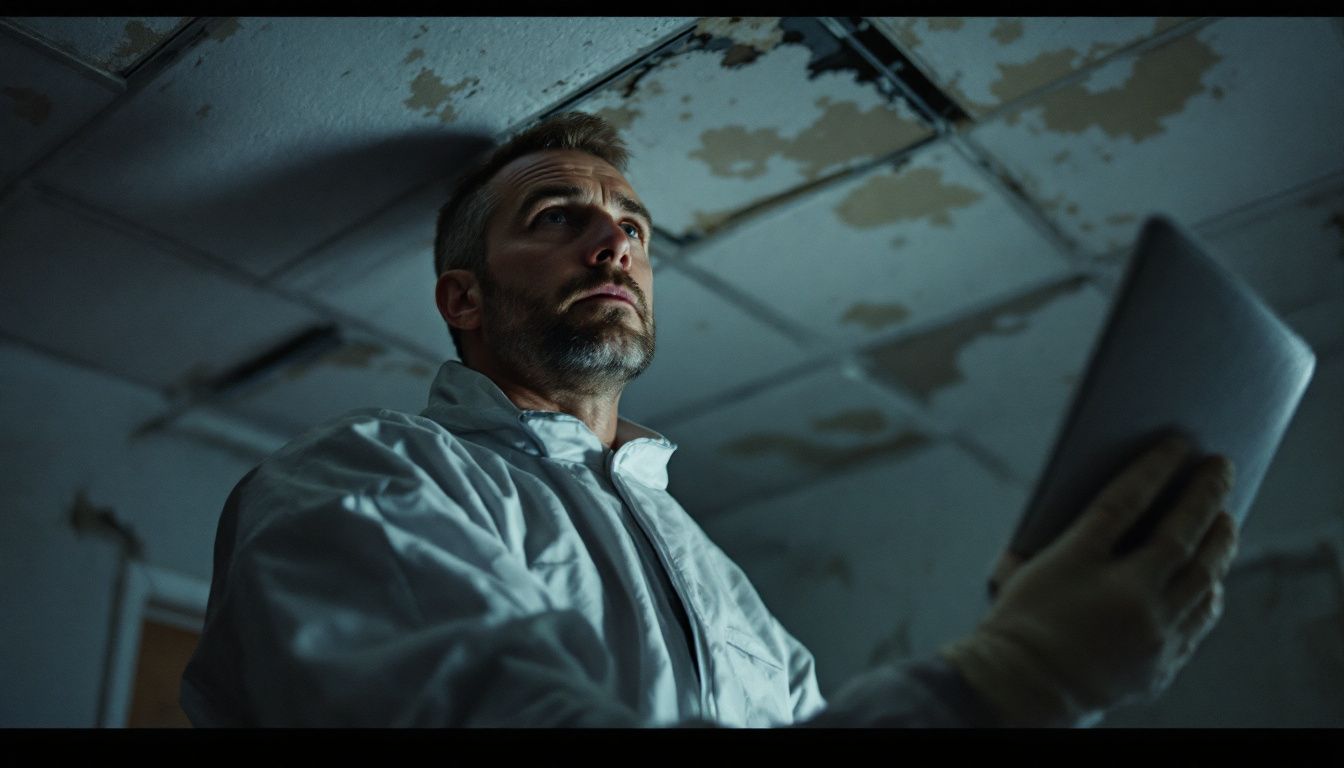
Why Asbestos Surveys for Healthcare Buildings Demand a Different Approach
Healthcare buildings carry responsibilities that go far beyond those of a typical commercial property. Patients, visitors, and clinical staff occupy these spaces continuously — often around the clock — and many of those patients are already medically vulnerable. When it comes to asbestos surveys for healthcare settings, the stakes are simply higher than anywhere else.
The UK’s NHS estate is vast, and a significant proportion of it was built or extended during the decades when asbestos use was at its peak. Hospitals, GP surgeries, health centres, and care homes constructed before 2000 are all likely to contain asbestos-containing materials (ACMs) somewhere within their fabric. Knowing exactly where those materials are — and managing them correctly — is not optional. It is a legal duty under the Control of Asbestos Regulations.
The Scale of the Asbestos Problem in UK Healthcare Estates
Asbestos was used extensively in construction throughout the mid-to-late twentieth century. It appeared in ceiling tiles, floor tiles, pipe lagging, boiler insulation, roofing sheets, fire doors, textured coatings, and dozens of other building products. In a large hospital built in the 1960s or 1970s, ACMs can be present in hundreds of locations across a single site.
The challenge for healthcare estates managers is that these buildings are rarely empty. Maintenance work, ward refurbishments, and infrastructure upgrades happen constantly — and each of those activities carries the potential to disturb asbestos if it has not been properly identified and managed in advance.
Asbestos-related diseases, including mesothelioma and asbestosis, typically develop decades after exposure. Many of the tradespeople and maintenance workers who have fallen ill in recent years were exposed during routine building work in hospitals and healthcare premises. That legacy makes proper asbestos management in healthcare not just a regulatory matter, but a moral one.
Legal Duties for Healthcare Dutyholders
Under the Control of Asbestos Regulations, anyone responsible for the maintenance or repair of non-domestic premises has a duty to manage asbestos. In a healthcare context, this typically falls on NHS trusts, foundation trusts, GP practice owners, care home operators, and private healthcare providers.
The duty to manage requires dutyholders to:
- Identify whether ACMs are present in their premises
- Assess the condition and risk of any ACMs found
- Produce and maintain an asbestos register
- Create and implement an asbestos management plan
- Ensure that anyone likely to disturb ACMs is informed of their location
- Review and update the register and plan regularly
Failure to comply can result in enforcement action by the Health and Safety Executive (HSE), prosecution, and significant fines. More critically, non-compliance can result in staff, patients, or contractors being exposed to asbestos fibres — with potentially fatal consequences.
HSE guidance document HSG264 sets out in detail how asbestos surveys should be planned and carried out. Healthcare estates managers should be familiar with its requirements and ensure that any surveying company they appoint works to its standards.
Types of Asbestos Surveys Used in Healthcare Settings
Not every situation calls for the same type of survey. Healthcare properties typically require different survey types at different stages of their lifecycle, and understanding which applies to your situation is essential.
Management Survey
A management survey is the standard survey for premises that are in normal occupation and use. It identifies the location, extent, and condition of any ACMs that are reasonably likely to be disturbed during everyday activities or routine maintenance.
In a healthcare setting, this type of survey forms the foundation of your asbestos management programme. It produces the asbestos register that your estates team, contractors, and maintenance staff rely on before carrying out any work on the building fabric.
Management surveys are not fully intrusive — they do not involve breaking into building structures. Instead, they assess accessible areas and make reasonable assumptions about materials in inaccessible locations, recording those assumptions clearly in the survey report.
Refurbishment Survey
When a ward, clinic, or any other part of a healthcare building is due for refurbishment, a refurbishment survey must be carried out before work begins. This is a fully intrusive survey — surveyors will open up walls, ceilings, and floors to identify all ACMs within the area of planned work.
This type of survey is critical in healthcare because refurbishment projects are frequent and the consequences of disturbing unidentified asbestos in an occupied building are severe. Even a relatively minor fit-out — replacing ceiling tiles, upgrading electrical systems, or installing new pipework — can disturb ACMs if a proper survey has not been completed first.
If the scope of work changes during the project, the survey scope must be reviewed accordingly. Never assume that a survey completed for one area covers adjacent spaces that have been added to the project.
Demolition Survey
Before any part of a healthcare building is demolished — whether that is an entire wing, a standalone outbuilding, or a smaller structure — a demolition survey is required. This is the most thorough and intrusive survey type, covering the entire structure to be demolished.
Demolition surveys are particularly important in healthcare settings where older buildings are being replaced as part of estate rationalisation or new development programmes. The survey ensures that all asbestos is identified and removed by a licensed contractor before demolition commences.
Re-inspection Survey
Where ACMs are present and are being managed in situ rather than removed, they must be monitored regularly to check that their condition has not deteriorated. A re-inspection survey provides that ongoing monitoring, typically carried out annually.
In a busy healthcare environment, building fabric can be subject to accidental damage, wear, or interference. Re-inspection surveys catch any deterioration early, allowing the management plan to be updated and remedial action taken before fibres are released into the air.
How Asbestos Surveys Are Carried Out in Occupied Healthcare Buildings
Surveying an occupied hospital or care home presents practical challenges that do not arise in empty commercial premises. Clinical areas cannot simply be closed off without notice, patient care must continue, and infection control requirements add an additional layer of complexity.
A professional surveying company with experience in healthcare settings will plan the survey carefully in advance. This typically involves:
- Pre-survey consultation — working with the estates team to understand the layout, occupancy patterns, and any areas of particular sensitivity
- Access planning — scheduling survey visits to minimise disruption to clinical activity, including out-of-hours access where necessary
- Infection control compliance — following the healthcare provider’s protocols for contractor access, including appropriate PPE and decontamination procedures
- Phased survey delivery — surveying different areas or buildings in phases to allow normal operations to continue
- Clear communication — keeping estates managers informed throughout and flagging any urgent findings immediately
Surveyors working in healthcare environments must wear appropriate personal protective equipment, including P3 respirators, disposable overalls, and gloves. Any materials sampled must be collected and sealed carefully to prevent fibre release, and the sampling point must be made good immediately after collection.
Sample Analysis and Laboratory Testing
When suspect materials are identified during a survey, samples are collected and sent for sample analysis. This is how the presence and type of asbestos is confirmed, and accurate results are particularly important in healthcare settings — decisions about whether areas can remain in use, or whether work can proceed, may depend directly on those findings.
Samples are analysed using techniques including Polarised Light Microscopy (PLM), which can identify the type of asbestos present. Only UKAS-accredited laboratories should be used for this analysis, and analysts should hold BOHS P402 certification. These are not optional quality markers — they are the standard required by HSG264 and expected by the HSE.
At Supernova Asbestos Surveys, all sample analysis is carried out through UKAS-accredited laboratories, and all surveyors hold the relevant BOHS P402 qualifications. Results are typically returned within 24 hours, supporting rapid decision-making for healthcare clients where delays to clinical operations are simply not acceptable.
The Asbestos Register and Management Plan in Healthcare
The survey report feeds directly into two essential documents: the asbestos register and the asbestos management plan. In a healthcare setting, these documents are not simply compliance paperwork — they are operational tools that protect people every single day.
The asbestos register records the location, type, condition, and risk rating of every ACM identified in the building. It must be readily accessible to anyone who might disturb those materials — including in-house maintenance staff, external contractors, and emergency responders.
The management plan sets out how identified ACMs will be managed — whether by monitoring in situ, encapsulation, or removal — and assigns responsibility for each action. It must be reviewed and updated regularly, particularly after any building work, accidental damage, or change in the condition of known ACMs.
Healthcare dutyholders should ensure that their asbestos register is integrated into their permit-to-work system. No contractor should be able to begin work on building fabric without first checking for asbestos in the relevant area. This single step eliminates one of the most common causes of accidental asbestos exposure in healthcare buildings.
Asbestos Risks During Healthcare Refurbishment and Maintenance
The greatest risk of asbestos exposure in healthcare buildings does not come from the presence of asbestos itself — it comes from disturbing it without knowing it is there. The most common scenarios where this happens include:
- Drilling into walls or ceilings to fix equipment or signage
- Replacing or cutting floor tiles
- Working on pipe lagging or duct insulation
- Removing or modifying ceiling systems
- Breaking through walls to create new openings
- Carrying out electrical or mechanical maintenance in ceiling voids
Each of these activities is routine in a healthcare environment. Each carries the potential to release asbestos fibres if ACMs are present and have not been identified. A current, accurate asbestos register — produced from a properly conducted survey — is what prevents these routine tasks from becoming dangerous incidents.
Healthcare buildings also frequently change hands, undergo changes of use, or are expanded with new wings and annexes. Each of these events can alter the asbestos risk profile of a site. Estates managers should treat any significant change to a building as a trigger to review their survey and management plan.
Choosing the Right Asbestos Surveying Company for Healthcare
Not all asbestos surveying companies have the experience or capability to work effectively in healthcare environments. When selecting a surveying partner, healthcare estates managers should look for:
- BOHS P402 qualified surveyors as standard
- UKAS-accredited laboratory analysis
- Demonstrable experience in occupied healthcare or clinical settings
- The ability to work flexibly around clinical schedules, including evenings and weekends
- Clear, detailed survey reports produced quickly — ideally within 24 hours
- Professional indemnity and public liability insurance appropriate for healthcare environments
- Familiarity with NHS infection control and contractor management protocols
It is worth asking any prospective surveying company to provide examples of previous healthcare survey work and to explain how they would approach access planning and infection control compliance for your specific site.
Asbestos Surveys for Healthcare Across the UK
Healthcare estates exist in every corner of the country, and access to qualified, experienced asbestos surveyors should not be a postcode lottery. Supernova Asbestos Surveys operates nationwide, with dedicated teams covering major cities and the surrounding regions.
If you manage a healthcare property in the capital, our team providing asbestos survey London services covers NHS trusts, private hospitals, GP practices, and care homes across all London boroughs. For healthcare clients in the North West, our asbestos survey Manchester team works across Greater Manchester and the surrounding area. In the Midlands, our asbestos survey Birmingham service covers the full West Midlands region and beyond.
Wherever your healthcare estate is located, Supernova can provide a surveying team with the qualifications, experience, and flexibility that clinical environments demand.
Frequently Asked Questions
Do all healthcare buildings need an asbestos survey?
Any non-domestic building — including all healthcare premises — built or refurbished before the year 2000 is likely to contain asbestos-containing materials. The Control of Asbestos Regulations places a legal duty on those responsible for the maintenance of such premises to identify whether ACMs are present. If you do not have a current, professionally conducted asbestos survey for your healthcare building, you are almost certainly in breach of that duty.
How often should asbestos surveys be updated in a healthcare setting?
A management survey should be reviewed and updated whenever there is a change to the building, including refurbishment, maintenance work, or accidental damage to known ACMs. In addition, any ACMs that are being managed in situ rather than removed should be subject to annual re-inspection surveys to monitor their condition. The asbestos register and management plan should be treated as live documents, not one-off exercises.
Can asbestos surveys be carried out in an occupied hospital ward?
Yes, but it requires careful planning. Experienced healthcare surveyors will work with your estates team to schedule access in a way that minimises disruption to clinical activity. This may include out-of-hours surveys, phased access, and strict compliance with infection control protocols. Surveyors must follow all relevant PPE and decontamination requirements and make good any sampling points immediately after collection.
What happens if asbestos is found during a survey?
Finding asbestos does not automatically mean it needs to be removed. If ACMs are in good condition and are not likely to be disturbed, the appropriate response is often to manage them in situ, monitor their condition through regular re-inspection surveys, and record them in the asbestos register. Removal is typically required before refurbishment or demolition work, or where materials are in poor condition and pose an active risk. Your surveying company should advise on the appropriate course of action based on the specific findings.
Who is responsible for asbestos management in an NHS trust?
Under the Control of Asbestos Regulations, the duty to manage asbestos falls on the dutyholder — the person or organisation responsible for maintaining the premises. In an NHS trust, this responsibility typically sits with the estates and facilities management function, with accountability ultimately resting at board level. Private healthcare providers, GP practice owners, and care home operators carry the same legal obligations for their respective premises.
Speak to Supernova About Asbestos Surveys for Healthcare
Supernova Asbestos Surveys has completed over 50,000 surveys across the UK, including extensive work in healthcare settings. Our surveyors are BOHS P402 qualified, our laboratory analysis is UKAS-accredited, and we understand the practical realities of working in occupied clinical environments.
Whether you need a management survey for a GP surgery, a refurbishment survey ahead of a ward upgrade, or a full demolition survey for an older hospital building, we can deliver the right survey at the right time — with minimal disruption to your operations.
Call us on 020 4586 0680 or visit asbestos-surveys.org.uk to discuss your healthcare estate’s requirements with our team.