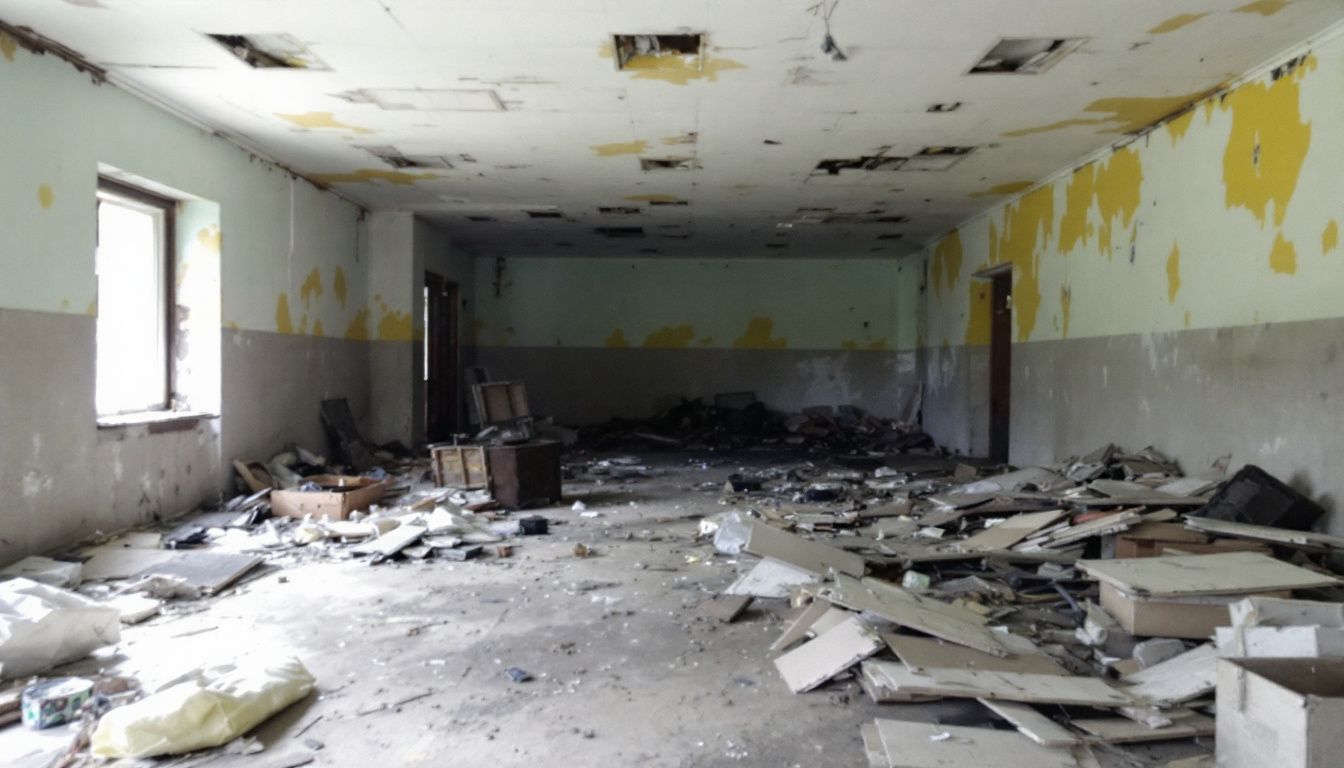
Why an Asbestos Demolition Survey Is Non-Negotiable Before Any Demolition Work
Asbestos doesn’t announce itself. It hides inside walls, beneath floor tiles, above suspended ceilings, and within the very fabric of buildings that look perfectly ordinary from the outside. Before a single wall comes down, an asbestos demolition survey is the only way to know what you’re dealing with — and UK law is unambiguous on that requirement.
If your building was constructed before 2000, there is a realistic chance asbestos-containing materials (ACMs) are present somewhere within the structure. Demolition work disturbs buildings in ways that day-to-day occupation never does, releasing fibres into the air where they can be inhaled by workers, contractors, and people in the surrounding area.
The consequences — mesothelioma, asbestosis, and lung cancer — are irreversible and can take decades to manifest. Here is everything property owners, developers, and project managers need to know before demolition begins.
What Is an Asbestos Demolition Survey?
An asbestos demolition survey — formally known as a refurbishment and demolition (R&D) survey — is a fully intrusive inspection carried out before any demolition or major structural work begins. Unlike a standard management survey, it is designed to locate all ACMs in a building, including those hidden deep within the structure itself.
Surveyors will access areas that are not normally reachable during routine inspections: inside wall cavities, beneath floor screeds, above false ceilings, inside duct runs, and within lift shafts. The building must typically be vacant — or the relevant areas cleared — before work begins, because the inspection process is inherently destructive.
The purpose is straightforward. Before demolition creates uncontrolled disturbance of ACMs, you need a complete picture of what is present, where it is, and in what condition. That information then drives the asbestos removal strategy, the risk assessment, and the method statement for the demolition contractor.
How Does an Asbestos Demolition Survey Differ From Other Survey Types?
Confusing the different survey types is a costly mistake — one that can leave you legally exposed and potentially responsible for a serious incident. There are three main survey types under UK regulations, and each serves a distinct purpose.
Management Survey
A management survey is designed for buildings that remain in use. It identifies ACMs in accessible areas that could be disturbed during normal occupation and routine maintenance. It is non-intrusive — surveyors do not break into the structure — and it produces an asbestos register that helps duty holders manage ACMs safely over time.
A management survey is simply not sufficient as a basis for demolition work. Using one in place of a proper R&D survey leaves you legally exposed and potentially responsible for a serious incident.
Refurbishment Survey
A refurbishment survey sits one step further along the spectrum. It is required when specific areas are being refurbished or altered, and it is intrusive within the zones where work will take place. It does not need to cover the whole building — only the areas affected by the planned works.
Demolition Survey
A demolition survey is the most thorough of all three. It must cover the entire building, not just specific areas, because demolition affects the whole structure. Every void, every layer, every concealed space must be investigated.
Key differences at a glance:
- Management survey: Non-intrusive, building in use, identifies ACMs in accessible areas only
- Refurbishment survey: Intrusive in work zones, required before localised refurbishment
- Demolition survey: Fully intrusive, whole building, required before any demolition work, building must be vacant or cleared
What Does UK Law Actually Require?
The Control of Asbestos Regulations set out the legal framework for asbestos management in the UK. Under these regulations, a refurbishment and demolition survey is a legal requirement before any work that will disturb the fabric of a building — and demolition is the most extreme example of that.
The HSE’s guidance document HSG264 — Asbestos: The Survey Guide — sets out precisely how surveys must be planned and executed. It specifies the qualifications surveyors must hold, the sampling methodology required, and the standard to which reports must be produced.
Surveyors must be accredited by UKAS (the United Kingdom Accreditation Service), which is the only body authorised to grant accreditation for asbestos inspection in the UK. This is not optional — it is a legal requirement.
Failure to commission a proper survey before demolition is not a minor administrative oversight. It is a criminal offence. The HSE can issue improvement notices, prohibition notices, and prosecute duty holders. Fines can reach £20,000 in the magistrates’ court, with unlimited fines and custodial sentences available in the Crown Court for serious breaches. Individuals — not just companies — can be prosecuted.
Beyond criminal law, there are also civil liability implications. If workers or third parties are exposed to asbestos as a result of inadequate survey work, the property owner and principal contractor may face compensation claims that dwarf the cost of any survey.
What Happens During an Asbestos Demolition Survey?
Understanding the process helps you prepare the site properly and set realistic expectations for timelines and access requirements.
Pre-Survey Planning
Before arriving on site, the surveying team will review any existing asbestos information — previous surveys, asbestos registers, building plans, and records of any previous removal work. This background research helps focus the inspection and ensures no areas are overlooked.
The building should be vacant, or the specific areas to be surveyed should be cleared of occupants and moveable contents. The surveyor needs unrestricted access to every part of the structure, including roof spaces, basements, service ducts, and any outbuildings.
The Physical Inspection
The survey itself involves a systematic inspection of every accessible and inaccessible area of the building. Surveyors use specialist tools to open up the structure — drilling into walls, lifting floor coverings, removing ceiling tiles, and accessing voids. Every material that could potentially contain asbestos is assessed.
Where materials are suspected to contain asbestos, samples are taken in accordance with HSG264 methodology. Samples are carefully collected, sealed, and labelled to prevent cross-contamination, and surveyors wear appropriate personal protective equipment throughout.
Photographs are taken of each sampling location, and the precise position is recorded on building plans. This creates an auditable trail that links each sample to a specific location in the structure.
Laboratory Analysis
All samples are sent to a UKAS-accredited laboratory for analysis. Only UKAS-accredited labs are authorised to carry out this work in the UK, and the results they produce carry the legal weight required for compliance purposes.
Laboratory analysis identifies the type of asbestos present — chrysotile (white), amosite (brown), or crocidolite (blue) — and confirms whether the material contains asbestos at all. Different fibre types carry different risk profiles, and this information shapes the removal strategy.
Results are typically returned within a few working days, though expedited turnaround is available when project timelines demand it.
The Survey Report
The final survey report is the document that demolition contractors, asbestos removal contractors, and the HSE will rely upon. It must meet the standards set out in HSG264 and contain:
- A complete schedule of all ACMs found, including type, location, extent, and condition
- A risk assessment for each ACM identified
- Photographs of each material in situ
- Annotated floor plans showing the location of every ACM
- Details of any areas that could not be accessed, with reasons
- Laboratory reports for all samples taken
- Recommendations for removal or management prior to demolition
A well-produced report is not just a legal document — it is a practical tool that enables the removal contractor to plan their work accurately and price it correctly. Vague or incomplete reports lead to unexpected discoveries during removal, which cause delays and significant cost overruns.
Common Asbestos-Containing Materials Found in Demolition Surveys
Knowing where asbestos is typically found helps property owners understand why a thorough survey is so important. ACMs can appear in unexpected places, particularly in buildings that have been altered or extended over the decades.
Typical locations and materials include:
- Insulation boards: Used extensively in partition walls, ceiling tiles, and fire doors in commercial buildings from the 1950s to 1980s
- Sprayed coatings: Applied to steel beams and columns as fire protection, particularly in industrial and commercial buildings
- Pipe and boiler lagging: Thermal insulation on heating systems, often heavily friable and high risk
- Asbestos cement: Corrugated roofing sheets, gutters, downpipes, and cladding panels — extremely widespread
- Floor tiles and adhesives: Vinyl floor tiles and the bitumen adhesive used to fix them frequently contain asbestos
- Textured coatings: Artex and similar decorative finishes on ceilings and walls
- Rope seals and gaskets: Found in boiler rooms, plant rooms, and around heating appliances
- Bitumen-based products: Damp-proof courses, roofing felts, and some external render
In a demolition scenario, all of these materials will be disturbed. Without a survey, there is no way to know which are present, and demolition workers cannot take appropriate precautions.
What Happens After the Survey? Asbestos Removal Before Demolition
Once the survey report is complete and all ACMs have been identified, the next stage is planned asbestos removal prior to demolition commencing. This must be carried out by a licensed contractor for the majority of ACM types — particularly those containing amosite or crocidolite, or any sprayed coatings and insulation boards.
The removal contractor will use the survey report to produce a detailed plan of works, including enclosures, air monitoring, and waste disposal arrangements. All asbestos waste must be double-bagged, clearly labelled, and disposed of at a licensed waste facility — it cannot go to a standard skip or general waste stream.
Only once all identified ACMs have been removed and clearance air testing has been completed should demolition work begin. Rushing this sequence creates serious legal and safety risks for everyone involved.
Selecting a Competent Asbestos Surveyor
The quality of an asbestos demolition survey is entirely dependent on the competence of the surveying organisation. This is not an area where cutting corners pays off.
Qualifications and Accreditation
Surveyors must hold the relevant BOHS (British Occupational Hygiene Society) qualifications — specifically the P402 certificate for building surveys and bulk sampling. The surveying organisation must hold UKAS accreditation for asbestos inspection, which is a legal requirement, not merely a quality badge.
Beyond qualifications, look for experience with the type of property you are demolishing. Industrial premises, commercial offices, residential blocks, and mixed-use buildings all present different challenges, and a surveyor familiar with the building type is more likely to identify all ACMs.
Report Quality
Ask to see example reports before appointing a surveyor. A well-structured, clearly written report with good photographs and annotated plans is a reliable indicator of a competent surveying team. A vague, template-heavy report with minimal site-specific detail is a warning sign.
Independence Matters
The survey should be carried out by an organisation that is independent of the asbestos removal contractor. Where the same company surveys and removes, there is an inherent conflict of interest — the survey scope can be influenced by commercial considerations rather than thoroughness. Keep the two functions separate wherever possible.
Asbestos Demolition Surveys Across the UK
Demolition projects are happening constantly across the country, from large-scale commercial redevelopments in city centres to smaller residential clearances in suburban areas. The legal requirements apply equally regardless of location or building size.
If you are based in the capital, Supernova provides a fully accredited asbestos survey London service covering all boroughs and property types. For projects in the North West, our asbestos survey Manchester team operates across Greater Manchester and the surrounding region. In the Midlands, our asbestos survey Birmingham service covers the city and the wider West Midlands area.
Supernova operates nationwide, so wherever your demolition project is located, our UKAS-accredited surveyors can be on site quickly and deliver reports that meet every legal requirement.
The Real Cost of Getting This Wrong
Some property owners and developers view the survey as an unwelcome cost and a delay to the programme. That perspective gets the risk calculation entirely backwards.
Consider what happens when demolition proceeds without a proper survey and asbestos is discovered mid-works. The demolition contractor stops immediately. The site is cordoned off. An emergency survey is commissioned. Air monitoring begins. Specialist removal contractors are brought in at short notice — at significant premium. Regulatory scrutiny follows, and the HSE may investigate. The project programme slips by weeks or months, not days.
The cost of that scenario — in direct expenditure, programme delay, and potential enforcement action — will almost always exceed the cost of a proper survey by a substantial margin. A thorough asbestos demolition survey completed before work begins is not a cost; it is risk management that protects the entire project.
Frequently Asked Questions
Is an asbestos demolition survey legally required for all buildings?
Under the Control of Asbestos Regulations and HSE guidance in HSG264, a refurbishment and demolition survey is required before any demolition work that will disturb the fabric of a building. This applies regardless of the age of the building, though the likelihood of finding ACMs is significantly higher in buildings constructed before 2000. Even newer buildings can contain certain ACMs, so the legal obligation to survey applies broadly.
Can I use an existing management survey instead of commissioning a new demolition survey?
No. A management survey is a non-intrusive inspection designed to identify ACMs in accessible areas during normal occupation. It does not investigate concealed voids, wall cavities, or structural elements. Using a management survey as the basis for demolition work is a legal breach and leaves the duty holder exposed to enforcement action and civil liability. A full refurbishment and demolition survey is always required.
How long does an asbestos demolition survey take?
The duration depends on the size, complexity, and construction type of the building. A small commercial unit might be surveyed in a single day, while a large industrial facility or multi-storey building could take several days. The building needs to be vacant and accessible throughout. Following the physical inspection, laboratory analysis typically adds a few working days before the final report is issued.
Who can legally carry out an asbestos demolition survey?
Surveyors must hold the appropriate BOHS P402 qualification and the surveying organisation must hold UKAS accreditation for asbestos inspection. UKAS accreditation is a legal requirement under HSE guidance — not simply a mark of quality. Always verify a surveyor’s accreditation status before appointing them, as only UKAS-accredited organisations can produce reports with the legal standing required for compliance purposes.
What happens if asbestos is found during demolition that was not identified in the survey?
Work must stop immediately in the affected area. The site should be secured, and a specialist asbestos surveyor should be called to assess the find. The demolition contractor, principal contractor, and duty holder all have obligations under the Control of Asbestos Regulations and the Construction (Design and Management) Regulations to manage the situation safely. This scenario underlines why commissioning a thorough, fully intrusive survey from a competent UKAS-accredited organisation at the outset is so important.
Ready to Book Your Asbestos Demolition Survey?
Supernova Asbestos Surveys has completed over 50,000 surveys across the UK. Our UKAS-accredited surveyors deliver thorough, fully compliant refurbishment and demolition surveys that give you the complete picture before work begins — protecting your project, your people, and your legal position.
Call us on 020 4586 0680 or visit asbestos-surveys.org.uk to request a quote or discuss your project with our team. We operate nationwide with rapid mobilisation, so your programme doesn’t have to wait.