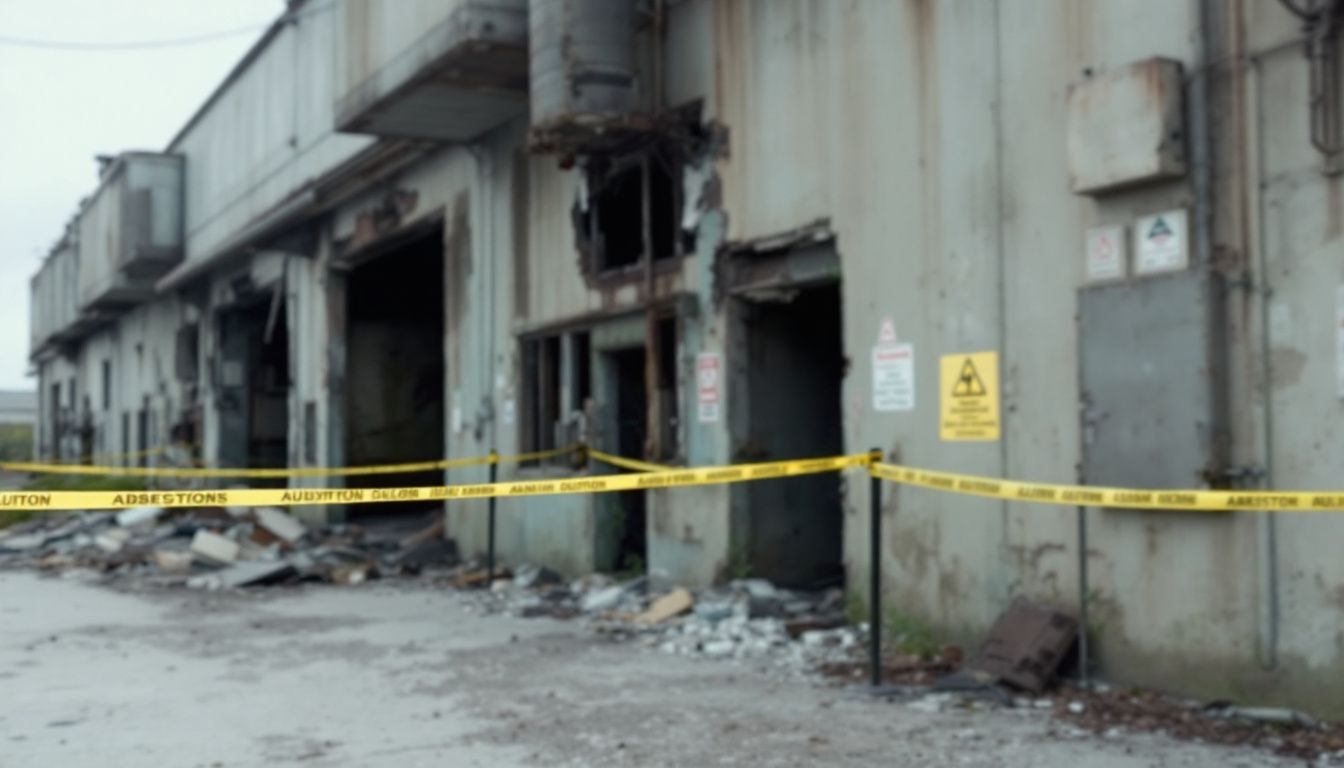
Why Every Demolition Decision Starts With an Asbestos Survey
Demolishing a building is never as simple as swinging a wrecking ball. Before a single wall comes down, asbestos hidden inside floor tiles, pipe lagging, ceiling boards, and roof sheets can completely reshape your project plan.
The way asbestos surveys influence decision-making in property demolition projects touches every aspect of the work — timelines, budgets, contractor selection, permit applications, and the safety of everyone on site. This applies to any building constructed before the year 2000.
The UK banned the use of all asbestos-containing materials (ACMs) in construction in 1999, but decades of widespread use mean the material remains present in millions of properties across the country. Get the survey wrong — or skip it entirely — and the consequences range from prosecution to fatal exposure.
The Legal Obligation: Why Asbestos Surveys Are Non-Negotiable Before Demolition
The Control of Asbestos Regulations places a clear legal duty on anyone commissioning demolition work to identify all ACMs before work begins. This is not a recommendation — it is a statutory requirement enforced by the Health and Safety Executive (HSE).
HSE guidance document HSG264 sets out the standards surveyors must meet when carrying out asbestos surveys. It defines the methodology, sampling requirements, and reporting standards that any competent surveyor must follow. Ignoring this framework exposes building owners, principal contractors, and project managers to serious legal liability.
Beyond the legal obligation, there is a straightforward safety argument. Asbestos fibres, once airborne, are invisible to the naked eye. Demolition work — breaking through walls, ripping out floors, lifting roof sheets — is precisely the kind of activity that releases those fibres in large quantities. Without a survey identifying where ACMs are located, workers and the surrounding public face uncontrolled exposure to one of the most dangerous carcinogens known.
The Types of Asbestos Surveys Used in Demolition Projects
Not all asbestos surveys are the same, and choosing the right type for your project is one of the first decisions that shapes everything that follows.
Management Surveys
A management survey is designed for buildings that are occupied and in normal use. It identifies ACMs in accessible areas, assesses their condition, and helps property managers put a plan in place to monitor and manage them safely over time.
For demolition purposes, a management survey alone is not sufficient. It does not involve breaking into the fabric of the building, so it cannot guarantee that all hidden ACMs have been found. It does, however, provide useful baseline information and is a sensible starting point for any pre-2000 building that has not been surveyed before.
Refurbishment Surveys
Where partial works are planned rather than full demolition, a refurbishment survey is the appropriate instrument. It is fully intrusive within the area where work will be carried out — surveyors access voids, cavities, and concealed spaces to ensure nothing is missed before contractors move in.
This type of survey directly influences decision-making in projects where selective demolition or strip-out work is planned. It gives the principal contractor accurate, location-specific data on which to base their method statement and risk assessment.
Demolition Surveys
For full demolition, a dedicated demolition survey is required. HSG264 is explicit on this point: the survey must be completed before any work starts, and it must cover the full extent of the building — every floor, every void, every service duct, every roof space.
Surveyors break into walls, lift floor coverings, and open up ceiling spaces to ensure nothing is missed. Samples taken during the survey are analysed by a UKAS-accredited laboratory. The results confirm which materials contain asbestos, what type of asbestos is present, and the condition of those materials. This data feeds directly into every major decision in the demolition plan.
Where specific materials need to be tested independently, you can also arrange standalone sample analysis to supplement the survey findings.
How Survey Findings Influence Decision-Making Across the Demolition Plan
Once the survey report lands on the project manager’s desk, it becomes the single most important document in the planning process. Every major decision — timeline, budget, contractor selection, permit applications — flows from what the survey has found.
Adjusting Project Timelines
If ACMs are identified, they must be removed or made safe before demolition proceeds. The scale of that removal work determines how much time needs to be added to the programme.
A small amount of asbestos cement sheeting on an outbuilding might add a few days. Extensive pipe lagging, sprayed coatings, or asbestos insulating board throughout a large commercial building could add weeks or months.
Experienced project managers build contingency into their schedules from the outset, but survey findings replace that contingency with hard data. You move from estimating to knowing — and that shift in certainty is enormously valuable when you are managing contractors, coordinating with local authorities, or working to a fixed handover date.
Estimating Costs for Asbestos Removal
Asbestos removal costs vary significantly depending on the type of material, the volume present, its location within the building, and the licence category required to remove it.
Some ACMs — such as asbestos cement — can be removed by contractors holding a notification-only licence. Others, including asbestos insulating board and sprayed coatings, require a fully licensed contractor under the Control of Asbestos Regulations.
Licensed asbestos removal is specialist work. It requires enclosures, negative pressure units, full personal protective equipment, air monitoring, and controlled waste disposal to a licensed facility — all of which carries significant cost. That cost cannot be accurately estimated without a thorough survey.
Properties with significant ACM presence routinely see demolition budgets revised upward once survey results are known. Factoring in removal costs before committing to a demolition contract protects you from budget overruns that can derail a project entirely.
Evaluating Whether Full Demolition Is Feasible
In some cases, survey findings raise questions about whether full demolition is the most practical approach at all. If a building contains extensive, heavily degraded asbestos throughout its structure, the cost and complexity of removal may prompt a reassessment of the project scope.
Could selective demolition or partial refurbishment reduce the volume of ACMs that need to be disturbed? Could certain elements be encapsulated rather than removed? These are questions that only arise once you have survey data in hand. Without it, you are making decisions in the dark.
Legal Compliance and Regulatory Requirements
The legal framework around asbestos in demolition is layered, and understanding each layer helps you avoid costly mistakes.
The Control of Asbestos Regulations
These regulations set out the duties of employers, the self-employed, and those in control of premises. They require that asbestos surveys are carried out by competent persons, that ACMs are identified before work begins, and that any work involving asbestos is properly planned and executed. Failure to comply is a criminal offence.
The Health and Safety at Work Act
The broader duty of care under the Health and Safety at Work Act applies to everyone involved in a demolition project. Employers must ensure the health and safety of their workers and anyone else who might be affected by the work — including members of the public near the demolition site, occupants of adjacent properties, and future users of the cleared site.
Demolition Permits and Local Authority Requirements
Many local authorities require evidence of an asbestos survey — and confirmation that ACMs have been properly managed or removed — before they will issue a demolition permit. Some require notification to the relevant environmental regulator regarding asbestos waste disposal.
Submitting a demolition permit application without an asbestos survey report is likely to result in delays or outright refusal. Building the survey into your pre-application process avoids that friction and keeps the project moving.
Protecting Workers and the Public on Demolition Sites
The human cost of asbestos exposure is well established. Mesothelioma, asbestos-related lung cancer, and asbestosis are all caused by inhaling asbestos fibres — and all are entirely preventable with proper controls.
The UK continues to record thousands of asbestos-related deaths every year, a legacy of decades of widespread use in construction before the dangers were fully understood and regulated.
Demolition sites present some of the highest-risk environments for asbestos exposure. The physical act of breaking down a structure releases fibres that may have been locked inside building materials for decades. Without a survey, workers have no way of knowing where the hazards are, what precautions to take, or when they need to stop work and call in licensed contractors.
Survey findings directly inform the risk assessment and method statement for the demolition. They tell the principal contractor:
- Which areas require controlled conditions before work begins
- Which workers need respiratory protective equipment and what grade
- Where air monitoring should be deployed during works
- Which materials require licensed removal contractors rather than general demolition operatives
- How asbestos waste must be segregated, packaged, and disposed of
This is not procedural box-ticking — it is the practical mechanism by which lives are protected on site.
Asbestos Surveys and Property Due Diligence
For developers and investors, asbestos surveys are a critical part of property due diligence before any acquisition or demolition project. The presence of ACMs has a direct bearing on the value of a site and the viability of redevelopment.
Buyers and their solicitors increasingly expect to see asbestos survey reports as part of the pre-purchase information pack for commercial and industrial properties. Where surveys have not been carried out, or where reports reveal significant ACM presence, buyers will factor remediation costs into their offer or seek contractual protections.
For sellers, commissioning a survey before going to market demonstrates transparency and removes uncertainty from the transaction. It allows both parties to negotiate on the basis of known facts rather than assumptions — which generally leads to smoother, faster deals.
For developers taking on a site for demolition and redevelopment, the survey findings become part of the financial model. Accurate remediation cost data allows for realistic appraisals and reduces the risk of unexpected expenditure once work is underway.
Selecting the Right Surveyor for a Demolition Project
The quality of your survey is only as good as the competence of the person carrying it out. HSG264 is clear that asbestos surveys must be conducted by competent surveyors — individuals who hold the relevant qualifications (typically BOHS P402 or equivalent) and who have the experience to carry out intrusive surveys correctly.
For demolition surveys in particular, the surveyor needs to understand construction methods and materials from different eras, know where asbestos was commonly used in different building types, and have the skills to access and sample difficult or concealed areas safely.
UKAS-accredited laboratory analysis of samples is the standard required under HSG264. Any surveyor who cannot demonstrate UKAS-accredited lab support for their sample analysis should not be engaged for this work.
When evaluating a surveyor, ask the following:
- Do your surveyors hold BOHS P402 or an equivalent recognised qualification?
- Which UKAS-accredited laboratory analyses your samples?
- Have you carried out demolition surveys on buildings of this type and age?
- Does your report format meet the requirements of HSG264?
- Can you provide a sample report before we engage you?
A surveyor who cannot answer these questions clearly and confidently is not the right choice for a demolition project where the stakes are this high.
Common Asbestos-Containing Materials Found in Demolition Projects
Understanding which materials are most likely to contain asbestos helps project managers anticipate where survey findings are likely to have the greatest impact on their plans. The following ACMs are among the most commonly encountered in pre-2000 buildings:
- Asbestos insulating board (AIB) — used in partition walls, ceiling tiles, fire doors, and service duct linings. Requires licensed removal.
- Sprayed asbestos coatings — applied to structural steelwork and concrete for fire protection. Friable, high-risk, and requires licensed removal.
- Pipe and boiler lagging — common in plant rooms, basements, and service areas. Often in poor condition in older buildings.
- Asbestos cement products — roof sheets, cladding panels, guttering, and flue pipes. Lower risk but still regulated.
- Floor tiles and adhesives — vinyl floor tiles and the bitumen adhesive beneath them frequently contain asbestos.
- Textured coatings — Artex and similar decorative finishes applied to ceilings and walls in residential and commercial properties.
- Rope seals and gaskets — found around boilers, furnaces, and industrial plant.
A thorough demolition survey will identify all of these materials, confirm through laboratory analysis which contain asbestos, and provide the location data needed to plan removal safely.
Nationwide Coverage From Supernova Asbestos Surveys
Supernova Asbestos Surveys operates nationwide, with experienced teams regularly undertaking demolition surveys across major cities and regions. Whether you need an asbestos survey in London, an asbestos survey in Manchester, or an asbestos survey in Birmingham, our BOHS P402-qualified surveyors deliver fully compliant reports that meet HSG264 standards and stand up to scrutiny from local authorities, planning departments, and the HSE.
With over 50,000 surveys completed across the UK, we have the experience to handle demolition projects of every scale — from single residential properties to large commercial and industrial sites.
To book a demolition survey or discuss your project requirements, call us on 020 4586 0680 or visit asbestos-surveys.org.uk. Our team will advise on the right survey type for your project, provide a clear quote, and arrange attendance at a time that works for your programme.
Frequently Asked Questions
Is an asbestos survey legally required before demolition?
Yes. The Control of Asbestos Regulations requires that all ACMs are identified before demolition work begins. This applies to any building that may contain asbestos — broadly any structure built or refurbished before 2000. Failure to comply is a criminal offence and can result in prosecution by the HSE.
What type of asbestos survey is needed for a full demolition project?
A demolition survey — also known as a pre-demolition survey — is required. This is a fully intrusive survey covering the entire building, including all voids, service ducts, roof spaces, and concealed areas. It goes significantly further than a management survey or a refurbishment survey, which are not sufficient on their own for full demolition projects.
How long does a demolition asbestos survey take?
The duration depends on the size, complexity, and age of the building. A small residential property may be surveyed in a single day. Large commercial or industrial buildings can take several days. Laboratory analysis of samples typically adds a further five to ten working days before the final report is issued. Your surveyor should give you a realistic timescale at the quoting stage.
Can demolition work start before asbestos removal is complete?
No. Any ACMs identified in the survey must be removed or otherwise made safe before demolition work proceeds in those areas. Starting demolition before asbestos has been properly managed is a breach of the Control of Asbestos Regulations and creates serious risk of uncontrolled fibre release, exposing workers and the public to harm.
How do asbestos survey findings affect demolition costs?
Survey findings directly determine the scope and cost of any asbestos removal work required before demolition can proceed. Licensed removal — required for high-risk materials such as asbestos insulating board and sprayed coatings — is significantly more expensive than non-licensed removal of lower-risk materials. Accurate survey data allows project managers to budget correctly and avoid costly surprises once work is underway.