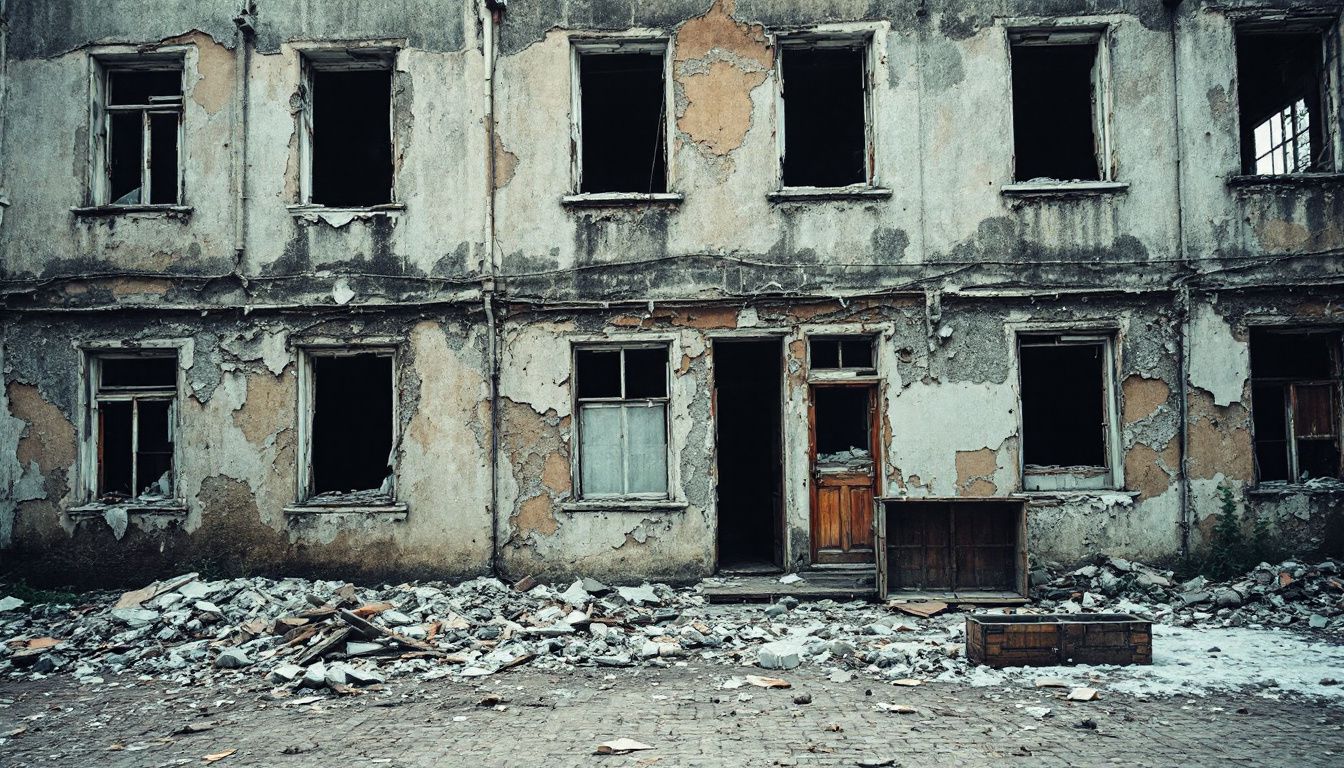
What You Must Do Before a Building Comes Down: The Asbestos Survey for Demolition
Demolishing a building without a proper asbestos survey is not just dangerous — it is illegal. Any structure built before 2000 could contain asbestos-containing materials (ACMs), and disturbing them during demolition releases fibres that cause fatal lung diseases including mesothelioma and asbestosis.
An demolition survey is the legal and practical foundation of any responsible demolition project. Skipping it puts workers, the public, and the environment at serious risk. Whether you are a property owner, developer, or demolition contractor, your obligations before a building comes down are not optional — they carry real legal consequences.
Why an Asbestos Survey for Demolition Is Non-Negotiable
The Control of Asbestos Regulations are unambiguous: no demolition work may begin on a building that may contain asbestos until a suitable survey has been completed and any ACMs have been properly managed or removed. This is not a technicality — it is a legal duty.
Asbestos fibres are microscopic. Once airborne, they cannot be seen, smelled, or tasted, but they lodge permanently in lung tissue. Demolition work is among the highest-risk activities for asbestos exposure precisely because it disturbs materials throughout an entire structure simultaneously.
Beyond the health risks, there are significant legal and financial consequences. Prosecution under the Health and Safety at Work Act, unlimited fines, and project shutdowns are all real outcomes for those who proceed without completing the required survey. Local authorities and the HSE actively monitor demolition sites, and ignorance is not a defence.
Which Type of Asbestos Survey Do You Need for Demolition?
Not all asbestos surveys are the same, and using the wrong type for a demolition project is a common and costly mistake. Understanding the difference between survey types is essential before any project begins.
Management Surveys: Not Sufficient for Demolition
A management survey is designed for buildings in normal use. It identifies ACMs in accessible areas to help building owners manage asbestos safely during routine occupation and maintenance — but it is not sufficient for demolition work.
A management survey does not involve breaking into building fabric. It will not locate asbestos hidden behind walls, beneath floor screeds, or within structural elements — precisely the locations that demolition work will disturb. Relying on a management survey alone before demolition is a serious regulatory failure that exposes everyone on the project to risk.
Refurbishment and Demolition Surveys: What the Law Requires
A refurbishment survey and a full demolition survey are both fully intrusive surveys. They involve breaking into the building fabric to locate all ACMs, including those hidden within the structure. For complete demolition, the survey must cover the entire building without exception.
This type of survey is required by HSG264, the HSE’s definitive guidance on asbestos surveys. The surveyor will access wall cavities, lift floor coverings, inspect above suspended ceilings, and examine structural elements throughout the building. The goal is to find every ACM before demolition begins — not to discover them mid-project when fibres are already airborne.
Here is a clear comparison of the two main survey types:
- Management survey: Non-intrusive, for occupied buildings in routine use, covers accessible areas only — not suitable for demolition
- Refurbishment/demolition survey: Fully intrusive, required before any structural work, covers all areas including hidden voids and structural elements
- Scope: For full demolition, the survey must cover the entire building — not just the areas where initial work will take place
- Outcome: The demolition survey produces a register of all ACMs, their condition, and recommendations for removal before work proceeds
What the Asbestos Survey for Demolition Actually Involves
Understanding what happens during a demolition survey helps property owners and contractors plan effectively and ensures nothing is missed. There are three distinct phases: preparation, site inspection, and reporting.
Pre-Survey Preparation
Before the surveyor arrives on site, gather any existing documentation about the building. Previous asbestos surveys, building plans, maintenance records, and any known history of asbestos removal are all valuable. This information helps the surveyor plan their approach and ensures no area is overlooked.
The building should be accessible throughout. Locked rooms, inaccessible plant areas, and sealed voids must be opened where possible. Any area the surveyor cannot access must be recorded as a presumed-positive area — meaning it is treated as containing asbestos until proven otherwise.
Site Inspection and Sampling
The surveyor conducts a systematic, room-by-room inspection of the entire building. For a demolition survey, this includes breaking into wall cavities, lifting floor coverings, inspecting roof spaces, examining pipe lagging, and checking structural elements throughout.
Samples are taken from suspect materials and sent to a UKAS-accredited laboratory for asbestos testing. The number of samples depends on the size and complexity of the building, but the surveyor must take sufficient samples to characterise all materials present. Bulk samples are typically analysed by polarised light microscopy to identify the type and proportion of asbestos fibres.
During sampling, surveyors follow strict contamination control procedures — wet methods to suppress dust, sealed sample containers, and appropriate personal protective equipment. Areas where sampling has taken place are made safe before the surveyor moves on.
Analysis and Reporting
Once laboratory results are returned, the surveyor compiles a detailed report. A compliant demolition survey report must include:
- A full register of all ACMs identified, including their location, type, extent, and condition
- Photographs of each ACM and its location within the building
- Floor plans or drawings showing the location of all ACMs
- Priority assessment for each material, indicating urgency of removal
- Details of any areas that could not be accessed, with presumed-positive status recorded
- Laboratory certificates confirming the analysis results
This report is a legal document. It must be shared with the demolition contractor before any work begins and must be available on site throughout the project.
Asbestos Removal Before Demolition Can Begin
The survey report is not the end of the process — it is the beginning of the removal phase. All ACMs identified must be removed before demolition work starts, unless the HSE has specifically approved an alternative approach.
Some asbestos materials require a licensed contractor for removal. These include sprayed asbestos coatings, asbestos insulation board, and pipe lagging. Other lower-risk materials may be removable by a competent non-licensed contractor, but the survey report and HSE guidance will make clear which category each material falls into.
Professional asbestos removal must be carried out in accordance with a written plan of work, with appropriate enclosures, air monitoring, and waste disposal procedures in place. Asbestos waste is classified as hazardous waste and must be disposed of at a licensed facility — it cannot simply go into a skip.
Once removal is complete, a clearance certificate should be obtained before demolition proceeds. This provides documentary evidence that the building is clear of ACMs and protects all parties involved in the project.
Navigating Complications: Inaccessible Areas and Structural Instability
In practice, demolition surveys sometimes encounter complications. A building may be structurally unstable, making full access unsafe. Some areas may be genuinely inaccessible without demolition work beginning first. The HSE recognises these realities and provides guidance on how to manage them.
Where areas cannot be accessed safely, they must be recorded in the survey report as inaccessible and presumed to contain asbestos. The demolition contractor must then treat those areas as asbestos-positive and implement appropriate controls when they are eventually disturbed.
In cases of structural instability, the HSE may permit a phased approach — where controlled demolition of specific elements creates access for further survey work. This must be agreed with the HSE in advance and documented carefully. It is not a loophole that allows demolition to proceed without surveys; it is a tightly controlled exception for genuinely exceptional circumstances.
The key principle throughout is that uncertainty does not justify inaction. Where asbestos cannot be confirmed or ruled out, it must be presumed present and managed accordingly.
Choosing the Right Surveyor for a Demolition Project
The quality of your asbestos survey for demolition is only as good as the competence of the surveyor conducting it. For demolition work, this matters enormously — an incomplete or inaccurate survey puts everyone on the project at risk.
Qualifications to Look For
Surveyors conducting refurbishment and demolition surveys should hold the BOHS P402 qualification (Buildings Surveys and Bulk Sampling for Asbestos) or an equivalent recognised qualification. This demonstrates that they have the technical knowledge to conduct intrusive surveys correctly and interpret the results accurately.
The laboratory analysing your samples must be UKAS-accredited for asbestos analysis. UKAS accreditation means the laboratory operates to internationally recognised standards and its results are reliable. Always ask to see accreditation certificates before instructing a surveyor.
Experience with Demolition Projects
Demolition surveys are more complex than surveys for occupied buildings. Look for a surveyor with demonstrable experience of demolition projects, particularly for buildings of a similar age, size, and construction type to yours. Ask to see example reports and check that they meet the requirements of HSG264.
Be wary of unusually low quotes. A thorough demolition survey takes time and requires significant sampling. A survey priced well below the market rate is likely to cut corners — and the consequences of a missed ACM during demolition are severe.
When Additional Asbestos Testing Is Required
In some situations, additional asbestos testing may be required beyond the initial survey. This might arise when:
- New materials are uncovered during demolition that were not identified in the original survey
- The condition of a material has changed significantly since the survey was conducted
- There is uncertainty about whether a material identified as presumed-positive actually contains asbestos
- Air monitoring is required during removal work to confirm fibre levels are within safe limits
Air monitoring during and after removal work is a separate but related process. It uses specialist equipment to measure the concentration of asbestos fibres in the air, providing assurance that removal has been effective and the environment is safe. This is particularly important before a clearance certificate is issued.
For projects where testing needs to be arranged quickly, Supernova Asbestos Surveys can provide rapid turnaround — including 24-hour reporting where required.
Integrating the Asbestos Survey for Demolition into Your Project Programme
One of the most common project management mistakes is treating the asbestos survey as an afterthought — something to be arranged once planning permission is granted and contracts are in place. By that point, the programme may already be under pressure, and there is a temptation to cut corners.
The asbestos survey for demolition should be one of the first items on the project timeline, not one of the last. Allow adequate time for:
- Commissioning and completing the survey — which may take several days for a large or complex building
- Laboratory analysis of samples — typically five to ten working days, though faster turnaround is available
- Report preparation and review
- Procurement of a licensed asbestos removal contractor
- Completion of all removal works and air clearance testing
- Issue of a clearance certificate confirming the building is free of ACMs
For large or complex sites, this process can take weeks or even months. Building it into the programme from the outset avoids the costly delays that result from treating it as an afterthought.
Asbestos Survey for Demolition Across the UK
Demolition projects take place across every region of the UK, and the legal obligations apply equally regardless of location. Supernova Asbestos Surveys operates nationwide, with particular depth of coverage in major urban centres where demolition activity is most concentrated.
If you are planning a demolition project in the capital, our team provides a full asbestos survey London service, covering both commercial and residential properties of all sizes. For projects in the north west, we offer a dedicated asbestos survey Manchester service with experienced surveyors familiar with the region’s building stock. In the midlands, our asbestos survey Birmingham team covers the full range of demolition survey requirements across the city and surrounding areas.
Wherever your project is located, Supernova’s surveyors are fully qualified, UKAS-accredited, and experienced in delivering the intrusive surveys that demolition projects demand.
Common Mistakes That Delay Demolition Projects
Having surveyed thousands of properties across the UK, the Supernova team sees the same avoidable mistakes appear repeatedly on demolition projects. Here are the most common — and how to avoid them:
- Commissioning the wrong survey type: Using a management survey instead of a full demolition survey. Always confirm in writing that the survey commissioned is a full refurbishment and demolition survey in accordance with HSG264.
- Failing to provide full access: Locked rooms and sealed voids become presumed-positive areas, which can complicate removal planning. Ensure the entire building is accessible before the surveyor arrives.
- Not allowing time for removal: Assuming removal can be completed in days when the volume of ACMs requires weeks of licensed contractor work. Get a removal estimate as soon as the survey report is issued.
- Treating the clearance certificate as optional: It is not. Without documentary evidence that the building is clear of ACMs, the demolition contractor and project owner remain exposed to significant liability.
- Choosing a surveyor on price alone: The cheapest survey is rarely the most thorough. A missed ACM during demolition is a far more expensive problem than a properly priced survey.
Your Legal Duties: A Summary
To summarise the legal framework clearly: before any demolition work begins on a building that may contain asbestos, you must:
- Commission a full refurbishment and demolition survey from a competent, qualified surveyor
- Ensure all ACMs identified are removed by an appropriately licensed contractor before demolition begins
- Obtain a clearance certificate confirming the building is free of ACMs
- Make the survey report and clearance certificate available to the demolition contractor and on site throughout the project
- Ensure all asbestos waste is disposed of as hazardous waste at a licensed facility
These duties apply to property owners, developers, principal contractors, and demolition contractors. Responsibility does not disappear because you have appointed a contractor — the duty holder remains accountable for ensuring the legal requirements have been met.
Get Your Demolition Survey Booked Today
Supernova Asbestos Surveys has completed over 50,000 surveys across the UK. Our fully qualified surveyors deliver thorough, HSG264-compliant demolition surveys with clear, actionable reports — giving you everything you need to proceed with your project safely and legally.
We provide rapid survey scheduling, UKAS-accredited laboratory analysis, and expert support throughout the removal and clearance process. Whether your project is a single commercial building or a large-scale redevelopment, our team has the experience to deliver.
Call us today on 020 4586 0680 or visit asbestos-surveys.org.uk to request a quote or speak to one of our surveyors about your demolition project requirements.
Frequently Asked Questions
Do I need an asbestos survey before demolishing a building?
Yes. Under the Control of Asbestos Regulations, a full refurbishment and demolition survey is legally required before any demolition work begins on a building that may contain asbestos — which includes any structure built before 2000. Proceeding without a survey is illegal and can result in prosecution, unlimited fines, and site shutdown.
What is the difference between a management survey and a demolition survey?
A management survey is a non-intrusive survey designed for buildings in normal use. It covers accessible areas only and is not suitable for demolition work. A demolition survey is fully intrusive — the surveyor breaks into the building fabric to locate all ACMs, including those hidden in wall cavities, floor screeds, and structural elements. Only a full demolition survey meets the legal requirements set out in HSG264.
How long does an asbestos survey for demolition take?
The duration depends on the size and complexity of the building. A small commercial property may be surveyed in a single day, while a large or complex building could require several days of on-site work. Laboratory analysis of samples typically takes five to ten working days, though faster turnaround options are available. The full process — survey, analysis, reporting, removal, and clearance — should be built into the project programme from the outset.
Who is responsible for commissioning the demolition survey?
Responsibility lies with the duty holder — typically the property owner or the principal contractor appointed for the project. However, responsibility does not transfer simply because a contractor has been appointed. The duty holder remains accountable for ensuring the legal requirements have been met before demolition begins. All parties — owner, developer, and contractor — should ensure they have sight of the survey report before work starts.
What happens if asbestos is discovered during demolition?
If ACMs are discovered during demolition that were not identified in the original survey, work in the affected area must stop immediately. The material should be treated as asbestos-positive until tested, and a competent surveyor should be called to assess and sample the material. Depending on the type of asbestos present, a licensed removal contractor may be required before work can resume. This situation underlines why a thorough demolition survey — not a rushed or cut-price one — is so important.