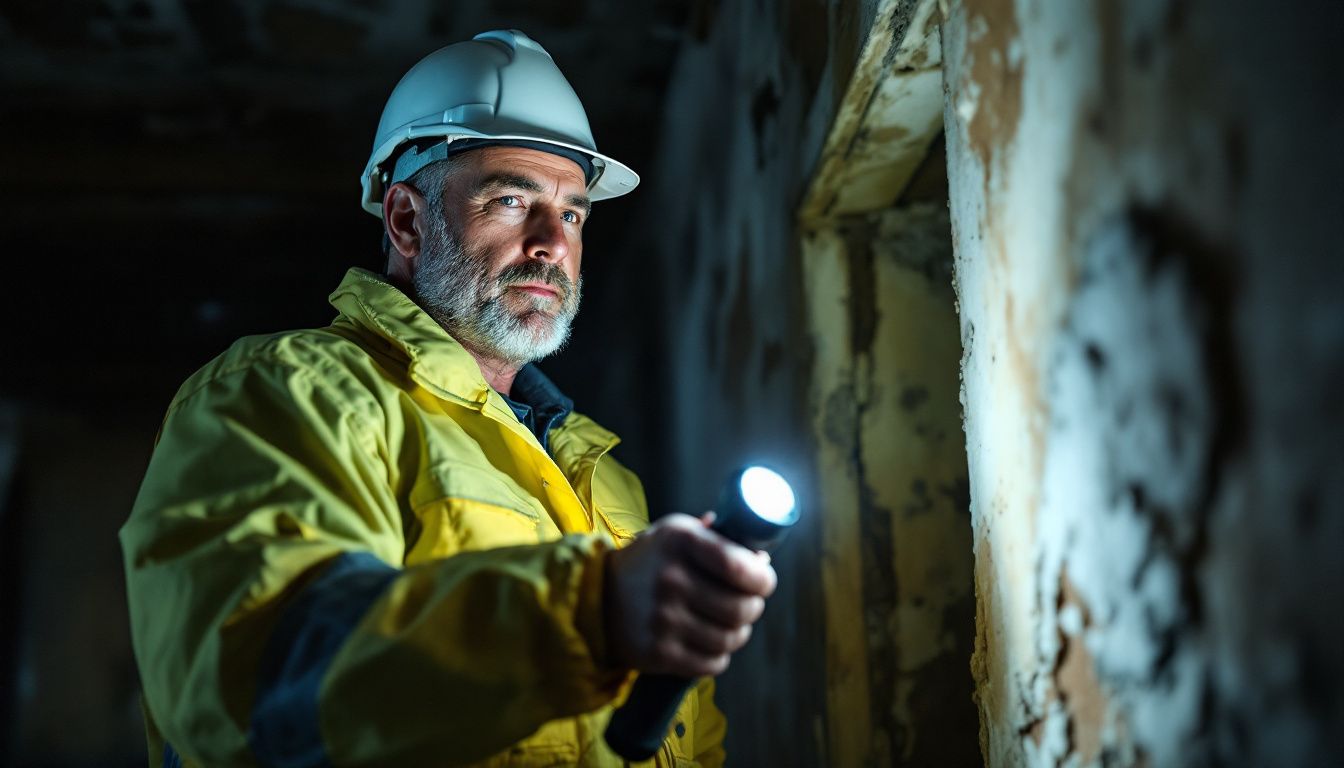
Why Demolition Asbestos Surveys Are Non-Negotiable Before Any Teardown
Demolish a building without a proper asbestos survey and you are not just breaking the law — you are gambling with lives. Asbestos-containing materials were used extensively in UK construction right up until 1999, meaning almost any building erected before 2000 could be harbouring dangerous fibres in its walls, ceilings, floors, and service areas.
Demolition asbestos surveys exist precisely to find those materials before a single wall comes down. This is not a box-ticking exercise. It is a legal obligation under the Control of Asbestos Regulations, and the consequences of skipping it — prosecution, unlimited fines, and potentially fatal exposure for workers and the public — are severe.
What Is a Demolition Asbestos Survey?
A demolition asbestos survey is a fully intrusive inspection of a building carried out before demolition work begins. Unlike a routine management survey, which checks accessible areas and monitors known asbestos in place, a demolition survey leaves nowhere unchecked.
Surveyors will break into walls, lift floors, open ceiling voids, and access every concealed space to locate all asbestos-containing materials (ACMs). The goal is a complete picture — not a partial one — because once demolition starts, any missed asbestos becomes an uncontrolled release of fibres into the air.
How It Differs from a Refurbishment Survey
A refurbishment survey is also intrusive and required before structural or renovation work, but its scope is typically limited to the areas being worked on. A demolition survey must cover the entire structure — every room, void, plant room, and external element — because the whole building is being removed.
Both survey types fall under the same regulatory framework, but the demolition variant demands a higher level of thoroughness. There is no acceptable margin for error when a building is being taken apart completely.
The Legal Framework You Must Understand
The Control of Asbestos Regulations places clear duties on building owners, employers, and contractors. Before any demolition work can legally proceed on a pre-2000 building, an asbestos survey must be completed by a competent surveyor. This is not optional guidance — it is a statutory requirement.
The HSE’s guidance document HSG264 sets out exactly how surveys should be planned, conducted, and reported. It defines the standards for sampling, analysis, and documentation that every credible surveyor must follow.
The 14-Day Notification Rule
Once the survey identifies materials that require licensed removal — which is common in demolition projects — the contractor carrying out that removal must notify the HSE at least 14 days before work begins. This is a legal requirement, not a courtesy. Failure to notify is a criminal offence.
Project managers must build this notification window into their programme from the outset. Discovering licensable asbestos late and scrambling to meet the 14-day rule is a preventable problem — one that causes costly delays and potential regulatory scrutiny.
Duty to Manage and the Building Owner’s Responsibilities
Under the Control of Asbestos Regulations, the duty to manage asbestos falls on whoever controls the building. For a demolition project, this typically means the building owner or the principal contractor. That duty includes commissioning the survey, acting on its findings, and ensuring all ACMs are properly managed or removed before demolition proceeds.
Ignoring this duty does not just carry legal risk — it creates a moral one. Asbestos-related diseases including mesothelioma and asbestosis develop years or even decades after exposure. The harm caused by a poorly managed demolition may not be visible for a generation.
Planning Your Demolition Asbestos Survey: What to Get Right
A demolition asbestos survey does not happen overnight. Proper planning is essential to avoid delays, ensure thoroughness, and keep the project on track.
Allow Enough Time in Your Programme
The survey itself may take anywhere from a few hours to several days depending on the size and complexity of the building. Add to that the time required for laboratory sample analysis — typically a few working days for standard turnaround — and you can see why leaving this to the last minute is a mistake.
Then factor in the 14-day HSE notification period for licensed removal work, plus the removal programme itself. A realistic demolition timeline accounts for all of this before the first structural element is touched.
Choosing the Right Surveying Company
Not every asbestos surveyor is qualified to carry out a demolition survey. You need a company with demonstrable experience in fully intrusive surveys, BOHS P402-qualified surveyors, and access to a UKAS-accredited laboratory for sample analysis.
Check for membership of relevant professional bodies and ask for references from comparable demolition projects. A credible surveyor will have no hesitation providing these. Be wary of unusually low quotes — thoroughness costs time, and cutting corners on a demolition survey creates serious downstream risk.
Supernova Asbestos Surveys provides demolition survey services nationwide, with BOHS-qualified surveyors and UKAS-accredited laboratory analysis as standard.
How a Demolition Asbestos Survey Is Carried Out
Understanding the process helps you prepare your site and set realistic expectations for your project team.
Stage One: Pre-Survey Information Gathering
Before setting foot on site, a competent surveyor will review all available information about the building. This includes original construction drawings, any existing asbestos registers or previous survey reports, planning records, and details of any past refurbishment work.
This desk-based stage shapes the survey strategy. It helps the surveyor identify likely locations for ACMs based on the building’s age, construction type, and use history — making the physical inspection more targeted and efficient.
Stage Two: The Physical Inspection
This is where demolition asbestos surveys differ most sharply from management surveys. The surveyor will carry out a fully intrusive inspection, which means deliberately breaking into the building fabric to access concealed areas. Walls are opened, floors are lifted, ceiling voids are entered, and ductwork is examined.
Every part of the building is assessed — not just the obvious suspects like ceiling tiles and pipe lagging, but also less obvious locations such as:
- Textured coatings on walls and ceilings (artex-type finishes)
- Floor tiles and the adhesive beneath them
- Rope seals around boiler doors and fire doors
- Insulating board used in partition walls and ceiling panels
- Sprayed coatings on structural steelwork
- Roofing felt, gutters, and external cement products
- Service ducts, plant rooms, and lift shafts
The surveyor marks each sampled location on a detailed site plan, creating a spatial record that forms part of the final report.
Stage Three: Sampling and Laboratory Analysis
Wherever a material is suspected of containing asbestos, a sample is taken. Samples are carefully removed to minimise fibre release, placed in sealed containers, and labelled with precise location references before being sent to a UKAS-accredited laboratory.
The laboratory identifies whether asbestos is present and, if so, which type — chrysotile (white), amosite (brown), or crocidolite (blue). Each type carries a different risk profile, and the type present will influence the removal specification and the level of licensing required.
Stage Four: The Survey Report and Asbestos Register
The completed report is the cornerstone document for your demolition project. It must include:
- A full schedule of all ACMs identified, with location, extent, and condition
- Photographs of each identified material in situ
- A site plan marking all ACM locations
- Laboratory analysis certificates for all samples taken
- A risk assessment for each ACM
- Recommendations for removal or management prior to demolition
This report becomes the asbestos register for the demolition project. It must be passed to the principal contractor, all subcontractors working on site, and the asbestos removal contractor. Under HSG264 guidance, it should be available on site throughout the demolition programme.
Asbestos Removal Before Demolition
Finding asbestos is only the first step. Once identified, ACMs must be removed before demolition work can begin — or in some cases, managed in a controlled way during a phased demolition. The survey report will guide this decision.
Licensed asbestos removal is required for the most hazardous materials, including sprayed coatings, pipe lagging, and asbestos insulating board. Notifiable non-licensed work (NNLW) applies to materials such as textured coatings and some floor tiles. The distinction matters — it affects who can carry out the work, what controls are required, and what records must be kept.
Supernova’s asbestos removal service works alongside our survey teams to provide a seamless pathway from identification through to safe removal and clearance — so you are not managing multiple contractors and handoffs.
Clearance Certificates After Removal
Once removal work is complete, a four-stage clearance procedure is required for licensed work. This culminates in air testing to confirm that fibre concentrations are below the clearance level, followed by the issue of a reoccupation certificate.
Only once this certificate is issued can demolition work proceed in that area. This certificate is not just good practice — it is the documented proof that the area has been properly cleared. Keep it with your project records.
Safety During the Survey: Protecting Workers and the Public
A demolition asbestos survey is itself a potentially high-risk activity. Surveyors are breaking into building fabric that may contain disturbed or deteriorating asbestos, and strict controls must be in place throughout.
Personal Protective Equipment Requirements
Surveyors must wear appropriate PPE at all times during intrusive survey work. This includes:
- Full-face respirators fitted with P3 filters
- Type 5/6 disposable coveralls
- Nitrile gloves
- Disposable boot covers
PPE must be correctly fitted, checked before each use, and disposed of safely after work in contaminated areas. A respirator that does not fit properly offers no meaningful protection.
Air Monitoring and Controlled Work Areas
Where intrusive work creates a risk of fibre release, air monitoring should be carried out to confirm that levels remain within safe limits. The survey area should be clearly segregated from other parts of the building, and access restricted to authorised personnel only.
Members of the public, other trades, and site visitors must not enter the survey area during intrusive work. Clear signage must be posted and enforced.
Common Mistakes That Delay Demolition Projects
Based on experience across thousands of demolition projects, these are the errors that consistently cause delays and cost overruns:
- Commissioning the survey too late. The survey, lab analysis, removal work, and HSE notification all take time. Build it into your programme from day one.
- Using a management survey instead of a demolition survey. A management survey will not access concealed voids and will miss materials that only a fully intrusive survey would find. It is not an acceptable substitute.
- Choosing a surveyor on price alone. An incomplete survey creates far greater cost and risk than a thorough one. The cheapest quote is rarely the safest choice.
- Failing to share the survey report with all contractors. Every party working on the demolition must have access to the asbestos register. Gaps in communication lead to uncontrolled exposures.
- Not allowing for phased removal. In complex buildings, asbestos removal may need to be sequenced around the demolition programme. Plan for this early, not after contracts are signed.
- Overlooking external materials. Asbestos cement roofing, guttering, and cladding are easily missed when attention is focused on the interior. A competent demolition survey covers the whole structure, inside and out.
Demolition Asbestos Surveys Across the UK
Supernova Asbestos Surveys operates nationwide. Whether you need an asbestos survey London for a commercial demolition in the capital, an asbestos survey Manchester for an industrial site clearance, or an asbestos survey Birmingham for a mixed-use redevelopment, our teams are experienced in the full range of demolition project types.
With over 50,000 surveys completed, we understand the pressures of demolition programmes — tight timescales, complex buildings, and the need for clear, actionable reports that keep projects moving.
What Happens If Asbestos Is Discovered During Demolition?
Even with a thorough pre-demolition survey, unexpected ACMs can occasionally be uncovered once demolition is underway. When this happens, work in the affected area must stop immediately.
The area should be cordoned off, the principal contractor notified, and a specialist called to assess the material. Do not attempt to remove or disturb it without proper assessment and controls in place. Resuming work without addressing the find is a criminal offence under the Control of Asbestos Regulations.
This scenario underlines why a thorough demolition asbestos survey before work begins is so valuable. The more complete the pre-demolition picture, the less likely unexpected finds become — and the better prepared the project team is to respond if they do occur.
Frequently Asked Questions
Do I need a demolition asbestos survey for a building built after 1999?
Buildings constructed entirely after 1999 are unlikely to contain asbestos, as the importation and use of all asbestos types was banned in the UK from that point. However, if there is any uncertainty about the build date, or if the building was refurbished using older materials, a survey is still advisable. When in doubt, commission a survey — the cost is negligible compared to the risk of getting it wrong.
How long does a demolition asbestos survey take?
The duration depends on the size, age, and complexity of the building. A small commercial unit might be surveyed in a single day, while a large industrial complex or multi-storey building could take several days. Laboratory analysis of samples typically adds a few working days on top of the physical inspection. Your surveyor should be able to give you a realistic timeframe at the quotation stage.
Who is legally responsible for commissioning a demolition asbestos survey?
Under the Control of Asbestos Regulations, the duty holder — typically the building owner or the person in control of the premises — is responsible for ensuring a survey is carried out before demolition proceeds. In practice, this responsibility is often passed to the principal contractor through the contract, but the underlying legal duty remains with the duty holder. Both parties should ensure the obligation is clearly assigned and met.
Can the same company carry out the survey and the asbestos removal?
Yes, and in many cases this is the most efficient approach. Using a company that provides both survey and removal services — as Supernova does — removes the risk of miscommunication between separate contractors and streamlines the overall programme. The key requirement is that the surveyor is genuinely qualified and independent in their assessment, not simply producing a report to generate removal work.
What is the difference between licensed and non-licensed asbestos removal?
Licensed removal is required for the most hazardous ACMs — including asbestos insulating board, sprayed coatings, and pipe lagging — and must be carried out by a contractor holding a licence issued by the HSE. Non-licensed work covers lower-risk materials and can be carried out without a licence, though notifiable non-licensed work (NNLW) still requires notification to the relevant enforcing authority and strict controls. Your survey report will specify which category applies to each material identified.
Get Your Demolition Asbestos Survey Booked Today
Supernova Asbestos Surveys has completed over 50,000 surveys across the UK. Our BOHS-qualified surveyors, UKAS-accredited laboratory analysis, and nationwide coverage make us the trusted choice for demolition projects of every scale — from single commercial units to large industrial clearances.
Do not let asbestos hold up your demolition programme. Call us today on 020 4586 0680 or visit asbestos-surveys.org.uk to request a quote or speak to one of our surveyors directly.