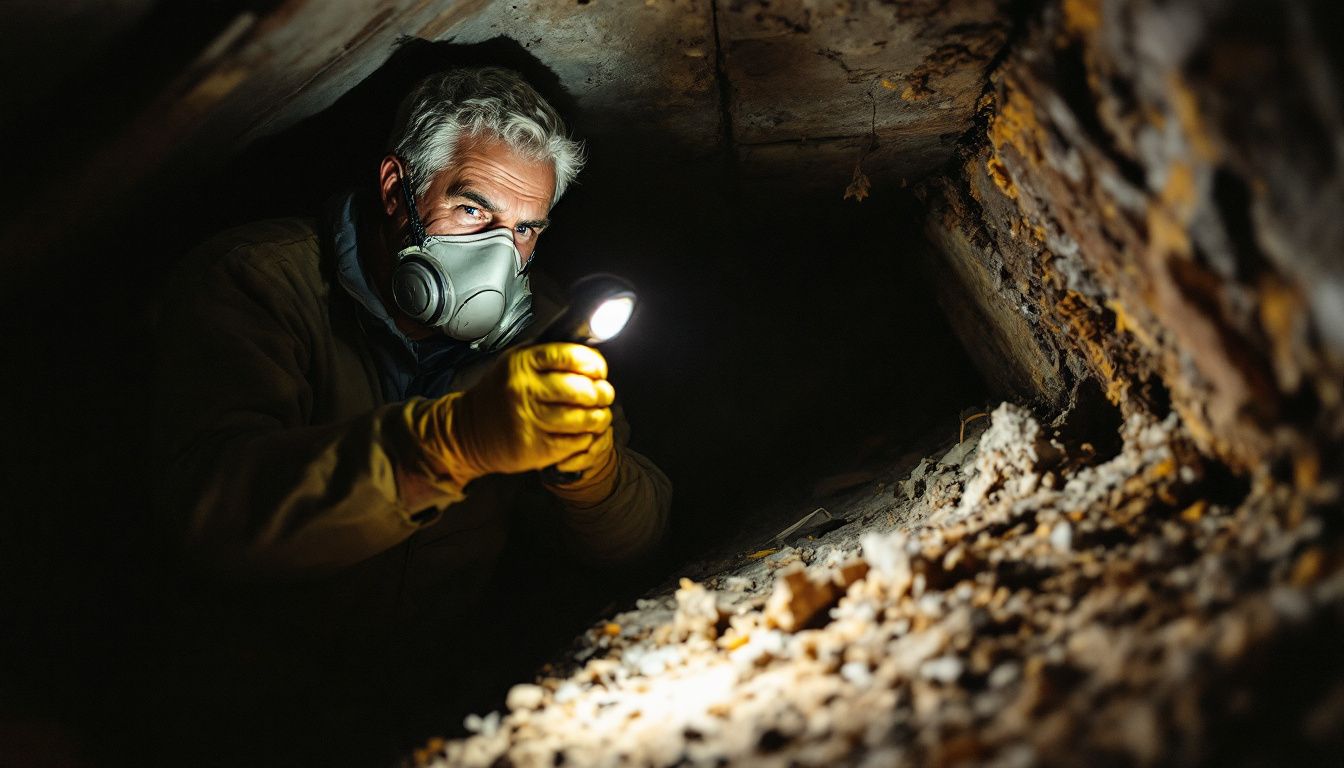
What Every Estate Agent Needs to Know About Asbestos-Free Property Listings
Asbestos is still present in millions of UK properties, and estate agents are increasingly on the front line when it comes to handling it correctly. Whether you’re listing a Victorian terrace or a 1980s commercial unit, knowing how to create asbestos-free property listings is no longer optional — it’s a professional and legal necessity.
Get it wrong, and you risk legal action, reputational damage, and — most critically — putting buyers, sellers, and occupants in harm’s way. Get it right, and you build the kind of trust that keeps clients coming back.
Why Asbestos Matters in Property Listings
Asbestos was widely used in UK construction until its full ban in 1999. Any building constructed or refurbished before that date could contain asbestos-containing materials (ACMs) — and that covers an enormous proportion of the UK’s housing and commercial property stock.
When ACMs are left undisturbed, they’re often manageable. The danger arises when fibres become airborne — during renovation, demolition, or even routine maintenance — and are inhaled. Diseases linked to asbestos exposure include mesothelioma, asbestosis, and lung cancer, all of which can take decades to develop after initial exposure.
For estate agents, this creates a clear responsibility: properties must be assessed, disclosed accurately, and marketed honestly. Failing to do so isn’t just bad practice — it can expose you to serious legal consequences.
How to Identify Asbestos in a Property Before Listing
You cannot identify asbestos by looking at it. It was mixed into hundreds of different building materials, and there is no visual test that reliably confirms its presence. That’s why professional assessment is essential before any property is listed.
Common Locations Where Asbestos Hides
In pre-2000 properties, ACMs can appear almost anywhere. The most frequently encountered locations include:
- Textured coatings such as Artex on ceilings and walls
- Vinyl floor tiles and the adhesive used to fix them
- Roof sheets, soffits, and fascias made from asbestos cement
- Pipe lagging and boiler insulation
- Ceiling tiles and partition boards
- Loose-fill insulation in roof spaces
- Duct insulation in older HVAC systems
- Garage roofs and outbuildings
Many of these materials look entirely ordinary. A ceiling that appears to be standard plaster may contain chrysotile fibres. A garage roof that looks like plain concrete sheeting may be asbestos cement. Without testing, you simply cannot know.
The Role of Professional Asbestos Surveys
For any property built before 2000, commissioning a professional survey before listing is the most responsible course of action. An management survey is the standard starting point — it identifies the location, type, and condition of any ACMs present and assesses the risk they pose.
The survey is carried out by a qualified asbestos surveyor who takes physical samples for laboratory analysis. Results are provided in a detailed report that can be shared with prospective buyers, solicitors, and managing agents.
If the property is due for significant renovation or partial demolition, a demolition survey is required instead. This is a more intrusive inspection that must be completed before any structural work begins.
UK Legal Requirements Estate Agents Must Understand
Estate agents operating in the UK need to understand the legal framework surrounding asbestos — not just to protect clients, but to protect themselves.
The Control of Asbestos Regulations
The Control of Asbestos Regulations set out the duty to manage asbestos in non-domestic premises. Under these regulations, the duty holder — typically the owner or person responsible for maintaining the building — must identify whether ACMs are present, assess their condition, and put a management plan in place.
For commercial properties being sold or let, this duty is directly relevant. Estate agents handling commercial listings should ensure their clients have fulfilled this obligation before the property goes to market.
HSE guidance, including HSG264, provides detailed information on how surveys should be conducted and what standards surveyors must meet. Recommending that your clients follow this guidance is part of acting responsibly as an agent.
Disclosure Obligations for Residential Property
For residential sales, the legal position is equally clear. Sellers — and by extension, their agents — are required to disclose material facts about a property. Known asbestos is a material fact. Failing to disclose it can lead to claims of misrepresentation and, in serious cases, legal action against both the seller and the agent.
Consumer protection legislation reinforces this. Misleading buyers about the condition of a property — whether through omission or inaccuracy — is not a grey area. If asbestos is known to be present, it must be declared.
The practical takeaway: if you’re listing a pre-2000 property and no asbestos survey has been carried out, you should strongly advise your client to commission one before exchange of contracts.
How to Create Asbestos-Free Property Listings: A Step-by-Step Approach
Creating accurate, legally compliant property listings when asbestos is involved requires a clear process. Here’s how to approach it systematically.
Step 1: Establish the Age and History of the Property
Any property built or refurbished before 2000 should be treated as potentially containing asbestos until proven otherwise. Ask your client about the building’s history, any previous surveys, and any works carried out in recent years.
Step 2: Commission or Request a Survey
If no survey exists, advise your client to commission one before listing. If a survey has already been carried out, obtain a copy and review the findings carefully. A current, professionally produced survey report is a significant asset in any property transaction.
For clients who want a preliminary check before committing to a full survey, professional asbestos testing of specific materials can provide useful initial information. Samples are sent to an accredited laboratory for analysis, giving a clear answer on whether a particular material contains asbestos.
Step 3: Understand the Report Findings
Survey reports categorise ACMs by risk level — typically using a scoring system that accounts for material type, condition, and likelihood of disturbance. Materials rated as high risk require action before the property is listed or sold. Lower-risk materials may be managed in situ with appropriate documentation.
Step 4: Ensure Accurate Disclosure
All known ACMs must be disclosed to prospective buyers. This should be documented clearly in the property information pack and communicated to solicitors on both sides. Do not rely on verbal disclosure alone — everything should be in writing.
Step 5: Highlight Remediation Work in the Listing
If asbestos has been professionally removed or encapsulated, make this a selling point. Include reference to the clearance certificate or management plan in the listing details. Buyers and their solicitors will be reassured by evidence that the issue has been properly addressed.
Step 6: Price the Property Realistically
Properties with unresolved asbestos issues may require price adjustments to reflect the cost of remediation. Be transparent with your client about this from the outset. A realistic asking price, combined with full disclosure and supporting documentation, will attract more credible buyers than an inflated price that collapses at survey stage.
Managing Asbestos Before a Property Goes to Market
Once a survey has confirmed the presence of ACMs, there are two main approaches: removal or management in situ. The right choice depends on the condition of the material, its location, and the intended use of the property.
Professional Asbestos Removal
Where ACMs are damaged, deteriorating, or in areas that will be disturbed during planned works, asbestos removal is often the most appropriate solution. Removal must be carried out by a licensed contractor — unlicensed removal of certain ACM types is illegal under UK regulations.
The process involves isolating the work area, using specialist equipment to contain fibres, and disposing of all asbestos waste at a licensed facility. Air testing is conducted after removal to confirm the area is safe before re-occupation.
Once removal is complete, the contractor issues a clearance certificate. This document is invaluable when selling a property — it gives buyers clear, documented evidence that the issue has been professionally resolved.
Encapsulation and Managed Asbestos
Where ACMs are in good condition and not at risk of disturbance, encapsulation or management in situ may be appropriate. This involves applying specialist sealants to prevent fibre release, combined with a formal asbestos management plan and regular condition monitoring.
This approach is often more cost-effective than full removal, but it comes with ongoing responsibilities. The property owner must maintain records, arrange periodic inspections, and ensure that anyone carrying out work on the building is made aware of the ACMs’ location.
A well-documented management plan can actually support a sale — it demonstrates that the issue has been identified, assessed, and is being handled responsibly. Buyers and their solicitors respond far more positively to organised documentation than to silence on the matter.
Using an Asbestos Testing Kit
In situations where a client wants a quick preliminary check on a specific material, a professional-grade asbestos testing kit can provide useful initial information. Samples are collected and sent to an accredited laboratory for analysis.
However, a testing kit is not a substitute for a full management survey. It can confirm whether a specific material contains asbestos, but it cannot assess the extent, condition, or risk level across an entire property. Always recommend a full survey for any property being prepared for sale.
Selling Strategies for Properties Where Asbestos Has Been Identified
Asbestos doesn’t have to derail a sale. With the right approach, it can be managed effectively and the property marketed with confidence.
Lead With Transparency
Buyers and their solicitors will carry out due diligence. If asbestos is present and you haven’t disclosed it, it will come out — and when it does, it will damage trust, delay the transaction, and potentially expose you to legal liability. Upfront disclosure, supported by documentation, is always the better strategy.
Use Documentation as a Marketing Tool
A thorough asbestos survey report, clearance certificate, or management plan tells buyers that the seller has taken the issue seriously. Frame this positively in your listing narrative. A property with a clean asbestos clearance certificate is genuinely more valuable than one with no survey at all — because at least buyers know exactly what they’re getting.
Negotiate With the Facts
Where ACMs remain and require remediation, build this into the negotiation process from the start. Whether that’s a price reduction, a contribution to removal costs, or an agreement for works to be completed before completion, having a clear plan keeps the transaction moving and gives all parties confidence.
Regional Coverage: Getting Surveys Arranged Quickly
For estate agents working across major cities, speed matters. Delays in obtaining survey reports can stall transactions and frustrate buyers. Working with a surveying provider that offers rapid turnaround and nationwide coverage is essential.
If you’re managing listings in the capital, our asbestos survey London team can be on site quickly and provide detailed reports that meet all regulatory requirements. For agents handling properties across the North West, our asbestos survey Manchester specialists offer the same fast, accredited service.
Wherever your portfolio is located, having a reliable survey partner means you can move listings forward with confidence rather than waiting on reports that hold up the chain.
What to Look for in an Asbestos Survey Provider
Not all asbestos surveyors are equal. When recommending a provider to your clients — or selecting one for your agency to work with — there are several key criteria to check.
- UKAS accreditation: The surveying company should hold accreditation from the United Kingdom Accreditation Service, confirming they meet the required technical standards.
- Qualified surveyors: Individual surveyors should hold the P402 qualification as a minimum for building surveys.
- Laboratory analysis: Samples should be analysed by a UKAS-accredited laboratory, not an in-house facility with no independent oversight.
- Clear reporting: Reports should be easy to read and include risk ratings, photographic evidence, and clear recommendations.
- Turnaround times: For property transactions, fast report turnaround is essential. Confirm expected timelines before instructing.
- Insurance: Ensure the provider carries adequate professional indemnity and public liability insurance.
Recommending a reputable, accredited surveyor to your clients also protects your own professional reputation. If a survey later proves to have been inadequate, you don’t want your name associated with it.
Building Asbestos Compliance Into Your Agency’s Standard Process
The most effective estate agents don’t treat asbestos as an occasional problem — they build it into their standard onboarding process for every pre-2000 property. This means asking the right questions at the initial valuation, having a clear referral pathway to a trusted surveying partner, and ensuring your team knows how to handle and communicate survey findings.
Training your staff to recognise the situations that require a survey — and to explain the reasons clearly to clients — is an investment that pays off in smoother transactions and stronger client relationships. It also reduces the risk of compliance failures that could expose your agency to legal challenge.
Consider developing a simple internal checklist that covers:
- Property age confirmed at instruction stage
- Previous asbestos survey requested from client
- Survey commissioned if none exists (for pre-2000 properties)
- Survey findings reviewed and risk-rated materials noted
- Disclosure documented in property information pack
- Remediation works (if any) evidenced with clearance certificates
- Listing narrative reflects asbestos status accurately
A simple process like this, applied consistently, protects your clients, protects your agency, and keeps transactions moving without nasty surprises at survey stage.
For agents who want to go further, commissioning an asbestos testing service on specific suspect materials during the listing preparation phase can provide additional clarity before a full survey is instructed — particularly useful where budget or timeline constraints are a factor.
Supernova Asbestos Surveys: Supporting Estate Agents Across the UK
Supernova Asbestos Surveys works with estate agents, property managers, and building owners across the country to provide fast, accurate, and professionally accredited asbestos surveys. With over 50,000 surveys completed nationwide, we understand the pressures of property transactions and provide the documentation you need to keep sales on track.
We cover the full range of survey types, testing, and removal coordination — from initial management surveys through to full clearance certification. Our reports are clear, comprehensive, and produced to the standards required by the Control of Asbestos Regulations and HSG264.
Whether you’re a sole agent managing a handful of residential listings or a national agency with a large commercial portfolio, we can provide the support you need. Get in touch today for a free quote and find out how we can support your next property listing.
Call us on 020 4586 0680 or visit asbestos-surveys.org.uk
Frequently Asked Questions
Do I legally have to disclose asbestos when selling a property?
Yes. Known asbestos is considered a material fact under UK property law. Sellers and their agents are required to disclose it to prospective buyers. Failure to do so can result in claims of misrepresentation and potential legal action. If you’re unsure whether asbestos is present, commissioning a professional survey before listing is the safest course of action.
What type of asbestos survey is needed before listing a property for sale?
For most residential and commercial properties being prepared for sale, a management survey is the appropriate starting point. It identifies the location, type, and condition of any ACMs and provides a risk assessment. If significant renovation or demolition is planned, a refurbishment and demolition survey is required instead. A qualified asbestos surveyor will advise which type is appropriate for your specific property.
Can a property with asbestos still be sold?
Absolutely. Many UK properties contain asbestos, and a large number are sold successfully every year. The key is transparency and documentation. Whether the ACMs have been professionally removed (evidenced by a clearance certificate) or are being managed in situ (evidenced by a management plan), buyers and their solicitors respond far more positively to clear documentation than to uncertainty. Asbestos doesn’t have to stop a sale — poor handling of it does.
How long does an asbestos survey take?
The physical inspection for a standard management survey on a typical residential property usually takes between one and three hours, depending on the size and complexity of the building. Laboratory analysis of samples typically takes a few working days. The full report is usually delivered within five to ten working days of the survey, though many providers offer expedited turnaround for time-sensitive transactions.
What is the difference between asbestos removal and encapsulation?
Asbestos removal involves physically extracting the ACMs from the building by a licensed contractor, followed by air testing and a clearance certificate confirming the area is safe. Encapsulation involves applying specialist sealants to stable, undamaged ACMs to prevent fibre release, combined with a management plan and regular monitoring. Removal provides a permanent solution; encapsulation is appropriate where materials are in good condition and unlikely to be disturbed. A qualified surveyor can advise which approach is most suitable for a given property.