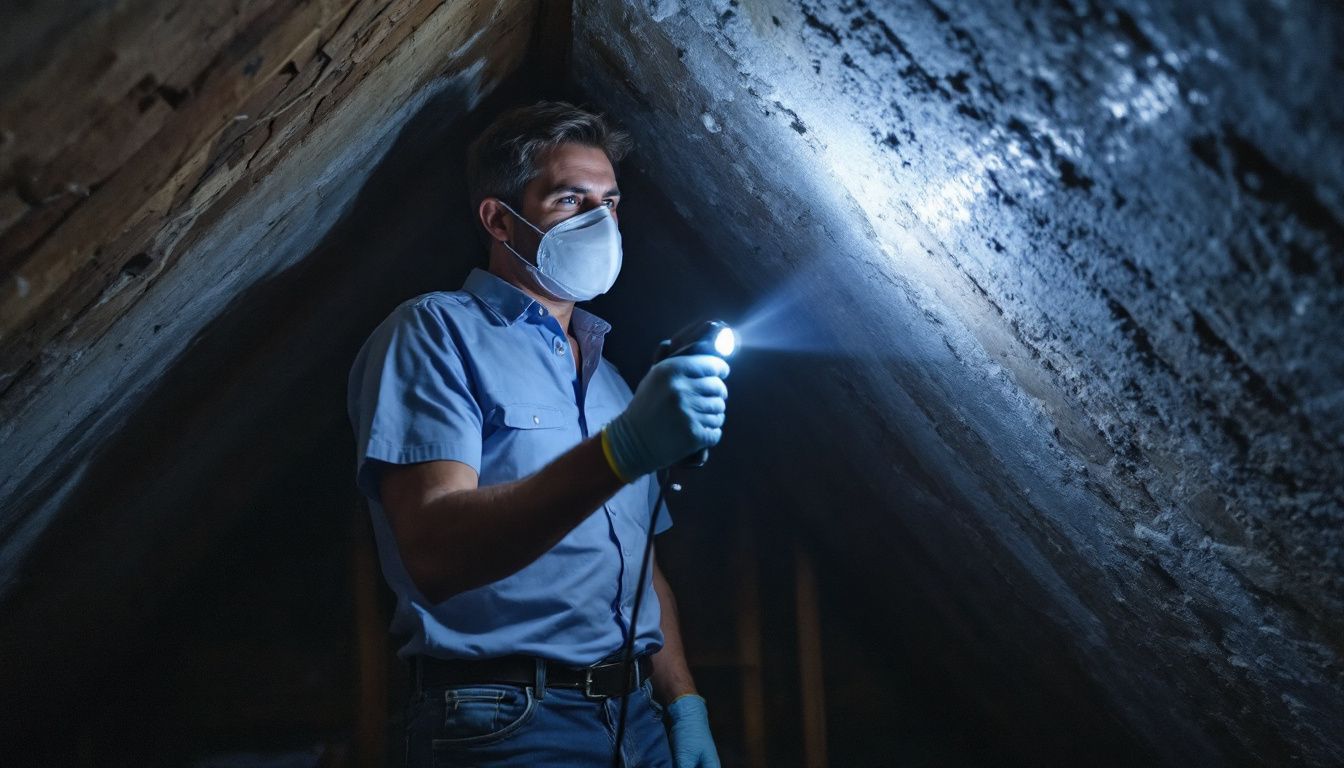
What Every Flat Owner and Landlord Needs to Know About an Asbestos Report for Flats
If your block of flats was built before 2000, asbestos-containing materials (ACMs) are very likely present somewhere in the building. Whether you are a leaseholder, freeholder, managing agent, or landlord, obtaining an accurate asbestos report for flats is not just good practice — in many cases, it is a legal requirement. This post walks you through why these reports matter, what they must contain, who carries the legal responsibility, and how to act on the findings once you have them.
Why Flats Present Unique Asbestos Challenges
Residential blocks are fundamentally different from a single house or a commercial office. They have shared spaces, communal plant rooms, stairwells, and roof voids — all of which may contain asbestos — alongside individually owned or tenanted flats. This layered ownership structure creates real complexity around who is responsible for what.
In a purpose-built block, asbestos was commonly used in:
- Ceiling tiles and artex coatings in communal corridors
- Pipe lagging around boilers and heating systems
- Floor tiles and the adhesive beneath them
- Textured coatings on internal flat ceilings
- Fire doors and door surrounds
- Roof and external cladding materials
- Electrical meter cupboards and service risers
Because residents and maintenance workers move through these areas regularly, disturbed asbestos poses a genuine health risk. An asbestos report for flats identifies exactly where these materials are, what condition they are in, and what action — if any — is needed.
Who Is Legally Responsible for Asbestos in a Block of Flats?
Under the Control of Asbestos Regulations, the duty to manage asbestos falls on the “dutyholder” — typically the person or organisation responsible for maintaining the non-domestic parts of a building. In a block of flats, this is almost always the freeholder, the managing agent, or the residents’ management company.
Individual flat owners are generally not responsible for communal areas, but they do have a duty of care for any ACMs within their own demise — particularly if they plan to carry out renovation work.
Key legal obligations for dutyholders include:
- Commissioning a suitable and sufficient asbestos survey of all non-domestic areas
- Producing and maintaining an asbestos register
- Creating an asbestos management plan
- Carrying out regular reinspections — typically annually
- Sharing information with anyone who may disturb ACMs, including contractors
Failing to meet these duties can result in enforcement action from the Health and Safety Executive (HSE), significant fines, and — most seriously — harm to residents and workers.
What a Proper Asbestos Report for Flats Must Include
Not all asbestos reports are equal. A report produced for a block of flats needs to cover specific ground to be legally sufficient and practically useful. Here is what you should expect from a quality report.
A Full Asbestos Register
The register lists every location where ACMs have been identified or are presumed to be present. Each entry should include the material type, its condition, an approximate quantity, and its exact location within the building. This becomes the living document that is updated at every reinspection.
Risk Assessment for Each ACM
Every identified material must be assigned a risk score based on its condition, accessibility, and the likelihood of it being disturbed. A risk score is typically expressed as high, medium, or low. Materials in good condition in undisturbed locations may simply require monitoring; damaged or friable materials in high-traffic areas require urgent action.
Photographic Evidence
A credible report includes photographs of every sampled or presumed ACM, clearly cross-referenced to the building plan. This removes ambiguity and makes it far easier for contractors and future surveyors to locate materials accurately.
Laboratory Analysis Results
Where physical samples are taken, the report must include results from a UKAS-accredited laboratory. The lab results confirm the fibre type — chrysotile, amosite, crocidolite, or other — which directly influences the risk rating and the management approach.
An Asbestos Management Plan
The report should conclude with a clear management plan: what actions are required, in what order of priority, and by whom. This plan is not a one-off document — it needs to be reviewed and updated regularly, particularly after any building work or following a reinspection.
Types of Asbestos Survey Relevant to Flats
The type of survey you need depends on what is happening with the building. HSE guidance document HSG264 defines two main survey types, and understanding the difference is essential before commissioning any work.
Management Survey
This is the standard survey for buildings in normal occupation. A management survey is designed to locate ACMs that could be disturbed during everyday use and routine maintenance. For most blocks of flats, this survey of the communal areas is the starting point — and the minimum legal requirement for dutyholders.
The surveyor will inspect all accessible areas, take samples where needed, and produce a full register and risk assessment. It is non-intrusive, meaning walls and structures are not broken open unless there is clear reason to do so.
Refurbishment and Demolition Survey
If you are planning significant works — a loft conversion, rewiring, replumbing, or a full refurbishment of a flat or communal area — a demolition survey is required before work begins. This is a more intrusive process that involves opening up structures to locate all ACMs that could be disturbed during the planned works.
Never allow contractors to begin refurbishment work on a pre-2000 building without this survey in place. The consequences of disturbing unknown asbestos can be severe for both health and legal liability.
The Survey Process: What to Expect
Understanding what happens during a survey helps you prepare the building and communicate clearly with residents. Here is a typical process for a management survey of a residential block.
- Pre-survey planning: The surveyor reviews available building drawings, construction dates, and any previous asbestos records.
- Site inspection: Every communal area is inspected systematically — plant rooms, roof spaces, stairwells, corridors, bin stores, and service cupboards.
- Sampling: Where materials are suspected to contain asbestos, small samples are taken and sealed for laboratory analysis. The surveyor photographs and records each sample location.
- Presumed ACMs: Where sampling is not possible or practical, materials may be presumed to contain asbestos and treated accordingly — a precautionary approach in line with HSE guidance.
- Laboratory analysis: Samples are sent to a UKAS-accredited lab, typically with results returned within 24–48 hours.
- Report production: The surveyor compiles the full report, including the register, risk assessments, photographs, floor plans, and management plan.
At Supernova Asbestos Surveys, reports are typically delivered within 24 hours of the survey being completed. Speed matters — especially when contractors are waiting to start work.
Asbestos Reports When Selling or Letting a Flat
Asbestos reports are increasingly relevant in property transactions. Buyers’ solicitors routinely request evidence of asbestos management in blocks of flats, and managing agents are expected to have an up-to-date register available.
If you are selling a leasehold flat, the freeholder or managing agent should be able to provide the current asbestos register for the communal areas. If no survey has ever been carried out, this can delay or complicate a sale significantly.
For landlords letting individual flats, the position is more nuanced. There is no specific legal requirement to provide an asbestos report to a residential tenant in the same way as an EPC or gas safety certificate. However, if you are aware of ACMs in the property and fail to disclose or manage them, you could face significant liability — particularly if a tenant or contractor is later exposed.
The practical advice is straightforward: if the flat was built before 2000 and you have not had a survey done, commission one before letting or selling.
Reinspections and Keeping Your Asbestos Register Up to Date
An asbestos report for flats is not a document you file away and forget. The management plan must be reviewed regularly, and ACMs in anything other than good condition should be reinspected at least annually.
Triggers for an updated survey or reinspection include:
- Any building work or maintenance in areas where ACMs are recorded
- Damage to known ACMs — for example, a damaged ceiling tile or disturbed pipe lagging
- Change of dutyholder, managing agent, or ownership
- The passage of time — even stable materials can deteriorate
- Planned refurbishment or demolition works
Keeping the register current is not bureaucracy for its own sake. It protects residents, protects workers, and protects you from legal liability.
Choosing the Right Asbestos Surveyor for Your Block
The quality of an asbestos report is only as good as the surveyor who produces it. When selecting a surveyor for a residential block, look for the following:
- UKAS accreditation: The surveying company should hold UKAS accreditation to ISO 17020, confirming they operate to recognised inspection standards.
- Qualified surveyors: Individual surveyors should hold the P402 qualification as a minimum — this is the recognised industry standard for asbestos surveying.
- Experience with residential blocks: Flats have specific complexities. Choose a company that regularly surveys multi-occupancy residential buildings, not just commercial premises.
- Clear reporting: Ask to see a sample report. It should be readable, well-structured, and actionable — not just a list of codes and numbers.
- Turnaround time: If you need a report quickly, confirm the surveyor can deliver within your required timeframe.
Supernova Asbestos Surveys operates nationwide, with local surveyors available across the country. Whether you need an asbestos survey London, an asbestos survey Manchester, or an asbestos survey Birmingham, we can typically arrange a survey within 24–48 hours.
What Happens After the Report: Acting on the Findings
Receiving an asbestos report is the beginning of a process, not the end of one. Here is how to respond to the findings effectively.
High-Risk Materials
ACMs rated as high risk — typically friable, damaged, or in areas of high footfall — require prompt action. This usually means engaging a licensed contractor to either encapsulate or carry out asbestos removal. Removal of certain types of asbestos, including most forms of sprayed coatings and pipe lagging, must be carried out by an HSE-licensed contractor.
Medium-Risk Materials
These may require remedial work or increased monitoring frequency. The management plan should specify the review interval and any conditions that would trigger escalation to high risk.
Low-Risk Materials
Materials in good condition with low disturbance potential can often be managed in place. The key is to record them clearly in the register, ensure contractors are made aware before any work begins, and reinspect at the scheduled interval.
Communicating with Residents and Contractors
Dutyholders have a legal obligation to share asbestos information with anyone who may disturb ACMs. This includes maintenance contractors, electricians, plumbers, and decorators.
A simple, practical step is to keep a copy of the asbestos register accessible to the building manager and to include a note in contractor briefings that an asbestos register exists and must be consulted before any work begins. Contractors who are not informed — and who then disturb ACMs — can expose residents and themselves to serious harm, and the liability can fall squarely on the dutyholder who failed to share the information.
It is also worth considering how you communicate with residents themselves. While there is no legal requirement to share the full register with every tenant, a brief, factual communication explaining that an asbestos survey has been carried out and that materials are being managed safely can go a long way towards maintaining trust and avoiding unnecessary alarm.
Common Mistakes to Avoid
Having reviewed asbestos management across thousands of residential blocks, the same avoidable errors come up repeatedly. These are the ones that cause the most problems.
- Assuming a survey was done at purchase: Many blocks change hands without a current asbestos register in place. Do not assume — verify.
- Using an unaccredited surveyor: A report from a non-UKAS-accredited company may not be legally sufficient and could expose you to liability.
- Filing the report and forgetting it: An asbestos register that is never reviewed or updated provides very limited protection.
- Failing to brief contractors: This is one of the most common causes of accidental asbestos disturbance in residential blocks.
- Confusing survey types: Commissioning a management survey when refurbishment work is planned — rather than a demolition survey — leaves you legally exposed before works even begin.
- Delaying action on high-risk materials: If a material is rated high risk, it requires prompt attention. Deferring action increases both the health risk and your potential liability.
Frequently Asked Questions
Is an asbestos report for flats a legal requirement?
For the non-domestic communal areas of a residential block, yes. Under the Control of Asbestos Regulations, the dutyholder — typically the freeholder or managing agent — is legally required to manage asbestos in those areas. This means commissioning a suitable survey, maintaining an asbestos register, and having a management plan in place. For individual privately occupied flats, the legal position is different, but a survey is strongly advisable before any renovation work on a pre-2000 property.
How often does an asbestos report need to be updated?
The asbestos register should be reviewed at least annually, and ACMs in anything other than good condition should be reinspected on that same schedule. Beyond annual reviews, the register must also be updated following any building work, damage to known ACMs, or a change of dutyholder or managing agent. It is a living document, not a one-off exercise.
What is the difference between a management survey and a demolition survey for a flat?
A management survey is the standard survey for a building in normal use. It identifies ACMs that could be disturbed during routine maintenance and everyday activities. A demolition survey — also called a refurbishment and demolition survey — is required before any significant structural work, such as rewiring, replumbing, or a loft conversion. It is more intrusive and is designed to locate every ACM that could be disturbed during the planned works. HSG264 sets out the requirements for both survey types.
Can I sell a flat if asbestos has been found?
Yes. The presence of asbestos does not prevent a sale. What matters is that the ACMs are identified, properly recorded, and being managed in accordance with the asbestos management plan. Buyers’ solicitors will typically ask for the current asbestos register during conveyancing. Having a well-maintained register in place is far less likely to cause problems than having no survey at all.
Who pays for the asbestos survey in a block of flats?
The cost of surveying communal areas is typically the responsibility of the freeholder or management company, and is usually recovered through the service charge. For works within an individual flat — particularly before refurbishment — the cost falls to the leaseholder or owner carrying out the work. If you are unsure, check your lease and speak to your managing agent or solicitor.
Supernova Asbestos Surveys has completed over 50,000 surveys across the UK, including hundreds of residential blocks. Our UKAS-accredited surveyors hold the P402 qualification and can typically arrange a survey within 24–48 hours, with reports delivered the following day.
To book an asbestos report for your block of flats or to speak with a surveyor about your specific situation, call us on 020 4586 0680 or visit asbestos-surveys.org.uk.