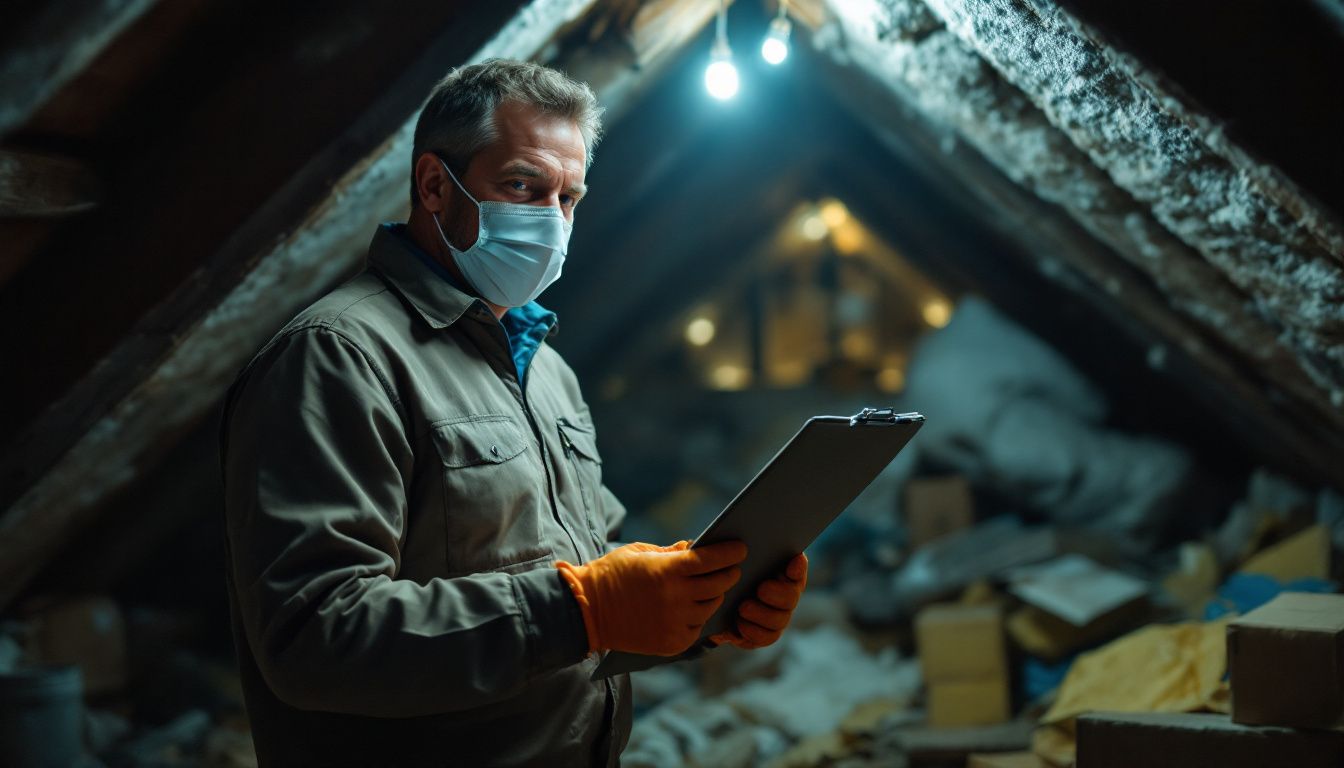
Selling a House with Asbestos: What Every Seller and Agent Needs to Know
Selling a house with asbestos is far more common than most people realise. Around half of all properties built before 2000 contain some form of asbestos-containing material (ACM), yet many sellers — and even some estate agents — are caught off guard when the subject comes up during a sale. Handle it correctly and the process can be entirely straightforward. Ignore it, and you risk derailing the transaction at the worst possible moment.
Below, we cover your legal obligations, how asbestos affects property value, which surveys you need, and how to manage the whole process from listing to completion.
Your Legal Obligations When Selling a House with Asbestos
The UK has strict rules around asbestos disclosure, and they apply whether you are a homeowner selling privately or an estate agent acting on someone else’s behalf. Asbestos use was banned in the UK in 1999, but the material remains in millions of properties built before that date — in everything from floor tiles and textured coatings to pipe lagging and roof sheets.
Sellers have a legal duty to disclose any known asbestos to prospective buyers. Failing to declare known asbestos can expose the seller to claims for misrepresentation and, in some cases, significant financial penalties.
What Sellers Must Disclose
If you are aware of asbestos in your property — whether through a previous survey, building works, or visual inspection — that information must be shared with buyers. This includes:
- Any existing asbestos survey reports
- The location and condition of known ACMs
- Any remediation work already carried out
- Air testing results or clearance certificates
Buyers’ solicitors will ask about asbestos through the standard property information forms. Answering these questions honestly is not just good practice — it is a legal requirement.
What Happens If You Don’t Disclose
Non-disclosure is a serious risk. If a buyer discovers asbestos after completion and can prove the seller knew, they may pursue a claim for misrepresentation or breach of contract. Legal costs, damages, and the cost of remediation can all fall to the seller.
For estate agents, the consequences include regulatory action and reputational damage that is very difficult to recover from. The safest approach is always transparency — buyers who are informed upfront are far less likely to pull out than those who feel misled later in the process.
Where Is Asbestos Commonly Found in Residential Properties?
Asbestos was used extensively in UK construction throughout the twentieth century because of its fire resistance, durability, and insulating properties. By the time it was banned, it had found its way into dozens of building materials. Knowing where to look is the first step in managing it properly.
Common locations in pre-2000 homes include:
- Textured coatings — Artex and similar products applied to ceilings and walls often contained chrysotile (white asbestos)
- Floor tiles and adhesives — Vinyl floor tiles and the bitumen adhesive used to fix them frequently contain asbestos
- Roof sheets and guttering — Asbestos cement was widely used in flat and pitched roofing, as well as rainwater systems
- Pipe lagging — Boiler pipes and hot water systems were often insulated with asbestos-based materials
- Soffit boards and fascias — Particularly on properties built in the 1960s to 1980s
- Insulating board — Used in ceiling tiles, partition walls, and fire doors
- Garage roofs — Corrugated asbestos cement sheets remain one of the most common finds during surveys
Asbestos cannot be identified by sight alone. A material may look perfectly ordinary and still contain fibres. Only laboratory analysis of a physical sample can confirm the presence of asbestos — which is precisely why a professional survey is essential before selling.
Why You Should Commission an Asbestos Survey Before Listing
Getting a survey done before you put your property on the market is one of the smartest moves a seller can make. It removes uncertainty, allows you to manage any issues proactively, and prevents unpleasant surprises during the buyer’s due diligence process.
An asbestos management survey is the standard survey type for occupied residential and commercial properties. It identifies the location, type, and condition of any ACMs, and assesses the risk they pose. The surveyor will take samples where necessary, which are then sent for laboratory analysis, and you receive a detailed written report with a risk assessment and recommendations.
What the Survey Report Tells You
A thorough management survey report gives you a clear picture of what you are dealing with. It will typically include:
- The location of all suspected and confirmed ACMs
- The type of asbestos identified (white, brown, or blue)
- The condition of each material and whether it is damaged or deteriorating
- A risk rating for each material
- Recommendations for management, encapsulation, or removal
Armed with this report, you can make informed decisions about what — if anything — needs to be done before sale. You can also share the report directly with prospective buyers, which demonstrates transparency and often accelerates the transaction.
When Is a Survey Legally Required?
For residential sales, there is no blanket legal requirement to commission a survey before listing. However, for non-domestic properties, the Control of Asbestos Regulations places a duty on those responsible for the premises to manage asbestos risk — which typically means having a survey in place.
For any property — residential or commercial — where renovation, refurbishment, or demolition work is planned, a survey is legally required before work begins. The HSE’s guidance document HSG264 sets out the standards that surveyors must meet.
Even where it is not a strict legal requirement, commissioning a survey before sale is strongly advisable. Many mortgage lenders now request asbestos information as part of their valuation process, and buyers’ solicitors increasingly raise the question as standard.
How Asbestos Affects Property Value and the Sale Process
Asbestos does affect property value, but the extent of that impact depends heavily on the type, location, and condition of the materials involved. Asbestos in good condition that poses minimal risk is a very different situation from damaged or friable material in a high-traffic area of the home.
Pricing Considerations
Buyers will typically factor the cost of future management or removal into any offer they make. If asbestos is identified during the buyer’s own survey or flagged in your disclosure, expect negotiation. Buyers may request a price reduction to cover the cost of remediation, or ask that certain works are completed before exchange.
Sellers who have already commissioned a survey, understand what they have, and can present a clear plan for managing it are in a much stronger negotiating position than those who leave it to the buyer to discover.
Mortgage and Lending Implications
Some mortgage lenders are cautious about properties with asbestos, particularly where the material is in poor condition or present in significant quantities. In certain cases, lenders may require evidence of a professional survey, or confirmation that high-risk materials have been remediated, before they will approve a mortgage.
This is particularly relevant for properties with asbestos cement roofing or large areas of damaged insulating board. If you are selling a property with these features, it is worth anticipating that some buyers may face lending difficulties and factoring this into your marketing strategy.
Removal, Encapsulation, or Management: Choosing the Right Approach
Not all asbestos needs to be removed. In many cases, ACMs that are in good condition and unlikely to be disturbed can be safely managed in place. The right approach depends on the specific materials present, their condition, and what you intend to do with the property.
When Management Is Appropriate
If the ACMs in your property are intact, undamaged, and in locations where they will not be disturbed, a management plan combined with regular monitoring may be entirely sufficient. This is often the case with textured coatings on ceilings, asbestos cement panels in good condition, or floor tiles beneath fitted carpets.
Demonstrating that a management survey has been carried out and that a management plan is in place can reassure buyers and their solicitors without requiring costly remediation works.
When Encapsulation Makes Sense
Encapsulation involves applying a specialist sealant to asbestos-containing materials to prevent fibre release. It is less disruptive and less expensive than full removal, and is suitable where materials are in reasonable condition but may be at some risk of disturbance.
It is not appropriate for heavily damaged or friable materials, where the risk of fibre release is already elevated. In those situations, removal is the only safe option.
When Removal Is the Right Call
Full asbestos removal is necessary where materials are damaged, deteriorating, or in locations where future building work will disturb them. It is also the preferred option for sellers who want to present a clean bill of health to buyers and remove any uncertainty from the transaction.
Asbestos removal must be carried out by a licensed contractor for certain material types — specifically those containing higher-risk forms of asbestos such as amosite (brown) or crocidolite (blue), or where the material is in a friable condition. All removal work must comply with the Control of Asbestos Regulations, and a licensed contractor will handle the required notifications and waste disposal documentation.
Costs vary considerably depending on the extent and type of material involved. Small-scale removal of a single area can start from around £1,000, while larger projects involving roof sheets or significant quantities of insulating board will cost considerably more. Your asbestos survey report will give you a clear picture of what is involved before you commit to any works.
A Practical Step-by-Step Process for Sellers
If you are preparing to sell a property built before 2000, follow this sequence to protect yourself and keep the transaction on track:
- Commission a management survey before listing. This gives you a clear, documented picture of any ACMs in the property.
- Review the survey report with a qualified asbestos consultant. Understand which materials require action and which can be managed in place.
- Decide on your approach — management, encapsulation, or removal — based on the survey findings and your sale timeline.
- Complete any agreed works using licensed contractors where required, and retain all documentation including clearance certificates.
- Disclose fully on the property information forms. Share the survey report and any remediation records with the buyer’s solicitor as early as possible.
- Be prepared to negotiate if the buyer raises asbestos as a concern. Having documentation in place puts you in a much stronger position.
Advice for Estate Agents Handling Asbestos Properties
Estate agents have a professional duty to handle asbestos disclosures correctly. This means asking the right questions at the point of instruction — not waiting for the buyer’s survey to raise the issue.
When taking on a pre-2000 property, ask the seller directly whether they are aware of any asbestos. If they are unsure, recommend a survey before listing. Document all conversations about asbestos, and ensure the seller has confirmed their disclosure obligations in writing.
Keep records of all correspondence relating to asbestos throughout the transaction. If asbestos is identified during the marketing period, inform the seller immediately and advise them to take professional advice before proceeding.
Never downplay the presence of asbestos to prospective buyers. Doing so exposes both you and your client to significant legal and regulatory risk. Your role is to facilitate an informed transaction — not to manage buyer perception by withholding material facts.
Practical Checklist for Agents
- Ask about asbestos at the point of instruction for all pre-2000 properties
- Recommend a professional survey if the seller is unsure or has no existing documentation
- Ensure all known asbestos information is disclosed on property information forms
- Share survey reports with buyers’ solicitors promptly and proactively
- Document every conversation and piece of advice given regarding asbestos
- Advise sellers on the likely impact on price and lending before they receive offers
- Never advise a seller to withhold asbestos information from buyers
Selling a House with Asbestos: Regional Considerations
The challenges of selling a house with asbestos are consistent across the UK, but the volume and type of properties affected does vary by region. Older housing stock in major cities tends to have a higher concentration of pre-2000 construction, meaning asbestos is a routine consideration in many urban property transactions.
If you are selling in the capital, an asbestos survey London from a qualified local team ensures you meet all obligations efficiently and without delay. For properties in the north-west, an asbestos survey Manchester can be arranged quickly to keep your sale on track. Similarly, sellers in the West Midlands can commission an asbestos survey Birmingham to get the documentation they need before going to market.
Wherever your property is located, using a UKAS-accredited surveying firm ensures the report will be accepted by solicitors, mortgage lenders, and buyers without question.
Frequently Asked Questions
Do I have to declare asbestos when selling a house?
Yes. If you are aware of asbestos in your property, you are legally obliged to disclose it to prospective buyers through the standard property information forms. Failing to do so can expose you to claims for misrepresentation after completion. Even if you are not certain whether asbestos is present, it is advisable to commission a survey so you can answer the question accurately.
Can you sell a house that has asbestos in it?
Absolutely. The presence of asbestos does not prevent a sale from proceeding. Millions of properties in the UK contain asbestos-containing materials, and the vast majority are sold without issue every year. The key is to identify what is present, understand its condition, disclose it properly, and either manage or remediate it as appropriate. Buyers and lenders respond far better to documented, managed asbestos than to uncertainty.
How much does asbestos devalue a property?
There is no fixed figure, as the impact depends on the type, quantity, location, and condition of the materials involved. Asbestos in good condition that poses minimal risk may have little or no effect on the sale price. Damaged or extensive ACMs — particularly in roofing or structural elements — can lead buyers to negotiate reductions to cover remediation costs. Having a survey report and a clear management or remediation plan in place significantly limits the impact on price.
Does asbestos affect getting a mortgage on a property?
It can. Some lenders are cautious about properties with asbestos, particularly where high-risk materials are in poor condition. Lenders may request evidence of a professional survey or require confirmation that certain materials have been removed before they will approve a mortgage offer. This is most common with properties containing large areas of asbestos cement roofing or damaged insulating board. Sellers who have survey documentation and remediation records are better placed to satisfy lender requirements.
What type of asbestos survey do I need when selling a house?
For most residential sales, a management survey is the appropriate survey type. It covers all accessible areas of the property, identifies and assesses any ACMs, and produces a report that can be shared with buyers and solicitors. If the property is to be refurbished or partially demolished before or after sale, a refurbishment and demolition survey may also be required for those specific areas. A qualified asbestos surveyor can advise on the right approach for your property.
Get Expert Help from Supernova Asbestos Surveys
Supernova Asbestos Surveys has completed over 50,000 surveys across the UK. Our UKAS-accredited team provides fast, reliable asbestos management surveys for residential and commercial properties, with reports that are accepted by solicitors, mortgage lenders, and buyers nationwide.
Whether you are a seller looking to get ahead of the process, an estate agent needing a trusted referral partner, or a buyer wanting independent assurance, we can help. Call us on 020 4586 0680 or visit asbestos-surveys.org.uk to book your survey or request a quote.