Do I Need an Asbestos Survey to Sell My Flat?
Selling a flat is stressful enough without a hidden hazard derailing the deal at the last minute. If your property was built before 2000, asbestos could be present — and failing to address it properly can cost you buyers, delay your sale, or expose you to legal liability.
So, do you need an asbestos survey to sell your flat? The short answer is: it depends on your specific situation, but commissioning one is almost always the right move. Here’s what flat sellers, landlords, and estate agents need to know.
What Is Asbestos and Why Does It Matter When Selling a Flat?
Asbestos is a naturally occurring fibrous mineral that was widely used in UK construction throughout the 20th century. It was valued for its fire resistance and durability, which is why it ended up in everything from floor tiles and ceiling panels to pipe lagging and textured coatings like Artex.
The UK banned the use of all forms of asbestos in 1999. Any property built or refurbished before that date could contain asbestos-containing materials (ACMs). When those materials are disturbed — during renovation, demolition, or even routine maintenance — they release microscopic fibres that, when inhaled, can cause serious and potentially fatal diseases including mesothelioma and asbestosis.
For flat sellers, the issue is straightforward: if your property could contain asbestos and you haven’t investigated, you’re either unknowingly putting people at risk or leaving yourself open to questions from buyers, solicitors, and mortgage lenders that you simply cannot answer.
Is an Asbestos Survey Legally Required to Sell a Flat?
There is no single piece of legislation that says you must obtain an asbestos survey before listing a residential flat for sale. However, the legal picture is more nuanced than that — and ignoring asbestos entirely is rarely a safe option.
The Duty to Manage Under the Control of Asbestos Regulations
The Control of Asbestos Regulations place a legal duty on those who manage non-domestic premises to identify and manage asbestos. For residential flats, this duty typically falls on the freeholder or managing agent responsible for the common areas — corridors, plant rooms, roof spaces, and stairwells — rather than on individual flat owners.
However, if you own the freehold of the building, or if you’re a landlord selling a leasehold flat where you also manage the building, the duty to manage applies directly to you. Failing to comply with the Control of Asbestos Regulations can result in prosecution and significant fines.
What Solicitors and Mortgage Lenders Expect
Even where there’s no strict legal requirement to survey before selling, solicitors acting for buyers will often raise asbestos as part of their enquiries — particularly for older properties. If asbestos is known to exist but hasn’t been surveyed or managed, that disclosure can stall or kill a sale entirely.
Mortgage lenders may also require evidence that any identified asbestos is either stable and managed, or has been professionally removed, before they’ll release funds. Having a current asbestos survey report in hand removes that obstacle before it becomes a problem.
Your Disclosure Obligations as a Seller
UK property law requires sellers to disclose material facts about a property that could affect a buyer’s decision. If you are aware of asbestos in your flat and fail to disclose it, you could face claims for misrepresentation after the sale completes.
A professional asbestos survey creates a clear, documented record that protects you legally — and demonstrates to buyers that you’ve acted responsibly. It’s not just about compliance; it’s about protecting yourself from costly disputes down the line.
Which Type of Asbestos Survey Do You Need?
Not all asbestos surveys are the same. The type you need depends on what you plan to do with the property and what stage of the sale process you’re at.
Management Survey
A management survey is the standard survey for properties that are occupied and in normal use. It identifies the location, type, and condition of any ACMs that could be disturbed during everyday activities or routine maintenance. The surveyor will access all reasonably accessible areas and take samples for laboratory analysis where necessary.
For most flat sellers, a management survey is the appropriate starting point. It gives you — and prospective buyers — a clear picture of what’s present, where it is, and whether it poses any immediate risk. If the materials are in good condition and unlikely to be disturbed, they may simply be recorded and managed in place rather than removed.
Refurbishment and Demolition Survey
If you’re planning to carry out any renovation work before selling — whether that’s a new kitchen, a bathroom refit, or structural changes — you’ll need a demolition survey (also called a refurbishment and demolition survey) before any work begins. This is a more intrusive survey that involves sampling from within the fabric of the building — behind walls, beneath floors, above ceilings — to ensure that any ACMs are identified before they’re disturbed by contractors.
Under the Control of Asbestos Regulations, this type of survey is a legal requirement before refurbishment or demolition work on any pre-2000 building. Skipping this step and allowing contractors to disturb hidden asbestos isn’t just dangerous — it’s illegal, and the consequences can include criminal prosecution.
What Happens During an Asbestos Survey?
If you’ve never had a survey done before, knowing what to expect makes the process far less daunting. A qualified surveyor — who should hold a BOHS P402 qualification as a minimum — will visit your property and carry out a systematic inspection.
For a typical flat, the process looks like this:
- The surveyor inspects all accessible areas of the property, including any storage spaces, loft hatches, and utility areas.
- Where materials are suspected to contain asbestos, small samples are taken carefully and sealed for laboratory analysis.
- Each suspected ACM is noted, photographed, and assessed for its condition and the risk it poses.
- Samples are sent to a UKAS-accredited laboratory for analysis.
- A detailed written report is produced — typically within 24 hours — outlining findings, risk assessments, and recommended actions.
The on-site portion of a residential survey usually takes one to two hours. You’ll receive a report that you can share with solicitors, estate agents, and buyers as part of the sale process.
Common Places Asbestos Hides in Flats
Asbestos doesn’t announce itself. It’s often hidden in plain sight or tucked away in areas that rarely get a second look. In a typical pre-2000 flat, you should be aware of these common locations:
- Textured coatings — Artex ceilings and walls were frequently made with chrysotile asbestos.
- Floor tiles — Vinyl floor tiles and the adhesive used to fix them often contained asbestos.
- Pipe lagging — Insulation around boiler pipes and heating systems is a common source.
- Ceiling tiles — Suspended ceiling tiles in older flats may contain asbestos.
- Soffit boards — Particularly in properties with older external cladding or communal areas.
- Boiler cupboards and airing cupboards — Insulation boards around older boilers frequently contained asbestos.
- Partition walls — Asbestos insulation board (AIB) was widely used in internal partitions.
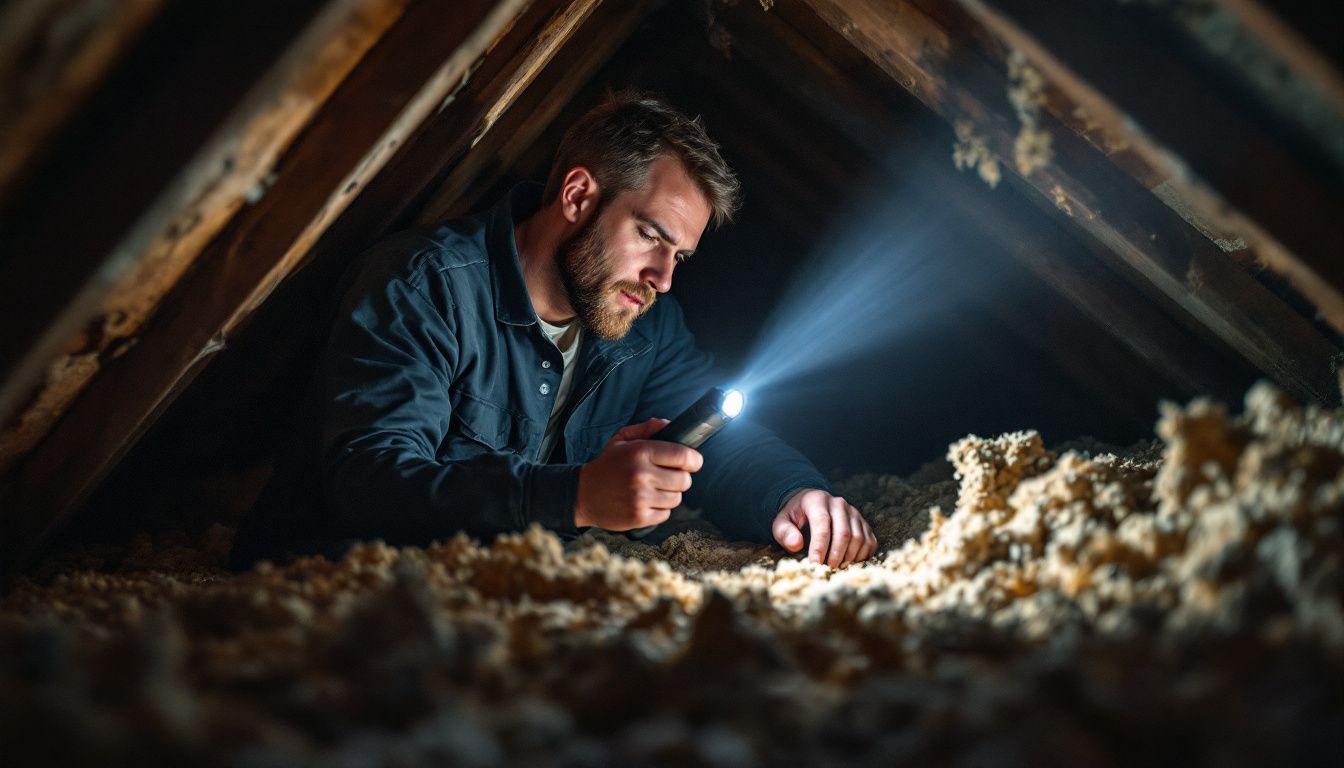
You cannot identify asbestos by looking at it. Only professional asbestos testing by an accredited laboratory can confirm whether a material contains asbestos fibres. Never attempt to take samples yourself — disturbing suspected ACMs without the correct training and equipment creates exactly the risk you’re trying to avoid.
What If Asbestos Is Found in Your Flat?
Finding asbestos in your flat is not the end of the world — or the end of your sale. The key is how you respond to the finding.
Don’t Panic — Assess the Risk First
Not all asbestos needs to be removed. Asbestos that is in good condition, undamaged, and unlikely to be disturbed during normal use is often best left in place and managed. The survey report will assign a risk rating to each identified ACM and recommend the appropriate course of action.
HSE guidance is clear on this point: the presence of asbestos alone is not a reason for alarm. The risk depends on the type of material, its condition, and whether it’s likely to be disturbed. A well-maintained Artex ceiling, for example, poses minimal risk if it’s not being sanded, drilled, or otherwise disturbed.
Consider Professional Removal Where Necessary
Where asbestos is damaged, deteriorating, or in a location where it’s likely to be disturbed, professional asbestos removal may be recommended. This work must be carried out by a licensed contractor for certain types of asbestos, and by a competent contractor following safe working procedures for lower-risk materials.
Having asbestos professionally removed before listing your flat removes a potential objection from buyers and can actually strengthen your asking price. It demonstrates that the property has been properly managed and is ready for occupation without further remediation.
Be Transparent with Buyers
If asbestos is present but in a managed condition, disclose this clearly to buyers along with the survey report and any management plan. Buyers who understand the situation — and can see that it’s been professionally assessed — are far more likely to proceed than those who discover asbestos unexpectedly during their own surveys.
Transparency here isn’t just good ethics; it’s good sales strategy. Surprises during conveyancing cost everyone time and money.
What About the Common Areas of the Building?
When selling a leasehold flat, it’s not just your individual unit that matters. Buyers and their solicitors will often ask about the condition of the building’s common areas — stairwells, corridors, roof spaces, and plant rooms — particularly in older blocks.
The freeholder or managing agent has a legal duty under the Control of Asbestos Regulations to maintain an asbestos register for these areas and to manage any identified ACMs. As a seller, you should request a copy of the building’s asbestos register and any associated management plan from the freeholder or managing agent before your sale progresses.
If no asbestos register exists for the building, that’s a red flag that needs to be addressed — either by the freeholder or, if you hold the freehold, by commissioning a survey of the common parts yourself. Buyers’ solicitors will ask, and not having an answer will cause delays.
How an Asbestos Survey Protects Your Sale
Estate agents and property solicitors will tell you that surprises kill sales. Anything that emerges unexpectedly during the conveyancing process — particularly something as emotive as asbestos — can cause buyers to pull out, renegotiate aggressively, or stall while they seek further advice.
Commissioning an asbestos survey before you list your flat puts you in control of the narrative. You know what’s there, you’ve addressed it appropriately, and you can provide documentation to any party who asks. That transparency builds buyer confidence and keeps your sale on track.
Properties with a clean asbestos survey — or with documented evidence of proper management or removal — tend to move more smoothly through the conveyancing process. Mortgage lenders are satisfied, solicitors have fewer queries, and buyers feel reassured about their investment.
How Much Does an Asbestos Survey Cost for a Flat?
For a standard residential flat, a management survey typically starts from around £250 plus VAT. The exact cost will depend on the size of the property, its location, and the complexity of the inspection required.
When you consider that a failed sale or a last-minute price renegotiation could cost you thousands, a few hundred pounds for professional certainty is a sound investment. Getting a free quote takes minutes and gives you a clear picture of costs before you commit.
If you’re uncertain whether a full survey is warranted, a targeted asbestos testing service can provide laboratory analysis of specific materials you’re concerned about — a useful option if you have a particular area of the flat you want to investigate before committing to a full survey.
Asbestos Surveys Across the UK
Supernova Asbestos Surveys operates nationwide, with specialist teams covering every major city and region. Whether you’re selling a Victorian conversion in the capital, a purpose-built block in the Midlands, or a tenement flat in the North West, our surveyors are on hand to help.
If you need an asbestos survey in London, our local team covers all boroughs and can typically arrange visits at short notice. For sellers in the North West, our asbestos survey Manchester service offers the same UKAS-standard reporting with fast turnaround times. And if you’re based in the Midlands, our asbestos survey Birmingham team is ready to assist with everything from single flats to large residential blocks.
With over 50,000 surveys completed across the UK, Supernova has the experience and accreditation to give you the certainty you need to sell with confidence.
Practical Steps for Flat Sellers
If you’re preparing to sell a pre-2000 flat, here’s a straightforward checklist to work through before you list:
- Check the build date. If your flat was built or significantly refurbished before 2000, treat it as potentially containing ACMs until proven otherwise.
- Contact the freeholder or managing agent. Request a copy of the building’s asbestos register and management plan. If one doesn’t exist, flag this immediately.
- Commission a management survey. Book a BOHS-qualified surveyor to inspect your flat and produce a written report before you list.
- Review the findings. Understand the risk rating of any identified ACMs and follow the surveyor’s recommendations — whether that means management in place or professional removal.
- Share the report with your solicitor and estate agent. Make it part of your property pack from day one. Don’t wait for buyers to ask.
- Arrange removal if required. If damaged or high-risk ACMs are identified, get them professionally removed before listing where possible.
- Disclose clearly. Be upfront with prospective buyers. A documented, managed asbestos situation is far less damaging to a sale than an undisclosed one discovered later.
Frequently Asked Questions
Do I legally have to have an asbestos survey before selling my flat?
There is no law that specifically requires a residential flat seller to commission an asbestos survey before listing. However, the Control of Asbestos Regulations impose a duty to manage asbestos on those responsible for non-domestic premises, which can include freeholders and managing agents. Beyond legal obligations, sellers have a duty to disclose material facts — including known asbestos — to buyers. Failing to do so can result in misrepresentation claims after the sale completes. A survey protects you and keeps your sale on track.
What type of asbestos survey do I need to sell my flat?
For most flat sellers, a management survey is the appropriate choice. It assesses all accessible areas of the property, identifies any asbestos-containing materials, and assigns a risk rating with recommended actions. If you plan to carry out any refurbishment work before selling, you’ll also need a refurbishment and demolition survey before that work begins — this is a legal requirement under the Control of Asbestos Regulations.
What if asbestos is found in my flat — will it stop the sale?
Not necessarily. The presence of asbestos does not automatically prevent a sale. If the materials are in good condition and unlikely to be disturbed, they can be recorded, managed in place, and disclosed to buyers with supporting documentation. Many sales proceed smoothly with asbestos present, provided it has been professionally assessed and appropriately managed. Where removal is recommended, arranging this before listing removes the issue entirely.
Who is responsible for asbestos in the common areas of a leasehold building?
The freeholder or managing agent is legally responsible for managing asbestos in common areas such as stairwells, corridors, roof spaces, and plant rooms under the Control of Asbestos Regulations. As a seller of a leasehold flat, you should request a copy of the building’s asbestos register before your sale progresses. If no register exists, this needs to be addressed before buyers’ solicitors raise it as a concern during conveyancing.
How long does an asbestos survey take for a flat?
The on-site inspection for a standard residential flat typically takes one to two hours. Laboratory analysis of any samples taken usually follows within 24 to 48 hours, and the written report is generally delivered shortly after. In most cases, you can have a full management survey report in hand within a few days of booking — well within the timeframe needed to prepare your property for sale.
Get Your Asbestos Survey Sorted Before You List
Supernova Asbestos Surveys has completed over 50,000 surveys nationwide, working with flat sellers, landlords, estate agents, and solicitors to make property transactions run smoothly. Our BOHS-qualified surveyors operate across the UK, and our reports are produced to HSG264 standards — the documentation that solicitors and mortgage lenders expect to see.
Don’t let asbestos become the reason your sale falls through. Call us today on 020 4586 0680 to speak with a surveyor, or visit asbestos-surveys.org.uk to get a free quote in minutes. We’ll help you sell with confidence.