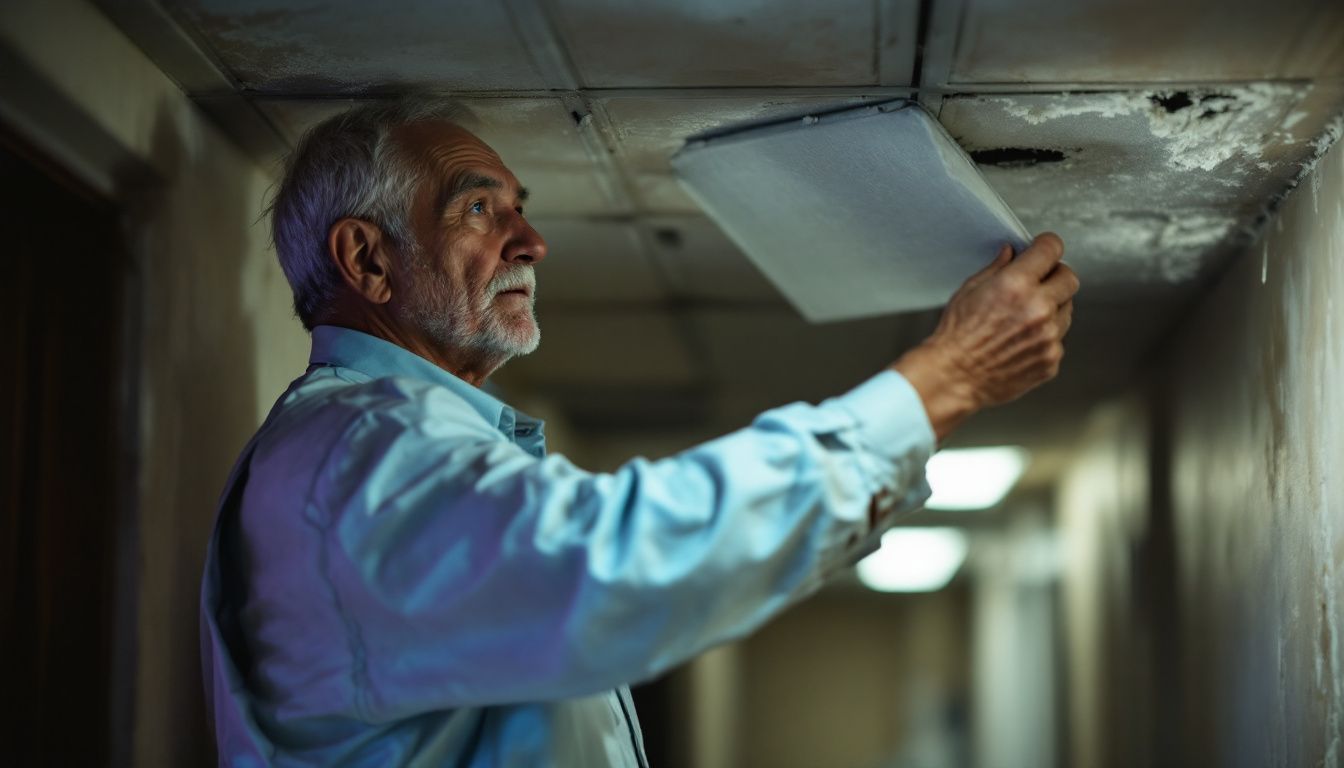
Hospitality Buildings and Asbestos: Where the Industry Is Heading
Thousands of hotels, restaurants, and hospitality venues across the UK are sitting on a legacy problem that will not resolve itself quietly. If your building was constructed before 2000, there is a very real chance it contains asbestos — and the future asbestos hospitality industry trends and predictions point firmly towards tighter regulation, smarter detection, and an accelerating push to eliminate this hazardous material from every guest-facing space in the country.
For property managers and hotel operators, understanding where things are heading is not optional. It is the difference between staying compliant and facing serious legal and financial consequences.
The Current State of Asbestos in UK Hospitality Buildings
Asbestos remains embedded in a significant number of non-domestic buildings across the UK. Many of these are hotels, restaurants, conference centres, and leisure facilities built during the mid-to-late twentieth century, when asbestos was used extensively in insulation, ceiling tiles, floor coverings, pipe lagging, and fire protection systems.
The scale of the challenge is substantial. Hundreds of thousands of non-domestic buildings are estimated to still contain asbestos-containing materials (ACMs) in some form. In the hospitality sector specifically, the risk is compounded by the fact that renovation and refurbishment work is frequent — and disturbance of ACMs during building work is one of the most common causes of dangerous fibre release.
Asbestos-related diseases continue to claim thousands of lives in the UK every year. These are not historical casualties — they are the result of exposures that occurred decades ago, and the latency period means current exposures will not show up in mortality figures for many years to come. That reality should sharpen the focus of every hospitality operator managing older stock.
Future Asbestos Hospitality Industry Trends: The Regulatory Landscape
The regulatory framework governing asbestos management in the UK is already robust, but the direction of travel is clearly towards greater scrutiny and stricter enforcement. Understanding where regulation is heading is essential for any hospitality operator planning a long-term property strategy.
The Control of Asbestos Regulations and the Duty to Manage
The Control of Asbestos Regulations place a clear legal duty on those responsible for non-domestic premises to manage asbestos risk. This includes identifying the presence of ACMs, assessing their condition, creating a management plan, and ensuring that plan is implemented and kept up to date.
For hotels and hospitality venues, this duty applies to every part of the building to which staff, contractors, or guests have access. It is not limited to back-of-house areas or plant rooms — common areas, guest rooms, kitchens, and function spaces all fall within scope.
Enforcement action by the Health and Safety Executive (HSE) has historically focused on the most egregious failures, but there is a clear trend towards more proactive inspection — particularly in sectors where building work and refurbishment is common. Hospitality sits squarely in that category.
The UK’s Long-Term Asbestos Removal Ambitions
There has been significant discussion at a policy level about the UK government’s ambitions to systematically remove asbestos from public and commercial buildings over the coming decades. A long-term programme of managed removal — rather than indefinite management in situ — represents a meaningful shift in approach.
If such a programme gathers momentum, hospitality operators should expect increased pressure to move from asbestos management plans to active remediation. That means budgeting for asbestos removal as a capital expenditure item, not simply an emergency response to an incident.
Stricter Licensing and Contractor Oversight
Only licensed contractors are legally permitted to carry out certain categories of asbestos removal work, and the licensing regime is subject to ongoing review. Expect requirements around contractor competency, air monitoring, waste disposal, and post-removal verification to become more demanding over time.
For hospitality operators, this means due diligence on your supply chain matters more than ever. Engaging an unlicensed or inadequately trained contractor — even inadvertently — exposes you to significant liability.
Innovations Shaping Asbestos Detection and Management
Technology is transforming the way asbestos is identified, managed, and removed. Several emerging approaches are particularly relevant to the hospitality sector, where minimising disruption to guests and operations is a constant consideration.
Advanced Detection Technologies
Traditional asbestos identification relies on bulk sampling and laboratory analysis — a process that is effective but time-consuming. Newer detection technologies are beginning to offer faster, less invasive options.
Portable analytical instruments capable of providing on-site fibre identification are becoming more sophisticated. While bulk sampling and laboratory confirmation remain the gold standard required under HSG264 guidance, these tools can help surveyors prioritise areas of concern and reduce the number of intrusive samples required during a survey.
Smart sensor technology is also developing, with the potential to provide continuous environmental monitoring in areas where ACMs are present but managed in situ. For a hotel with asbestos-containing ceiling tiles in a managed condition, sensors could provide early warning of deterioration or disturbance before a problem escalates.
Safer Removal Methods
Asbestos removal techniques have advanced considerably. Wet removal methods — where ACMs are dampened before disturbance to suppress fibre release — are now standard practice. HEPA filtration systems, negative pressure enclosures, and rigorous air monitoring protocols protect both workers and building occupants.
Robotic removal systems are beginning to emerge for use in confined or hazardous spaces where human access is difficult or dangerous. Dry ice blasting and other low-disturbance techniques are also being refined. These innovations are particularly valuable in hospitality settings, where access constraints and the need to maintain partial operation during works create real logistical challenges.
Non-Toxic Encapsulation Materials
Where removal is not immediately practicable, encapsulation — sealing ACMs to prevent fibre release — remains a legitimate management option. The materials available for encapsulation have improved significantly, with modern plant-based and water-based sealants creating durable barriers around asbestos fibres without introducing additional chemical hazards.
For hospitality operators managing ACMs in situ, upgraded encapsulation materials can extend the safe life of existing management plans while longer-term remediation is planned and budgeted.
Why Asbestos Surveys Remain Non-Negotiable for Hospitality Venues
The foundation of any asbestos management strategy is an accurate, up-to-date survey. Without knowing precisely where ACMs are located, what type they are, and what condition they are in, every decision that follows — from maintenance scheduling to refurbishment planning — carries unnecessary risk.
HSG264, the HSE’s guidance on asbestos surveys, distinguishes between three primary survey types, all of which are relevant to the hospitality sector:
- An management survey is required for routine maintenance and ongoing management of a building. It gives you the information you need to fulfil your duty to manage under the Control of Asbestos Regulations.
- A refurbishment survey is required before any significant building work begins. It gives contractors the information they need to work safely and ensures ACMs are not disturbed unknowingly during renovation.
- A demolition survey is required before any part of a building is demolished, providing a full picture of all ACMs present so they can be safely removed prior to structural work.
Skipping any of these — or relying on an outdated survey — is not a cost saving. It is a liability. Many operators need more than one survey type at different points in their building’s lifecycle, and the surveys must be carried out by a competent surveyor working to HSG264 standards.
Supernova Asbestos Surveys provides all survey types for hospitality venues across the UK. Whether you need an asbestos survey London for a city-centre hotel, an asbestos survey Manchester for a northern venue, or an asbestos survey Birmingham for a Midlands property, our experienced surveyors work around your operational requirements to minimise disruption.
Asbestos Testing: The Role of Sampling in Hospitality Risk Management
Surveying and testing are closely related but distinct processes. A survey identifies the location and condition of suspected ACMs. Asbestos testing — the laboratory analysis of bulk samples — confirms whether a material actually contains asbestos fibres and, if so, which type.
This distinction matters in practice. Not every material that looks like it might contain asbestos actually does. Conversely, some materials that appear benign may contain asbestos in concentrations that require professional management. Only laboratory analysis provides certainty.
For hospitality operators, there are several scenarios where asbestos testing is particularly important:
- Before any refurbishment, renovation, or fit-out work begins
- When a material suspected to contain asbestos has been disturbed
- When acquiring a property without a complete asbestos register
- When existing survey records are incomplete or out of date
- Following any incident where ACMs may have been damaged
Air monitoring — measuring airborne fibre concentrations — is a separate but complementary process, typically carried out during and after removal works to verify that the environment is safe for re-occupation.
Safer Alternatives to Asbestos in Hospitality Construction and Refurbishment
One of the most positive trends shaping future asbestos hospitality industry predictions is the growing availability and adoption of high-performance, asbestos-free building materials. For operators planning refurbishment or new-build projects, the choice of alternative materials is now genuinely strong.
Mineral Wool
Mineral wool — produced from rock or slag spun into fibrous form — is one of the most widely used asbestos alternatives in commercial construction. It performs well as both thermal and acoustic insulation, meets fire safety requirements, and is suitable for a wide range of applications including wall cavities, roof spaces, and pipe insulation.
For hotels, the acoustic performance of mineral wool is particularly valuable. Effective sound attenuation between guest rooms and common areas is a genuine quality-of-stay issue, and mineral wool delivers this without the health risks associated with legacy asbestos insulation.
Fibreglass Insulation
Fibreglass insulation offers excellent thermal performance and is non-combustible, making it well suited to fire safety applications in hospitality buildings. It is lightweight, easy to install, and compatible with a wide range of construction systems.
Well-specified fibreglass insulation can deliver meaningful reductions in energy consumption — a consideration that aligns with the sustainability commitments increasingly expected of hospitality operators by both guests and regulators.
Cellulose Fibre
Made from recycled paper and cardboard, cellulose fibre insulation is an environmentally attractive option for hospitality operators with sustainability targets. It can be blown or sprayed into cavities, making it effective for retrofitting older buildings where access is limited.
Cellulose fibre requires treatment with fire-retardant chemicals to meet building regulations requirements, but when properly specified and installed it offers a genuine combination of environmental and performance credentials.
Calcium Silicate and Other High-Performance Boards
Calcium silicate boards are widely used as asbestos-free replacements for legacy asbestos insulating boards (AIB) in commercial buildings. They offer comparable fire resistance and mechanical strength, and are available in a range of formats suited to hospitality applications including ceiling systems, duct enclosures, and fire barriers.
For operators replacing AIB during a phased refurbishment programme, calcium silicate and similar high-performance boards represent a like-for-like upgrade that meets current regulatory standards without compromise on performance.
What Future Asbestos Hospitality Industry Trends Mean for Your Property Strategy
Pulling these threads together, the picture for hospitality operators is one of increasing obligation, improving capability, and a clear direction of travel away from indefinite management and towards active remediation.
Here is what that means in practical terms for your property strategy:
- Commission or update your asbestos register now. If your survey is more than a few years old, or if significant work has been carried out since it was completed, it needs revisiting. An outdated register is not a defence — it is an additional risk.
- Build asbestos management into your maintenance planning. ACMs in a managed condition require regular inspection. Condition changes must be recorded and acted upon. This is not a one-time exercise.
- Plan for remediation as a capital investment. As regulatory pressure increases and removal technology improves, the economics of managed removal become more favourable. Operators who plan ahead will be better positioned than those who wait for enforcement action to force their hand.
- Vet your contractors rigorously. Any contractor working on a building that contains or may contain asbestos must be competent and, where required, licensed. Verify credentials before work begins — not after an incident.
- Align asbestos strategy with sustainability goals. The shift towards asbestos-free materials and lower-impact removal methods fits naturally within broader sustainability frameworks. Operators who frame asbestos management as part of their ESG commitments will find it easier to secure budget and stakeholder buy-in.
- Stay informed on regulatory developments. The policy environment is moving. Subscribe to HSE updates, engage with your industry body, and ensure your legal obligations are reviewed regularly by a competent professional.
The hospitality sector faces a significant but manageable challenge. The operators who will navigate it most successfully are those who treat asbestos management as a strategic priority rather than a reactive compliance task.
Frequently Asked Questions
Do all hotels and hospitality venues need an asbestos survey?
Any non-domestic building constructed before 2000 must have its asbestos risk assessed under the Control of Asbestos Regulations. For hotels and hospitality venues, this almost always means commissioning a formal asbestos management survey. If you are planning refurbishment or demolition work, additional survey types are required before work begins. Operating without an up-to-date survey is a legal risk, not just a health one.
What are the main types of asbestos found in hospitality buildings?
The most commonly encountered asbestos types in UK commercial buildings include chrysotile (white asbestos), amosite (brown asbestos), and crocidolite (blue asbestos). In hospitality settings, ACMs are frequently found in ceiling tiles, floor tiles and adhesives, pipe lagging, boiler insulation, partition boards, and fire-resistant panels. The type and condition of the material determines the level of risk and the appropriate management response.
How often should an asbestos management plan be reviewed in a hospitality venue?
The HSE expects asbestos management plans to be reviewed at least annually, and whenever there is a change in the condition of ACMs, a change in the use of the building, or any maintenance or building work that could affect ACMs. In busy hospitality environments where works are frequent, reviews may need to happen more often. A competent asbestos surveyor can advise on an appropriate review schedule for your specific building.
Can a hotel remain open during asbestos removal works?
In many cases, yes — but only with careful planning and strict controls. Licensed asbestos removal contractors use containment enclosures, negative pressure systems, and air monitoring to prevent fibre release beyond the work area. In practice, affected areas must be isolated and access controlled. Whether partial operation is feasible depends on the location and extent of the works. A specialist contractor will assess the specific situation and advise on the safest approach for your venue.
What happens if asbestos is found unexpectedly during renovation work?
Work must stop immediately in the affected area. The site should be secured and access restricted. A competent asbestos surveyor should be called to assess the material and confirm whether it contains asbestos through laboratory testing. If ACMs have been disturbed, air monitoring may be required before the area can be re-entered. Attempting to continue work without addressing the discovery is a serious legal offence under the Control of Asbestos Regulations and could result in significant penalties.
Work With Supernova Asbestos Surveys
Supernova Asbestos Surveys has completed over 50,000 surveys across the UK, working with hospitality operators, property managers, and facilities teams to manage asbestos risk professionally and efficiently. We provide management surveys, refurbishment surveys, demolition surveys, asbestos testing, and removal services — everything you need under one roof.
Our surveyors understand the operational pressures of the hospitality sector. We schedule work to minimise disruption, deliver clear and actionable reports, and provide practical guidance on next steps — not just a list of findings.
To discuss your requirements or arrange a survey, call us on 020 4586 0680 or visit asbestos-surveys.org.uk.