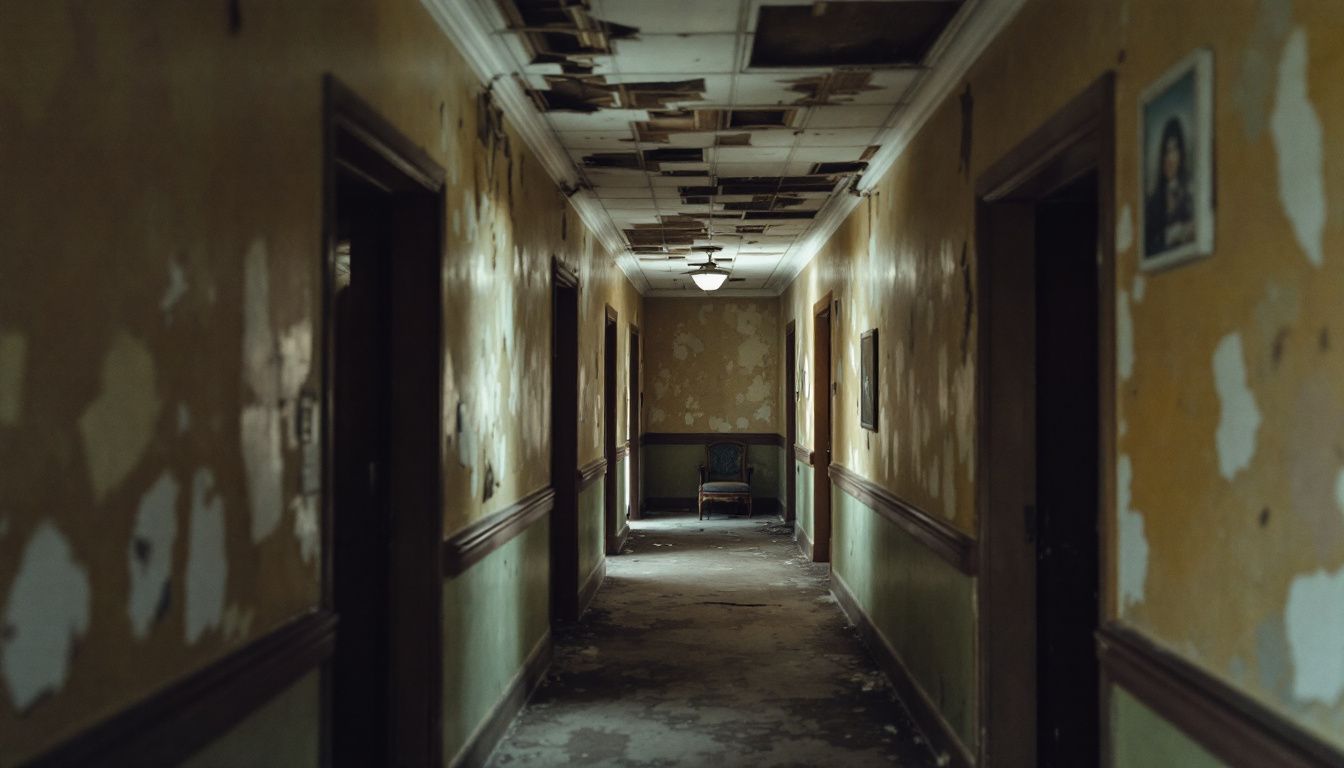
Why Every Restaurant Owner Needs an Asbestos Survey
If your restaurant operates from a building constructed before the year 2000, there is a very real chance asbestos-containing materials are present somewhere on the premises. An asbestos survey for restaurant properties is not optional — it is a legal requirement under the Control of Asbestos Regulations, and failing to act puts your staff, customers, and business at serious risk.
Asbestos was used extensively in UK commercial construction for decades. It was cheap, fire-resistant, and excellent at insulation. The problem is that when those materials deteriorate or get disturbed during maintenance or refurbishment, they release fibres that cause fatal lung diseases — including mesothelioma and asbestosis — with no safe level of exposure.
This is not a remote risk. It is happening in commercial kitchens, dining rooms, and storage areas across the country right now, often without the owner’s knowledge.
Legal Duties: What the Law Requires of Restaurant Owners
The Control of Asbestos Regulations place a clear duty on anyone who owns, manages, or has responsibility for the maintenance of a non-domestic building. That includes restaurants, cafés, takeaways, hotel dining areas, and any other hospitality premises.
As a duty holder, you are legally required to:
- Assess whether asbestos-containing materials (ACMs) are present in your premises
- Commission a suitable asbestos survey if the presence of ACMs cannot be presumed absent
- Maintain an up-to-date asbestos register
- Produce and implement an asbestos management plan
- Ensure contractors and maintenance workers are informed of any ACMs before starting work
- Arrange regular monitoring of any ACMs that are left in place
Ignorance is not a defence. If an HSE inspector visits your premises and you cannot produce an asbestos register or management plan, you are exposed to enforcement action, improvement notices, and potentially prosecution.
Who Counts as a Duty Holder in a Restaurant?
In most cases, the duty holder is the building owner. If you lease your restaurant premises, the responsibilities may be split between landlord and tenant — and your tenancy agreement should make this clear.
As a tenant, you are typically responsible for managing asbestos risks in the areas you occupy and control. Your landlord retains responsibility for shared areas such as stairwells, plant rooms, and external fabric. Both parties need to communicate clearly and keep shared records up to date.
Where Asbestos Hides in Restaurant Buildings
Asbestos does not always announce itself. In many pre-2000 commercial buildings it is hidden inside walls, above suspended ceilings, beneath floor tiles, and around pipework — all areas that are routinely disturbed during restaurant fit-outs and refurbishments.
Common locations where ACMs are found in hospitality premises include:
- Ceiling tiles — Artex and textured coatings in dining areas and back-of-house spaces frequently contain chrysotile asbestos
- Floor tiles and adhesives — Vinyl floor tiles, particularly in kitchens and service corridors, often contain asbestos, as does the black bitumen adhesive beneath them
- Pipe lagging and boiler insulation — Plant rooms, basement areas, and service ducts are high-risk zones
- Partition walls — Asbestos insulating board (AIB) was widely used in internal walls and ceiling panels
- Roof sheets and external cladding — Corrugated asbestos cement was common on flat-roofed commercial extensions
- Electrical cupboards and service risers — Asbestos was used as fire protection around electrical installations
- Sprayed coatings — Applied to structural steelwork for fire protection in older commercial builds
The kitchen area deserves particular attention. Extraction systems, ductwork, and the areas around commercial catering equipment were often insulated with asbestos-containing materials. Any work involving these areas — even something as routine as fitting a new extraction hood — can disturb ACMs if a survey has not been carried out first.
Types of Asbestos Survey for Restaurant Properties
Not every survey is the same, and choosing the right type matters. The HSE’s guidance document HSG264 defines two main categories of asbestos survey, each suited to different circumstances.
Management Survey
A management survey is the standard survey required for premises that are in normal use. It is designed to locate, as far as reasonably practicable, the presence and extent of any ACMs that could be damaged or disturbed during everyday activities.
The surveyor will inspect accessible areas of the building, take samples where ACMs are suspected, and produce a report detailing the location, condition, and risk rating of any materials found. This forms the basis of your asbestos register.
For most restaurants that are simply operating and carrying out routine maintenance, a management survey is the starting point. It does not involve destructive investigation — walls are not broken open and floors are not lifted — but it covers the areas your staff and contractors are likely to encounter.
Refurbishment and Demolition Survey
If you are planning a fit-out, renovation, or any significant building work, a management survey alone is not sufficient. You need a refurbishment and demolition survey, which is far more intrusive.
This type of survey involves destructive inspection — breaking into walls, lifting floors, accessing voids — to locate all ACMs in the areas affected by the planned work. It must be completed before any refurbishment or demolition work begins.
Restaurant refurbishments are one of the most common triggers for asbestos exposure incidents. Contractors ripping out old kitchens, removing suspended ceilings, or chasing walls for new services frequently disturb ACMs without knowing it. A refurbishment survey eliminates that risk.
What Happens During an Asbestos Survey for a Restaurant?
Understanding the process helps you prepare and minimise disruption to your business. A qualified surveyor from an accredited organisation will attend your premises and carry out a systematic inspection of the building.
The process typically involves:
- Pre-survey information gathering — The surveyor will want to know the age of the building, any previous survey records, and details of any recent works
- Physical inspection — Every accessible area is inspected, including kitchen, dining room, toilets, storage areas, plant rooms, and roof spaces where accessible
- Sampling — Small samples are taken from materials suspected of containing asbestos and sent to an accredited laboratory for analysis
- Risk assessment — Each identified ACM is assessed for its condition and the likelihood of fibre release
- Report production — A detailed written report is produced, typically within 24 hours, including an asbestos register, site plans, photographs, and recommendations
Surveys can often be arranged outside of trading hours to avoid disruption. For a typical restaurant premises, a management survey will usually be completed within a few hours.
Creating and Maintaining an Asbestos Management Plan
Once your survey is complete and your asbestos register is in place, you need a written asbestos management plan. This is a legal requirement, not a nice-to-have document.
Your management plan should include:
- A list of all identified ACMs with their locations, condition, and risk ratings
- Named individuals responsible for managing asbestos on the premises
- Procedures for informing contractors and maintenance workers about ACMs before work begins
- A schedule for regular monitoring of ACMs left in situ
- Actions required for any ACMs in poor condition or at risk of disturbance
- Emergency procedures in the event of accidental disturbance
The plan must be reviewed and updated regularly — at least annually, and whenever building works are carried out or conditions change. It should be readily accessible to anyone who needs it, including your maintenance team and any contractors working on the premises.
Communicating with Your Team and Contractors
One of the most practical — and most frequently overlooked — aspects of asbestos management in restaurants is communication. Your kitchen porter, your maintenance contractor, or the electrician you call in to fix a fault could all disturb ACMs if they are not made aware of what is in the building.
Before any contractor begins work, you must show them your asbestos register and point out any ACMs in or near their work area. This is a legal obligation, and it is also the single most effective way to prevent accidental asbestos exposure on your premises.
When ACMs Need to Be Removed
Not all asbestos needs to come out immediately. If an ACM is in good condition and is not likely to be disturbed, it is often safer to leave it in place and manage it. Removal itself creates risk if not done properly.
However, removal becomes necessary when:
- ACMs are damaged, deteriorating, or showing signs of fibre release
- Planned refurbishment or building work will disturb the materials
- The materials are in a location where they are regularly at risk of damage
- You are planning to sell the property or hand back a lease
Any asbestos removal work involving higher-risk materials — such as asbestos insulating board, sprayed coatings, or pipe lagging — must be carried out by a contractor licensed by the HSE. Using an unlicensed contractor is illegal and puts everyone at risk.
Lower-risk materials such as asbestos cement may be removable by a competent but unlicensed contractor, though they must still follow the relevant regulations and notification requirements. Always take professional advice before making this distinction.
The Cost of Getting It Wrong
The consequences of failing to manage asbestos properly in a restaurant go far beyond a fine. They include:
- Criminal prosecution — Duty holders who fail to comply with the Control of Asbestos Regulations can face prosecution, unlimited fines, and in serious cases, imprisonment
- Civil liability — If a member of staff or a contractor is exposed to asbestos on your premises due to your failure to manage it, you face personal injury claims that can be substantial
- Business closure — An HSE prohibition notice can shut your restaurant down with immediate effect
- Reputational damage — An asbestos incident at your premises will affect customer confidence and staff morale
The cost of an asbestos survey for a restaurant is modest by comparison. Getting a survey done is the single most effective step you can take to protect your business, your staff, and your customers.
Supernova Asbestos Surveys: Covering Restaurants Nationwide
Supernova Asbestos Surveys has completed more than 50,000 surveys across the UK, working with restaurant owners, hospitality operators, and commercial landlords of all sizes. Our accredited surveyors understand the specific challenges of surveying working premises — and we work around your trading hours wherever possible.
We provide surveys across the country, including asbestos survey London services for the capital’s dense commercial sector, asbestos survey Manchester coverage across the North West, and asbestos survey Birmingham services for the Midlands and beyond.
Reports are delivered within 24 hours of the survey. Our quotes are transparent, with no hidden costs.
To get a free quote in under 15 minutes, call us on 020 4586 0680 or visit asbestos-surveys.org.uk. Do not wait until you are planning a refurbishment — get your survey in place now and manage the risk properly from the start.
Frequently Asked Questions
Do I need an asbestos survey for my restaurant?
Yes, if your restaurant is in a building constructed before the year 2000, you have a legal duty under the Control of Asbestos Regulations to assess whether asbestos-containing materials are present. A management survey is required for premises in normal use, and a refurbishment and demolition survey is required before any significant building work begins.
What happens if asbestos is found in my restaurant?
Finding asbestos does not mean your restaurant needs to close. If the materials are in good condition and not likely to be disturbed, they can be managed in place with regular monitoring. Your surveyor will provide a risk rating for each material found and recommend appropriate action. Only damaged or high-risk materials require urgent removal.
How much does an asbestos survey for a restaurant cost?
The cost depends on the size and complexity of the premises. Supernova provides transparent, no-obligation quotes — call 020 4586 0680 and we can give you a price in under 15 minutes. Surveys for typical restaurant premises are competitively priced, and the cost is negligible compared to the legal and financial risks of not having one.
Can I carry out an asbestos survey myself?
No. Asbestos surveys must be carried out by a competent surveyor with appropriate training, equipment, and access to an accredited laboratory for sample analysis. HSG264 sets out the requirements for surveyors. Using an unqualified person to carry out a survey does not fulfil your legal duty and could put people at serious risk.
How long does an asbestos survey take in a restaurant?
A management survey for a typical restaurant premises usually takes between two and four hours on site. Larger or more complex properties will take longer. Reports are delivered within 24 hours of the survey being completed. Supernova can often arrange surveys outside of trading hours to minimise disruption to your business.