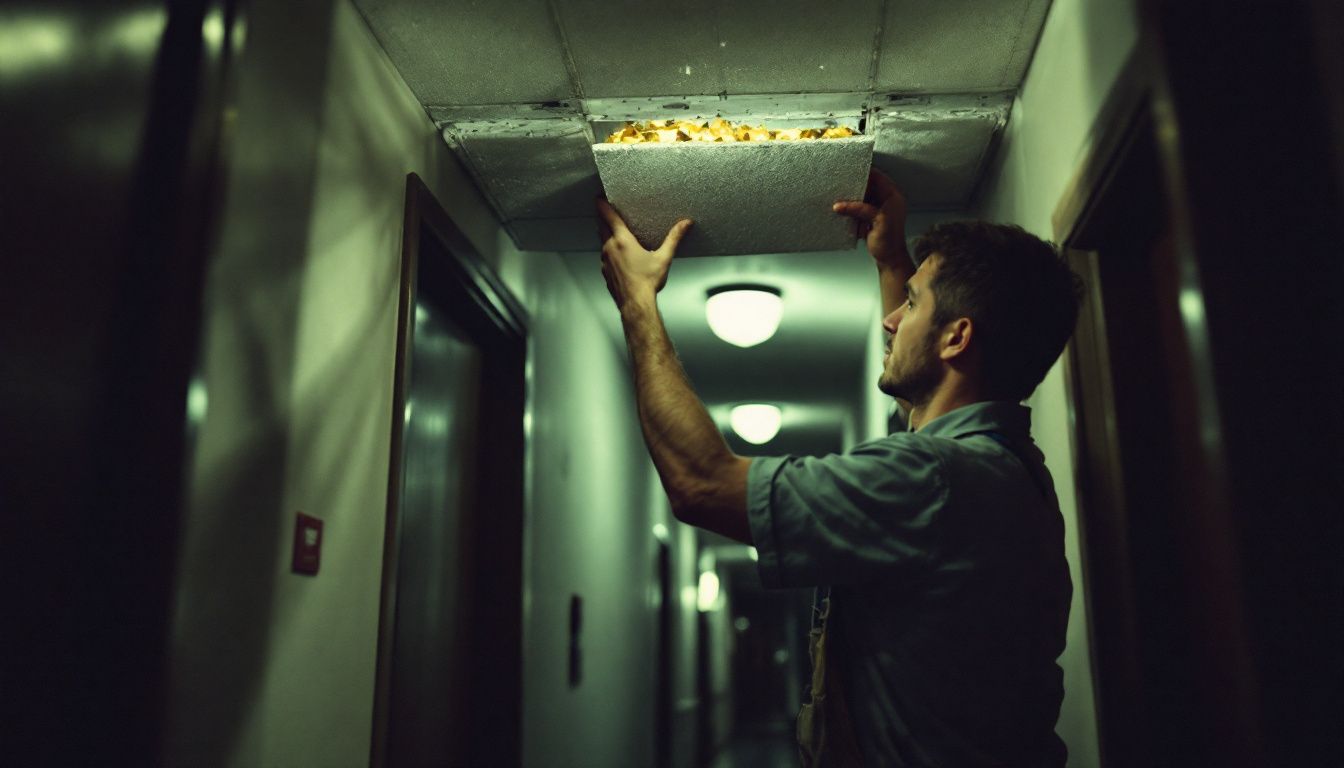
Why Hospitality Businesses Cannot Afford to Ignore Asbestos
Hotels, pubs, restaurants, and guest houses built before 2000 carry a risk that many owners still underestimate: asbestos-containing materials hidden within the very fabric of their buildings. Dealing with asbestos-containing materials in the hospitality industry is not optional — it is a legal duty, and getting it wrong can mean serious harm to staff and guests, significant fines, and lasting reputational damage.
Whether you manage a boutique hotel in the city centre or a chain of budget properties across the UK, the rules apply equally. The hospitality sector presents a uniquely complex set of asbestos risks — constant refurbishment cycles, high footfall, and a revolving door of contractors all create conditions where asbestos disturbance becomes far more likely than in a standard office or industrial setting.
Understanding those risks — and knowing exactly what to do about them — is what separates a well-managed property from a liability waiting to happen.
Why the Hospitality Industry Faces Particular Asbestos Risks
Hotels and hospitality venues are in a constant state of modification. Rooms get refurbished, kitchens are upgraded, boiler rooms are serviced, and pipe runs are altered. Every one of those activities carries the potential to disturb asbestos-containing materials if the building has not been properly surveyed first.
Many hospitality buildings were constructed during the peak decades of asbestos use — the 1950s through to the late 1990s. Asbestos was widely used in ceiling tiles, floor tiles, pipe lagging, spray coatings on structural steelwork, roof panels, partition boards, and textured decorative coatings. In a busy hotel environment, these materials can be present in dozens of locations across multiple floors.
High footfall, frequent maintenance, and ongoing refurbishment cycles all increase the chances of accidental disturbance. That is why robust asbestos management is not just good practice — it is essential for any responsible operator in this sector.
Your Legal Duties Under the Control of Asbestos Regulations
The Control of Asbestos Regulations place a clear duty to manage asbestos on anyone who has responsibility for the maintenance or repair of non-domestic premises. In the hospitality sector, that typically means the building owner, the leaseholder, or the facilities manager — sometimes all three, depending on how responsibilities are divided in a lease agreement.
The duty holder must:
- Take reasonable steps to identify whether asbestos-containing materials are present in the premises
- Assess the condition and risk of any materials found
- Produce a written asbestos management plan and keep it up to date
- Ensure the plan is implemented and that relevant staff are informed
- Arrange regular monitoring of the condition of known asbestos-containing materials
Managers who lease hotel or restaurant spaces must read their contracts carefully. Lease agreements often split responsibility between landlord and tenant, and failing to understand your obligations is not a defence in law.
The Health and Safety Executive’s guidance document HSG264 sets out the technical standard for asbestos surveys and is the benchmark that all reputable surveyors work to. Any survey report you receive should explicitly reference compliance with HSG264.
Getting the Survey Right: Which Type Do You Need?
The first practical step for any hospitality business is commissioning the correct type of asbestos survey. There are two main types, and choosing the right one matters enormously — both for legal compliance and for the safety of everyone in the building.
Management Surveys
A management survey is the standard requirement for premises in normal occupation and use. It locates asbestos-containing materials that could be disturbed during everyday activities and routine maintenance. For a hotel or restaurant that is not currently undergoing major works, this is the survey you need as your baseline.
The surveyor will carry out a visual inspection of all accessible areas, take samples from suspected materials, and send those samples to a UKAS-accredited laboratory for analysis. You will receive a written report containing an asbestos register, a risk assessment for each material found, and recommendations for management.
Refurbishment and Demolition Surveys
If you are planning any significant building work — knocking down walls, replacing ceilings, upgrading a kitchen, or carrying out a full room refurbishment — a demolition survey is required before work begins. This is a more intrusive survey that accesses areas not normally disturbed during day-to-day use.
Skipping this step is one of the most common and costly mistakes in the hospitality sector. Contractors who disturb asbestos-containing materials without prior identification face prosecution — and so do the building owners who hired them without ensuring a survey had been completed first.
Where Asbestos Is Commonly Found in Hospitality Buildings
Knowing where to look helps you understand the full scope of the risk. In hotels, pubs, and restaurants, asbestos-containing materials have historically been found in a wide range of locations:
- Ceiling tiles and suspended ceiling systems
- Floor tiles and the adhesive used to fix them
- Pipe lagging and duct insulation in boiler rooms and service corridors
- Spray coatings on structural steelwork, particularly in older buildings
- Textured decorative coatings on walls and ceilings
- Partition boards and internal wall panels
- Roof panels and external cladding
- Electrical equipment and switchgear panels
Any building constructed or refurbished before 2000 should be treated as potentially containing asbestos until a survey proves otherwise. This is not a precaution — it is the legally correct starting position.
Developing a Robust Asbestos Management Plan
Once a survey has been completed and the asbestos register is in place, the next legal requirement is an asbestos management plan. This is a working document — not something to file away and forget. In a busy hospitality environment, it needs to be actively maintained and accessible to the right people at all times.
A well-structured plan for a hospitality business should include:
- A clear asbestos register — listing every location where asbestos-containing materials have been identified, their type, condition, and risk rating
- A monitoring schedule — setting out how often each material will be re-inspected to check for deterioration
- Procedures for planned maintenance — ensuring that any contractor working on the building is informed of asbestos locations before they start
- Emergency procedures — clear instructions for what staff should do if they accidentally damage or disturb a suspected asbestos-containing material
- A named duty holder — the individual responsible for implementing and updating the plan
- Training records — evidence that relevant staff have received asbestos awareness training
The plan must be reviewed whenever there is a change in the condition of materials, after any building work, or when the asbestos register is updated. It is a live document, not a one-off exercise.
Dealing with Asbestos-Containing Materials in the Hospitality Industry: Safe Daily Practices
Understanding the legal framework is one thing. Embedding safe practices into daily operations is another. Here is how hospitality businesses can make asbestos safety part of their working culture rather than a box-ticking exercise.
Asbestos Awareness Training for Staff
Every member of staff who could conceivably come into contact with asbestos-containing materials — maintenance technicians, housekeeping supervisors, facilities staff — must receive asbestos awareness training. This is a legal requirement under the Control of Asbestos Regulations, not an optional extra.
Awareness training does not teach staff to work with asbestos. It teaches them to recognise materials that might contain it, understand the risks, and know exactly what to do if they encounter suspected asbestos — which is to stop work immediately and report it to the duty holder. Training records must be kept as evidence of compliance.
Using Licensed Contractors for Removal and Repair
Some asbestos work can be carried out by non-licensed contractors, but only for specific, lower-risk tasks. The vast majority of asbestos removal in hospitality settings — particularly the removal of pipe lagging, spray coatings, or heavily damaged materials — requires a contractor licensed by the HSE.
When licensed removal is required, contractors must:
- Notify the HSE before starting notifiable work
- Establish a controlled work area with appropriate enclosures and negative pressure units
- Use full personal protective equipment and respiratory protective equipment
- Conduct air monitoring throughout the removal process
- Issue a clearance certificate once the area has been independently tested and confirmed safe
Always ask to see a contractor’s HSE licence before they begin any asbestos work. Keep copies of all clearance certificates — these are your legal evidence that the work was done correctly.
Managing Contractors and Planned Maintenance
One of the most common routes to accidental asbestos disturbance in hotels is contractors beginning maintenance or refurbishment work without being briefed on the asbestos register. This is entirely preventable.
Before any contractor starts work on your premises, share the relevant sections of your asbestos management plan with them. Make it a contractual requirement that they acknowledge receipt and understanding of the asbestos information before work commences. Document this process every time — that documentation is your protection if something goes wrong.
Communicating with Guests: Transparency Without Alarm
Asbestos that is in good condition and properly managed poses a low risk. Guests do not need to be alarmed by the presence of asbestos-containing materials in a building — but they do deserve to be managed by a team that takes their safety seriously.
Appointing a Designated Point of Contact
Every hospitality business should appoint a named individual as the asbestos duty holder and point of contact. This person should be familiar with the asbestos management plan, know where the register is kept, and be the first point of call if a maintenance worker or guest raises a concern.
Having a single, knowledgeable point of contact means queries are handled consistently and accurately, rather than being passed around or answered incorrectly by staff who lack the relevant information.
Handling Guest Concerns Professionally
If a guest raises a concern about asbestos — perhaps because they have noticed work being carried out nearby — the response should be calm, factual, and reassuring. Staff should be briefed on what to say and who to refer guests to if they need more detailed information.
The key messages are straightforward: the building has been surveyed, any asbestos-containing materials are being managed in accordance with legal requirements, and any remedial work is being carried out by licensed professionals. Transparency builds trust. Evasion does the opposite.
The Consequences of Getting It Wrong
The hospitality industry has seen prosecutions and significant fines as a result of asbestos mismanagement. Regulatory enforcement action can follow from a single incident — a maintenance worker disturbing asbestos-containing materials without prior identification, or a refurbishment project proceeding without the correct survey in place.
Beyond the financial penalties, the reputational damage to a hotel or restaurant brand can be severe. In an industry that depends on guest trust and positive reviews, an asbestos incident that becomes public knowledge can have lasting commercial consequences.
The cost of getting asbestos management right is modest compared to the cost of getting it wrong. HSE inspectors can and do visit hospitality premises, and improvement notices or prohibition notices can force a business to cease operations until compliance is demonstrated.
Asbestos Surveys Across the UK: We Cover Your Location
Supernova Asbestos Surveys operates nationwide, with specialist teams covering major hospitality hubs across the country. If your property is in the capital, our asbestos survey London service provides rapid response and full compliance documentation for hotels, restaurants, and licensed premises of all sizes.
For properties in the North West, our asbestos survey Manchester team covers the full Greater Manchester area and surrounding regions. In the Midlands, our asbestos survey Birmingham service supports hospitality operators across the city and beyond.
Wherever your premises are located, we can provide a fully compliant survey, a clear asbestos register, and an actionable management plan — all delivered to the HSG264 standard.
Practical Steps to Take Right Now
If you manage a hospitality property built before 2000 and have not yet commissioned an asbestos survey, these are the immediate actions you should take:
- Commission a management survey — this is your legal baseline and must be completed before any maintenance or refurbishment work begins
- Review your lease agreement — confirm who holds duty holder responsibilities and ensure the correct person is named in your management plan
- Audit your contractor management process — check that every contractor who works on your premises is being briefed on your asbestos register before they start
- Check your training records — confirm that all relevant staff have completed asbestos awareness training and that records are up to date
- Review your management plan — if you have one, check when it was last updated and whether it reflects the current condition of all identified materials
- Book a refurbishment or demolition survey — if any building works are planned, this must be done before work commences, without exception
None of these steps are complicated. What they require is a commitment to taking asbestos management seriously — and the willingness to act before an incident forces your hand.
Frequently Asked Questions
Do I need an asbestos survey if my hotel was built in the 1990s?
Yes. Any building constructed or refurbished before 2000 should be treated as potentially containing asbestos until a survey demonstrates otherwise. Asbestos use in the UK continued right up until its total ban in 1999, so buildings from the 1990s are very much within scope. A management survey will confirm whether asbestos-containing materials are present and advise on how they should be managed.
Who is responsible for asbestos management in a leased hotel or restaurant?
Responsibility depends on the terms of the lease. In many cases, the landlord retains responsibility for the structure and common areas, while the tenant takes on responsibility for the demised space. However, lease agreements vary significantly, and both parties can hold duties simultaneously. You must review your lease carefully and seek legal advice if the position is unclear. Ignorance of your obligations is not a legal defence.
Can my in-house maintenance team carry out asbestos removal?
Only for very limited, low-risk tasks. The Control of Asbestos Regulations define which work is licensable and which is not. Most asbestos removal work in hospitality buildings — particularly involving pipe lagging, spray coatings, or damaged materials — requires an HSE-licensed contractor. Attempting to carry out licensable work without the correct authorisation is a criminal offence and puts workers at serious risk.
How often should I review my asbestos management plan?
Your asbestos management plan should be reviewed at least annually as a minimum. It must also be reviewed after any building work, whenever the condition of a known asbestos-containing material changes, and whenever the asbestos register is updated. In a busy hospitality environment where maintenance and refurbishment are frequent, reviews may be needed more regularly than once a year.
What should I do if a contractor accidentally disturbs asbestos during work on my premises?
Stop all work in the affected area immediately. Evacuate the area and prevent anyone from re-entering until the situation has been assessed by a competent person. Do not attempt to clean up any debris yourself. Depending on the nature and extent of the disturbance, you may need to notify the HSE. Contact a licensed asbestos contractor to carry out an assessment and, if necessary, arrange controlled removal and independent air testing before the area is reoccupied.
Work With Supernova Asbestos Surveys
Supernova Asbestos Surveys has completed over 50,000 surveys across the UK, working with hospitality operators, property managers, and facilities teams to deliver fully compliant asbestos management from initial survey through to clearance. Our surveyors are qualified, experienced, and work to the HSG264 standard on every project.
If you manage a hotel, pub, restaurant, or guest house and need to get your asbestos obligations in order, call us today on 020 4586 0680 or visit asbestos-surveys.org.uk to find out how we can help.