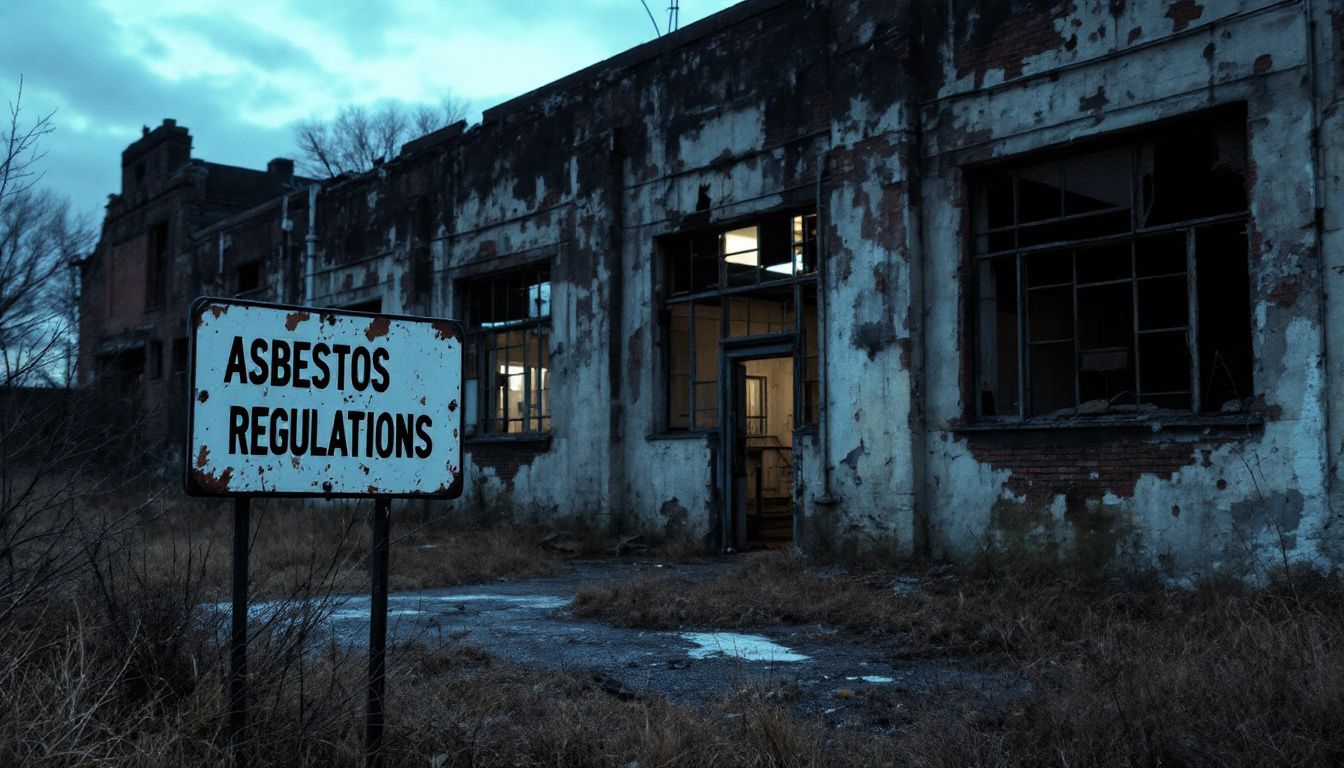
The EU Asbestos Ban Date and What It Means for UK Property Owners After Brexit
The EU asbestos ban date is one of the most common questions we hear from property managers, building owners, and contractors trying to make sense of where UK law now sits relative to European standards. Since Brexit, the picture has become more complicated — the UK operates its own regulatory framework, yet the legacy of EU directives continues to shape how asbestos is managed across Britain today.
This is not just regulatory history. It has direct, practical consequences for anyone responsible for a building constructed before the year 2000. If that includes you, read on.
When Did the EU Ban Asbestos — and Did the UK Follow?
The EU issued a full ban on the manufacture, use, and processing of all forms of asbestos in 2005, following Council Directive 1999/77/EC, which specifically targeted chrysotile (white asbestos). Chrysotile was the last commercially used asbestos type in Europe, and its prohibition marked the end of legal asbestos use across EU member states.
The UK had already moved ahead of the curve on chrysotile. Britain banned its use in 1999, making it one of the first countries to act on this specific fibre type. The wider EU asbestos ban date of 2005 therefore brought EU standards broadly in line with what the UK had already implemented six years earlier.
So while the EU asbestos ban date is technically 2005, the UK’s own prohibition on all asbestos types effectively predates it. What matters now — particularly post-Brexit — is how the two regulatory systems have begun to diverge on managing the asbestos that already exists in buildings across the country.
A Brief History of UK Asbestos Legislation
UK asbestos law did not appear overnight. It evolved over several decades as the true scale of asbestos-related disease became impossible to ignore.
Early Milestones
A significant rise in mesothelioma cases during the 1990s accelerated legislative action. By 1999, the UK had banned chrysotile asbestos entirely. In 2002, new duties were introduced requiring duty holders of non-domestic properties to identify, manage, and record the presence of asbestos-containing materials (ACMs) in their buildings.
These duties placed the legal burden squarely on building owners and managers — not just contractors. Failure to comply was not a technicality; it carried serious legal and financial consequences that remain in force today.
The Control of Asbestos Regulations
The Control of Asbestos Regulations consolidated and strengthened existing rules, introducing clearer requirements around licensing, training, health surveillance, and what is known as Notifiable Non-Licensed Work (NNLW). Under NNLW, certain lower-risk asbestos tasks still require notification to the relevant enforcing authority, along with medical examinations for the workers involved.
These regulations remain the cornerstone of UK asbestos law today. They did not disappear with Brexit — and they are not optional. If you manage a non-domestic property, the duty to manage asbestos under these regulations applies to you regardless of what happens at a European policy level.
HSG264, the HSE’s guidance document on asbestos surveys, sets out in practical terms how surveys should be planned, conducted, and reported. It is the standard against which all reputable asbestos surveyors — including Supernova — work.
How the EU Asbestos Ban Date Shaped UK Standards Before Brexit
During UK membership of the EU, European directives played a significant role in shaping domestic asbestos law. Directive 2009/148/EC on the protection of workers from asbestos exposure was the primary instrument, covering everything from permissible exposure limits to required protective equipment and air monitoring procedures.
The UK transposed this directive into domestic law, which is why the Control of Asbestos Regulations align closely with European standards. The EU’s approach to harmonisation meant that a worker in Manchester had broadly the same legal protections as a worker in Munich.
The 2023 EU Directive and Tightened Exposure Limits
In 2023, the EU introduced Directive 2023/2668, which significantly tightened the occupational exposure limit (OEL) for asbestos fibres. The existing EU limit is being reduced to 0.002 fibres per cubic centimetre, with member states required to implement this by 2026. This represents a fivefold reduction in the permitted exposure level.
For EU member states, this change is not optional — it must be written into national law. For the UK, however, it is a policy choice. Britain is no longer bound by EU directives, and the HSE must decide independently whether to match, exceed, or diverge from this new standard.
The practical implication for UK businesses is uncertainty. If the UK adopts tighter exposure limits, existing working methods, equipment, and monitoring protocols may need to be revised. If it does not, UK standards will fall behind the EU’s — raising serious questions about worker protection and the UK’s international standing on occupational health.
What Brexit Actually Changed for UK Asbestos Regulation
Brexit did not repeal the Control of Asbestos Regulations. It did not remove the duty to manage asbestos or lower any existing exposure limits. What it did do is remove the automatic pipeline through which EU regulatory improvements flow into UK law.
Retained EU Law
Under the Retained EU Law framework, EU-derived legislation that was in force at the point of Brexit was carried over into UK domestic law. This means the regulations that existed at the time of departure remain valid and enforceable. However, future EU changes — such as the 2023 directive on exposure limits — do not automatically apply in Britain.
The government has identified a number of retained EU law instruments across health and safety that it intends to review or revoke. For asbestos specifically, the key question is whether the UK will proactively update its standards or allow a growing gap to develop between British and European worker protections.
Northern Ireland: A Different Position
Northern Ireland occupies a unique regulatory position. Under the arrangements governing the movement of goods between Northern Ireland and the EU single market, certain EU regulations continue to apply in Northern Ireland that do not apply in Great Britain. This creates a regulatory split within the UK itself — something that adds complexity for businesses operating across both jurisdictions.
HSE Capacity and Enforcement Concerns
Enforcement is only as strong as the body doing the enforcing. The HSE has faced significant funding pressures, with reductions in its budget affecting the number of inspectors available to check compliance at work sites. Fewer inspections mean a greater reliance on businesses and building owners to self-regulate — which is not always a reliable assumption.
Local authorities, who share enforcement responsibilities with the HSE in certain premises, face similar resource constraints. The result is that some non-compliant asbestos work goes unchecked, and some building owners who cut corners face no immediate consequences — even though the legal liability remains very real.
The Practical Impact on Building Owners and Property Managers
For anyone responsible for a pre-2000 building, the regulatory landscape post-Brexit does not reduce your obligations — it potentially adds complexity. Here is what you need to focus on right now.
The Duty to Manage Has Not Changed
If you are the duty holder for a non-domestic property, you are legally required to:
- Identify whether asbestos-containing materials are present in your building
- Assess their condition and the risk they pose
- Put a written management plan in place
- Ensure the plan is reviewed and updated regularly
- Make the asbestos register accessible to anyone who might disturb the material
This is not a recommendation — it is a legal requirement under the Control of Asbestos Regulations. The starting point for meeting this duty is commissioning a proper management survey from a qualified, accredited surveyor. Without one, you cannot know what is in your building, where it is, or what condition it is in.
Refurbishment and Demolition Work
If any work is planned that could disturb the fabric of a building — whether a minor refurbishment or a full demolition — a refurbishment and demolition survey must be completed in the affected area before work begins. This is non-negotiable. Disturbing asbestos without prior identification puts workers at serious risk and exposes the duty holder to criminal liability.
A thorough demolition survey ensures that every area likely to be disturbed is inspected and sampled before a single tool is raised. Where asbestos is identified and removal is necessary, this must be carried out by a licensed contractor.
Supernova’s asbestos removal service uses fully licensed operatives and follows all HSE-approved procedures for safe encapsulation, removal, and disposal.
Record Keeping and Ongoing Monitoring
Once asbestos has been identified, the duty holder must keep an up-to-date asbestos register. This document must be accessible to anyone who might disturb the material — including maintenance contractors, electricians, and plumbers. Failing to share this information with contractors before they begin work is a common and serious compliance failure.
Asbestos in good condition that poses low risk does not always need to be removed immediately. However, it must be monitored regularly to ensure its condition has not deteriorated. The management plan should specify inspection intervals and trigger points for remedial action.
Economic Pressures on the Asbestos Industry Post-Brexit
Brexit has introduced economic pressures that affect the asbestos sector in ways that are not always visible to building owners. The loss of free movement has tightened the labour market for specialist asbestos workers, pushing up costs for licensed removal contractors. Supply chains for specialist personal protective equipment and decontamination units have also become more complex.
For small and medium-sized building owners, this translates into higher quotes for asbestos removal and remediation work. The temptation to use cheaper, unlicensed contractors is understandable — but it is both illegal and dangerous. The fines for using unlicensed contractors, or for failing to manage asbestos properly, far outweigh any short-term savings.
There is also the longer-term question of what happens if the UK moves towards a mandatory removal policy for non-domestic buildings, as has been recommended by the Work and Pensions Committee. Such a shift would represent an enormous programme of work — and the industry would need to scale up significantly to meet demand.
Schools and Public Buildings: A Particular Area of Concern
Schools built between the 1950s and 1980s contain some of the highest concentrations of asbestos-containing materials of any building type. The HSE has indicated that the majority of schools in England and Wales contain some form of ACM. This is not a fringe issue — it affects millions of children and staff every working day.
The duty to manage applies to schools just as it does to any other non-domestic property. Head teachers and governors who are duty holders must ensure a current asbestos management plan is in place and that all staff who might disturb ACMs are made aware of their location. Regular reinspection is essential, particularly where buildings are ageing and materials may be deteriorating.
Post-Brexit, there is no EU-level mechanism pushing the UK government to raise standards in this area. The pressure for improvement must come from domestic regulators, campaigners, and — frankly — building managers who take their obligations seriously.
Will the UK Align With the New EU Asbestos Exposure Limits?
This is the most pressing open question in UK asbestos regulation right now. The HSE has the power to revise occupational exposure limits independently of EU decisions, but doing so requires a formal review process, industry consultation, and ultimately a political decision about how to balance worker protection against compliance costs for businesses.
There are strong arguments on both sides. Tighter limits would bring the UK in line with the scientific evidence on safe asbestos exposure thresholds and maintain parity with the EU — which matters for businesses operating across both markets. Against this, the cost of upgrading monitoring equipment, retraining workers, and revising working methods is not trivial, particularly for smaller contractors.
What is clear is that building owners and managers cannot afford to wait for this debate to resolve itself. The duty to manage asbestos exists now. The obligation to survey before refurbishment or demolition exists now. And the liability for getting it wrong is personal, significant, and not diminished by regulatory uncertainty at a policy level.
Asbestos Surveys Across the UK: Where Supernova Operates
Supernova Asbestos Surveys operates nationwide, with specialist teams covering every region of the UK. Whether you need an asbestos survey in London, are managing a portfolio of commercial properties in the North West and need an asbestos survey in Manchester, or require urgent pre-refurbishment inspection and need an asbestos survey in Birmingham, our accredited surveyors are available to respond quickly.
All surveys are conducted in accordance with HSG264 and the Control of Asbestos Regulations. Reports are clear, detailed, and designed to give you everything you need to fulfil your legal duty to manage.
Frequently Asked Questions
What is the EU asbestos ban date?
The EU issued a full ban on all forms of asbestos in 2005, following Council Directive 1999/77/EC which had already prohibited chrysotile (white asbestos). The UK actually banned chrysotile in 1999, predating the EU-wide ban by six years. All other asbestos types had been banned in the UK before that date.
Does the EU asbestos ban date apply in the UK after Brexit?
The ban on using or processing asbestos remains fully in force in the UK — this has not changed. However, the UK is no longer automatically bound by new EU directives, such as the 2023 directive tightening occupational exposure limits. The UK must decide independently whether to adopt equivalent measures through the HSE’s own review processes.
What are my legal obligations as a building owner under UK asbestos law?
If you are the duty holder for a non-domestic property built before 2000, you must identify whether asbestos-containing materials are present, assess their condition and risk, produce a written management plan, and make the asbestos register available to anyone who might disturb the material. These obligations exist under the Control of Asbestos Regulations and have not been affected by Brexit.
Do I need a survey before refurbishing or demolishing a building?
Yes. A refurbishment and demolition survey is a legal requirement before any work that could disturb the fabric of a pre-2000 building. This applies even to minor refurbishment in a single room. The survey must be completed before work begins — not during or after. Failure to do so exposes both the duty holder and the contractor to criminal liability.
Will the UK adopt the EU’s new lower asbestos exposure limits?
This remains an open question. The EU’s 2023 directive requires member states to reduce the occupational exposure limit for asbestos fibres to 0.002 fibres per cubic centimetre by 2026. The UK is not bound by this directive, but the HSE may choose to revise UK limits independently. No formal decision has been announced at the time of writing. Building owners and managers should monitor HSE guidance for updates.
Get Expert Asbestos Advice From Supernova
Supernova Asbestos Surveys has completed over 50,000 surveys across the UK. Our accredited surveyors work to HSG264 standards and provide clear, actionable reports that help duty holders meet their legal obligations — whatever direction the regulatory landscape takes.
To book a survey or discuss your asbestos management requirements, call us on 020 4586 0680 or visit asbestos-surveys.org.uk. We cover the whole of the UK and can typically mobilise within 48 hours for urgent instructions.