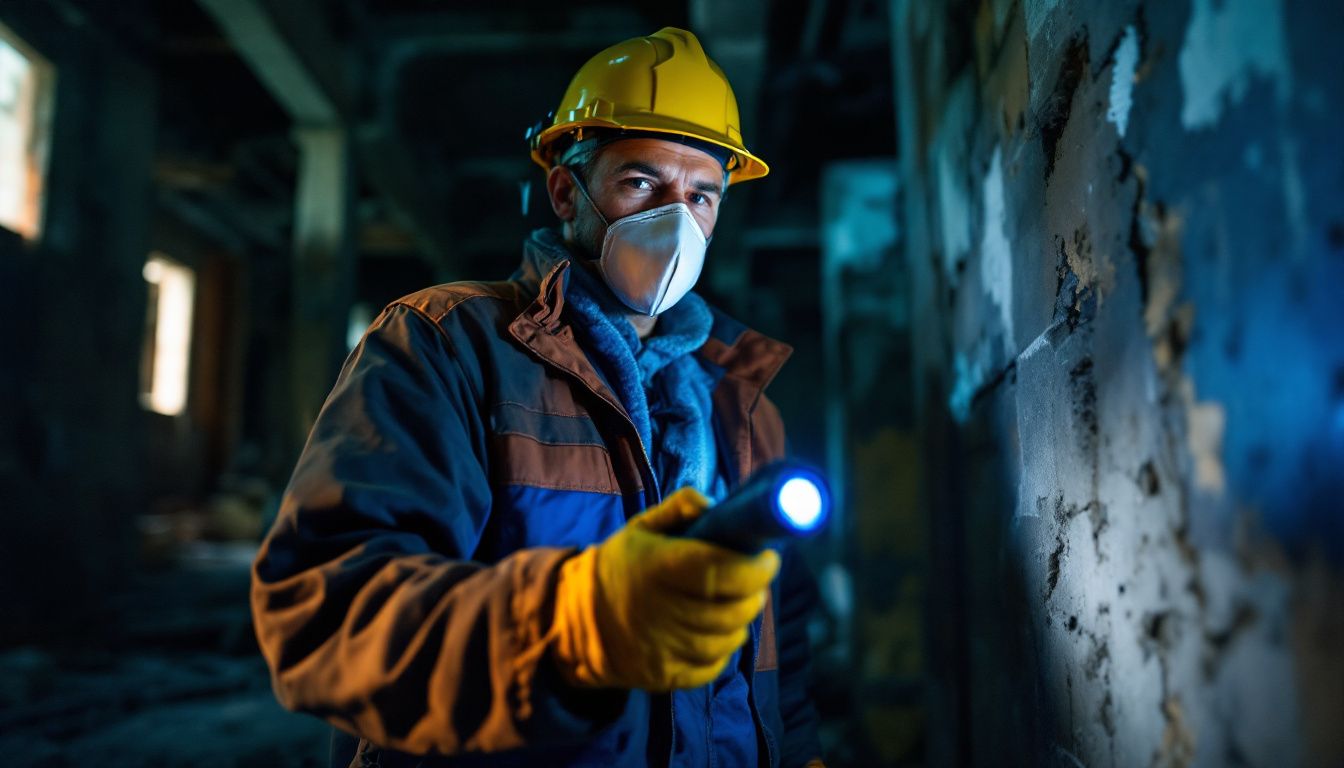
Why Office Asbestos Surveys Are Non-Negotiable for Employer Safety
If your office was built or refurbished before 2000, there is a very real chance asbestos-containing materials (ACMs) are present somewhere in the building. Ceiling tiles, floor coverings, pipe lagging, partition walls — all were commonly made with asbestos during the decades when it was the go-to building material. Office asbestos surveys exist to find those materials before your staff inadvertently disturb them.
Asbestos-related diseases kill thousands of people in Great Britain every year. The tragedy is that most of those deaths trace back to exposures that happened years or even decades earlier — often in workplaces where nobody realised the risk was there at all. A survey changes that entirely.
What Are Office Asbestos Surveys and Why Do They Matter?
An office asbestos survey is a systematic inspection of your workplace carried out by a qualified surveyor. The goal is to locate, identify, and assess any ACMs within the building fabric so that you — as the dutyholder — can manage or eliminate the risk to your employees.
Unlike a residential survey, an office survey must account for the fact that people are working in the building every day. Maintenance staff, IT contractors, electricians, and cleaners all move through spaces that could contain hidden asbestos. A single uninformed drilling job through the wrong ceiling tile can release fibres into a busy open-plan office.
The Control of Asbestos Regulations places a legal duty on those who manage non-domestic premises to manage asbestos risk. That duty starts with knowing what is in your building — and that means commissioning a proper survey.
The Two Main Types of Survey for Office Buildings
Not every survey is the same, and choosing the right one depends on what you are planning to do with the building.
Management Surveys
A management survey is the standard survey required for any office building in normal occupation. It is designed to locate ACMs that could be disturbed during everyday use — routine maintenance, minor repairs, or even moving furniture around.
The surveyor will inspect accessible areas, take samples where materials are suspected to contain asbestos, and have those samples analysed by an accredited laboratory. The result is a clear asbestos register that tells you exactly where ACMs are, what condition they are in, and what priority action (if any) is needed.
Management surveys are not a one-off exercise. They should be reviewed and updated regularly — at least annually — to reflect any changes in the condition of materials or any work that has been carried out on the building.
Refurbishment and Demolition Surveys
If you are planning a fit-out, a major refurbishment, or the building is coming down altogether, a standard management survey is not sufficient. You need a demolition survey (also known as a refurbishment and demolition survey).
This is a far more intrusive inspection. Surveyors will access areas that are normally sealed off — above suspended ceilings, inside wall cavities, beneath raised floors. The aim is to find every ACM that could be disturbed by the planned works, so that licensed removal can take place before a single contractor starts work.
Skipping this step is not just dangerous — it is illegal. HSE guidance under HSG264 is explicit that a refurbishment and demolition survey must be completed before any work that could disturb the building fabric.
Where Asbestos Hides in Office Buildings
Many office managers assume that asbestos is only found in industrial buildings or old factories. That is a dangerous misconception. Office buildings from the 1960s, 70s, and 80s used asbestos extensively, often in materials that look completely innocuous.
Common locations for ACMs in office buildings include:
- Suspended ceiling tiles — particularly common in offices built between the 1960s and 1980s
- Floor tiles and adhesives — vinyl floor tiles often contained chrysotile asbestos, and the adhesive used to fix them frequently did too
- Pipe and boiler lagging — especially in plant rooms and service risers
- Partition walls and boards — asbestos insulating board (AIB) was widely used in internal partitions
- Textured coatings — Artex-style finishes on ceilings and walls sometimes contained asbestos
- Fire doors — older fire-rated doors often used asbestos as the fire-resistant core material
- Roof sheets and soffits — corrugated asbestos cement was extremely common on flat-roofed commercial buildings
The presence of asbestos in any of these locations does not automatically mean your staff are at risk. Intact, undisturbed ACMs in good condition pose a low risk. The danger comes when those materials are damaged, deteriorating, or disturbed by work activities.
Your Legal Duties as an Employer or Dutyholder
The Control of Asbestos Regulations makes it clear: if you manage a non-domestic building, you have a legal duty to manage asbestos within it. This applies whether you own the building, manage it on behalf of the owner, or occupy it under a lease that gives you responsibility for maintenance and repair.
Your core obligations include:
- Assessing whether asbestos is present — through a suitable and sufficient survey carried out by a competent person
- Maintaining an asbestos register — a written record of the location, type, and condition of all known or presumed ACMs
- Producing an asbestos management plan — setting out how you will manage the risk from identified ACMs
- Providing information to anyone who might disturb ACMs — contractors, maintenance staff, and anyone else working in or on the building must be told about the location of asbestos before they start work
- Reviewing and monitoring — the condition of ACMs must be checked regularly and the register updated accordingly
Failure to comply can result in enforcement action from the HSE, including prohibition notices, improvement notices, and prosecution. The fines for non-compliance are substantial — and more importantly, the human cost of getting it wrong is irreversible.
The Survey Process: What to Expect
If you have never commissioned an office asbestos survey before, understanding what the process involves will help you prepare your building and your staff.
Initial Assessment and Planning
Before the surveyor arrives on site, they will want to understand the building — its age, construction type, any previous surveys or remedial works, and the scope of the inspection. Providing any existing building records, plans, or previous asbestos reports will help the surveyor work efficiently and thoroughly.
The surveyor will also agree access arrangements with you. For a working office, this often means scheduling the survey outside of core hours or in sections to minimise disruption to staff.
On-Site Inspection and Sampling
The surveyor will carry out a methodical walk-through of the building, inspecting all accessible areas and noting any materials that are suspected to contain asbestos. Where sampling is required, the surveyor will take small bulk samples using appropriate personal protective equipment and containment procedures to prevent fibre release.
Each sample is clearly labelled and its location recorded on a building plan. The surveyor will also note the condition of each material — whether it is in good condition, slightly damaged, or significantly deteriorated — as this directly affects the risk assessment.
Laboratory Analysis
All samples are sent to a UKAS-accredited laboratory for analysis. The lab will identify whether asbestos is present and, if so, which type — chrysotile (white), amosite (brown), or crocidolite (blue). Each type carries different risk profiles, though all are hazardous when fibres are inhaled.
If you need to carry out preliminary testing before a full survey — for example, on a specific material you are concerned about — a testing kit can be used to collect a sample for laboratory analysis. This is not a substitute for a full survey but can be a useful first step.
The Survey Report and Asbestos Register
Once laboratory results are in, you will receive a detailed survey report. This will include:
- A schedule of all ACMs found (or presumed to be present where sampling was not possible)
- The location, extent, and condition of each material
- A risk assessment score for each ACM
- Recommended actions — whether to manage in place, repair, encapsulate, or arrange for removal
- Photographs and annotated building plans
This report forms the basis of your asbestos register and management plan. It is a living document — it must be updated whenever work is carried out that affects ACMs, or whenever a reinspection reveals a change in condition.
Managing Asbestos in the Office: Ongoing Responsibilities
Completing the survey is the beginning of your asbestos management process, not the end. Once you have your register, you need to act on it.
For materials that are in good condition and are not at risk of disturbance, the recommended approach is often to manage them in place — monitoring their condition through regular reinspections rather than removing them. Removal is not always the safest option; it can release fibres if not carried out correctly.
For materials that are damaged, deteriorating, or in areas where disturbance is likely, the risk assessment may recommend encapsulation or licensed removal. Any removal of notifiable ACMs must be carried out by a contractor licensed by the HSE.
Your asbestos management plan should also address staff training. Anyone who works in the building — particularly maintenance staff and contractors — should receive appropriate asbestos awareness training so they can recognise suspect materials and know what to do if they encounter them.
Office Asbestos Surveys Across the UK
Supernova Asbestos Surveys carries out office asbestos surveys across the length and breadth of the UK. Whether your office is in the heart of the capital or in a regional city, we have qualified surveyors ready to attend quickly.
If you are based in the capital, our team covers all areas — find out more about our asbestos survey London service. For businesses in the North West, we offer a full survey service through our asbestos survey Manchester team. And if you are in the Midlands, our asbestos survey Birmingham team can be with you fast.
With over 50,000 surveys completed nationwide, we have the experience and the accreditations to handle any office building — from a small serviced office suite to a multi-storey commercial block.
Getting a Quote for Your Office Asbestos Survey
The cost of an office asbestos survey depends on the size of the building, the number of samples required, and the type of survey needed. The best way to get an accurate price is to speak to our team directly.
You can get a free quote from Supernova in minutes. We aim to turn quotes around quickly and can typically have a surveyor on site within 24 to 48 hours of instruction. Reports are delivered within 24 hours of the survey being completed.
Call us on 020 4586 0680 or visit asbestos-surveys.org.uk to get started.
Frequently Asked Questions
Do I need an asbestos survey for my office?
If your office building was constructed or refurbished before 2000, you almost certainly need an asbestos management survey. The Control of Asbestos Regulations requires dutyholders of non-domestic premises to manage the risk from asbestos — and that starts with knowing whether it is present. Even if a previous survey was carried out, it should be reviewed and updated regularly.
What happens if asbestos is found in my office?
Finding asbestos does not mean your office needs to close or that staff are in immediate danger. In many cases, ACMs in good condition can be safely managed in place. Your survey report will include a risk assessment and recommended actions for each material found. Licensed removal is only required where materials are damaged, deteriorating, or need to be disturbed by planned works.
How long does an office asbestos survey take?
This depends on the size and complexity of the building. A small office suite might take two to three hours, whilst a large multi-floor commercial building could take a full day or more. Supernova delivers survey reports within 24 hours of the inspection being completed, so you are never left waiting for results.
Who is legally responsible for asbestos management in a leased office?
Responsibility depends on the terms of the lease. In many commercial leases, the tenant takes on maintenance and repair obligations — which brings with it the duty to manage asbestos under the Control of Asbestos Regulations. It is essential to review your lease carefully and take legal advice if you are unsure. In shared buildings, responsibility may be split between the landlord and tenants.
How often should office asbestos surveys be updated?
Your asbestos register and management plan should be reviewed at least once a year. If any work has been carried out that could have affected ACMs, or if a reinspection reveals a change in condition, the register must be updated immediately. A full resurvey may be needed if significant changes have been made to the building or if the original survey is significantly out of date.