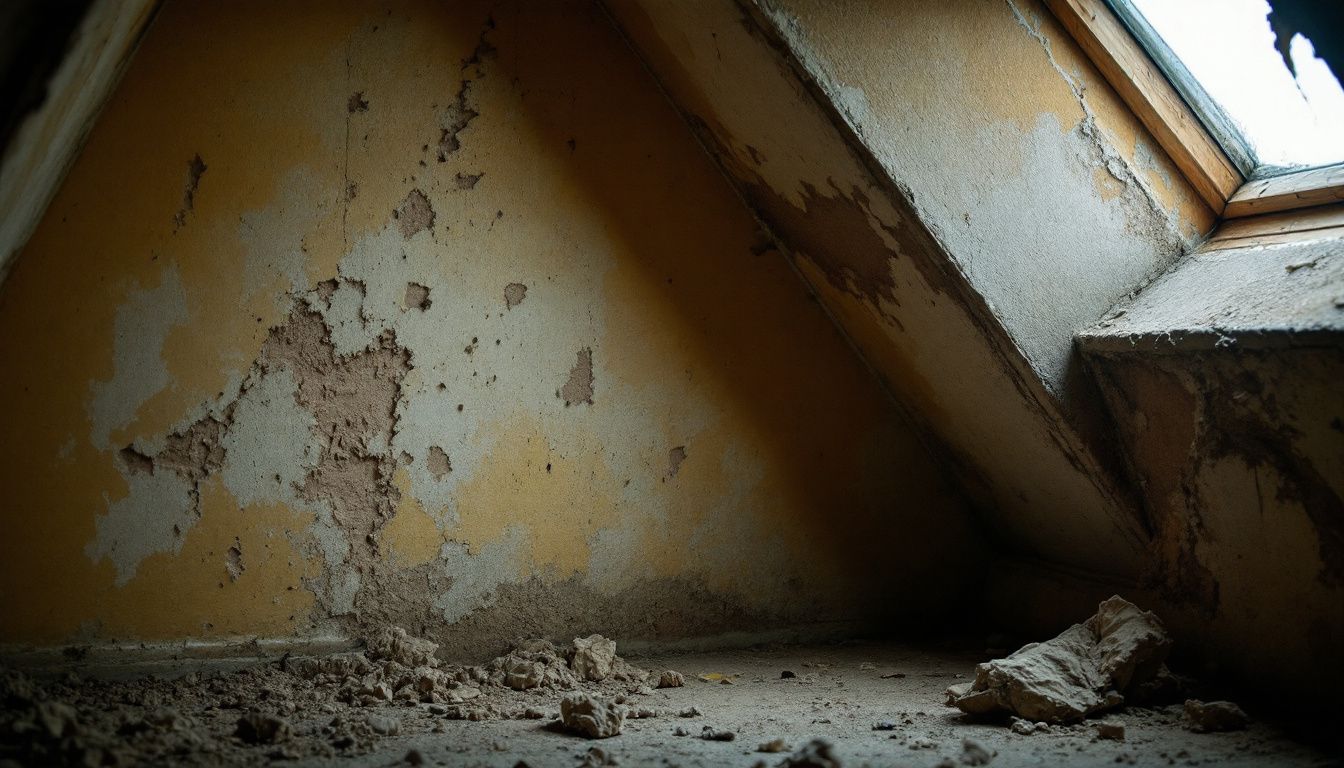
Is the Asbestos Risk in UK Buildings Really Overblown?
Some people genuinely believe the asbestos risk has been overblown — that decades of public health warnings have created unnecessary panic about a material that, in many cases, just sits quietly behind a wall doing nothing. That view is understandable. It is also dangerously incomplete.
Asbestos remains the single largest cause of work-related deaths in the UK. The buildings most likely to contain it are the ones people spend the most time in: schools, offices, homes, and hospitals. The question is not whether asbestos is dangerous in every situation — it is not. The question is whether the UK has a coherent, consistent approach to managing the risk. The honest answer is: not always.
Why People Think the Asbestos Danger Is Overblown
The argument that asbestos risks are exaggerated tends to follow a familiar pattern. Asbestos has been in buildings for decades. Most of those buildings are still standing. Most of the people who have lived or worked in them have not developed asbestos-related disease. So what is all the fuss about?
There is a grain of truth buried in that logic. Asbestos-containing materials (ACMs) that are in good condition and left completely undisturbed do pose a low risk. The fibres that cause disease are released into the air when materials are damaged, drilled into, cut, or disturbed during maintenance and refurbishment work. An intact ceiling tile is not the same as a ceiling tile being sanded down without respiratory protection.
But here is where the overblown argument falls apart: most people have no idea whether the materials in their building are intact or damaged. Most people do not know which products in a pre-2000 building contain asbestos and which do not. And most people carrying out maintenance work — a plumber, an electrician, a DIY enthusiast — are not stopping to think about what is inside the wall before they drill into it.
The Actual Scale of the Problem in the UK
The UK used more asbestos per capita than almost any other country in the world during the mid-twentieth century. It was in everything: pipe lagging, ceiling tiles, floor tiles, textured coatings like Artex, roof panels, insulating board, gaskets, and more. Use peaked in the 1960s and 1970s before a ban on the most dangerous forms, with a full ban on all asbestos products not coming into force until 1999.
Any building constructed or significantly refurbished before the year 2000 could contain asbestos — and that covers a vast proportion of the UK’s existing building stock, including the majority of state schools, a huge number of commercial properties, and millions of residential homes.
The diseases caused by asbestos exposure — mesothelioma, asbestosis, asbestos-related lung cancer, and pleural thickening — have a latency period of between 20 and 50 years. People dying from asbestos-related disease today were typically exposed in the 1970s, 1980s, or 1990s. The UK records more than 5,000 asbestos-related deaths per year, making it one of the highest rates in the world. That is not a figure that supports the idea that the danger has been overblown.
Where Asbestos Hides in UK Buildings
One of the reasons the asbestos issue persists is that people simply do not know where to look. Asbestos is not always obvious, and it was used in so many different products that even experienced tradespeople can be caught out.
Common Locations in Residential Properties
- Textured coatings — Artex and similar ceiling and wall finishes applied before the 1990s frequently contain chrysotile asbestos
- Floor tiles — Vinyl floor tiles and the adhesive beneath them, particularly those laid between the 1950s and 1980s
- Pipe lagging — Insulation around boiler pipes and hot water systems in older properties
- Insulating board — Used in partition walls, ceiling panels, fire doors, and around boilers
- Roof materials — Corrugated asbestos cement sheets on garages, outbuildings, and flat roofs
- Soffit boards — The boards under the eaves of many 1970s and 1980s houses
Common Locations in Commercial and Public Buildings
- Sprayed asbestos coatings on structural steelwork — highly friable and high-risk
- Lagging on pipework and boilers in plant rooms and service areas
- Ceiling tiles and suspended ceiling systems
- Asbestos insulating board in wall panels and partitions
- Gaskets and rope seals in older industrial plant
- Asbestos cement products in roofing, cladding, and guttering
The sheer variety of products means that a thorough management survey is the only reliable way to understand what is present in a building and where. Visual inspection alone is not sufficient — many ACMs look identical to non-asbestos alternatives.
Schools: The Case That Should Settle the Debate
If you want a concrete example of why the asbestos risk cannot be written off as overblown, look at the state of UK schools. The majority of state school buildings in England were constructed during the post-war period when asbestos use was at its height. Many of these buildings still contain substantial quantities of ACMs.
Between 2001 and 2020, more than 460 teaching professionals died from mesothelioma — a cancer caused almost exclusively by asbestos exposure. These were not people who worked in shipyards or asbestos factories. They were teachers, working in classrooms, exposed to fibres released when maintenance work disturbed materials in their school buildings.
The Covid-19 pandemic compounded the problem by interrupting routine inspection and monitoring programmes. Buildings that should have been checked regularly went without assessment. The condition of asbestos in school buildings is, in many cases, deteriorating — and deteriorating asbestos releases fibres.
Trade unions representing teachers and school staff have repeatedly called for a managed programme of asbestos removal from school buildings. The response from successive governments has been to advocate a manage-in-place approach — monitoring and maintaining ACMs rather than removing them. Many asbestos specialists believe this is inadequate given the age and condition of many school buildings.
The Legal Framework: What UK Law Actually Requires
The Control of Asbestos Regulations set out clear legal duties for those who manage non-domestic premises. The duty to manage requires anyone responsible for the maintenance or repair of non-domestic premises to take reasonable steps to find out if asbestos is present, assess its condition, and manage the risk it poses.
In practice, this means:
- Conducting a suitable and sufficient assessment of the premises — in practice, commissioning an asbestos management survey
- Preparing and implementing an asbestos management plan
- Providing information about the location and condition of ACMs to anyone who might disturb them
- Reviewing and monitoring the plan regularly
HSE guidance, including HSG264, provides the technical standards for how surveys should be carried out and how materials should be assessed and classified. Licensed contractors are required for the removal of the most hazardous asbestos materials, including asbestos insulating board, lagging, and sprayed coatings.
For domestic properties, the legal picture is less prescriptive — but the practical risk is just as real. Homeowners undertaking renovation work on pre-2000 properties are legally required to manage asbestos risks, and the HSE expects work to stop if ACMs are encountered unexpectedly.
Why Manage-in-Place Is Not Always the Right Answer
The official UK approach to asbestos has long been that removal is not always necessary — that well-maintained, undisturbed ACMs can be safely managed in place. This is technically correct in some circumstances. A sealed, intact asbestos cement roof panel in a rarely accessed outbuilding poses a very different risk profile from sprayed asbestos coating in a busy school corridor.
The problem is that manage-in-place requires ongoing, competent, consistent management. It requires regular inspection, that everyone who works in or on the building knows where the ACMs are and what precautions to apply, and that the management plan is kept up to date and actually followed.
In practice, management plans are sometimes poorly maintained. Premises change hands and the asbestos register is not passed on. Maintenance contractors are not briefed. Surveys go out of date. When manage-in-place works, it is a reasonable approach. When it does not — and there is ample evidence that it often does not — it puts people at risk.
Studies have found that a significant proportion of asbestos items across UK buildings show signs of damage or deterioration. Damaged ACMs are a fundamentally different risk proposition from intact ones, and the argument that the danger is overblown tends to assume the former situation when the reality is frequently the latter.
The Groups Most at Risk
The narrative that asbestos risk is overblown often focuses on the general population — the vast majority of whom will never develop an asbestos-related disease. But that framing obscures the groups who face genuinely elevated exposure.
Construction and Maintenance Workers
Electricians, plumbers, carpenters, and general builders working on pre-2000 buildings encounter ACMs regularly, often without knowing it. The cumulative exposure from years of working in and around asbestos-containing materials creates a meaningful risk of disease. These workers are the highest-risk group in the UK.
Teachers and School Staff
As the mesothelioma mortality data makes clear, teachers and school support staff face elevated risk from working in buildings where asbestos management has not always been adequate. Healthcare workers in older NHS buildings face similar exposure risks during maintenance and refurbishment work.
Women and Overlooked Groups
Women are a frequently overlooked group in asbestos risk discussions. The assumption that asbestos disease is primarily a male, industrial problem has led to underdiagnosis and delayed treatment. Women who worked in textiles, manufacturing, and other industries involving asbestos-containing products — and those who washed the work clothes of men who worked with asbestos — have suffered significant rates of asbestos-related disease. The risk is not confined to any one demographic.
What Property Owners and Managers Should Actually Do
Whether you manage a commercial property, a school, a block of flats, or you are a homeowner planning renovation work, the practical steps are consistent.
For Non-Domestic Properties
- Commission a management survey if one does not exist or if the existing one is out of date
- Ensure your asbestos register and management plan are current and accessible
- Brief all contractors before they begin work — provide them with a copy of the register
- Commission a demolition survey before any intrusive refurbishment or demolition work begins
- Use licensed contractors for the removal of licensable ACMs — professional asbestos removal ensures the work is done safely and legally
- Review the management plan annually and after any significant changes to the building
For Residential Properties
- If your home was built before 2000, assume ACMs may be present until proven otherwise
- Do not drill, cut, sand, or disturb any material you cannot positively identify as asbestos-free
- Commission a survey before any refurbishment — even relatively minor work like fitting a new kitchen or bathroom can disturb hidden ACMs
- If you suspect a material contains asbestos, leave it alone and get it tested by a qualified analyst
Getting a Survey Where You Are
Access to a qualified, UKAS-accredited surveying team is straightforward regardless of where your property is located. If you are based in or around the capital, an asbestos survey London from an accredited provider gives you the assurance that the work meets the required technical standard.
If you manage property in the North West, an asbestos survey Manchester from a qualified team will ensure your management obligations are properly met. For those in the Midlands, an asbestos survey Birmingham can be arranged quickly, with detailed reporting that gives you a clear picture of what is present and what action is required.
Supernova Asbestos Surveys operates nationwide, with surveyors covering all regions of England, Scotland, and Wales. Every survey is carried out to HSG264 standards by qualified professionals, with clear, actionable reports delivered promptly.
The Bottom Line on Whether Asbestos Risk Is Overblown
The claim that asbestos risk is overblown rests on a selective reading of the evidence. Yes, undisturbed ACMs in good condition pose a low immediate risk. But the UK has millions of buildings containing asbestos, a large proportion of which are ageing, poorly monitored, and regularly disturbed by tradespeople who do not know what they are working with.
More than 5,000 people die from asbestos-related disease in the UK every year. Those deaths are not a statistical abstraction — they are the delayed consequence of exposure that happened decades ago, often in workplaces and buildings that were never properly managed. The people dying today were exposed when the manage-in-place approach was already supposed to be working.
Dismissing the risk as overblown is not a neutral position. It is one that makes it easier to defer surveys, skip contractor briefings, and cut corners on management plans. The cost of that complacency is measured in lives.
If you are responsible for a building that may contain asbestos and you do not have a current, accurate survey in place, the most useful thing you can do is commission one. Not because of panic — but because knowing what is there is the only basis for managing it properly.
Frequently Asked Questions
Is the risk from asbestos really as serious as it is made out to be?
The short answer is yes — but with important nuance. Asbestos-containing materials that are intact and undisturbed pose a low immediate risk. The serious risk arises when those materials are damaged, disturbed, or deteriorating, releasing fibres into the air. Given that the UK has an enormous stock of pre-2000 buildings containing asbestos, and that maintenance and refurbishment work regularly disturbs those materials without adequate precautions, the risk across the population is substantial. More than 5,000 asbestos-related deaths are recorded in the UK each year, which is not consistent with a danger that has been overblown.
Do I need a survey if my building looks fine and no one has complained about asbestos?
Yes. Asbestos-containing materials are often visually indistinguishable from non-asbestos alternatives, and the absence of visible damage does not mean materials are safe to disturb. Under the Control of Asbestos Regulations, duty holders for non-domestic premises are legally required to assess whether asbestos is present and manage the risk. A management survey is the standard method for fulfilling that duty. Relying on visual inspection or the absence of complaints is not legally or practically sufficient.
What is the difference between a management survey and a demolition survey?
A management survey is carried out to locate and assess ACMs that could be disturbed during normal occupation and routine maintenance. It is the standard survey required for most non-domestic premises under the duty to manage. A demolition survey — also known as a refurbishment and demolition survey — is a more intrusive investigation required before any significant refurbishment or demolition work. It is designed to locate all ACMs in the areas to be worked on, including those that would not be accessible during normal use. The two surveys serve different purposes and are not interchangeable.
Can I remove asbestos myself to save money?
For some lower-risk, non-licensable materials — such as asbestos cement products — it is technically possible for non-licensed contractors to carry out removal, provided they follow the relevant HSE guidance and notification requirements. However, the most hazardous materials — including asbestos insulating board, lagging, and sprayed coatings — must be removed by a licensed contractor. Attempting to remove licensable materials without the appropriate licence is illegal and extremely dangerous. Even for non-licensable work, engaging a professional is strongly advisable to ensure the work is done safely and waste is disposed of correctly.
How often should an asbestos management plan be reviewed?
The Control of Asbestos Regulations require that the asbestos management plan is reviewed and kept up to date. As a minimum, this means an annual review. It also means updating the plan after any significant changes to the building, after any work that has disturbed or removed ACMs, and whenever the condition of identified materials changes. An out-of-date management plan provides false assurance and may leave contractors and occupants without the information they need to work safely.
Speak to Supernova Asbestos Surveys
Supernova Asbestos Surveys has completed more than 50,000 surveys across the UK. Our teams are qualified, UKAS-accredited, and operate nationwide — from London and Birmingham to Manchester and beyond. Whether you need a management survey, a demolition survey, or advice on your legal obligations, we can help.
Call us on 020 4586 0680 or visit asbestos-surveys.org.uk to request a quote or speak to a member of our team.