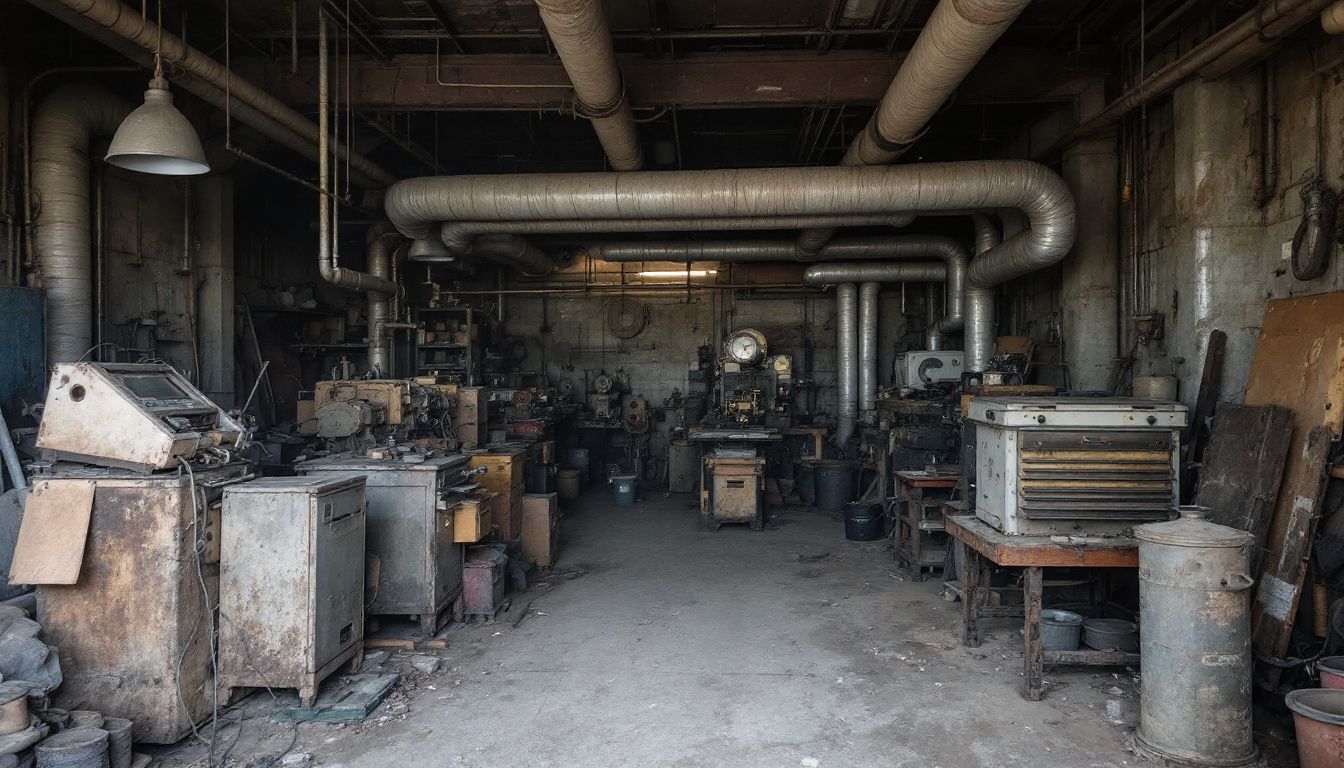
If your workplace was built or refurbished before 2000, there is a very real chance that asbestos in the workplace is not a historical problem — it is a present one. Millions of commercial buildings across the UK still contain asbestos-containing materials (ACMs), and the people who work in, maintain, and manage those buildings face genuine risks every single day.
This is not a problem confined to shipyards and factories. Teachers, electricians, office managers, plumbers, and facilities teams encounter asbestos risks routinely, often without realising it. Understanding where asbestos hides, what the law demands of you, and how to protect your workforce is not optional — it is a legal and moral obligation.
Why Asbestos in the Workplace Remains a Serious Hazard
The UK banned the import and use of all forms of asbestos, but decades of widespread use in construction and manufacturing have left an enormous legacy. Asbestos was incorporated into buildings throughout the twentieth century — in ceiling tiles, pipe lagging, floor tiles, insulation boards, roof sheets, and decorative coatings.
The Health and Safety Executive consistently identifies asbestos-related disease as the single largest cause of work-related deaths in Great Britain, with thousands of fatalities recorded every year. Many of those deaths are linked to exposures that happened decades earlier, which is precisely what makes asbestos so dangerous — the diseases it causes take 20 to 50 years to develop.
The tragedy is that the vast majority of these deaths were, and continue to be, entirely preventable.
Where Asbestos Hides in UK Workplaces
One of the most persistent misconceptions about asbestos is that it only exists in old industrial sites. In reality, ACMs were used across virtually every building type — offices, schools, hospitals, retail units, and warehouses included.
Common Locations in Commercial Buildings
If your workplace was built before 2000, asbestos may be present in any of the following locations:
- Ceiling tiles and suspended ceiling systems — textured coatings such as Artex frequently contained asbestos
- Pipe and boiler lagging — insulation around heating systems was one of the primary applications of asbestos
- Floor tiles and adhesives — vinyl floor tiles from the mid-twentieth century commonly contained chrysotile
- Insulation boards — used extensively in partition walls, fire doors, and ceiling panels
- Roof sheets and guttering — asbestos cement was widely used in industrial and agricultural buildings
- Sprayed coatings — applied to structural steelwork for fire protection
- Gaskets and seals — found in older plant and machinery
High-Risk Industries and Occupations
Certain workers face a significantly higher risk of encountering asbestos during their daily duties. These include:
- Construction workers and labourers on older buildings
- Electricians and plumbers working in pre-2000 properties
- Heating and ventilation engineers
- Demolition contractors
- Maintenance and facilities management staff
- Teachers and school staff in older buildings
- Local authority housing repair teams
The danger is not always visible. A maintenance worker drilling into a wall to run a cable, or a plumber cutting through an insulation board — these routine tasks can disturb asbestos fibres and release them into the air without anyone realising. That is precisely why professional surveys and up-to-date asbestos registers are so critical.
The Health Consequences of Asbestos Exposure at Work
When asbestos fibres are inhaled, they become permanently lodged in lung tissue. The body cannot break them down or remove them. Over time, this causes progressive and irreversible damage that manifests in several serious conditions.
Mesothelioma
Mesothelioma is a cancer of the lining of the lungs or abdomen caused almost exclusively by asbestos exposure. Symptoms typically do not appear until 20 to 50 years after the initial exposure, and by the time it is diagnosed, the disease is usually at an advanced stage. There is no cure. Treatment focuses on managing symptoms and extending life expectancy, which makes prevention the only meaningful response.
Asbestosis
Asbestosis is a chronic lung condition caused by prolonged exposure to asbestos fibres. The lungs become scarred and stiff, making breathing increasingly difficult. It is progressive — it worsens over time even after exposure has stopped — and there is no way to reverse the damage once it has occurred.
Lung Cancer and Pleural Thickening
Asbestos exposure significantly increases the risk of lung cancer, particularly in individuals who also smoke. Pleural thickening — scarring of the membrane surrounding the lungs — causes breathlessness and chest pain that can severely limit quality of life and the ability to work.
All of these conditions are entirely preventable with the right surveys, management plans, and working practices in place.
The Wider Impact on Families
The harm caused by asbestos in the workplace does not stop at the building entrance. Workers have historically brought asbestos fibres home on their clothing, unknowingly exposing partners and children. This secondary exposure has led to mesothelioma diagnoses in people who never set foot in an industrial environment.
Communities built around heavy industry — shipbuilding, power generation, manufacturing — have borne a disproportionate burden of asbestos-related illness, and the emotional and economic toll continues to be felt across generations.
Your Legal Duties Under UK Law
The legal framework around asbestos in the workplace is clear and well-established. Employers and those who manage non-domestic premises have specific duties under the Control of Asbestos Regulations and associated HSE guidance, including HSG264.
The Duty to Manage
Anyone responsible for the maintenance or repair of non-domestic premises has a legal duty to manage asbestos. In practical terms, this means they must:
- Find out whether ACMs are present in the building
- Assess the condition and risk of any ACMs identified
- Prepare and implement a written asbestos management plan
- Keep the management plan up to date and review it regularly
- Provide information to anyone who may disturb ACMs during their work
Failing to fulfil this duty is a criminal offence. The HSE has the power to issue improvement notices, prohibition notices, and prosecute duty holders who fail to comply. Ignorance is not a defence.
Notifiable Non-Licensed Work and Licensed Removal
Not all asbestos work requires a licence, but some does. Work on asbestos insulation, asbestos insulation board, and asbestos coating must only be carried out by a contractor holding a current HSE licence. Other types of work may be classed as notifiable non-licensed work (NNLW), which requires notification to the relevant enforcing authority before work begins.
Employers must understand which category applies to any planned work and appoint appropriately qualified contractors accordingly. Where asbestos needs to be removed from your premises, only engage a licensed contractor with current HSE licensing and appropriate insurance. You can find out more about what professional asbestos removal involves before committing to a contractor.
Workplace Exposure Limits
The Control of Asbestos Regulations sets a workplace exposure limit (WEL) for asbestos fibres. Employers must ensure that exposure is reduced to as low as reasonably practicable and kept below the WEL at all times. Where there is any risk of exposure, appropriate respiratory protective equipment must be provided along with training on its correct use.
The Role of Asbestos Surveys in Workplace Safety
The starting point for managing asbestos in any workplace is knowing what you are dealing with. You cannot manage a risk you have not identified, and a professional asbestos survey is the only reliable way to establish that baseline.
Management Surveys
A management survey is the standard survey required for most non-domestic premises. It locates, as far as reasonably practicable, the presence and extent of any ACMs in a building that could be disturbed during normal occupation and routine maintenance.
The survey involves a visual inspection of accessible areas, sampling of suspect materials, and laboratory analysis. The resulting report provides a detailed register of ACMs, their condition, and a risk assessment to help you prioritise your management actions.
An asbestos management survey is not a one-off exercise. It should be reviewed and updated whenever the building changes, work is carried out, or the condition of known ACMs deteriorates.
Refurbishment and Demolition Surveys
Before any significant refurbishment or demolition work, a more intrusive refurbishment and demolition survey is required. This survey is designed to locate all ACMs in the areas to be worked on, including those hidden within the fabric of the building — behind walls, beneath floors, and above ceilings.
A thorough demolition survey is a legal requirement before any licensed asbestos removal work takes place. Commissioning one is not merely good practice — it is a condition of compliance.
What Happens Without a Survey?
Without a current asbestos survey, your maintenance team, contractors, and anyone entering the building are operating blind. They may disturb asbestos without knowing it, putting themselves and others at serious risk of exposure.
As the duty holder, you would be liable for any resulting harm. The HSE takes a very dim view of duty holders who permit work on older buildings without first commissioning appropriate surveys.
Practical Steps to Protect Your Workforce
Managing asbestos in the workplace does not have to be complicated, but it does require a systematic and ongoing approach. Here is what good practice looks like.
Step 1: Commission a Survey
If you manage a non-domestic building constructed before 2000 and do not have an up-to-date asbestos register, commission a management survey immediately. This is your legal baseline and the foundation of everything else you do.
Step 2: Create and Maintain an Asbestos Register
The survey report forms the basis of your asbestos register. This document must be kept on site, kept up to date, and made available to any contractor or maintenance worker before they begin any work that could disturb the building fabric.
Step 3: Develop a Management Plan
Your management plan should set out how you will manage each ACM identified — whether that means leaving it in place and monitoring it, encapsulating it, or arranging for its removal. The plan should assign responsibilities clearly and set review dates.
Step 4: Train Your Staff
Anyone who may work with or disturb asbestos must receive appropriate training. This includes awareness training for those who may encounter ACMs incidentally, as well as more detailed training for those managing the asbestos register or supervising contractors.
Step 5: Control Contractor Access
Before any contractor begins work on your premises, provide them with relevant information from your asbestos register. Make sure they have carried out their own risk assessment and have appropriate controls in place. Never allow contractors to start work on older buildings without first verifying whether asbestos is present in the area they will be working.
Step 6: Review Regularly
Asbestos management is an ongoing responsibility, not a box to tick once. Review your management plan at least annually, and after any incident, change of use, or maintenance work that may have affected the condition of known ACMs.
Supernova Asbestos Surveys: National Coverage, Expert Surveyors
Supernova Asbestos Surveys operates across the length and breadth of the UK, with BOHS-qualified surveyors ready to respond quickly wherever your premises are located. With over 50,000 surveys completed nationwide, we have the experience and accreditation to support duty holders across every sector.
If you need an asbestos survey London for your commercial premises, our surveyors can typically attend within 24 to 48 hours. For businesses in the north-west, our team providing asbestos survey Manchester services covers the full Greater Manchester area and surrounding regions. We also provide a full asbestos survey Birmingham service for businesses and landlords across the West Midlands.
Whether you need a management survey, a refurbishment and demolition survey, or advice on your existing asbestos register, our team is ready to help. Call us today on 020 4586 0680 or visit asbestos-surveys.org.uk to request a quote or speak to a surveyor.
Frequently Asked Questions
Does my workplace definitely contain asbestos?
If your workplace was built or significantly refurbished before 2000, there is a reasonable chance that asbestos-containing materials are present somewhere in the building. The only way to know for certain is to commission a professional asbestos management survey. Assuming asbestos is absent without evidence is not a safe or legally defensible position.
Who is legally responsible for managing asbestos in the workplace?
Under the Control of Asbestos Regulations, the duty to manage asbestos falls on the person or organisation responsible for the maintenance and repair of non-domestic premises. This is typically the building owner, landlord, or facilities manager. If that responsibility is shared or unclear, it must be clarified in writing — ambiguity is not a defence if something goes wrong.
What is the difference between a management survey and a demolition survey?
A management survey is carried out during normal building occupation and identifies ACMs that could be disturbed during routine maintenance and day-to-day use. A demolition or refurbishment survey is more intrusive and is required before any significant building work takes place. It is designed to locate all ACMs in the areas to be worked on, including those concealed within the structure.
Can I leave asbestos in place rather than having it removed?
Yes — in many cases, leaving ACMs in place and managing them is the correct approach, provided they are in good condition and are not likely to be disturbed. Removal is not always necessary or even advisable, as the removal process itself can release fibres if not carried out correctly. Your asbestos management plan should document the condition of all ACMs and set out how they will be monitored over time.
How often does an asbestos management survey need to be updated?
Your asbestos register and management plan should be reviewed at least annually. They should also be updated following any maintenance work, refurbishment, change of building use, or any incident that may have affected the condition of known ACMs. An out-of-date survey offers limited legal protection and may give a false sense of security.