Living with Asbestos: What You Need to Know to Stay Safe
Living with asbestos is a reality for millions of people across the UK. Homes, schools, offices, and industrial buildings constructed before 2000 are likely to contain asbestos-containing materials (ACMs) — and in many cases, those materials are still in place today.
The key question is not always whether asbestos is present, but whether it poses a genuine risk to the people living or working around it. Understanding your situation, your legal responsibilities, and your practical options is the most important thing you can do. This is not a subject to guess at or leave to chance.
Why So Many UK Properties Still Contain Asbestos
Asbestos was used extensively in British construction from the 1950s through to the late 1990s. It was cheap, fire-resistant, and excellent at insulation — which made it popular with builders and developers across every sector. It was not fully banned in the UK until 1999.
That means any property built or refurbished before that date could contain asbestos in some form. Given the UK’s enormous stock of older housing and commercial property, the number of buildings still containing ACMs runs into the millions.
Common locations where asbestos is found include:
- Ceiling tiles and textured coatings such as Artex
- Floor tiles and the adhesive beneath them
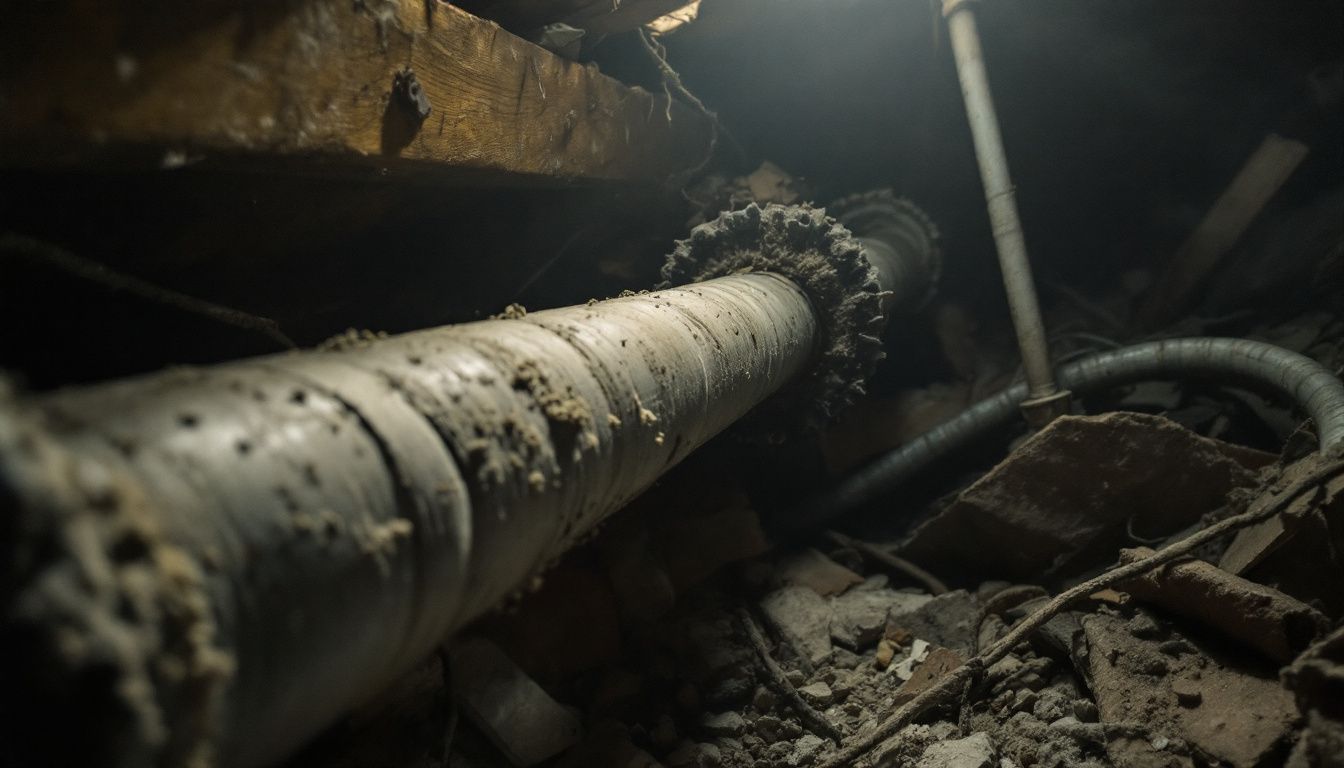
- Pipe lagging and boiler insulation
- Roof panels and soffit boards
- Partition walls and ceiling panels
- Insulating board around fireplaces and storage heaters
- Garage roofs and outbuildings, often corrugated asbestos cement
Many of these materials remain in good condition and are not immediately dangerous. But that does not mean they can be ignored.
Is Living with Asbestos Actually Dangerous?
This is one of the most important distinctions to understand: asbestos is only dangerous when its fibres become airborne and are inhaled. Intact, undisturbed ACMs in good condition do not release fibres and generally pose a low risk to occupants.
The danger arises when ACMs are damaged, deteriorating, or disturbed — during DIY work, renovation, or general wear and tear over time. Once fibres are released into the air, they can be inhaled and become lodged in the lungs, where they can cause serious diseases including mesothelioma, asbestos-related lung cancer, asbestosis, and pleural disease.
These conditions typically take decades to develop after exposure, which is part of what makes asbestos so insidious. A person may have been exposed years ago without realising it, and the consequences only become apparent much later.
The message from the HSE is clear: do not disturb asbestos unless you know exactly what you are dealing with. If you suspect materials in your property may contain asbestos, do not sand, drill, cut, or otherwise interfere with them until you have had a professional assessment.
Your Legal Responsibilities When Living with Asbestos
The Control of Asbestos Regulations place a legal duty on those who manage non-domestic properties to identify, assess, and manage any asbestos present. This is known as the Duty to Manage, and it applies to landlords, employers, facilities managers, and anyone with responsibility for the maintenance of a commercial or public building.
For residential homeowners, the legal position is different — there is no statutory duty to survey your own home. However, if you are a landlord renting out a property, you have a duty of care to your tenants and must take reasonable steps to manage any asbestos risk.
What the Duty to Manage Requires
Under the Control of Asbestos Regulations, duty holders for non-domestic premises must:
- Find out whether asbestos is present in the building
- Assess the condition and risk of any ACMs identified
- Produce and maintain an asbestos register
- Create a written asbestos management plan
- Share information with anyone who may disturb the materials, including contractors and maintenance staff
- Monitor the condition of ACMs regularly and keep records up to date
Failure to comply is a criminal offence and can result in substantial fines or prosecution. The HSE takes enforcement of these duties seriously.
What About Residential Properties?
If you own a pre-2000 home and are planning any building work — even something as minor as drilling into a wall or replacing a ceiling — you should consider whether asbestos may be present before you start. Many homeowners have inadvertently disturbed asbestos during routine DIY without realising it.
Getting a survey before any work begins is the responsible approach, and in many cases it will save you money by preventing costly remediation later.
The Right Type of Survey for Your Situation
Not all asbestos surveys are the same. The type of survey you need depends on what you are planning to do with the property.
Management Surveys
A management survey is designed to locate and assess ACMs that could be disturbed during normal occupation and routine maintenance. It is the standard survey for occupied buildings and is used to produce the asbestos register required under the Control of Asbestos Regulations.
This type of survey is appropriate if you need to understand what is in a building and manage it safely over time. It is not intrusive — the surveyor will inspect accessible areas and take samples where necessary, but will not break into the building fabric.
Refurbishment and Demolition Surveys
If you are planning significant renovation, refurbishment, or demolition work, you will need a more thorough demolition survey. This is a fully intrusive inspection designed to locate all ACMs that could be disturbed by the planned work — including those hidden behind walls, under floors, or above ceilings.
This survey must be completed before any licensed or notifiable work begins. Skipping this step is not just dangerous — it is illegal.
How to Manage Asbestos Safely in Your Property
If asbestos is found in your property, removal is not always the right answer. In many cases, managing it in place is the safer and more cost-effective option — provided the materials are in good condition and are unlikely to be disturbed.
Here is a practical approach to managing ACMs safely:
- Do not disturb it. If ACMs are intact and in good condition, leaving them alone is often the best course of action.
- Monitor regularly. Keep an eye on the condition of any known ACMs. If they deteriorate — crumbling, cracking, or showing signs of physical damage — seek professional advice promptly.
- Label and record. Maintain an up-to-date asbestos register so that anyone working in the building knows where ACMs are located.
- Brief your contractors. Before any maintenance or building work, inform contractors about the location of ACMs and ensure they have appropriate training and equipment.
- Use licensed contractors for high-risk work. Certain types of asbestos work — particularly involving sprayed coatings, lagging, or asbestos insulating board — must by law be carried out by a licensed contractor.
- Consider encapsulation. In some cases, ACMs can be encapsulated with a specialist coating to prevent fibre release, rather than removed entirely.
The key principle is this: manage the risk, do not create one. Poorly planned removal can release far more fibres than leaving materials undisturbed.
When Asbestos Must Be Removed
There are situations where removal is the only appropriate course of action. These include:
- Materials that are in poor condition and cannot be safely encapsulated
- Planned refurbishment or demolition work that will disturb ACMs
- Situations where the ongoing management risk is assessed as unacceptably high
- Where the building will be significantly altered and continued management is impractical
Professional asbestos removal must be carried out by a suitably qualified contractor. For higher-risk materials — including asbestos insulating board, lagging, and sprayed coatings — only HSE-licensed contractors are permitted to carry out the work. The work must be notified to the HSE in advance, and strict controls must be in place throughout.
Never attempt to remove asbestos yourself. The risks are serious, and the legal consequences of unlicensed removal can be severe.
The Health Impact of Asbestos Exposure
Being clear-eyed about what asbestos exposure can cause is part of managing it responsibly. These diseases are entirely preventable — but only if exposure is properly controlled.
Asbestos-related diseases include:
- Mesothelioma — a cancer of the lining of the lungs or abdomen, almost exclusively caused by asbestos exposure. It has a long latency period and is typically diagnosed at a late stage.
- Asbestos-related lung cancer — similar to other forms of lung cancer but directly linked to asbestos fibre inhalation.
- Asbestosis — a chronic lung condition caused by scarring of lung tissue from inhaled fibres. It is progressive and currently has no cure.
- Pleural thickening and pleural plaques — changes to the lining of the lungs that can cause breathlessness and discomfort.
The single most effective way to prevent asbestos-related illness is to know where asbestos is, manage it properly, and ensure that no one is exposed to fibres unnecessarily. The HSE publishes technical guidance under HSG264, which sets out the standards for asbestos surveying and sampling. Any reputable surveying company will work to this standard.
Getting an Asbestos Survey: What to Expect
If you have never had an asbestos survey, the process is straightforward. A qualified surveyor will visit the property, inspect accessible areas, and take samples of any materials suspected to contain asbestos. Those samples are sent to an accredited laboratory for analysis.
The resulting report will identify the location, type, and condition of any ACMs found, along with a risk assessment and recommendations for management or remediation. A good survey report gives you everything you need to make informed decisions about your property.
Turnaround times are typically fast. At Supernova, survey reports are delivered within 24 hours of the inspection, and surveys can usually be booked within 24 to 48 hours of enquiry.
If you are based in or around the capital, our asbestos survey London team covers the full Greater London area and can typically attend at short notice. For clients in the North West, our asbestos survey Manchester service operates across Greater Manchester and the surrounding region. In the Midlands, our asbestos survey Birmingham team covers Birmingham and the wider West Midlands area.
Practical Steps You Can Take Right Now
Whether you are a homeowner, landlord, facilities manager, or business owner, there are concrete steps you can take today to manage your asbestos risk responsibly:
- Find out when your property was built. If it was constructed or significantly refurbished before 2000, assume asbestos may be present until proven otherwise.
- Do not carry out any building work until you know what you are dealing with. This includes seemingly minor tasks like drilling, sanding, or cutting into existing materials.
- Book a professional survey. A management survey will give you a clear picture of what is in your building and what condition it is in.
- Create or update your asbestos register. If you manage a non-domestic property, this is a legal requirement — not a recommendation.
- Brief anyone working on your property. Contractors, maintenance staff, and tradespeople all need to know about any ACMs before they start work.
- Review regularly. Asbestos management is not a one-time task. The condition of ACMs can change over time, and your register should be reviewed and updated accordingly.
Taking these steps does not need to be complicated or expensive. A professional survey provides the foundation for everything else, and the cost is modest compared to the potential consequences of getting it wrong.
How Supernova Asbestos Surveys Can Help
Supernova Asbestos Surveys has completed over 50,000 surveys across the UK. Our surveyors are BOHS-qualified and work to the standards set out in HSG264. We provide fast, accurate survey reports with clear recommendations — giving you the information you need to protect your building, your occupants, and your legal position.
We work with homeowners, landlords, facilities managers, housing associations, local authorities, schools, and commercial property owners of all sizes. Whatever your situation, we can advise on the right type of survey and carry out the work quickly and professionally.
To book a survey or speak to a member of our team, call us on 020 4586 0680 or visit asbestos-surveys.org.uk. We cover the whole of the UK and can usually arrange a survey within 24 to 48 hours of your enquiry.
Frequently Asked Questions
Is it safe to live in a house with asbestos?
In many cases, yes — provided the asbestos-containing materials are intact, in good condition, and not being disturbed. Asbestos only poses a health risk when fibres become airborne and are inhaled. If ACMs are undamaged and properly managed, the risk to occupants is generally low. The key is knowing where the materials are and ensuring they are not accidentally disturbed during maintenance or DIY work.
Do I have to remove asbestos from my home?
Not necessarily. For residential homeowners, there is no legal requirement to remove asbestos simply because it is present. In many cases, managing ACMs in place is the safer and more practical option. Removal is typically required when materials are in poor condition, when refurbishment or demolition work will disturb them, or when the ongoing management risk is assessed as too high to manage safely in situ.
What should I do if I think I have disturbed asbestos?
Stop work immediately. Vacate the area and keep others away. Do not attempt to clean up any dust or debris yourself. Open windows to ventilate the space if it is safe to do so, then contact a licensed asbestos contractor to assess the situation. If you are concerned about exposure, seek medical advice and inform your GP of the potential contact with asbestos fibres.
Who is responsible for managing asbestos in a rented property?
Landlords have a duty of care to their tenants and must take reasonable steps to identify and manage any asbestos risk in properties they let. For non-domestic premises, the Control of Asbestos Regulations impose a formal Duty to Manage on those responsible for the building. For residential lettings, landlords should ensure they are aware of any ACMs present and that tenants and contractors are informed accordingly.
How long does an asbestos survey take?
The duration depends on the size and complexity of the property. A management survey of a typical residential property can often be completed within a couple of hours. Larger commercial or industrial premises will take longer. At Supernova Asbestos Surveys, we aim to deliver survey reports within 24 hours of the inspection, so you will not be left waiting for results.