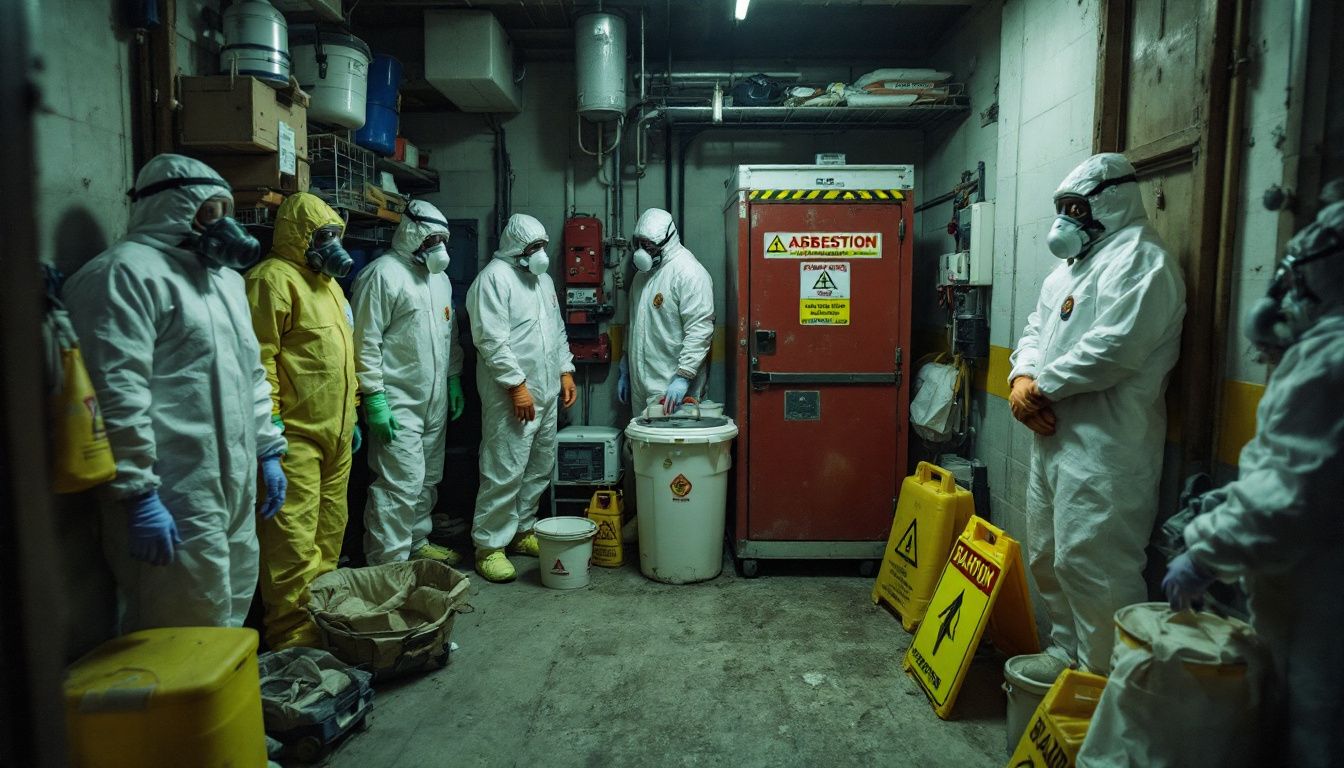
Asbestos Flash Guards: What They Are, Where They Hide, and What You Must Do Next
Asbestos flash guards are one of the most consistently overlooked asbestos-containing materials in UK buildings — and they have a habit of turning up exactly where nobody expects them. Inside electrical panels, switchgear, and distribution boards that haven’t been opened in years, they sit quietly, unrecorded, waiting to be disturbed by an unsuspecting electrician or maintenance engineer.
If you manage a commercial building, industrial unit, or older residential block, understanding what asbestos flash guards are and how to handle them safely isn’t optional. It’s a legal obligation — and the consequences of getting it wrong can be severe.
What Are Asbestos Flash Guards?
Flash guards are protective shields or barriers designed to prevent electrical arcing — the dangerous flash of electricity that can jump between conductors inside switchgear, fuse boards, and electrical distribution equipment. They’re found inside electrical panels, circuit breaker enclosures, and industrial switchgear throughout UK buildings.
Before the widespread ban on asbestos in construction materials, flash guards were routinely manufactured using asbestos-based composites. Asbestos was considered ideal for the job: exceptional heat resistance, strong electrical insulation properties, and impressive durability. It could withstand the intense heat generated by electrical arcing without degrading — which made it a logical choice at the time.
The legacy of that thinking is that thousands of buildings across the UK — particularly those with electrical infrastructure installed before 2000 — may still contain asbestos flash guards inside their switchgear and distribution boards. Many have never been identified, because electrical equipment is routinely overlooked during asbestos surveys.
Where Are Asbestos Flash Guards Found?
Asbestos flash guards tend to sit inside electrical equipment rather than being visible on walls or ceilings. That’s what makes them so easy to miss — and so easy to disturb accidentally during maintenance or upgrade work.
Common locations include:
- Electrical distribution boards and consumer units — particularly older fuse boards in commercial and industrial premises
- High-voltage switchgear — found in substations, plant rooms, and industrial facilities
- Circuit breaker panels — especially in buildings constructed or refurbished before the 1990s
- Industrial control panels — in manufacturing plants, warehouses, and utilities infrastructure
- Meter cupboards and service intake areas — in older residential blocks and commercial properties
- Rewireable fuse boxes — a particularly common source in pre-1980s properties
The critical point is that asbestos flash guards are often hidden inside closed equipment. An electrician opening up an old distribution board to carry out routine maintenance may unknowingly disturb asbestos-containing flash guards — releasing fibres into the air without any warning or protection in place.
Why Asbestos Flash Guards Are a Serious Health Risk
Asbestos flash guards present a particular challenge because they combine two hazards: the electrical risk of the equipment itself, and the asbestos risk from the materials inside it.
When asbestos-containing flash guards are disturbed — even slightly — they can release microscopic fibres into the air. These fibres are invisible to the naked eye and can remain airborne for hours. When inhaled, they lodge in the lungs and can cause serious diseases including mesothelioma, asbestosis, and lung cancer.
These conditions typically take decades to develop, which is why many workers exposed during the 1970s and 1980s are only now becoming ill. The risk is compounded by the fact that electricians, maintenance engineers, and facilities staff may have no idea that asbestos flash guards are present.
Unlike asbestos insulating board on a ceiling or pipe lagging around a boiler, flash guards inside a closed panel aren’t visible. Without a thorough asbestos management survey that specifically includes electrical equipment, they can remain undetected for years.
Who Is Most at Risk?
The people most likely to encounter asbestos flash guards include:
- Electricians carrying out maintenance, upgrades, or fault-finding on older switchgear
- Facilities managers overseeing electrical infrastructure in pre-2000 buildings
- Building services engineers working on refurbishment projects
- Demolition contractors stripping out old electrical installations
- Maintenance staff in industrial and commercial premises
If any of these roles apply to your organisation, asbestos flash guards need to be on your radar — and recorded in your asbestos register.
Your Legal Duties Under the Control of Asbestos Regulations
The Control of Asbestos Regulations place a clear duty on those responsible for non-domestic premises to manage asbestos — and that duty extends to asbestos flash guards inside electrical equipment. This isn’t a grey area.
The duty to manage requires you to:
- Identify all asbestos-containing materials (ACMs) in your premises, including those inside electrical equipment
- Assess the condition of those materials and the risk they pose
- Produce and maintain an asbestos register that is accessible to anyone who might disturb ACMs — including contractors and electricians
- Implement a management plan that sets out how identified ACMs will be managed safely
- Review and update the register and management plan regularly
Failing to identify asbestos flash guards and include them in your asbestos register is a breach of this duty. If a contractor is then exposed to asbestos because they weren’t informed, the consequences — legal, financial, and human — can be severe.
HSE guidance, including HSG264, makes clear that asbestos surveys must be thorough and must consider all accessible areas and materials where asbestos might reasonably be present. Electrical equipment in older buildings falls squarely within that scope. A management survey that doesn’t consider your switchgear and distribution boards may well be leaving you exposed.
What About Domestic Properties?
The formal duty to manage applies to non-domestic premises. However, domestic properties — particularly older flats, houses, and converted buildings — can also contain asbestos flash guards in their consumer units and fuse boxes.
If you’re a landlord with pre-2000 properties, getting a survey completed before any electrical maintenance is carried out is strongly advisable — both to protect your contractors and to protect yourself legally. Homeowners planning rewiring or electrical upgrades should also be aware of this risk before work begins.
How to Identify Asbestos Flash Guards
You cannot identify asbestos flash guards by looking at them. Asbestos-containing materials are visually indistinguishable from non-asbestos alternatives in many cases, and even experienced electricians cannot make a reliable visual determination.
The only way to confirm whether a flash guard contains asbestos is through sampling and laboratory analysis. This must be carried out by a trained asbestos surveyor — not an electrician, and not a general building inspector.
A proper asbestos survey should include electrical equipment in its scope. If your existing asbestos register doesn’t reference your switchgear and distribution boards, it may be incomplete — and that’s worth addressing urgently if your premises are pre-2000 and have older electrical infrastructure in place.
What Does Sampling Involve?
When a surveyor takes a sample from a suspected asbestos flash guard, the process typically involves:
- Isolating the electrical equipment safely before accessing it — this usually requires a qualified electrician to make the panel safe first
- Taking a small sample of the suspect material using appropriate PPE and containment measures
- Sending the sample to a UKAS-accredited laboratory for analysis
- Receiving a written report confirming whether asbestos is present, the type of asbestos, and the condition of the material
Results are typically available within a few working days. Once confirmed, the material is added to your asbestos register with a risk assessment and management recommendation.
Managing Asbestos Flash Guards: Your Options
Once asbestos flash guards have been identified and recorded, you have several options. The right approach depends on the condition of the material, how frequently the equipment is accessed, and the overall risk level.
Option 1: Leave in Place and Manage
If the flash guards are in good condition and the equipment is not regularly accessed, it may be appropriate to leave them in place and manage them. This means recording them clearly in your asbestos register, informing all contractors before they work on or near the equipment, and monitoring their condition at regular intervals.
This approach is only appropriate while the material remains in good condition. If it deteriorates, or if the equipment needs to be accessed frequently, removal should be considered.
Option 2: Encapsulation
In some cases, asbestos flash guards can be encapsulated — sealed with a specialist coating that binds the fibres and prevents release. This is a temporary measure and must be carried out by a licensed contractor.
It does not remove the hazard; it manages it. The material still needs to be recorded and monitored going forward.
Option 3: Removal by a Licensed Contractor
Removal is often the most practical long-term solution, particularly where electrical equipment is being upgraded or where the flash guards are in poor condition. Asbestos flash guards are classified as a licensable material under the Control of Asbestos Regulations, which means their removal must be carried out by a contractor licensed by the HSE.
Professional asbestos removal of flash guards involves isolating the electrical equipment, setting up appropriate containment, removing the material safely, and disposing of it as hazardous waste in line with current regulations. A clearance certificate is issued once the area has been tested and confirmed safe.
Do not attempt to remove asbestos flash guards yourself, and do not allow an electrician to remove them as part of a wider electrical job unless they are specifically licensed to do so. The consequences of unlicensed asbestos removal are serious — for the individuals involved and for the duty holder responsible for the premises.
Contractor Management and Asbestos Flash Guards
One of the most common routes to asbestos exposure from flash guards is through contractor work — specifically, electricians or maintenance engineers opening up old switchgear without knowing what’s inside.
As a duty holder, you are responsible for ensuring contractors are informed about asbestos before they start work. In practice, this means:
- Sharing your asbestos register with contractors before work begins
- Specifically highlighting any asbestos flash guards in equipment they will be accessing
- Requiring contractors to confirm they have read and understood the asbestos information
- Ensuring any contractor carrying out work on asbestos-containing electrical equipment is appropriately licensed or supervised
If you don’t have an up-to-date asbestos register, you should not allow contractors to work on older electrical equipment until a survey has been completed. This isn’t bureaucracy — it’s basic duty of care.
Getting a Survey That Actually Covers Asbestos Flash Guards
Not all asbestos surveys are equal. A standard survey may not specifically address electrical equipment unless the surveyor is experienced and thorough.
When commissioning a survey, make sure you specify that electrical equipment — including switchgear, distribution boards, and fuse boxes — is included in scope. Ask the surveying company directly how they handle electrical equipment, and whether they coordinate with a qualified electrician to isolate panels before sampling.
Supernova Asbestos Surveys has completed over 50,000 surveys across the UK, including surveys in complex commercial and industrial environments where asbestos flash guards are a known concern. Our surveyors are trained to identify all types of ACMs — including those hidden inside electrical equipment — and to produce registers that give you and your contractors the information you actually need.
We carry out surveys across the country. If you’re based in the capital, our team provides a thorough asbestos survey London clients rely on for complex commercial and mixed-use buildings. In the North West, our asbestos survey Manchester service covers everything from industrial units to older residential blocks. And across the Midlands, our asbestos survey Birmingham team regularly works on sites with pre-2000 electrical infrastructure where flash guards are a genuine risk.
What to Do Right Now If You Suspect Asbestos Flash Guards
If you manage a building with pre-2000 electrical infrastructure and you don’t have an asbestos register that specifically covers your switchgear and distribution boards, here’s what to do:
- Stop any planned electrical work on older panels until the equipment has been assessed
- Commission an asbestos survey that explicitly includes electrical equipment in its scope
- Inform your contractors in writing that asbestos flash guards may be present until a survey has confirmed otherwise
- Once results are available, update your asbestos register and management plan accordingly
- If removal is required, engage an HSE-licensed asbestos removal contractor — not a general electrician
Acting now is considerably less costly than dealing with an enforcement notice, a civil claim, or — far worse — a serious illness in one of your contractors or employees.
Frequently Asked Questions
Can an electrician remove asbestos flash guards during routine electrical work?
No. Asbestos flash guards are a licensable material under the Control of Asbestos Regulations, which means their removal must be carried out by an HSE-licensed asbestos removal contractor. An electrician can isolate and make safe the electrical equipment to allow access, but the removal of any asbestos-containing material must be handled by a licensed specialist. Allowing an unlicensed person to remove asbestos flash guards — even inadvertently — puts both the individual and the duty holder at serious legal and health risk.
How do I know if my building’s electrical equipment contains asbestos flash guards?
You cannot tell by looking. The only reliable way to confirm whether flash guards contain asbestos is through sampling and laboratory analysis carried out by a trained asbestos surveyor. If your building has electrical infrastructure installed before 2000 and your asbestos register doesn’t specifically reference your switchgear and distribution boards, there’s a real possibility that asbestos flash guards have not been assessed. Commission a survey that explicitly includes electrical equipment in its scope.
Are asbestos flash guards dangerous if the electrical panel is never opened?
If asbestos flash guards are in good condition and the equipment is sealed and undisturbed, the immediate risk of fibre release is low. However, this does not mean they can be ignored. They must still be recorded in your asbestos register, and any contractor who might access that equipment must be informed before work begins. The risk becomes acute the moment the panel is opened without appropriate precautions in place.
What type of asbestos is typically found in flash guards?
Asbestos flash guards have been found to contain various types of asbestos, including chrysotile (white asbestos), amosite (brown asbestos), and in some cases crocidolite (blue asbestos). The type present can only be confirmed through laboratory analysis of a sample. All types of asbestos are hazardous, and all require the same careful management approach regardless of which fibre type is identified.
Does the duty to manage asbestos apply to asbestos flash guards in domestic properties?
The formal statutory duty to manage asbestos under the Control of Asbestos Regulations applies to non-domestic premises. However, domestic properties — particularly those built or refurbished before 2000 — can contain asbestos flash guards in consumer units and fuse boxes. Landlords have a duty of care to protect contractors working in their properties, and commissioning a survey before electrical maintenance is strongly advisable. Homeowners should also be aware of the risk before undertaking any rewiring or electrical upgrade work.
Speak to Supernova Asbestos Surveys
If you’re concerned about asbestos flash guards in your building — or if your asbestos register hasn’t been updated recently — Supernova Asbestos Surveys can help. With over 50,000 surveys completed nationwide, our experienced team knows exactly where asbestos hides and how to find it.
Call us on 020 4586 0680 or visit asbestos-surveys.org.uk to book a survey or speak to one of our specialists. Don’t wait for a contractor to open the wrong panel — get the information you need now.